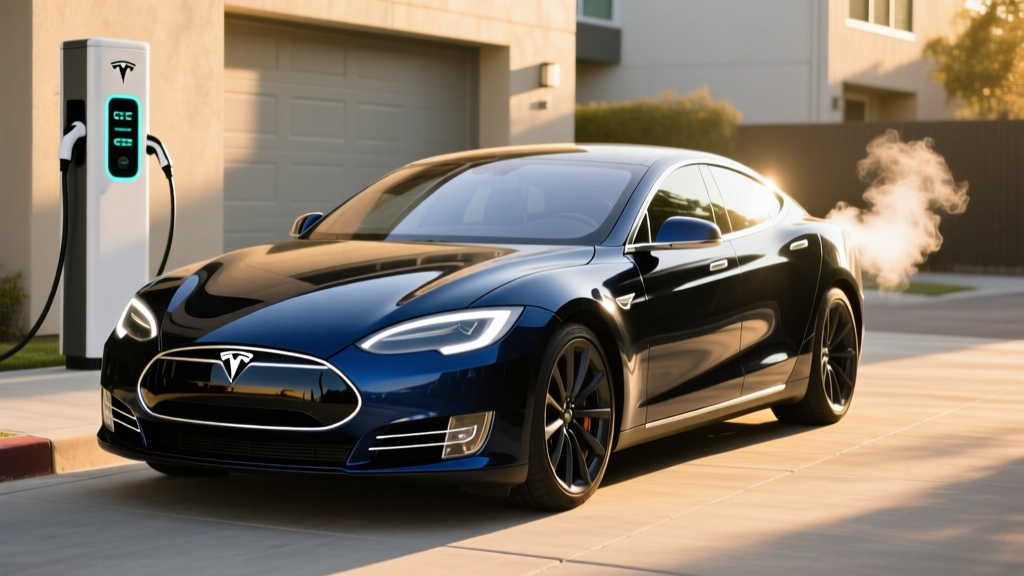
The Tesla Model S All Wheel Drive remains one of the most capable long-range electric sedans on the market in 2026. While newer competitors have narrowed the gap in charging speed and interior refinement, the dual-motor AWD Model S still delivers a combination of 400+ mile EPA range, access to the Supercharger network, and blistering straight-line performance that few can match. This review breaks down the exact numbers you need — range, charging curves, pricing, tax-credit eligibility, and real-world ownership — to decide if it's the right EV for you.
Tesla Model S All Wheel Drive: Quick Verdict
The dual-motor AWD Model S is Tesla's flagship luxury sedan for buyers who prioritize maximum range and all-weather traction over the Plaid's track-focused fury. At a base MSRP of $79,990 (before any incentives), it competes with the Lucid Air Pure, BMW i5 eDrive40, and Mercedes EQS 450 4MATIC. Its strongest advantage remains the Supercharger network and the lowest cost-per-mile of range in its class. Its biggest vulnerability is an aging interior and a ride quality that hasn't kept pace with European rivals.
| Base MSRP | $79,990 |
| EPA Range | 402 miles |
| Battery | ~100 kWh usable, NMC |
| 0-60 mph | 3.1 seconds |
| Horsepower | 670 hp |
| Max DC Charge | 250 kW |
| Drivetrain | Dual-motor AWD |
| Battery Warranty | 8 years / 150,000 miles |
Range & Efficiency: EPA vs. Real World
The EPA rates the 2026 Tesla Model S All Wheel Drive at 402 miles of combined range, with an efficiency of approximately 124 MPGe (about 28 kWh per 100 miles). That figure is achievable in mixed city/suburban driving at moderate temperatures — but real-world conditions tell a more nuanced story.
EPA Sticker: 402 miles
Highway (70-75 mph, 70°F): ~340–360 miles
Highway (70-75 mph, 30°F): ~280–310 miles
City/Suburban mixed: ~380–400 miles
Sources: EPA data via fueleconomy.gov; real-world estimates based on owner-reported data and independent testing.
The Model S AWD's large ~100 kWh NMC (nickel manganese cobalt) battery pack gives it substantial buffer for highway and cold-weather driving. NMC chemistry offers higher energy density than LFP, which translates to more range in a lighter package — but it also means Tesla recommends daily charging to 80–90% for longevity, reserving 100% charges for road trips. At 90% state of charge, expect roughly 360 miles of displayed range.
Cold weather hits every EV, and the Model S is no exception. Tesla's heat pump (standard since the 2021 refresh) significantly reduces cabin-heating energy draw compared to older resistive heaters, but battery chemistry itself loses efficiency below freezing. Plan for a 20–30% range reduction in sustained sub-30°F highway driving. The car's navigation-based battery preconditioning helps mitigate charging-speed losses in cold weather — more on that below.
Charging Speed: DC Fast, Level 2 & Home Setup
Charging speed remains one of the most practical concerns for EV buyers, and the Model S AWD supports a peak DC fast-charge rate of 250 kW on V3 Superchargers and compatible CCS/NACS stations. Here's the full charging breakdown:
| Level | Power | Speed | Notes |
|---|---|---|---|
| DC Fast (V3 Supercharger) | 250 kW peak | 10–80% in ~27 min | NACS connector native; peaks at low SoC, tapers above 50% |
| DC Fast (CCS adapter) | Up to 250 kW | Varies by station | Tesla CCS adapter required for non-Tesla networks |
| Level 2 (Tesla Wall Connector) | 11.5 kW (48A) | ~41 mi/hr | Full overnight charge in ~10 hours |
| Level 2 (Generic J1772/NACS) | 7.7–11.5 kW | ~28–41 mi/hr | Depends on EVSE amperage and circuit |
| Level 1 (120V outlet) | ~1.4 kW | ~5 mi/hr | Emergency/top-up only |
Charging curve reality: The 250 kW peak rate is only sustained at low states of charge (roughly 5–25% SoC). By 50% SoC, the rate tapers to approximately 150 kW, and above 80% it drops further to under 50 kW. This is normal for NMC lithium-ion chemistry — the battery management system protects cell longevity by reducing current as voltage rises. For road trips, plan your stops around 10–80% charges to minimize time at the charger.
Home charging setup: The Model S's onboard charger supports up to 11.5 kW (48 amps) on Level 2. To achieve this, you need a 60-amp dedicated circuit with a Tesla Wall Connector or equivalent NACS EVSE. Most homes with a 200-amp electrical panel can accommodate this, but older homes with 100-amp service may require a panel upgrade ($1,500–$3,000) before installation. Always consult a licensed electrician for final specifications.
Performance & Drivetrain
The dual-motor all-wheel-drive powertrain produces 670 horsepower and launches the Model S from 0 to 60 mph in 3.1 seconds — figures that would have been supercar territory a decade ago. The front and rear permanent-magnet synchronous motors provide instant torque vectoring, giving the car confident grip in rain, snow, and dry pavement alike.
Unlike the Plaid variant (1,020 hp, 1.99-second 0-60), the AWD model prioritizes range over raw acceleration. You still get more than enough power for highway merging and passing, and the adaptive air suspension (standard) adjusts ride height and damping for comfort or sport modes. Top speed is electronically limited to 155 mph.
Regenerative braking offers two modes — standard (strong regen enabling near one-pedal driving) and low (coasting feel closer to a gas car). Tesla removed the user-selectable regen toggle for several years but restored it in recent software updates.
Interior, Tech & Cargo Space
The Model S interior is a study in minimalist design, centered around a 17-inch landscape touchscreen that controls virtually all vehicle functions. A secondary 12.3-inch instrument cluster sits behind the yoke (or optional round steering wheel), and rear passengers get an 8-inch screen for climate and entertainment.
Passenger and cargo dimensions:
- Front headroom: 40.0 inches
- Front legroom: 42.4 inches
- Rear headroom: 38.1 inches
- Rear legroom: 35.4 inches
- Cargo volume (rear trunk): 26.3 cu ft
- Front trunk (frunk): 2.8 cu ft
- Total cargo: 29.1 cu ft (expandable with 60/40 rear seat fold)
The cargo space is generous for a sedan — the hatchback-style liftback trunk opening makes loading bulky items easier than a traditional sedan trunk. However, rear-seat comfort remains a common criticism: the seat cushion is relatively flat and low, which can leave taller passengers feeling less supported on long trips compared to the BMW i5 or Mercedes EQS.
Notable tech features:
- Autopilot (standard): SAE Level 2 driver-assist with adaptive cruise, lane-keeping, and auto lane-change
- Full Self-Driving (Supervised): $8,000 add-on; still Level 2, requires active driver supervision
- 17-inch touchscreen with Netflix, YouTube, and gaming (while parked)
- Over-the-air software updates adding features post-purchase
- HEPA air filtration with Bioweapon Defense Mode
- Sentry Mode dashcam recording and smartphone alerts
Tesla Autopilot and Full Self-Driving (Supervised) are SAE Level 2 driver-assistance systems. The driver must remain fully engaged, hands on or near the wheel, and eyes on the road at all times. These systems do not make the car self-driving. Only Level 4 services like Waymo operate without a human driver in defined areas.
Pricing, Tax Credits & Ownership Costs
The 2026 Tesla Model S All Wheel Drive starts at $79,990 (including destination). Common configurations push the price higher:
| Configuration | MSRP | §30D Credit | Effective Price |
|---|---|---|---|
| AWD (Pearl White, 19" wheels) | $79,990 | $0* | $79,990 |
| AWD + FSD Supervised | $87,990 | $0* | $87,990 |
| AWD + 21" wheels + premium paint | $84,480 | $0* | $84,480 |
*Federal tax credit status: The Tesla Model S does not qualify for the $7,500 federal EV tax credit under IRS §30D rules. Two factors disqualify it:
- MSRP cap: The §30D credit applies only to sedans with an MSRP of $55,000 or less (IRS §30D guidelines). The Model S starts well above that threshold.
- Buyer income cap: Even if the price qualified, modified adjusted gross income must not exceed $150,000 (single) or $300,000 (joint). Many Model S buyers exceed these limits.
Some states offer separate EV rebates or HOV lane access that may apply — check your state's energy office or DMV for current programs. Always consult a tax professional for personalized credit eligibility.
Five-year ownership cost estimate (AWD, 15,000 mi/yr):
- Electricity (home + Supercharger mix, ~$0.15/kWh avg): ~$4,200
- Maintenance (cabin filter, wipers, tire rotation): ~$1,800
- Insurance (national avg for Model S): ~$14,000–$18,000
- Estimated depreciation (5 yr): ~$32,000–$38,000
- Total 5-year operating cost (excl. purchase): ~$52,000–$62,000
Insurance is notably higher than average for the segment — the Model S's performance profile, repair costs, and aluminum body panels drive premiums above comparable luxury sedans. Get quotes before committing.
Warranty & Battery Longevity
Tesla covers the Model S AWD with the following warranty:
- Basic vehicle: 4 years / 50,000 miles
- Battery & drive unit: 8 years / 150,000 miles (whichever comes first), with a minimum 70% capacity retention guarantee
The 150,000-mile battery warranty is competitive with other premium EVs. Tesla's NMC pack has demonstrated strong longevity in fleet data — most Model S vehicles retain 85–90% of original capacity after 100,000 miles. To maximize battery health, Tesla recommends:
- Daily charge limit set to 80–90%
- Avoid leaving the car at 100% SoC for extended periods
- Plug in when possible to allow the BMS to manage cell balancing
- Use preconditioning before DC fast charging (automatic when navigating to a Supercharger)
Tesla Model S AWD vs. Key Competitors
The Model S AWD competes in a shrinking but still relevant premium EV sedan segment. Here's how it stacks up against the most direct alternatives:
| Spec | Tesla Model S AWD | Lucid Air Pure | BMW i5 eDrive40 |
|---|---|---|---|
| EPA Range | 402 mi | 419 mi | 295 mi |
| Base MSRP | $79,990 | $69,900 | $56,600 |
| 0-60 mph | 3.1 sec | 5.2 sec | 5.7 sec |
| Peak DC Charge | 250 kW | 200+ kW | 205 kW |
| §30D Credit | No (MSRP too high) | No (MSRP too high) | Potentially yes |
| Supercharger Access | Native NACS | Adapter available | Adapter available |
| Rear Seat Comfort | Average | Excellent | Good |
The Lucid Air Pure offers more range at a lower price, with a more spacious and refined rear seat — but its charging network access is less seamless than Tesla's native Supercharger integration. The BMW i5 is far more affordable and eligible for the federal credit, but sacrifices over 100 miles of range. The Model S wins on performance and charging infrastructure; it loses on value and interior luxury.
Choose the Tesla Model S AWD if: You want 400+ miles of range, need native Supercharger access for frequent road trips, value acceleration and all-weather AWD traction, and prefer Tesla's software ecosystem.
Choose the Lucid Air Pure if: You prioritize rear-seat comfort and maximum range per dollar, and don't mind using a CCS adapter for DC fast charging.
Choose the BMW i5 if: You want a more traditional luxury sedan experience, qualify for the $7,500 federal credit, and can live with ~295 miles of range.
Pros & Cons
- 402-mile EPA range — among the longest of any EV sedan
- Native NACS/Supercharger access with 17,000+ stations
- 670 hp and 3.1-second 0-60 with AWD grip
- Spacious hatchback cargo area (29.1 cu ft)
- Continuous OTA updates add features over time
- Strong battery longevity track record
- No federal tax credit eligibility (MSRP exceeds $55K cap)
- Rear seat comfort lags European competitors
- Interior materials and build quality inconsistent at this price
- Insurance premiums significantly above segment average
- Yoke steering (standard) divisive; round wheel is extra
- 250 kW peak charge rate trails newer 350 kW architectures
Who Should Buy the Tesla Model S All Wheel Drive?
The Model S AWD is best suited for:
- Long-distance commuters who need 350+ real-world miles between charges and want AWD security in inclement weather
- Tech-forward buyers who value Tesla's software, OTA updates, and Supercharger network above traditional luxury-brand cachet
- Performance-oriented EV shoppers who want sports-car acceleration in a four-door sedan with usable cargo space
It's less ideal for buyers who prioritize rear-seat luxury (consider the Lucid Air or Mercedes EQS), need the lowest possible purchase price (the BMW i5 or Hyundai Ioniq 6 offer better value), or require the federal tax credit to make the math work.
Frequently Asked Questions
What is the real-world range of the Tesla Model S All Wheel Drive?
The EPA rates it at 402 miles combined. In real-world highway driving at 70–75 mph in mild weather, expect approximately 340–360 miles. In freezing temperatures, highway range drops to roughly 280–310 miles. City and suburban driving tends to be closer to the EPA estimate due to regenerative braking recovery.
How fast does the Model S AWD charge at home and on the road?
On a V3 Supercharger, it peaks at 250 kW and charges from 10–80% in approximately 27 minutes. At home on a Tesla Wall Connector (11.5 kW / 48A Level 2), it adds about 41 miles of range per hour, achieving a full charge overnight in roughly 10 hours.
Does the Tesla Model S qualify for the federal EV tax credit?
No. The Model S AWD's $79,990 MSRP exceeds the $55,000 sedan cap set by IRS §30D rules. Even the base configuration is ineligible regardless of buyer income. State-level incentives may still apply — check your state energy office for current programs.
Is the Model S AWD worth it compared to the Plaid?
For most buyers, yes. The AWD model gives up 350 horsepower and 1.1 seconds in the 0-60 sprint but gains 49 miles of EPA range and costs $10,000 less. Unless you plan to track the car regularly, the AWD's performance is more than adequate and its range advantage matters daily.
How long will the Model S battery last?
Tesla warranties the battery for 8 years or 150,000 miles with a 70% minimum capacity retention guarantee. Fleet data suggests most Model S packs retain 85–90% capacity at 100,000 miles when charged responsibly (daily limit at 80–90%, avoiding prolonged 100% storage). Full battery replacement, if ever needed, currently costs approximately $15,000–$22,000 out of warranty.
What connector does the Model S AWD use?
The 2026 Model S uses the NACS (North American Charging Standard) connector natively — the same connector used across the Tesla Supercharger network. Tesla also offers a CCS adapter for access to Electrify America, EVgo, and other non-Tesla DC fast-charging networks.
Sources: EPA efficiency data from fueleconomy.gov; federal tax credit rules from IRS §30D; manufacturer specifications from Tesla.com. All pricing and specifications reflect 2026 model year at time of publication and are subject to change. Verify current tax credit eligibility with a qualified tax professional.