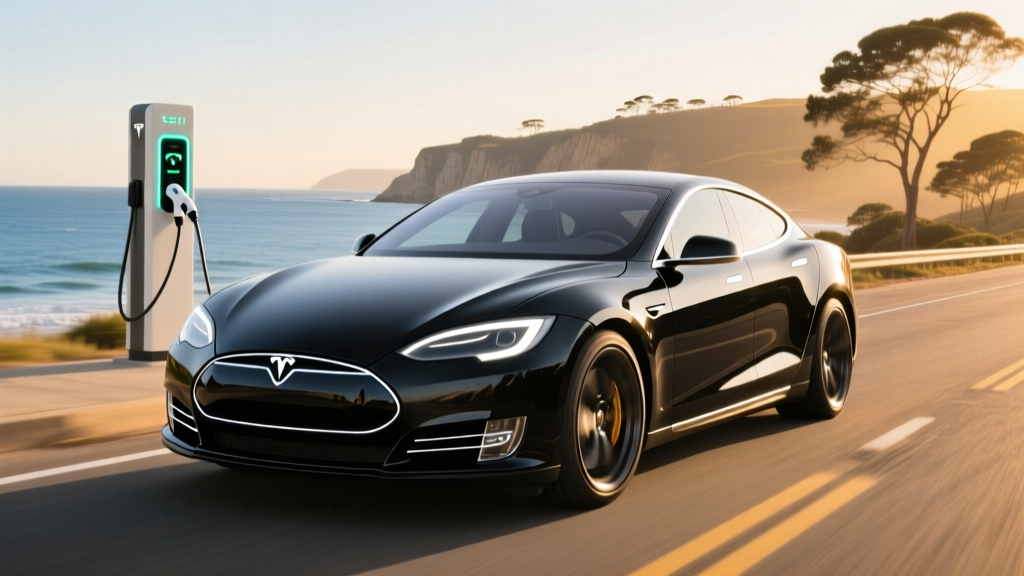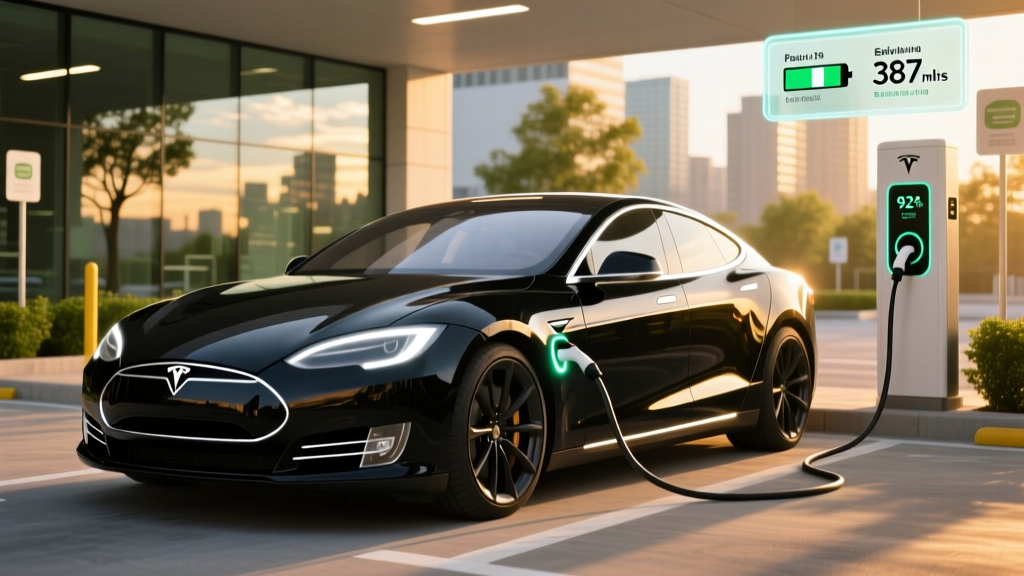
The Tesla Model S 85D occupies a unique space in the electric vehicle market. Originally sold between 2015 and 2016, this dual-motor, all-wheel-drive sedan helped define what a long-range, practical EV could be. With an 85 kWh battery pack, dual motors, and access to Tesla's Supercharger network, the 85D remains one of the most sought-after used electric sedans in 2026 — especially for buyers who want premium EV performance without the new-car price tag.
This review covers everything a prospective buyer or current owner needs to know: real-world range expectations, charging speeds across Level 1, Level 2, and DC fast charging, performance benchmarks, ownership costs, and whether the 85D still qualifies for federal tax incentives on the used market.
Tesla Model S 85D: Core Specifications at a Glance
| Specification | Value |
|---|---|
| Model Years Produced | 2015–2016 |
| Battery Capacity (Usable) | ~81 kWh usable (85 kWh nominal) |
| Battery Chemistry | NMC (Nickel Manganese Cobalt) |
| EPA Range (Original) | 294 miles |
| Drivetrain | Dual-Motor AWD |
| Horsepower | ~417 hp (combined) |
| 0–60 mph | 4.9 seconds |
| Top Speed | 155 mph |
| MPGe (Combined) | 101 MPGe |
| Efficiency | 33 kWh/100 mi |
| Max DC Fast Charge Rate | ~120 kW (Supercharger V2) |
| Level 2 Charge Rate | Up to 11.5 kW (48A onboard charger) |
| Cargo Volume (Rear + Frunk) | 26.3 cu ft rear + 5.3 cu ft frunk = 31.6 cu ft total |
| Seating | 5 passengers (optional rear-facing 3rd row for 7) |
| Original MSRP (2015) | ~$85,200 (before incentives) |
| 2026 Used Market Price | ~$22,000–$35,000 depending on mileage and condition |
| Battery Warranty (Original) | 8 years / unlimited miles |
Real-World Range: What to Actually Expect From the 85 kWh Pack
EPA Estimated: 294 miles
Real-World Highway (65–75 mph, moderate temps): ~235–260 miles
Real-World City/Mixed (moderate temps): ~255–280 miles
Cold Weather (below 32°F, highway): ~190–220 miles
Note: Range varies significantly with driving speed, temperature, elevation changes, HVAC use, and battery age/degradation.
The EPA rated the Model S 85D at 294 miles when new — an impressive figure that helped cement Tesla's reputation for range leadership. But real-world driving rarely matches the sticker.
On highway road trips at 70–75 mph in moderate temperatures (60–80°F), expect roughly 235 to 260 miles of usable range. The Model S's large frontal area and weight (~4,600 lbs) work against it at sustained highway speeds, where aerodynamic drag dominates energy consumption. At 65 mph, you'll see better results — closer to 260–275 miles.
City and mixed driving tend to yield better efficiency thanks to regenerative braking recapturing energy during stop-and-go traffic. In moderate conditions, 255–280 miles is achievable.
Cold weather is the 85D's biggest range adversary. NMC lithium-ion cells experience increased internal resistance in freezing temperatures, and cabin heating draws significant energy (the 85D uses resistive heating, not a heat pump). In sub-freezing highway driving, plan for 190–220 miles of range. Preconditioning the battery while plugged in helps mitigate this loss — always enable it before winter drives.
Battery degradation is a critical factor for any used 85D in 2026. These packs are now 10–11 years old. According to Tesla fleet data aggregated by sources like Teslanomics, most 85 kWh packs retain approximately 75–88% of their original capacity after 100,000–150,000 miles. A degraded 85D with 80% State of Health (SoH) would see its effective range drop to roughly 190–210 miles in mixed real-world driving. Always request a battery health report or third-party inspection before purchasing.
Charging Speeds: DC Fast, Level 2, and Level 1 Breakdown
Charging speed is where the 85D shows its age compared to modern EVs. The vehicle was designed around Tesla's V2 Supercharger architecture, which caps at approximately 120 kW. While that was class-leading in 2015, today's EVs routinely accept 200–350 kW on DC fast chargers.
| Charging Level | Power (kW) | Miles of Range Added per Hour | 10–80% Time (Estimated) |
|---|---|---|---|
| Level 1 (120V, 12A) | ~1.4 kW | ~3–4 mi/hr | N/A (days) |
| Level 2 (240V, 48A — Dual Charger) | ~11.5 kW | ~30–34 mi/hr | ~7–8 hours |
| Level 2 (240V, 40A — Single Charger) | ~9.6 kW | ~25–29 mi/hr | ~8–9 hours |
| DC Fast (Tesla V2 Supercharger) | Peak ~120 kW | ~250–300 mi/hr (at peak) | ~40–50 minutes |
| DC Fast (Tesla V3/V4 Supercharger) | Capped at ~120 kW by vehicle | Same as V2 | ~40–50 minutes |
Understanding the charge curve: The 120 kW peak rate is only sustained at low states of charge (roughly 10–30% SoC) under ideal battery temperature conditions. As the battery fills, the charge rate tapers significantly — dropping to ~60 kW around 50% SoC and ~30 kW or less above 80%. This is why a 10–80% charge takes 40–50 minutes despite the 120 kW headline number. Modern EVs with 800V architectures and improved thermal management sustain peak rates far longer.
CCS adapter note: The Model S 85D uses Tesla's proprietary connector (now called NACS). Tesla sells a CCS1 adapter that allows access to non-Tesla DC fast chargers (Electrify America, EVgo, etc.), though the vehicle's ~120 kW charge ceiling remains the bottleneck regardless of the station's capability.
Home charging: The 85D was available with either a single onboard charger (10 kW / 40A) or a dual onboard charger option (20 kW / 80A — though real-world throughput is often limited to ~11.5 kW by most residential electrical panels). A standard NEMA 14-50 outlet with a Tesla Mobile Connector delivers ~30 miles of range per hour of charging, which is sufficient for overnight replenishment for most daily commutes. A hardwired Tesla Wall Connector on a 60A circuit is the optimal home setup.
Performance: Dual-Motor AWD, 0–60, and Driving Dynamics
The "D" in 85D stands for Dual Motor — one on each axle — providing all-wheel drive and a combined output of approximately 417 horsepower. The result is a 0–60 mph time of 4.9 seconds, which was blistering for a full-size luxury sedan in 2015 and still holds up well today.
The dual-motor setup provides genuine all-weather traction, making the 85D a viable year-round vehicle in snow-belt states. Torque vectoring between the front and rear motors gives confident cornering, and the low center of gravity (battery pack mounted under the floor) keeps body roll minimal for a car of this size.
However, the 85D is not the performance variant of the Model S lineup — that title belongs to the P85D (3.2 seconds to 60 mph with Ludicrous Mode) and later the P100D and Plaid. The 85D prioritizes range and comfort over outright acceleration, and its ride quality reflects that: compliant, quiet, and well-suited to long-distance touring.
Regenerative braking on the 85D is strong and enables one-pedal driving in most scenarios, though it lacks the adjustable regen levels found in competitors like the BMW i4 or Hyundai Ioniq 5. The brake-by-wire system can feel numb compared to traditional hydraulic setups — a common Tesla characteristic of this era.
Interior, Cargo, and Technology
The Model S interior was designed around its 17-inch center touchscreen, which was revolutionary in 2015. However, by 2026 standards, the interior materials and build quality show their age. Early Model S vehicles (2012–2016) are known for issues including:
- Door handle mechanism failures (a well-documented and costly repair)
- MCU (Media Control Unit) screen delamination and failure — Tesla issued a recall for certain MCU1 units, but verify repair history
- Squeaks and rattles from interior trim panels
- Air suspension failures (if equipped) — replacement struts cost $1,500–$2,500 per corner
Cargo space remains a strong point. The rear hatchback design opens to reveal 26.3 cubic feet of cargo room, and the front trunk (frunk) adds another 5.3 cubic feet, for a total of 31.6 cubic feet — more than many midsize SUVs. Rear seat legroom measures 35.4 inches, which is adequate but not class-leading compared to the Mercedes EQS or BMW i7.
Driver assistance: The 85D era coincides with Tesla's Hardware 1 (HW1) Autopilot system, which provides basic adaptive cruise control and lane-keeping. This is a SAE Level 2 driver-assist system — it is not autonomous driving and requires the driver to remain fully engaged with hands on the wheel and eyes on the road. HW1 does not support Tesla's current Full Self-Driving (Supervised) software, and it cannot be upgraded to newer hardware. Buyers should understand this limitation: the 85D's driver-assist capabilities are basic by 2026 standards.
The Model S 85D's Autopilot (HW1) is a Level 2 driver-assist system. The driver must remain fully engaged, monitor the road at all times, and keep hands on the steering wheel. This is not self-driving. Only SAE Level 4 systems (like Waymo's driverless robotaxi service) operate without a human driver.
Pricing, Used Market Value, and Federal Tax Credit Eligibility
The Model S 85D originally carried an MSRP of approximately $85,200 in 2015 (before any incentives). In the 2026 used market, prices have depreciated significantly, with most examples trading between $22,000 and $35,000 depending on mileage, condition, battery health, and service history.
| Item | Details |
|---|---|
| Original MSRP (2015) | ~$85,200 |
| 2026 Used Price Range | $22,000–$35,000 |
| Federal Used EV Tax Credit (§25E) | Up to $4,000 (30% of sale price, capped) |
| §25E Vehicle Price Cap | $25,000 maximum sale price |
| §25E Buyer Income Cap | $75,000 single / $112,500 HOH / $150,000 MFJ |
| §25E Vehicle Age Requirement | Must be at least 2 model years old (85D qualifies) |
| New EV Credit (§30D) | Not applicable — 85D is out of production |
Critical tax credit detail: The federal new EV tax credit (§30D, up to $7,500) does not apply to the Model S 85D because it is no longer in production. However, the Used Clean Vehicle Credit (§25E) may apply. This credit provides 30% of the sale price, up to a maximum of $4,000, but only if the vehicle's sale price is $25,000 or less and the buyer's adjusted gross income falls below the caps listed above. The vehicle must be purchased from a licensed dealer (private-party sales do not qualify). Always verify current rules at IRS.gov and consult a tax professional, as incentive regulations are subject to change.
This means buyers shopping in the $22,000–$25,000 range may capture up to $4,000 in federal credit — effectively reducing the net cost to as low as $18,000. Buyers paying above $25,000 will not qualify for the used credit at all.
Ownership Costs: Maintenance, Insurance, and Battery Longevity
The 85D eliminates oil changes, transmission fluid, and spark plugs — but it is not maintenance-free. Key ownership cost considerations include:
- Tires: The 85D's weight and instant torque wear through tires faster than ICE vehicles. Expect replacement every 25,000–35,000 miles at $800–$1,400 per set.
- Air suspension: If equipped, air struts are a known failure point. Budget $4,000–$8,000 for a full replacement if not already addressed.
- Coolant and brake fluid: Tesla recommends periodic replacement; budget $200–$400 per service.
- Insurance: Model S insurance premiums tend to run 20–40% higher than comparable ICE sedans due to repair costs and vehicle value. Expect $2,400–$4,000/year depending on location and driving record.
- Battery replacement: If the 85 kWh pack fails outside warranty, a refurbished replacement from Tesla costs approximately $12,000–$16,000 (parts and labor). Third-party options exist for $8,000–$12,000. The original 8-year/unlimited-mile battery warranty has expired for all 85D vehicles as of 2024.
The 85D's NMC battery chemistry offers high energy density but is more susceptible to calendar degradation than LFP (lithium iron phosphate) chemistry. Best practices for longevity include:
- Charge to 80–90% for daily use; reserve 100% charges for road trips
- Avoid leaving the car at very low SoC (below 10%) for extended periods
- Minimize frequent DC fast charging — use Level 2 as your primary charge method
- Enable preconditioning in cold weather to reduce battery stress
Pros, Cons, and Who the Model S 85D Is Best For
- Spacious hatchback cargo area (31.6 cu ft total)
- Dual-motor AWD for all-weather capability
- Access to Tesla Supercharger network (15,000+ stations in the US)
- Strong 0–60 performance (4.9 seconds)
- Over-the-air software updates still supported
- Eligible for up to $4,000 used EV tax credit (if under $25K)
- Proven platform with extensive community knowledge and third-party repair options
- DC fast charging capped at ~120 kW (slow vs. modern EVs)
- Battery degradation reduces effective range on 10-year-old packs
- Original battery warranty has expired — replacement is a $12K+ risk
- HW1 Autopilot is outdated; no FSD upgrade path
- Known issues: door handles, MCU1 failures, air suspension
- No heat pump — resistive heating drains range in cold weather
- Insurance costs above average for the segment
Who the Model S 85D suits best:
- Budget-conscious EV buyers who want a premium sedan with genuine long-range capability and don't mind buying used.
- Daily commuters with round trips under 150 miles who can charge at home overnight.
- All-weather drivers in snow-belt states who benefit from dual-motor AWD.
- Road trippers who value Supercharger network access, though they should plan for longer charge stops (40–50 minutes per session).
Who should look elsewhere: Buyers who prioritize the latest tech, cutting-edge charging speeds, or worry about out-of-warranty battery replacement costs should consider newer alternatives like the Hyundai Ioniq 6, Tesla Model 3 Highland, or a certified pre-owned Model S from 2021+ with remaining battery warranty.
Frequently Asked Questions
What is the real-world range of the Tesla Model S 85D?
The EPA rated the 85D at 294 miles when new. In real-world driving, expect 235–260 miles on the highway in moderate temperatures, 255–280 miles in city/mixed driving, and 190–220 miles in cold-weather highway driving. Battery degradation on 10-year-old packs further reduces these figures — a pack at 80% SoH will deliver roughly 190–210 miles mixed.
How fast does the Model S 85D charge?
On DC fast chargers (Tesla V2 Superchargers), the 85D peaks at approximately 120 kW, with a 10–80% charge taking roughly 40–50 minutes due to charge-curve tapering. On Level 2 home charging (240V, 48A dual charger), it adds about 30–34 miles of range per hour, fully replenishing overnight. Level 1 (120V) is impractical for daily use at 3–4 miles per hour.
Does the Model S 85D qualify for a federal EV tax credit?
Not the new-vehicle §30D credit — the 85D is out of production. However, the Used Clean Vehicle Credit (§25E) can provide up to $4,000 if the sale price is $25,000 or less, the buyer's income is under the caps ($75K single / $150K married filing jointly), and the purchase is from a licensed dealer. Verify current eligibility at IRS.gov.
Is the Model S 85D worth buying in 2026 vs. competitors?
The 85D offers strong value at $22,000–$35,000 used, with genuine long-range capability, AWD, Supercharger access, and a spacious interior. However, its aging battery, expired warranty, slow DC charging (by modern standards), and outdated driver-assist hardware are real drawbacks. A used 2019+ Model 3 Long Range offers similar range with newer hardware and faster charging at comparable prices. The 85D wins on cargo space, ride comfort, and prestige — but buyers must budget for potential battery and suspension repairs.
What are the biggest risks of buying a used Model S 85D?
The three biggest financial risks are: (1) battery replacement at $12,000–$16,000 if the pack fails, (2) air suspension replacement at $4,000–$8,000 for a full set, and (3) MCU1 screen failure if not already addressed under recall. Always get a pre-purchase inspection from a Tesla-certified or EV-specialist shop, and request battery SoH data from the vehicle's service menu or TeslaFi logs.
Can the Model S 85D use non-Tesla chargers?
Yes, with Tesla's CCS1 adapter (sold separately), the 85D can access Electrify America, EVgo, and other CCS-equipped networks. However, the vehicle's ~120 kW charge ceiling means it won't benefit from 350 kW stations — it will charge at the same speed as on a V2 Supercharger. The 85D cannot use CHAdeMO stations without a third-party adapter (no longer widely available).