Quick Verdict: The Model S 75D in 2026
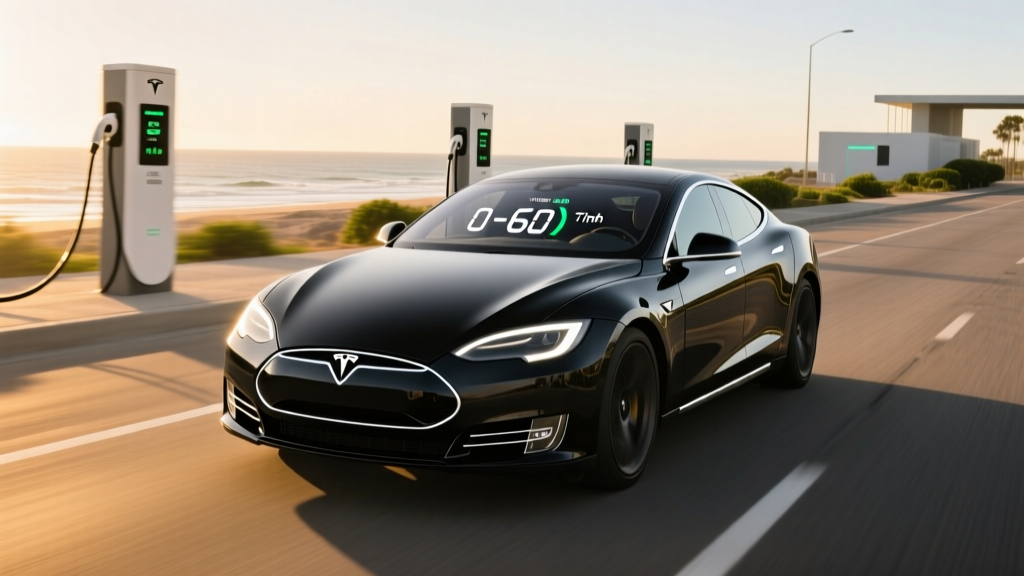
The Tesla Model S 75D was discontinued after the 2017 model year, but it remains one of the most sought-after used electric sedans on the market. Buyers searching for the Model S 75D 0-60 time will find a dual-motor, all-wheel-drive luxury EV that Tesla rated at 4.2 seconds — a figure that still holds up against many new performance sedans nearly a decade later. With an EPA-estimated 259 miles of range, a usable ~72.5 kWh NMC battery, and access to Tesla's Supercharger network, the 75D occupies a sweet spot in the used EV market for buyers who want long-range electric motoring without the six-figure price tag of a new Model S.
This review covers everything you need to know before purchasing a used Model S 75D in 2026: real-world range expectations, charging speeds on modern DC fast chargers, battery degradation realities, and whether it still makes sense against newer alternatives.
Tesla Model S 75D Specifications at a Glance
| Spec | Value |
|---|---|
| EPA Range | 259 miles |
| Battery (Total / Usable) | 75 kWh / ~72.5 kWh |
| Battery Chemistry | NMC (Nickel Manganese Cobalt) |
| Drivetrain | Dual-Motor AWD |
| Horsepower | ~328 hp (combined) |
| 0-60 mph | 4.2 seconds |
| Top Speed | 140 mph |
| EPA Efficiency | 104 MPGe (combined) |
| Energy Consumption | 32 kWh / 100 mi |
| DC Fast Charge (Max) | ~120 kW (V2 Supercharger) |
| Level 2 Charge Rate | ~11.5 kW (48A) |
| Cargo Volume | 26.3 cu ft (rear) + 5.3 cu ft (frunk) |
| Seating | 5 passengers (optional 3rd row for 7) |
| Battery Warranty (Original) | 8 years / 120,000 miles |
| Original MSRP (2017) | ~$74,500 (before incentives) |
| Used Price Range (2026) | $22,000 – $34,000 |
Range: EPA Numbers vs. Real-World Expectations
The Model S 75D carries an EPA-estimated 259 miles of range. That figure was competitive in 2017 and remains usable for most daily driving and moderate road trips. However, real-world range depends heavily on conditions, and the 75D's NMC battery is subject to the same environmental sensitivities as all lithium-ion packs.
- EPA Sticker: 259 miles
- Typical Highway (70 mph, moderate temps): ~220–240 miles
- City / Mixed Commuting: ~245–260 miles (regen braking helps)
- Cold Weather (below 32°F): ~170–200 miles (30–35% reduction common)
- Hot Weather (above 95°F with A/C): ~230–245 miles
The 75D lacks the heat pump Tesla introduced on the 2021 refresh. Cold-weather range loss is more pronounced than on newer Teslas. Preconditioning the battery while plugged in mitigates some loss.
On a 300-mile road trip, expect to stop once at a Supercharger for roughly 25–35 minutes. The 75D's efficiency of 32 kWh per 100 miles is respectable for a full-size luxury sedan weighing over 4,600 lbs, though it trails the newer Model S Long Range (which achieves roughly 28 kWh/100 mi on a larger pack).
Battery Degradation: What to Expect in 2026
A 2017 Model S 75D is now 8–9 years old. NMC batteries in Teslas of this era typically show 10–18% degradation depending on charging habits and climate. Owners who frequently DC fast-charged to 100% and lived in hot climates may see packs with 80–85% State of Health (SoH). Those who charged to 80% daily and used Level 2 predominantly may retain 88–92% SoH.
Before purchasing, request a battery health reading from Tesla Service or use third-party diagnostics. A pack below 80% capacity may trigger warranty coverage if within the 8-year/120,000-mile window — but most 75D vehicles have now exceeded the time limit. Budget $12,000–$18,000 for a potential battery replacement if the pack is significantly degraded.
Charging Speeds: DC Fast Charging and Home Level 2
The Model S 75D uses Tesla's proprietary connector (now being rebranded as NACS) and charges natively on the Supercharger network without an adapter. It can also use CCS-equipped public chargers with Tesla's CCS adapter (sold separately, ~$250).
| Charging Method | Max Power | Miles Added per Hour | Notes |
|---|---|---|---|
| Level 1 (120V / 12A) | ~1.4 kW | ~3–4 mi/hr | Emergency/trickle only |
| Level 2 (240V / 48A) | ~11.5 kW | ~30–34 mi/hr | Full charge in ~7–8 hours |
| DC Fast (V2 Supercharger) | ~120 kW peak | ~300+ mi/hr (peak) | 10–80% in ~40 min |
| DC Fast (V3 Supercharger) | ~120 kW (capped) | ~300+ mi/hr (peak) | 75D cannot use full 250 kW |
Understanding the 75D's Charge Curve
The 75D peaks at roughly 120 kW at low State of Charge (SoC), typically between 5–25%. Above 50% SoC, the charge rate tapers to ~60–80 kW, and above 80% it drops further to ~30–40 kW. This means a 10–80% session takes approximately 35–45 minutes on a V2 Supercharger — slower than modern EVs with 800V architectures that achieve 10–80% in under 20 minutes, but still practical for road-trip stops.
On V3 Superchargers (250 kW capable), the 75D's older battery architecture caps the charge rate at roughly the same 120 kW peak. You won't gain a meaningful speed advantage at V3 stalls compared to V2.
Home charging tip: A Level 2 wall connector at 48A adds roughly 30–34 miles of range per hour. Most 75D owners report a full overnight charge from 20% to 100% in 7–8 hours. If your home electrical panel supports a 60A circuit (for a 48A continuous draw), this is the optimal setup. Installation typically costs $800–$2,000 depending on panel proximity and local permit requirements — consult a licensed electrician for a final quote.
Performance: Model S 75D 0-60 and Driving Dynamics
The headline number for many shoppers is the Model S 75D 0-60 mph time of 4.2 seconds. That figure was verified by Tesla and independently confirmed by multiple automotive publications. In 2017, it placed the 75D firmly in sports-sedan territory, rivaling the BMW M5 and Mercedes-AMG E63 in straight-line acceleration while delivering silent, instant torque.
The dual-motor AWD system provides confident all-weather traction. Combined output is approximately 328 horsepower, though electric torque delivery (available from 0 RPM) makes the car feel more urgent than that number suggests. The low center of gravity from the floor-mounted battery pack contributes to composed handling, though the 75D is tuned more for grand-touring comfort than track aggression.
How It Compares to the Current Model S
The 2026 Tesla Model S Long Range achieves a 0-60 time of 3.1 seconds with 670 hp, and the Plaid variant hits 1.99 seconds. The 75D is a generation behind in outright performance, but 4.2 seconds remains genuinely quick for daily driving and highway merging. Most owners find the acceleration more than adequate — the real gap is in range and charging speed, not performance.
Interior, Tech, and Cargo Space
The pre-refresh Model S (2012–2020 body style) features a minimalist interior dominated by a 17-inch portrait touchscreen. The 2017 model year received an interior update with improved materials, upgraded audio, and revised seating. Key dimensions and features:
- Rear cargo: 26.3 cu ft (hatchback design makes loading easy)
- Front trunk (frunk): 5.3 cu ft
- Front legroom: 42.7 inches
- Rear legroom: 35.4 inches (tight for taller passengers on long trips)
- Infotainment: 17" touchscreen, navigation, streaming, over-the-air updates
- Driver Assist: Autopilot hardware (HW2 or HW2.5 depending on build date)
The Model S 75D's Autopilot and available Enhanced Autopilot / Full Self-Driving (Supervised) are SAE Level 2 driver-assistance systems. The driver must remain fully engaged, hands on or near the wheel, and eyes on the road at all times. These systems do not make the vehicle self-driving. Only Level 4 services like Waymo operate without a human driver in defined geographic areas.
Notable Drawbacks
The pre-refresh Model S interior shows its age compared to 2026 competitors. Rear seat comfort is mediocre for a luxury sedan at this price point, panel gaps from the Fremont factory varied widely, and the lack of a heat pump means cold-weather efficiency suffers. The MCU1 (original media control unit) in earlier builds was prone to failure — confirm whether the vehicle has been upgraded to MCU2 or later, which supports modern Tesla software features.
Pricing, Tax Credits, and Ownership Costs
The Model S 75D originally started around $74,500 in 2017 before incentives. In the 2026 used market, expect to pay between $22,000 and $34,000 depending on mileage, condition, battery health, and Autopilot package. Vehicles with FSD (Supervised) purchased outright command a premium, though the transferability of FSD licenses varies — confirm with Tesla before purchase.
Federal Tax Credit Eligibility for Used EVs
The IRS §25E used clean vehicle credit offers up to $4,000 (or 30% of the sale price, whichever is less) for qualifying used EVs. Key requirements:
- Sale price must be $25,000 or less
- Buyer income caps: $75,000 (single), $112,500 (head of household), $150,000 (joint)
- Vehicle must be at least 2 model years old (75D qualifies)
- Must purchase from a licensed dealer (private-party sales do not qualify)
- Credit can be transferred to the dealer at point of sale for an instant discount
A Model S 75D priced at $24,500 from a dealer could qualify for the full $4,000 credit, bringing the effective cost to ~$20,500 for income-eligible buyers. This makes the 75D one of the most compelling value propositions in the used luxury EV segment.
Note: The new-vehicle §30D credit ($7,500) does not apply to used purchases. Tax rules are subject to change — consult a tax professional and verify current IRS guidance before relying on credit eligibility.
Pros and Cons of the Model S 75D in 2026
- 4.2-second 0-60 mph still impresses
- 259-mile EPA range covers most daily needs
- Supercharger network access (most reliable DC network)
- Hatchback cargo versatility (26.3 + 5.3 cu ft)
- Over-the-air updates still supported
- Potential $4,000 used EV tax credit
- Dual-motor AWD for all-weather confidence
- Battery degradation risk at 8–9 years old
- No heat pump — poor cold-weather efficiency
- 120 kW max DC charge rate (slow vs. modern EVs)
- Rear seat legroom tight for the class (35.4 in)
- Pre-refresh interior showing its age
- Original battery warranty likely expired
- MCU1 units may need costly upgrade
Who Should Buy the Model S 75D?
The Model S 75D is best suited for:
- Budget-conscious luxury seekers who want a premium EV badge, strong acceleration, and Supercharger access for under $30,000.
- Commuters with home charging who drive 50–100 miles daily and can charge overnight on Level 2.
- Mild-climate buyers — the lack of a heat pump makes the 75D less ideal for consistently sub-freezing regions.
- Second-car households who want an electric daily driver with occasional road-trip capability.
It is not ideal for buyers who need the latest ADAS hardware, maximum fast-charging speed, or the longest possible range for frequent 400+ mile road trips. Those buyers should consider a newer Model S Long Range, a used Model 3 Long Range, or competitors like the Hyundai Ioniq 6 or BMW i4.
Frequently Asked Questions
What is the real-world range of the Tesla Model S 75D?
The EPA rates the 75D at 259 miles. In real-world mixed driving at moderate temperatures, expect 230–250 miles. Highway driving at 75+ mph reduces this to roughly 210–230 miles, and cold weather (below freezing) can drop range to 170–200 miles. Battery age and degradation will further reduce these figures on a used example.
How fast does the Model S 75D charge?
On DC fast charging (Tesla Supercharger V2), the 75D peaks at ~120 kW and achieves a 10–80% charge in approximately 35–45 minutes. On a home Level 2 charger at 48A (~11.5 kW), it adds roughly 30–34 miles of range per hour, with a full charge taking 7–8 hours.
Does the Model S 75D qualify for any federal tax credit?
As a used vehicle, the 75D is not eligible for the new-vehicle §30D credit. However, it may qualify for the IRS §25E used clean vehicle credit of up to $4,000 if the dealer sale price is $25,000 or less and the buyer meets income caps ($75K single / $150K joint). Verify current rules at irs.gov.
Is the Model S 75D worth buying vs. a newer Model 3?
It depends on priorities. The 75D offers more cargo space, a larger footprint, and a luxury sedan ride. A used 2021+ Model 3 Long Range offers newer hardware (HW3/HW4), a heat pump, faster charging, and potentially more remaining battery life — often at a similar price. If rear-seat space and hatchback cargo matter, the 75D wins. If tech freshness and efficiency matter more, the Model 3 is the better pick.
What is the Model S 75D battery replacement cost?
A remanufactured or replacement 75 kWh battery from Tesla typically costs $12,000–$18,000 including labor as of 2026. Third-party repair shops may offer repairs for $8,000–$14,000 by replacing individual modules. Most 75D batteries still function at 82–92% SoH, so full replacement is not always necessary — but budget for it as a worst-case scenario.
What is the Tesla Model S 75D 0-60 time?
Tesla officially rated the Model S 75D 0-60 mph time at 4.2 seconds. Independent testing by automotive publications has confirmed this figure within a tenth of a second. The dual-motor AWD system and instant electric torque make the launch consistent and repeatable.