Quick Verdict: A Discontinued Benchmark Worth Revisiting
The Tesla Model S 75D was one of the most popular configurations Tesla ever sold. Produced primarily between 2016 and 2019, this dual-motor, all-wheel-drive sedan paired a 75 kWh (usable) battery pack with enough power to hit 0-60 mph in 4.2 seconds — a figure that still holds up against many new EVs in 2026. Though no longer available new, the 75D dominates the used EV market, and understanding its real-world performance envelope is critical before you sign paperwork.
This profile dissects the specs that matter to a used-EV buyer: the Tesla Model S 75D 0-60 time and what enables it, actual range after years of battery degradation, DC fast-charge behavior on modern Superchargers, and whether the used-market price plus potential tax credits make it a smart buy versus a new Model 3 or Model Y.
Performance: Tesla Model S 75D 0-60 and Powertrain Details
The 75D's dual-motor all-wheel-drive layout delivers power to all four wheels with torque-vectoring precision. Here is the complete performance picture:
| Metric | Value |
|---|---|
| 0-60 mph | 4.2 seconds |
| Top Speed | 140 mph |
| Horsepower (combined) | ~328 hp |
| Drivetrain | Dual-Motor AWD |
| Quarter Mile | ~12.8 seconds |
| Battery (Usable) | ~75 kWh (NMC) |
The 4.2-second sprint remains genuinely quick. For context, the 2026 base Model 3 Long Range AWD does 0-60 in 4.2 seconds as well, so the 75D keeps pace with Tesla's current mid-tier offerings. The difference is mass: the Model S weighs roughly 4,800 lbs versus the Model 3's ~4,000 lbs, so the 75D achieves similar acceleration with less peak power but more low-end torque from its larger motors.
The dual-motor setup also provides confident all-weather traction. Unlike single-motor RWD EVs, the 75D's front and rear motors independently manage torque delivery, reducing wheelspin in rain or light snow without the drivetrain losses of a mechanical AWD system.
EPA Range and Real-World Expectations
Real-World Highway (70-75 mph): ~200-220 miles
Cold-Weather (below 32°F): ~170-195 miles
City/Mixed Driving: ~230-245 miles
The EPA rated the Model S 75D at 249 miles of combined range when new. However, real-world conditions — especially at highway speeds and in cold weather — consistently reduce that figure.
At sustained 70-75 mph highway speeds, expect 200-220 miles in moderate temperatures (55-80°F). The Model S's large frontal area and sedan profile create more aerodynamic drag at speed than the EPA's mixed driving cycle assumes. In cold weather, range drops further due to battery chemistry limitations (NMC cells lose efficiency below freezing) and cabin heating demands, even though later 75D models include a heat pump or resistive heating system.
Critically, used 75D buyers must account for battery degradation. A 2017-2019 Model S 75D with 80,000-120,000 miles typically retains 85-92% of its original capacity, depending on charging habits. That means a pack that originally delivered 249 EPA miles may now provide 210-230 miles when fully charged in ideal conditions. Always request a battery health report or use third-party tools like Tesla's battery health diagnostics before purchasing.
Charging Speeds: DC Fast, Supercharger, and Home Level 2
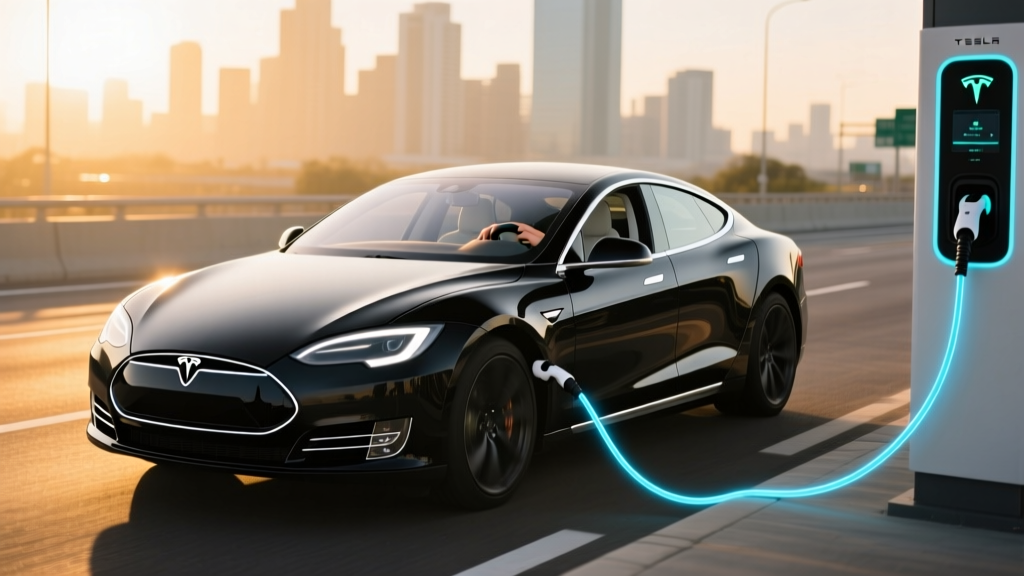
Charging speed is often the deciding factor for road-trip usability. The 75D uses the CCS1 connector (or Tesla's proprietary connector on pre-2022 models with a CCS adapter now available) and charges at the following rates:
| Charging Level | Power / Rate | Time or Range Added |
|---|---|---|
| Level 1 (120V household) | ~1.4 kW | ~3-4 miles per hour |
| Level 2 (240V / 48A home charger) | ~11.5 kW | ~32-35 miles per hour |
| DC Fast Charge (V3 Supercharger) | Peak ~120 kW | 10-80% in ~35-40 minutes |
| DC Fast Charge (V2 Supercharger / 150 kW) | Peak ~100-120 kW | 10-80% in ~40-45 minutes |
The 75D's 75 kWh battery and older battery management system limit peak DC charge rates compared to the current Model S Plaid (which peaks at 250 kW). On a V3 Supercharger (250 kW capable), the 75D will peak around 120 kW and taper significantly above 60% State of Charge (SoC). This means the 10-80% charge takes 35-40 minutes — roughly double the time of a 2026 Model Y Long Range on the same stall.
For home charging, a Level 2 wall connector at 48 amps (11.5 kW) will replenish the 75D from 20% to 100% in about 6-7 hours, making overnight charging practical for daily commutes. A standard 240V / 32A dryer outlet or hardwired setup at 7.7 kW extends that to roughly 9-10 hours.
Charge curve reality check: The 75D's peak 120 kW rate is only sustained from roughly 10-40% SoC. Above 60%, the rate tapers to 60-80 kW, and above 80% it drops below 30 kW. Plan road-trip stops to charge to 70-80% and move on rather than waiting for a full charge.
Efficiency, Interior Space, and Daily Practicality
The Model S 75D was rated by the EPA at 104 MPGe combined (city 101 / highway 107), which translates to roughly 32 kWh per 100 miles. This is less efficient than the current Model 3 Long Range (~26 kWh/100 mi), largely due to the Model S's greater weight (4,800+ lbs) and larger frontal area. On the used market, efficiency matters because it directly affects your cost-per-mile: at the national average electricity rate of $0.16/kWh (per EIA data), the 75D costs about $0.05 per mile to fuel versus $0.12-$0.15 for a comparable gas sedan.
Interior space remains a strong point:
- Front legroom: 42.7 inches
- Rear legroom: 35.4 inches
- Cargo (rear trunk): 26.3 cu ft
- Frunk (front trunk): 5.3 cu ft
- Total cargo: 31.6 cu ft (with rear seats up)
The Model S also offers a full-size rear seat that comfortably fits three adults on longer trips — something the Model 3 struggles with due to its sloping roofline and tighter rear quarters. For families with rear-facing car seats, the Model S's longer wheelbase and wider rear door openings make installation easier.
Used Pricing, Tax Credits, and Ownership Costs
The Model S 75D originally started at $74,500 MSRP when new (before incentives). As of early 2026, used-market pricing has settled into a more accessible range:
| Model Year | Mileage Range | Typical Price |
|---|---|---|
| 2016-2017 | 90,000-130,000 mi | $22,000-$28,000 |
| 2018-2019 | 60,000-95,000 mi | $28,000-$36,000 |
Federal tax credit (IRS §30D — Used EV Credit): Under current IRS rules, qualified used EV buyers may claim up to $4,000 or 30% of the sale price (whichever is less) as a federal tax credit. To qualify:
- Sale price must be $25,000 or less
- Buyer's adjusted gross income must not exceed $75,000 (single), $112,500 (head of household), or $150,000 (joint)
- Vehicle must be at least two model years old
- Vehicle must be purchased from a licensed dealer (private-party sales do not qualify)
- Buyer must not have claimed the used-EV credit in the prior 3 years
This means a 2017 Model S 75D priced at $24,500 from a dealer could net a $4,000 credit, bringing the effective cost to $20,500 — competitive with a new base-model Nissan Leaf or Chevy Bolt EV. Always verify eligibility with a tax professional and check IRS §25E guidelines before purchase, as rules are subject to change.
Warranty, Tech, and Standout Features
Tesla's original battery and drive unit warranty for the 75D was 8 years / 120,000 miles with a minimum 70% capacity retention guarantee. For a 2017 model, that warranty window has closed. A 2019 model with under 120,000 miles may still carry partial warranty coverage through 2027, but verify the exact in-service date with Tesla.
The 75D's tech suite was class-leading at launch and remains competitive:
- Infotainment: 17-inch center touchscreen (pre-2021 refresh models), navigation, streaming, gaming
- Autopilot (Basic): Adaptive cruise control, lane-keeping assist, auto emergency braking — SAE Level 2 driver-assist (driver must remain engaged at all times)
- Enhanced Autopilot / FSD (optional): Auto lane change, navigate on Autopilot, Smart Summon, traffic light/stop sign recognition. FSD (Supervised) was a paid upgrade (~$8,000-$15,000 when new) — check whether it transfers with a used purchase, as Tesla has changed transfer policies over time.
- Over-the-air updates: The 75D continues to receive software updates, though hardware limitations (older MCU1 screens in 2016-2018 models) may restrict newer features. Tesla offered an MCU2 upgrade program for ~$1,500-$2,000.
- Air suspension: Standard on the 75D, providing adjustable ride height and a smooth highway ride, though air strut replacement can cost $1,500-$2,500 per corner if they fail (common above 80,000 miles).
Notable drawbacks:
- No Apple CarPlay or Android Auto (Tesla's proprietary system only)
- MCU1 infotainment in 2016-2018 models is sluggish by 2026 standards
- Panel gaps and interior build quality were inconsistent pre-2020 Fremont production
- Rear visibility is limited by the sloping roofline and small rear window
- Insurance premiums run 15-30% higher than comparable ICE sedans (per IIHS data)
Pros
- 4.2-sec 0-60 still outpaces most used EVs at this price
- Dual-motor AWD with strong all-weather capability
- Spacious rear seat and generous cargo volume (31.6 cu ft total)
- Air suspension for ride comfort and adjustable height
- Supercharger network access for reliable road trips
- Continued OTA software updates
Cons
- DC fast charge peaks at ~120 kW — slow vs. modern 250+ kW EVs
- Battery degradation reduces range to ~210-230 mi on high-mile examples
- Air suspension struts are a known failure point above 80K miles
- MCU1 infotainment (2016-2018) feels dated without upgrade
- No Apple CarPlay/Android Auto
- Original 8-yr battery warranty expired on 2016-2017 models
Who Should Buy the Model S 75D in 2026?
Consider alternatives if: You need sub-25-minute DC fast charging for frequent 300+ mile road trips, you want the latest infotainment with CarPlay, or you need a battery warranty still in force. In those cases, a used 2022+ Model 3 Long Range or a new Hyundai Ioniq 6 may serve better.
Against competitors like the used Porsche Taycan 4S (0-60 in 3.8 sec, but ~$45,000+ used) or the Lucid Air Pure (new, $69,900, 419-mi range), the 75D wins on value. No other used EV at the $25,000-$35,000 price point delivers this combination of acceleration, range, interior space, and charging infrastructure access.
Frequently Asked Questions
What is the Tesla Model S 75D 0-60 time?
The Tesla Model S 75D achieves 0-60 mph in 4.2 seconds as tested by Tesla and independently verified. This is enabled by its dual-motor AWD layout and ~328 combined horsepower. It remains competitive with the 2026 Model 3 Long Range AWD (4.2 sec) and significantly quicker than most used EVs in its price range.
Does the Model S 75D qualify for any federal tax credit?
Yes, under the IRS §25E used clean vehicle credit, buyers may claim up to $4,000 (or 30% of the sale price, whichever is less) if the vehicle is purchased from a dealer for $25,000 or less, and the buyer meets income caps ($75K single / $150K joint). The 75D qualifies as a used EV since it is well past the two-model-year threshold. Consult a tax professional and verify rules at IRS.gov before purchase.
How much range does a used Model S 75D actually have?
A 75D with 80,000-120,000 miles and 85-92% battery health will deliver roughly 210-230 miles of real-world range in moderate temperatures with mixed driving. Highway-only driving at 75 mph reduces that to 190-210 miles, and cold weather (below 32°F) can drop it to 170-195 miles. Always request a battery health reading before purchase.
How fast does the 75D charge on a Supercharger?
The 75D peaks at approximately 120 kW on a V3 Supercharger, with a 10-80% charge taking 35-40 minutes. The charge rate tapers significantly above 60% SoC. This is slower than the current Model S Plaid (250 kW peak, 10-80% in ~18 min) but adequate for road-trip stops of 30-45 minutes.
Is the Model S 75D worth buying over a new Model 3?
It depends on your priorities. The 75D offers more interior space, air suspension, a larger cargo area, and a more premium cabin than the Model 3. However, a new 2026 Model 3 Long Range ($42,990 before incentives) provides 341 miles of EPA range, 250 kW DC fast charging, a full battery warranty, and the latest hardware. If budget is under $30,000 and you value space and ride quality, the 75D is a strong pick. If you want maximum range, fastest charging, and warranty coverage, the new Model 3 wins.
What are the most common problems with the Model S 75D?
The most reported issues include: air suspension strut failure (above 80K miles, $1,500-$2,500 per corner), MCU1 infotainment screen delamination or sluggishness in 2016-2018 models, door handle mechanism failures, and 12V auxiliary battery replacement every 3-4 years. The drive units and main battery pack have proven highly reliable, with most packs retaining 85%+ capacity at 100K miles when charged responsibly (avoiding frequent 100% charges and DC fast charging above 90%).