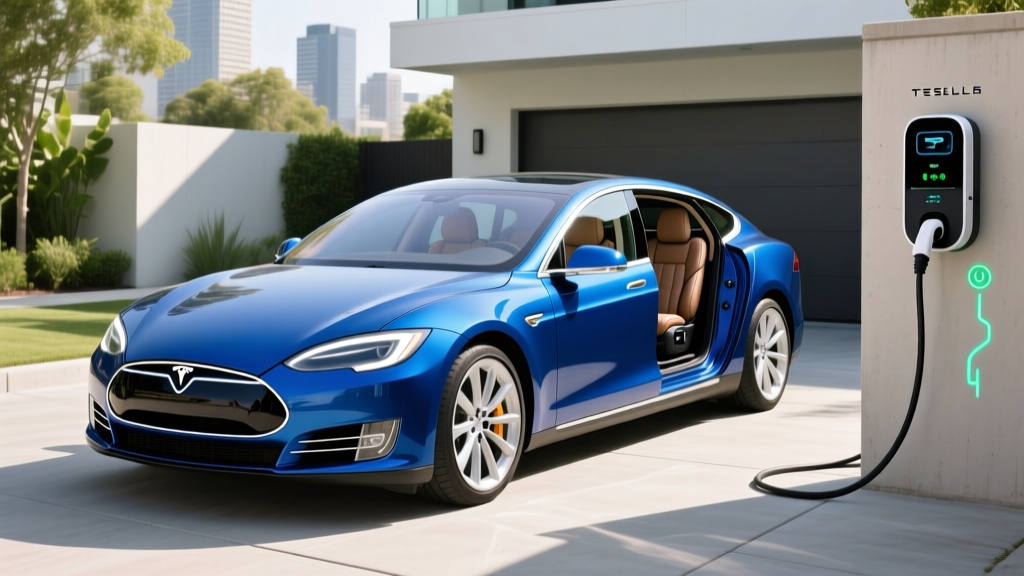
The Tesla Model S has been the benchmark luxury electric sedan for over a decade, but the optional third-row seat transforms it into a family hauler that defies its sleek silhouette. The Model S 7-passenger configuration adds a rear-facing third row, expanding seating capacity in a vehicle better known for 0-60 sprints than school runs. For 2025 and into the current 2026 model year, this $79,990+ sedan offers an unusual combination: 405 miles of EPA range, 250 kW DC fast charging, and space for seven — though that last claim deserves a closer look.
This review breaks down what the Model S 7-passenger actually delivers in range, charging speed, interior utility, and total cost. We'll separate Tesla's marketing from real-world ownership realities so you can decide if this is the right family EV — or if a three-row SUV serves you better.
Quick Verdict: Who Should Consider the Model S 7-Seat?
The third-row option costs roughly $2,000 and replaces the standard five-seat layout. Availability fluctuates by model year and market, so check Tesla's configurator directly for current offerings. When available, it adds two rear-facing seats in what is otherwise the cargo area, accessed by folding down a section of the rear seatback.
Range, Battery, and Real-World Efficiency
| Specification | Value |
|---|---|
| EPA Estimated Range | 405 miles (Long Range AWD) |
| Battery Capacity | ~100 kWh usable (NMC chemistry) |
| EPA Efficiency | 124 MPGe combined / 28 kWh per 100 mi |
| Drivetrain | Dual-Motor AWD |
| 0-60 mph (Long Range) | 3.1 seconds |
| Horsepower | 670 hp (Long Range) |
| Top Speed | 155 mph (Long Range) |
The Model S Long Range uses a dual-motor all-wheel-drive powertrain with a roughly 100 kWh lithium-ion battery pack. Tesla has historically used NMC (nickel manganese cobalt) chemistry in the Model S — not the LFP (lithium iron phosphate) found in some Model 3/Y Standard Range variants. NMC offers higher energy density, which is critical for fitting 405 miles of range into a sedan form factor, though it carries different long-term degradation characteristics than LFP.
The EPA's 405-mile estimate assumes a mix of city and highway driving at moderate temperatures. In real-world conditions:
• Highway-only at 75 mph: Expect roughly 320–350 miles before needing a charge
• Cold weather (below 32°F): Range can drop 20–30%, yielding ~280–320 miles
• City/regenerative driving: You may approach or slightly exceed the EPA figure
Adding passengers and cargo increases weight and reduces efficiency modestly. The third row, when occupied, adds weight over the rear axle — expect 5–10 fewer miles vs. a solo driver.
For efficiency context, the Model S achieves 124 MPGe combined according to fueleconomy.gov, translating to roughly 28 kWh consumed per 100 miles of driving. That's among the most efficient large luxury EVs on the market, a benefit of Tesla's powertrain engineering and the sedan's aerodynamic profile (0.208 drag coefficient).
Charging Speed: DC Fast, Level 2, and Home Setup
| Charging Level | Max Rate | Speed | Notes |
|---|---|---|---|
| Level 1 (120V) | ~1.4 kW | ~3–4 mi/hr | Emergency/trickle only |
| Level 2 (240V, 48A) | 11.5 kW | ~34 mi/hr | Home Wall Connector |
| DC Fast Charge | 250 kW peak | ~10–80% in 30 min | V3 Supercharger |
The Model S supports up to 250 kW peak DC fast charging on Tesla's V3 Superchargers. A 10% to 80% session takes approximately 30 minutes under ideal conditions — battery preconditioned, moderate ambient temperature, and a station not shared with other vehicles at peak load.
Here's the charging-curve reality most spec sheets omit: the 250 kW peak is sustained only between roughly 10–30% state of charge. Above 50%, the rate tapers significantly, dropping below 100 kW by the time you reach 70%, and slowing further above 80%. This is normal for NMC batteries — the BMS (battery management system) protects cell longevity by reducing charge current at higher SoC. If you regularly charge to 100% at Superchargers, expect the full session to take 45–55 minutes, not 30.
For home charging, Tesla's Wall Connector delivers up to 11.5 kW (48 amps) on a 240V/60A circuit. At this rate, a full charge from 10% takes roughly 9 hours — easily done overnight. The onboard charger in the Model S is limited to 11.5 kW on Level 2 AC, so even if your home charger is rated higher, the car won't accept more.
Home installation for a 60A dedicated circuit typically runs $800–$2,500 depending on panel proximity, conduit length, and whether your electrical panel needs an upgrade from 100A to 200A service. Always hire a licensed electrician and pull permits — EV charging loads are continuous and demand proper wiring.
Interior Space: Third-Row Dimensions and Cargo Trade-Offs
The 7-passenger option fundamentally changes the Model S from a spacious five-seat sedan into a vehicle with a usable — but compromised — third row. Here's the dimensional reality:
- Third-row headroom: Approximately 35.5 inches — tight for anyone over 5'4"
- Third-row legroom: Roughly 28 inches — adequate for children and smaller teens
- Second-row legroom: ~35.4 inches (unchanged from 5-seat config)
- Front legroom: ~42.7 inches
- Cargo behind third row: ~10 cu ft (significantly reduced from the 5-seat's 28 cu ft)
- Cargo with third row folded: ~28 cu ft rear + ~5.3 cu ft front trunk (frunk)
- Total cargo (all rear seats folded): ~64.9 cu ft
The rear-facing third row is best understood as a child seat or small-child zone. Adults will find it cramped for anything beyond a short trip across town. The seats fold flat when not in use, restoring most of the standard Model S cargo area. The trade-off is clear: you gain two seats but lose roughly 18 cubic feet of cargo space when those seats are deployed.
Compared to a three-row SUV like the Tesla Model X or Rivian R1S, the Model S third row sacrifices headroom and ingress/egress ease. The sedan's low roofline means climbing into the back requires more effort than stepping into an SUV. If your family regularly carries more than five people, a purpose-built three-row EV is likely the better choice.
Pricing, Trims, and Federal Tax Credit Eligibility
| Trim | MSRP | Key Specs |
|---|---|---|
| Long Range AWD | ~$79,990 | 405 mi range, 670 hp, 3.1s 0-60 |
| Plaid (Tri-Motor AWD) | ~$94,990 | 396 mi range, 1,020 hp, 1.99s 0-60 |
| 7-Passenger Option | +$2,000 (approx.) | Rear-facing third row, reduces cargo |
Now for the tax credit question that matters to most buyers: Does the Tesla Model S qualify for the federal §30D EV tax credit?
The Model S does NOT qualify for the full $7,500 federal EV tax credit under current IRS §30D rules. The reason is the MSRP cap: the law limits the credit to sedars priced at $55,000 or less. The Model S starts at ~$79,990, well above this threshold.
Additional §30D requirements to be aware of:
• Buyer income caps: AGI must not exceed $150K (single), $225K (head of household), or $300K (joint)
• Battery sourcing: Critical minerals and battery components must meet phased-in sourcing requirements
• Point-of-sale transfer: For qualifying vehicles, the credit can be applied at purchase — but this is moot for Model S given the MSRP cap
Check current rules at irs.gov — regulations evolve and consulting a tax professional is recommended.
The Model S also exceeds the MSRP cap for the $4,000 used EV credit (capped at $25,000 sale price), so pre-owned buyers are similarly ineligible for federal incentives. Some states offer their own EV rebates or tax credits that may apply regardless of price — check your state energy office or AFDC incentive database for local programs.
As-tested pricing for a Model S Long Range with the 7-passenger option, Full Self-Driving capability ($8,000 add-on), and premium paint typically lands between $92,000–$98,000 before destination fees.
Driver Assistance, Tech, and Standout Features
The Model S continues to ship with Tesla's latest hardware suite (Hardware 4.0), which includes higher-resolution cameras and an improved neural network processor. Standard Autopilot provides adaptive cruise control and lane-keeping — this is an SAE Level 2 driver-assistance system, meaning the driver must remain fully engaged and responsible at all times.
Tesla Autopilot and Full Self-Driving (Supervised) are Level 2 systems — they assist with steering and speed but require continuous driver supervision. They are not self-driving. Only Level 4 services like Waymo operate without a human driver in defined areas. Never disengage attention while using Autopilot or FSD.
The optional Full Self-Driving (Supervised) package ($8,000 one-time or available as a subscription) adds automatic lane changes, Navigate on Autopilot, traffic light and stop sign recognition, and Autopark. While FSD has improved substantially, it remains a supervised system — and its value proposition depends heavily on your tolerance for beta-like behavior in complex driving scenarios.
Other tech highlights:
- 17-inch center touchscreen with gaming-capable processor (AMD Ryzen)
- 12.3-inch driver instrument cluster
- 22-speaker audio system with immersive sound
- Over-the-air updates that continuously add features
- Sentry Mode and Dashcam using the vehicle's camera array
- Yoke steering wheel (optional) — polarizing; some drivers love it, others strongly prefer the round wheel
Notable drawbacks include the absence of Apple CarPlay and Android Auto (Tesla uses its proprietary infotainment), limited physical buttons for climate and mirror adjustments (all screen-controlled), and rear visibility that's compromised by the sloping roofline — a backup camera is essential.
Warranty and Long-Term Battery Outlook
Tesla covers the Model S with the following warranty structure:
- Basic vehicle: 4 years / 50,000 miles
- Battery and drive unit: 8 years / 150,000 miles (Long Range)
- Battery capacity retention: Warranty covers degradation below 70% of original capacity during the warranty period
The 8-year/150,000-mile battery warranty is competitive within the luxury EV segment. Real-world data from Tesla's fleet suggests NMC packs in the Model S typically retain 85–90% capacity after 100,000 miles, with the steepest degradation occurring in the first 20,000–30,000 miles before leveling off. Best practices for longevity include avoiding frequent 100% charges (set daily limit to 80–90%) and minimizing DC fast charging when Level 2 is available.
Out-of-warranty battery replacement for the Model S currently ranges from $12,000–$20,000 depending on pack availability and labor — a significant expense, though one that most owners won't face within typical ownership periods given the pack's demonstrated durability.
Model S 7-Passenger vs. the Competition
If you need a 7-seat electric vehicle, the Model S sedan competes against a small but growing field of three-row EVs:
- Tesla Model X (~$79,990): True three-row SUV, falcon-wing doors, 348 mi range, similar powertrain. More third-row space, worse efficiency. Qualifies for no federal credit either (SUV MSRP cap is $80K, but Model X often exceeds this with options).
- Kia EV9 (~$54,900–$73,900): Purpose-built three-row SUV, up to 307 mi range, 236 kW charging, eligible for §30D credit on lower trims. Less performance, more practicality.
- Rivian R1S (~$75,900+): Rugged three-row SUV, up to 410 mi range (Max Pack), off-road capable. Different buyer profile — adventure-oriented vs. luxury sedan.
- Mercedes EQS SUV (~$104,400): Luxury three-row, 305 mi range, premium interior. Significantly more expensive.
✓ You prioritize range (405 mi) and efficiency (124 MPGe) over third-row comfort
✓ You want sports-sedan performance (3.1s 0-60) with occasional extra seating
✓ You have access to Tesla's Supercharger network and prefer its reliability
✓ Your third-row passengers will primarily be small children
Look elsewhere if:
✗ You regularly carry 6–7 adults
✗ You need maximum cargo space with all seats in use
✗ You want federal tax credit eligibility (consider the Kia EV9)
✗ You prefer SUV ride height and easier ingress/egress
Pros and Cons
- Class-leading 405-mile EPA range
- 250 kW Supercharger network access
- 670 hp performance in a family sedan
- Low running costs (~$0.04–0.08/mi on home charging)
- Strong OTA update track record
- Spacious frunk + rear cargo (when 3rd row folded)
- Third row is child-only; cramped for adults
- No federal tax credit (MSRP exceeds $55K cap)
- Cargo space severely limited with 3rd row deployed
- No Apple CarPlay / Android Auto
- FSD costs $8,000 extra and remains Level 2
- Yoke steering divisive; round wheel availability varies
Frequently Asked Questions
What is the real-world range of the Model S 7-passenger?
The EPA rates the Model S Long Range at 405 miles. Real-world highway driving at 75 mph typically yields 320–350 miles. Cold weather (below freezing) can reduce range by 20–30%, bringing it to roughly 280–320 miles. Adding passengers in the third row slightly increases weight and reduces efficiency by a small margin.
How fast does the Model S charge at home and on the road?
At home on a Level 2 Tesla Wall Connector (11.5 kW), the Model S gains roughly 34 miles of range per hour, charging from 10% to full overnight in about 9 hours. On a V3 Supercharger (250 kW peak), 10–80% takes approximately 30 minutes, though charging tapers significantly above 80% SoC.
Does the Tesla Model S qualify for the $7,500 federal EV tax credit?
No. Under IRS §30D rules, the federal new EV tax credit is limited to sedans with an MSRP of $55,000 or less. The Model S starts at ~$79,990, making it ineligible. Additionally, buyer income caps ($150K single / $300K joint) and battery sourcing requirements apply to qualifying vehicles. Consult a tax professional for your specific situation.
Is the Model S third row practical for adults?
No. With roughly 35.5 inches of headroom and 28 inches of legroom, the rear-facing third row is designed for small children. Adults will find it uncomfortable for anything beyond a very short ride. If you regularly need seating for six or seven adults, a three-row SUV like the Kia EV9, Rivian R1S, or Tesla Model X is a better choice.
What is the total cost of ownership compared to a gas sedan?
Charging at home at $0.13/kWh, the Model S costs roughly $3.64 to "fill" its ~28 kWh/100mi consumption over 100 miles — compared to about $12–15 for a comparable gas sedan at 25 MPG and $3.50/gallon. Over 5 years and 75,000 miles, fuel savings alone can reach $5,000–$8,000. However, the Model S carries higher insurance premiums (typically 20–40% above comparable gas sedans) and the upfront purchase price is substantial without a tax credit.
Is the Model S 7-passenger worth buying over a Model X?
It depends on your priorities. The Model S offers 57 more miles of EPA range (405 vs. 348), better efficiency, and a lower starting price. The Model X offers a genuinely usable third row for older children and teens, more cargo space, and easier access via falcon-wing doors. If third-row use is occasional and for small kids, the Model S saves money and delivers more range. If it's daily use, the Model X is the more practical family vehicle.