The Tesla Model S 60 holds a unique place in EV history. Produced between 2016 and 2017, it served as Tesla's entry-level luxury sedan, offering a lower price point into the Model S lineup with a 60 kWh battery pack. Tesla discontinued the 60 kWh variant in March 2017, citing strong buyer preference for longer-range configurations. Today, the Model S 60 survives exclusively on the used market — and for bargain-hunting EV shoppers, it raises a critical question: does a 200-mile EV from nearly a decade ago still make sense in 2026?
This review covers everything a used-EV buyer needs to know: real-world range after years of battery degradation, charging speeds on modern networks, the software-locked battery quirk that defines this model, and whether the federal used-EV tax credit can make it a steal.
Tesla Model S 60: Core Specifications at a Glance
| Specification | Value |
|---|---|
| EPA Range (new) | 210 miles (2016); 210 miles (2017) |
| Battery Capacity (gross / usable) | ~60 kWh gross / ~58 kWh usable |
| Battery Chemistry | NMC (Nickel Manganese Cobalt) — Panasonic cells |
| Drivetrain | Rear-Wheel Drive (single motor) |
| Horsepower | 315 hp (235 kW) |
| 0–60 mph | 5.5 seconds |
| Top Speed | 130 mph |
| DC Fast Charge (peak) | ~120 kW (V2 Supercharger) |
| Level 2 Charge Rate | 11.5 kW (48A) onboard charger; optional Dual Charger 20 kW |
| MPGe (combined) | 104 MPGe |
| Energy Consumption | 32 kWh/100 mi |
| Cargo Volume | 26.3 cu ft (rear) + 5.3 cu ft (frunk) |
| Seating | 5 passengers (optional rear-facing 3rd row for 7) |
| Battery Warranty (original) | 8 years / unlimited miles |
| Original MSRP | $66,000–$71,000 (before incentives) |
Sources: EPA Fuel Economy, Tesla historical press releases.
Real-World Range: What to Expect in 2026
EPA Sticker (new): 210 miles
Expected real-world range (2026, used): 150–185 miles depending on battery health
Highway (70 mph): ~140–170 miles
Cold weather (below 32°F): ~120–150 miles
The Model S 60 left the factory with an EPA-rated 210 miles. But no used EV buyer should expect that number today. Lithium-ion NMC batteries degrade with time, charge cycles, and exposure to high states of charge. A 2016–2017 Model S 60 is now 8–10 years old, and typical NMC degradation at this age runs 10–20% depending on charging habits and climate.
That means most used Model S 60 examples on the market in 2026 will deliver between 150 and 185 miles of usable range in mixed driving. Highway speeds above 70 mph push consumption higher — the Model S's large frontal area and weight work against it at speed, dropping effective range to roughly 140–170 miles. Cold weather compounds the loss: NMC chemistry becomes sluggish below freezing, and cabin heating (the Model S uses resistive PTC heating, not a heat pump) further cuts range by 20–30%.
The software-lock quirk: Many Model S 60 units were sold with a software-locked 75 kWh battery. Buyers paid $60k for 60 kWh of usable capacity but physically had 75 kWh of cells onboard. Tesla offered an over-the-air unlock to 75 kWh (adding ~40 miles of range) for $2,000–$4,500 at various points. If you're shopping for a used Model S 60, checking whether the 75 kWh unlock has been applied is the single most impactful thing you can do — it transforms the car from a 150-mile EV into a 190-mile EV.
Charging Speed: DC Fast, Level 2, and Supercharger Access
| Charging Level | Power | Speed / Time |
|---|---|---|
| Level 1 (120V household) | ~1.4 kW | ~3–4 miles per hour |
| Level 2 (240V, single charger) | 11.5 kW (48A) | ~34 miles per hour; 0–100% in ~5.5 hours |
| Level 2 (240V, optional Dual Charger) | 20 kW (80A) | ~58 miles per hour; 0–100% in ~3 hours |
| DC Fast Charge (V2 Supercharger) | Peak ~120 kW | 10–80% in ~30 minutes; tapers significantly above 80% |
| DC Fast Charge (V3/V4 Supercharger) | Limited to ~120 kW | No benefit from 250 kW stalls; same ~30 min 10–80% |
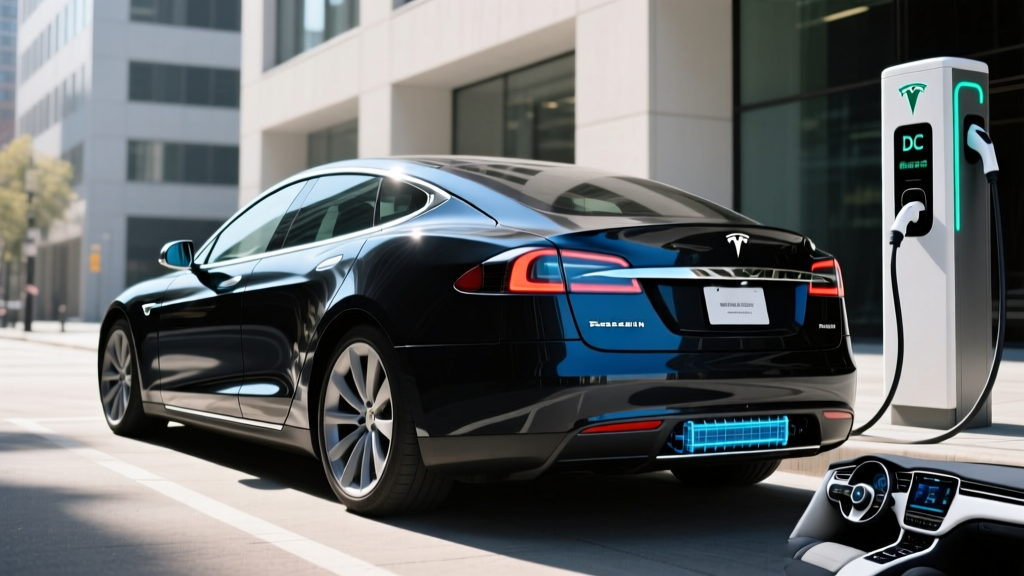
The Model S 60 charges via Tesla's proprietary connector (pre-NACS standardization). It retains full access to the Tesla Supercharger network — a major advantage over discontinued EVs from other brands that rely on aging CCS or CHAdeMO infrastructure.
On a V2 Supercharger (150 kW cabinet), the Model S 60 peaks around 120 kW, though it sustains that rate only briefly. The charge curve tapers progressively: expect roughly 30 minutes from 10% to 80%, with the final 20% taking another 25–30 minutes. On newer V3 (250 kW) and V4 Supercharger stalls, the Model S 60 gains no meaningful speed advantage — its battery management system and cell configuration cap the draw well below what those stalls can deliver.
For home charging, the standard single onboard charger handles 11.5 kW on a 60-amp circuit (48 amps continuous). That's roughly 34 miles of range per hour — sufficient for overnight replenishment of a full day's driving. The optional Dual Charger doubles this to 20 kW, but requires an 80-amp dedicated circuit and a High Power Wall Connector, which Tesla no longer sells new. Most used Model S 60 examples ship with the single charger.
Connector note for 2026 buyers: The Model S uses Tesla's proprietary connector. With the industry's shift to NACS, Tesla Superchargers remain compatible, but if you need to use third-party CCS networks (Electrify America, EVgo), you'll need a Tesla-to-CCS adapter — available from Tesla for ~$250. Adapters support DC fast charging up to the car's maximum rate.
Performance and Driving Dynamics
The single-motor RWD Model S 60 delivers 315 horsepower and a 5.5-second 0–60 mph time. That's brisk by any sedan standard, though it sits at the bottom of the Model S performance hierarchy — the dual-motor 75D, 100D, and P100D variants from the same era are substantially quicker.
Where the Model S 60 shines is ride quality and refinement. The air suspension (standard on most trims) provides a compliant ride with adjustable ride height. The cabin is quiet at highway speeds, and the low center of gravity from the floor-mounted battery pack gives confident handling for a large sedan. Regenerative braking is strong enough for near one-pedal driving in most conditions, though it lacks the adjustable regen settings found in newer EVs.
The electric powertrain is paired with a single-speed reduction gear — no multi-speed transmission, no shift shock. Torque delivery is instant from a stop, making the Model S 60 feel quicker in city driving than its 5.5-second 0–60 time suggests.
Interior, Tech, and Cargo Space
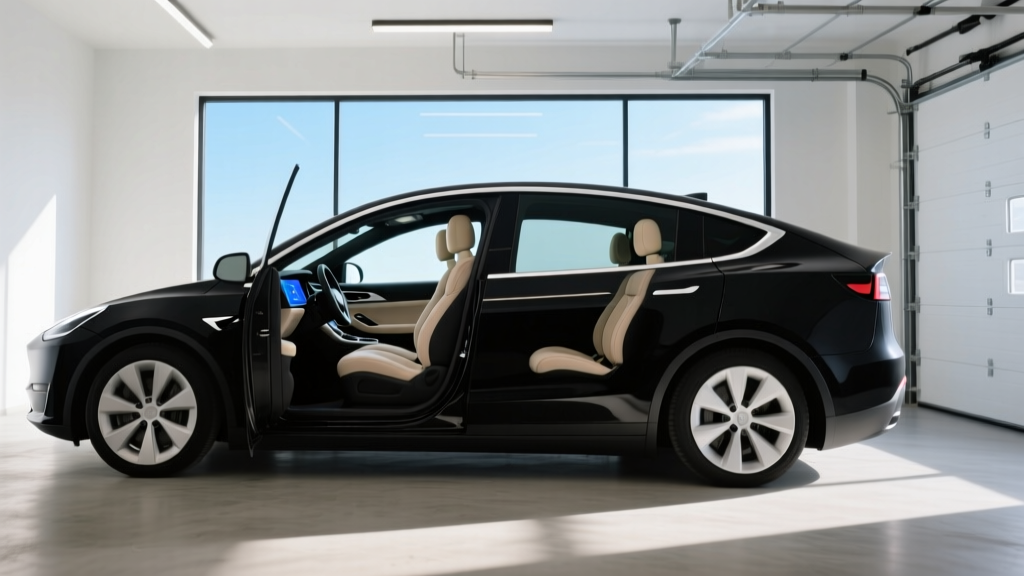
The 2016–2017 Model S interior centers on a 17-inch portrait touchscreen that controls virtually every vehicle function — climate, media, navigation, vehicle settings, and even glovebox release. The instrument cluster is a 12.3-inch digital display behind the steering wheel. The infotainment system received incremental over-the-air updates through the years, though 2016–2017 hardware (MCU1 — the original Nvidia Tegra-based Media Control Unit) is noticeably slower than the MCU2 (Intel Atom) and current AMD Ryzen-based systems. Sluggish map rendering and occasional UI lag are common complaints.
MCU upgrade path: Tesla offered an MCU1-to-MCU2 retrofit for approximately $1,500–$2,000, which significantly improves responsiveness and enables newer software features. Some used examples will already have this upgrade; verify before purchase.
Driver assistance comes via Tesla's Autopilot hardware. Most 2016–2017 Model S vehicles shipped with Hardware 2.0 (HW2) or Hardware 2.5 (HW2.5), which supports basic Autopilot (adaptive cruise control, lane centering) but has limited capability for newer FSD (Supervised) features. Tesla has progressively restricted FSD functionality on older hardware, so do not expect the latest FSD capabilities on a Model S 60.
Cargo space remains a Model S strong point: 26.3 cubic feet behind the rear seats and an additional 5.3 cubic feet in the front trunk (frunk). The rear seats fold in a 60/40 split for longer items. Rear legroom measures 35.4 inches — adequate for adults on shorter trips but tight compared to the BMW 5 Series or Mercedes E-Class of the same era.
Pricing, Used Market Value, and Tax Credit Eligibility
| Item | Estimated Cost |
|---|---|
| Original MSRP (2016–2017) | $66,000–$71,000 |
| Used market price (2026) | $18,000–$28,000 depending on mileage, condition, and battery health |
| Federal Used EV Tax Credit (§25E) | Up to $4,000 (30% of sale price, capped) |
| Price after maximum credit | As low as ~$14,000–$24,000 |
Federal tax credit details: The Model S 60 does not qualify for the new-vehicle §30D credit (the car is discontinued, and its original MSRP exceeded the $55,000 sedan cap regardless). However, it may qualify for the §25E Previously-Owned Clean Vehicle Credit, which provides up to $4,000 or 30% of the sale price (whichever is less) for used EVs purchased from a licensed dealer for $25,000 or less. Income caps apply: modified adjusted gross income must not exceed $75,000 (single), $112,500 (head of household), or $150,000 (joint). The vehicle must be at least two model years old, and the credit can only be claimed once per vehicle VIN. Consult the IRS §25E guidelines and a tax professional to confirm your eligibility.
The 75 kWh unlock economics: If you find a software-locked Model S 60 at $20,000, spending $2,000–$4,500 on the 75 kWh unlock (if Tesla still offers it for your VIN) could add 35–40 miles of range — effectively bringing the car close to Model S 75 territory at a fraction of the 75's used-market premium.
Battery Health, Degradation, and Warranty Status
The Model S 60's NMC battery pack carries an original warranty of 8 years with unlimited miles — a warranty that has now expired or is expiring for all 2016–2017 examples. This is the single biggest risk factor for used buyers.
NMC batteries from this era typically show 10–18% capacity loss after 8–10 years and 80,000–130,000 miles. Units that were frequently charged to 100% or exposed to extreme heat (Arizona, Texas) may show greater degradation. Tesla's onboard battery management system includes a top and bottom buffer, which protects the cells from the most damaging charge extremes, but calendar aging is unavoidable.
Replacement cost: A refurbished Model S battery pack from Tesla's service network typically costs $12,000–$16,000 installed as of 2025–2026. Third-party EV repair shops may offer pack-level module replacement for $5,000–$9,000, replacing only the degraded modules rather than the full pack. Before purchasing, request a battery health report — accessible through the car's service menu or via third-party tools like TeslaFi or Scan My Tesla — to check the current usable capacity versus original.
Pros and Cons: The Honest Assessment
Pros
- Low entry price into the Tesla Supercharger network ecosystem
- Air suspension and premium ride quality for the price
- Spacious cargo area (26.3 cu ft + 5.3 cu ft frunk)
- Software-locked 75 kWh battery in many units = upgradeable range
- Strong regenerative braking for one-pedal driving
- Eligible for up to $4,000 federal used-EV credit
- OTA updates still supported for core vehicle functions
Cons
- Real-world range of 150–185 miles is limited for road trips
- Battery warranty has expired — replacement is a $12k–$16k risk
- MCU1 hardware is slow; map and UI lag are common
- Older Autopilot hardware (HW2/HW2.5) limits FSD capability
- No heat pump — cold-weather range loss is significant
- DC fast charge capped at ~120 kW; slow vs. modern EVs
- Build quality inconsistencies from early Fremont production
Who Should Buy the Tesla Model S 60 in 2026?
The Model S 60 fits a specific buyer profile: someone who wants Tesla's Supercharger network access, appreciates premium sedan comfort, and has a commute under 70 miles round-trip with reliable home charging. It works as a comfortable daily driver for suburban commuters and can handle occasional 200-mile road trips with one Supercharger stop.
It does not suit high-mileage road trippers, buyers in extreme cold climates without garage parking, or anyone who cannot absorb a potential $12,000+ battery replacement within the first few years of ownership. If your daily drive exceeds 100 miles or you lack home charging, look at a newer, longer-range EV or a PHEV instead.
Key competitors in the used market:
- Tesla Model 3 (2018–2020, Standard Range Plus): Similar price ($18k–$26k), more modern hardware, better efficiency, but smaller and less premium.
- Chevrolet Bolt EV (2017–2022): Lower price ($12k–$20k), comparable range, but far slower charging and no Supercharger access.
- BMW i3 (2017–2021, 94 Ah / 120 Ah): Quirky, city-focused, much less range but extremely efficient.
Frequently Asked Questions
What is the real-world range of a used Tesla Model S 60 in 2026?
Expect 150–185 miles in mixed driving, depending on battery degradation. Highway driving at 70 mph drops this to roughly 140–170 miles. Cold weather (below freezing) can reduce range to 120–150 miles. Units with the 75 kWh software unlock gain approximately 35–40 additional miles.
How fast does the Model S 60 charge at home and on DC fast chargers?
On a Level 2 home charger (240V, 48A), the Model S 60 charges at 11.5 kW, adding about 34 miles of range per hour. A full charge takes roughly 5.5 hours. On a Tesla V2 Supercharger, it peaks around 120 kW and charges from 10–80% in approximately 30 minutes. It cannot take advantage of V3/V4 Supercharger speeds above 120 kW.
Does the Tesla Model S 60 qualify for any federal EV tax credit?
Not the new-vehicle §30D credit. However, it may qualify for the §25E Used Clean Vehicle Credit: up to $4,000 or 30% of the sale price (whichever is less), provided the purchase price is $25,000 or less, the buyer meets income caps ($75k single / $150k joint), and the sale is through a licensed dealer. See IRS §25E guidelines.
Is the Tesla Model S 60 worth buying vs. a used Model 3?
It depends on priorities. The Model S 60 offers more interior space, air suspension, and a premium sedan experience. The Model 3 (2018+) offers newer hardware (MCU2 or AMD Ryzen, HW3 for FSD), better efficiency, and often comparable or better range. If tech modernity and future software support matter, the Model 3 wins. If ride comfort and cargo space matter, the Model S 60 has the edge.
What should I check before buying a used Model S 60?
Prioritize these: (1) Battery health — check usable kWh vs. original via the service menu or TeslaFi; (2) whether the 75 kWh software unlock has been applied; (3) MCU version — MCU1 is slow, MCU2 is preferable; (4) Autopilot hardware version (HW2 vs. HW2.5); (5) service history for air suspension, drive unit, and touchscreen replacements; (6) title status (clean vs. salvage, which can affect Supercharger eligibility).
Can I use non-Tesla chargers with the Model S 60?
Yes, with a Tesla-to-J1772 adapter for Level 2 public charging (widely available, ~$50–$100) and a Tesla-to-CCS adapter for DC fast charging on Electrify America, EVgo, and other CCS networks (~$250 from Tesla). The Model S 60 cannot use CHAdeMO chargers without an expensive and rare adapter.