The Quick Verdict on the Tesla Model S
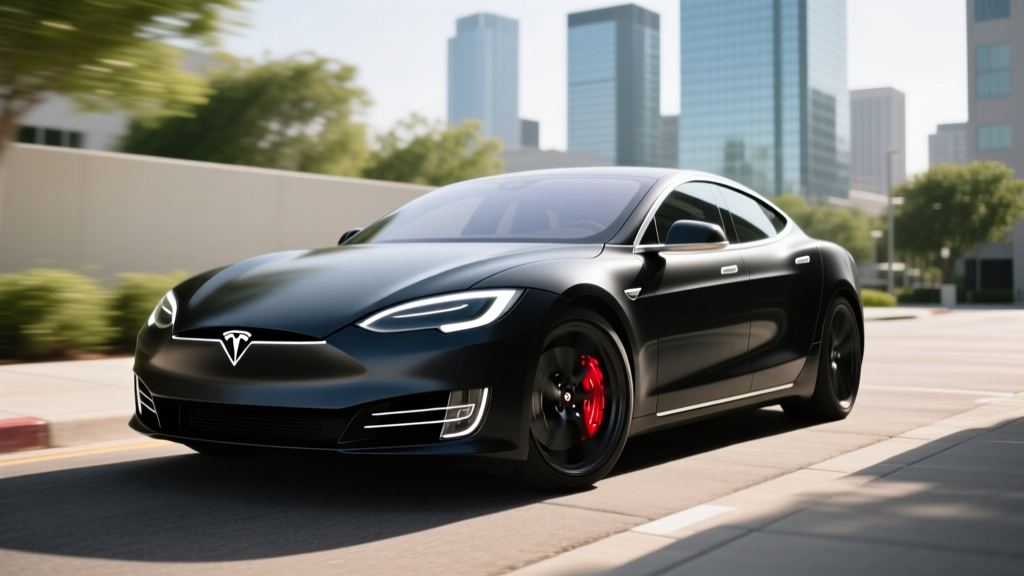
The Tesla Model S remains the benchmark that every luxury electric sedan is measured against — not because it's the newest, but because its powertrain efficiency, Supercharger network access, and raw acceleration are still hard to match. For 2026, the Long Range variant delivers an EPA-estimated 402 miles of range and a 3.1-second 0-60 mph sprint, while the Plaid drops that 0-60 to a staggering 1.99 seconds with 1,020 horsepower. But specs on paper don't tell the full story. This review breaks down what you'll actually experience on the highway, at the charger, and in your wallet.
If you've been searching for Tesla Model S 60 0 60 times, you're likely comparing the Model S against rivals like the Lucid Air, Porsche Taycan, or BMW i7. Below, we give you exact numbers — not marketing superlatives — so you can make an informed decision.
Full Specifications at a Glance
| Specification | Long Range | Plaid |
|---|---|---|
| EPA Range | 402 mi | 359 mi |
| Battery (usable) | ~100 kWh (NMC) | ~100 kWh (NMC) |
| Drivetrain | Dual-Motor AWD | Tri-Motor AWD |
| Horsepower | 670 hp | 1,020 hp |
| 0-60 mph | 3.1 sec | 1.99 sec |
| Top Speed | 155 mph | 200 mph |
| Max DC Fast Charge | 250 kW | 250 kW |
| 10-80% DC Time | ~27 min | ~30 min |
| Level 2 Rate | 11.5 kW (~44 mi/hr) | 11.5 kW (~44 mi/hr) |
| MPGe (combined) | 120 MPGe | 116 MPGe |
| Base MSRP | $74,990 | $89,990 |
| Battery Warranty | 8 yr / 150,000 mi | 8 yr / 150,000 mi |
Sources: fueleconomy.gov, Tesla.com. Specs reflect 2025-2026 model year data. Verify current pricing at time of purchase.
Real-World Range: What the EPA Sticker Doesn't Tell You
Long Range: EPA 402 mi → Expect ~320-350 mi highway at 75 mph; ~280-310 mi in sub-30°F cold.
Plaid: EPA 359 mi → Expect ~280-310 mi highway; ~240-270 mi in freezing temps.
The Model S Long Range's 402-mile EPA figure is genuinely class-leading among large luxury sedans. Tesla achieves this through a combination of a ~100 kWh (usable) nickel-manganese-cobalt (NMC) battery pack and industry-leading drivetrain efficiency — the Model S converts roughly 28 kWh per 100 miles in mixed driving, which translates to 120 MPGe combined per EPA data.
However, real-world highway driving at sustained speeds of 75+ mph increases aerodynamic drag significantly. In independent testing, the Model S Long Range typically delivers 320-350 miles at highway speeds in moderate temperatures (60-80°F). In cold weather — below 30°F — the lithium-ion NMC chemistry becomes less efficient, and cabin heating draws substantial energy even with the heat pump. Expect a 20-30% range reduction in deep winter conditions.
The Plaid's tri-motor setup adds weight and rolling resistance, dropping the EPA figure to 359 miles. Its real-world highway range lands around 280-310 miles in good weather. For road-trippers, this still means comfortable 250-mile legs between Supercharger stops with a safety buffer.
Charging Speed: DC Fast, Level 2, and the Supercharger Advantage
| Level | Power / Rate | Miles Added Per Hour | Notes |
|---|---|---|---|
| Level 1 (120V) | ~1.4 kW | ~5 mi/hr | Emergency/trickle only |
| Level 2 (240V, 48A) | 11.5 kW | ~44 mi/hr | Full overnight charge in ~9 hrs |
| DC Fast (V3 Supercharger) | 250 kW peak | ~200 mi in 15 min | 10-80% in ~27 min (LR) |
| DC Fast (CCS adapter) | Up to 250 kW | Varies by station | Non-Tesla networks supported |
The Model S peaks at 250 kW on Tesla V3 Superchargers. That's not the fastest in the luxury segment — the Lucid Air accepts over 300 kW and the Porsche Taycan can pull 270+ kW on 800V architecture — but Tesla's advantage is network density and reliability. With over 50,000 Superchargers globally, long-distance travel in a Model S remains the least stressful EV road-trip experience available.
Understanding the charge curve is critical. The Model S hits peak 250 kW only at low state-of-charge (SoC), typically below 30%. As the battery fills, the rate tapers: expect ~150 kW around 50% SoC, dropping to ~60 kW by 80%. This is why Tesla and most manufacturers quote 10-80% times rather than 0-100%. Pushing past 80% at a DC fast charger is painfully slow — plan to unplug at 80% on road trips for optimal time efficiency.
At home, the onboard 11.5 kW charger means a 48-amp Level 2 circuit (requiring a 60-amp breaker) will add roughly 44 miles of range per hour. A full charge from near-empty takes about 9 hours — easily achievable overnight. If your home electrical panel supports it, this is the most convenient and cost-effective charging method. Tesla's Wall Connector costs around $475, with professional installation typically running $500-$1,500 depending on your panel's capacity and the run length from breaker to outlet.
0-60 Performance: Why the Model S Still Dominates
This is where the Model S earns its reputation. The Long Range's dual-motor all-wheel-drive system produces 670 horsepower and delivers a 3.1-second 0-60 mph time. That's quicker than a Porsche 911 Carrera and most V8-powered sports sedans — in a five-passenger luxury car with 28 cubic feet of cargo space.
The Plaid is in a different universe entirely. Its tri-motor configuration — one front, two rear — generates 1,020 horsepower and a claimed 1.99-second 0-60 mph. To put that in perspective, that rivals hypercars costing ten times the price. The Plaid uses a carbon-sleeved rotor design that allows the motors to spin at over 20,000 RPM without disintegrating from centrifugal force.
In real-world drag-strip testing, the Plaid consistently runs 2.1-2.3 second 0-60 times depending on surface conditions, tire temperature, and battery SoC. Tesla's 1.99-second claim requires a prepped surface, preconditioned battery, and drag-strip mode engaged. Even at 2.3 seconds, it's absurdly quick.
Both trims feature adaptive air suspension that lowers the car at highway speeds for reduced drag, and both offer strong regenerative braking — though Tesla removed the adjustable regen setting years ago, leaving only a single aggressive regen profile that approximates one-pedal driving.
Pricing, Tax Credits, and Total Cost
| Item | Long Range | Plaid |
|---|---|---|
| Base MSRP | $74,990 | $89,990 |
| Federal Tax Credit (§30D) | $0 (MSRP cap exceeded) | $0 (MSRP cap exceeded) |
| Typical As-Tested Price | ~$78,000-$82,000 | ~$95,000-$105,000 |
| Destination Fee | $1,390 | $1,390 |
The Tesla Model S does not qualify for the $7,500 federal EV tax credit under IRS §30D. The credit has an MSRP cap of $55,000 for sedans, and the Model S starts at $74,990 — well above the threshold. Additionally, buyers must meet income caps ($150,000 single / $300,000 joint) and the vehicle must meet battery critical-mineral and component sourcing requirements. Per IRS guidelines, always verify current eligibility with a tax professional before purchasing.
Without the federal credit, the Model S's value proposition rests on its performance, range, and Supercharger access rather than government incentives. Some states offer additional rebates or HOV-lane access that may partially offset the cost — check your state's energy office for current programs.
For total cost of ownership, the Model S benefits from zero oil changes, minimal brake wear (regenerative braking preserves pads), and electricity costs roughly one-third to one-half of equivalent gasoline. Insurance, however, is a real factor: the Model S typically carries premiums 30-50% higher than comparable gas sedans due to repair costs and performance classification. Get quotes before committing.
Interior, Cargo, and Technology
The Model S interior has been updated with a 17-inch center touchscreen (now in landscape orientation), a 12.3-inch driver instrument cluster, and a rear-seat 8-inch display. Build quality has improved markedly over pre-2021 models, with ventilated front seats, a panoramic glass roof, and a yoke-style steering wheel (a conventional round wheel is available at no extra charge).
Passenger and cargo dimensions:
- Front legroom: 42.7 inches
- Rear legroom: 35.4 inches
- Rear cargo (behind second row): 28 cu ft
- Front trunk (frunk): 3.1 cu ft
- Total cargo: 31.1 cu ft (best in class for luxury sedans)
The hatchback design is a major practicality advantage over traditional trunk sedans like the BMW i7 or Mercedes EQS. Folding the rear seats opens up substantially more space — enough for a bicycle or large furniture pieces.
Tech highlights:
- Tesla's infotainment system remains best-in-class for responsiveness, with Netflix/YouTube streaming while parked, a built-in browser, and over-the-air updates that continuously add features
- 22-speaker, 960-watt audio system with active noise cancellation
- Autopilot standard (SAE Level 2 driver-assist): includes adaptive cruise, lane centering, and automatic emergency braking
- Full Self-Driving (Supervised) available as a $8,000 add-on or $99/month subscription — still requires active driver supervision at all times
- Phone-as-key, sentry mode dashcam recording, and dog mode climate control
Tesla Autopilot and FSD (Supervised) are SAE Level 2 driver-assistance systems. They do not make the Model S self-driving. The driver must remain fully attentive, hands on or near the wheel, and ready to take over instantly. Only Level 4 services like Waymo operate without a human driver. Misuse of Level 2 systems has led to serious accidents — never treat them as autonomous.
How It Stacks Up Against Key Competitors
| Spec | Tesla Model S LR | Lucid Air Grand Touring | Porsche Taycan Turbo S | BMW i7 xDrive50 |
|---|---|---|---|---|
| EPA Range | 402 mi | 516 mi | 283 mi | 318 mi |
| 0-60 mph | 3.1 sec | 3.0 sec | 2.4 sec | 4.5 sec |
| Max DC Charge | 250 kW | 300+ kW | 270 kW | 195 kW |
| Starting MSRP | $74,990 | $125,600 | $190,500 | $124,200 |
| Supercharger Access | Native | Via adapter | Via adapter | Via adapter |
The Lucid Air Grand Touring beats the Model S on range (516 mi EPA) and DC charge speed, but costs $50,000 more. The Porsche Taycan Turbo S offers superior handling dynamics and a faster 0-60, but sacrifices range and costs over twice as much. The BMW i7 prioritizes rear-seat luxury and ride comfort but can't match the Model S on performance or range.
The Model S occupies a unique middle ground: supercar acceleration, 400-mile range, practical hatchback utility, and the best public charging network — all at a price that undercuts most rivals by a significant margin.
Pros and Cons
- Class-leading 402-mi EPA range (Long Range)
- Supercar 0-60: 3.1s LR / 1.99s Plaid
- Native Supercharger network — best road-trip EV
- Over-the-air updates add features post-purchase
- Hatchback cargo practicality (28 cu ft + frunk)
- 8-year / 150,000-mile battery warranty
- No federal tax credit (exceeds $55K sedan MSRP cap)
- 250 kW peak DC charge — slower than Lucid/Porsche
- High insurance premiums vs. gas sedans
- Yoke steering polarizing; no physical stalks
- FSD (Supervised) costs extra, still requires full attention
- Platform dates to 2012; exterior design aging
Who Should Buy the Tesla Model S?
- Choose the Model S Long Range if: You want the best combination of range, performance, and daily usability in a luxury sedan, and you road-trip frequently where Supercharger access matters.
- Choose the Model S Plaid if: Acceleration is a priority, you want the fastest production sedan available, and you accept the 43-mile range penalty for tri-motor performance.
- Look elsewhere if: You need the absolute longest range (Lucid Air), the most luxurious rear seat (BMW i7, Mercedes EQS), or you require the federal tax credit (consider the Model 3, which falls under the MSRP cap).
The Model S is best suited for performance-oriented buyers who also need daily-driver practicality. It's an excellent commuter car (the 402-mile range means charging once or twice a week for most drivers), a capable road-tripper thanks to Supercharger density, and surprisingly practical with its hatchback cargo area. Families will appreciate the spacious rear seat and available rear entertainment screen.
It's less ideal for buyers who prioritize traditional luxury ambiance (the BMW i7 and Mercedes EQS offer more opulent interiors), those who need the federal tax credit to justify the purchase, or anyone who prefers physical buttons and conventional steering wheels.
Frequently Asked Questions
What is the real-world range of the Tesla Model S?
The Long Range delivers an EPA-estimated 402 miles, but expect 320-350 miles at highway speeds in moderate weather and 280-310 miles in freezing temperatures. The Plaid achieves 359 miles EPA, with real-world highway range around 280-310 miles.
How fast does the Tesla Model S charge?
On a V3 Supercharger, the Model S peaks at 250 kW and charges from 10-80% in approximately 27 minutes (Long Range) or 30 minutes (Plaid). At home on a 48-amp Level 2 charger, it adds about 44 miles of range per hour, fully charging overnight in roughly 9 hours.
Does the Tesla Model S qualify for the federal EV tax credit?
No. Under IRS §30D rules, the federal tax credit has an MSRP cap of $55,000 for sedans. The Model S starts at $74,990, making it ineligible regardless of buyer income or battery sourcing. Check IRS.gov for current rules and consult a tax professional.
Is the Model S worth it vs. the Lucid Air or Porsche Taycan?
The Model S offers the best value proposition: 402-mile range, 3.1-second 0-60, and native Supercharger access at $74,990. The Lucid Air Grand Touring has more range (516 mi) but costs $50,000 more. The Taycan Turbo S has sharper handling but half the range and over twice the price. For most buyers, the Model S is the rational choice.
What is the battery warranty on the Model S?
Tesla covers the Model S battery and drive unit for 8 years or 150,000 miles, whichever comes first, with a minimum 70% capacity retention guarantee. If the battery degrades below 70% within the warranty period, Tesla will repair or replace it at no cost.
What's the difference between Autopilot and FSD (Supervised)?
Autopilot (standard) provides adaptive cruise control and lane centering — an SAE Level 2 system. Full Self-Driving (Supervised), available for $8,000 or $99/month, adds automated lane changes, traffic-light recognition, and city-street navigation. Both require full driver attention at all times and are not self-driving systems.