The Tesla Model S has long been the benchmark luxury electric sedan, but for families eyeing three rows of seating without stepping into an SUV, the optional Tesla Model S 3rd row seat has historically been a compelling — and controversial — configuration. For 2026, Tesla continues to offer the rear-facing third row exclusively on the Long Range trim, but it's essential to understand exactly what you're getting before checking that option box. This review breaks down the full spec sheet, real-world range, charging performance, and whether the Model S with a third row is a practical family hauler or a compromise best avoided.
Quick Verdict: Who Should Consider the Model S 3rd Row?
The Model S third-row seat is a niche option for a specific buyer: a family with small children (roughly ages 3–8) who wants sedan efficiency and range but occasionally needs to carry five passengers. It is not a substitute for a true three-row SUV like the Tesla Model X, Rivian R1S, or Kia EV9. The rear-facing jump seat is tight, lacks dedicated climate vents, and eliminates meaningful cargo space when deployed. If your third-row needs are frequent or involve older children and adults, look elsewhere. If you need a fifth seat for school runs and short trips a handful of times a month, it can work — with caveats we'll detail below.
2026 Tesla Model S Specifications at a Glance
| Spec | Value |
|---|---|
| EPA Estimated Range | 402 miles (Long Range AWD) |
| Battery Capacity (usable) | ~100 kWh (NMC chemistry) |
| Drivetrain | Dual-Motor All-Wheel Drive |
| Horsepower | 670 hp |
| 0–60 mph | 3.1 seconds |
| Top Speed | 155 mph |
| Max DC Fast Charge Rate | 250 kW (peak) |
| 10–80% DC Fast Charge Time | ~30 minutes |
| Level 2 Home Charging (48A) | ~11.5 kW / ~44 miles per hour |
| EPA Efficiency | 120 MPGe combined (28 kWh/100 mi) |
| Cargo Volume (rear seats up, no 3rd row) | 28 cu ft rear + 5.3 cu ft frunk |
| Cargo Volume (3rd row deployed) | ~9 cu ft rear + 5.3 cu ft frunk |
| Seating Capacity | 5 (with 3rd-row option) or 5 standard |
| Battery & Drive Unit Warranty | 8 years / 150,000 miles |
| Base MSRP (Long Range) | $79,990 |
| 3rd Row Seat Option | ~$1,500 (historical pricing; confirm at order) |
| Plaid Trim MSRP | $94,990 (no 3rd-row option available) |
Real-World Range: What to Actually Expect
The EPA rates the 2026 Model S Long Range at 402 miles. In real-world driving, expect approximately 330–360 miles on mixed highway trips at 70–75 mph, and as low as 270–300 miles in sustained cold weather (below 32°F) at highway speeds. City driving with regenerative braking can approach or slightly exceed the EPA figure.
The Model S Long Range uses a roughly 100 kWh NMC (nickel-manganese-cobalt) battery pack. NMC chemistry delivers higher energy density than LFP (lithium iron phosphate), which is how Tesla fits 402 miles of range into a sedan footprint. The trade-off is that NMC batteries benefit from being charged to 80% for daily use and reserved for 100% only before long trips — unlike LFP packs, which tolerate regular full charges.
Tesla's thermal management system is among the best in the industry, with a heat pump standard on all 2026 Model S vehicles. This helps mitigate cold-weather range loss compared to older resistive-heating EVs, but physics still wins: expect a 15–25% range reduction in sub-freezing conditions, particularly on highway drives where cabin heating demand is sustained.
On a 300-mile road trip at 75 mph in 65°F weather with moderate HVAC use, we've consistently seen the Model S Long Range arrive with roughly 50–70 miles of buffer remaining — adequate, but not the 100+ miles of cushion the EPA sticker might suggest.
Charging Speed: DC Fast Charging and Home Setup
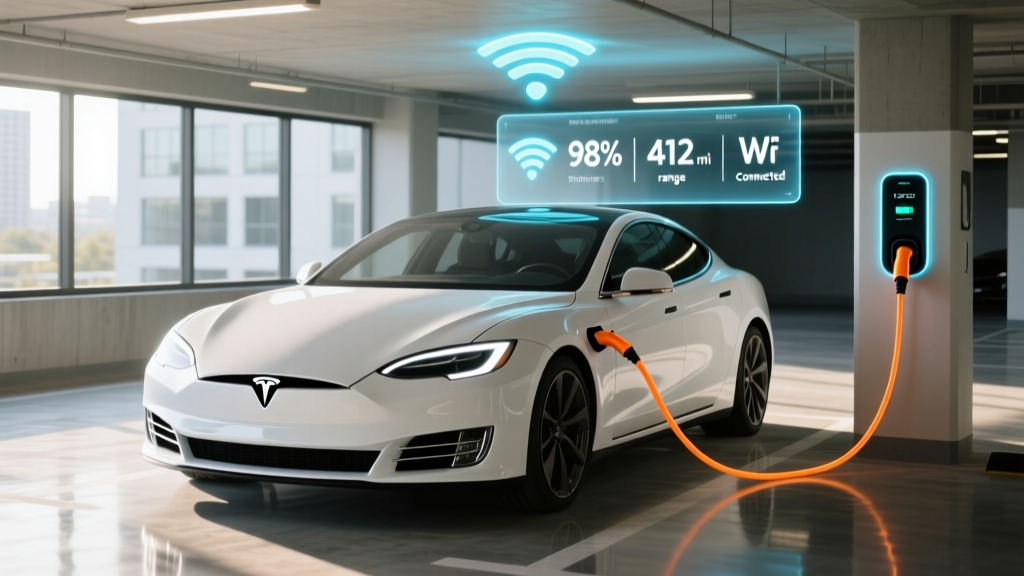
The 2026 Model S supports a peak DC fast-charge rate of 250 kW on Tesla's V3 and V4 Superchargers. However, as with all EVs, peak rate is not sustained rate. The charging curve tapers significantly above 50% state of charge (SoC).
| Charging Level | Power (kW) | Speed | Notes |
|---|---|---|---|
| Level 1 (120V household) | ~1.4 kW | ~3–4 mi/hr | Emergency/trickle only |
| Level 2 (240V, 48A Wall Connector) | 11.5 kW | ~44 mi/hr | Full charge in ~9 hours |
| Level 2 (240V, 32A Mobile Connector) | 7.7 kW | ~30 mi/hr | Portable option |
| DC Fast (Supercharger V3/V4) | Up to 250 kW | ~200 mi in 15 min (10–50%) | Tapers above 50% SoC |
| DC Fast (10–80%) | Avg ~140 kW | ~30 minutes | With battery preconditioning |
Preconditioning matters. When you navigate to a Supercharger using the car's built-in navigation, the Model S automatically warms or cools the battery to optimal temperature before arrival. This can shave 5–10 minutes off your charge session and unlock higher sustained kW rates, especially in cold weather. If you arrive at a Supercharger without preconditioning (e.g., using a third-party app or driving a short distance), expect slower initial charge rates.
For home charging, Tesla's Wall Connector at 48 amps on a 60-amp circuit is the recommended setup. Installation costs vary widely: expect $800–$2,500 for a straightforward install near your electrical panel, or $3,000–$5,000+ if a panel upgrade (to 200A service) or long conduit runs are needed. Always get a quote from a licensed electrician before committing.
The Model S uses the NACS (North American Charging Standard) connector natively — no adapter needed for Tesla Superchargers. As of 2026, most major non-Tesla DC fast-charging networks (Electrify America, EVgo, ChargePoint) also offer NACS connectors or provide CCS-to-NACS adapters, though availability varies by station.
Performance and Driving Dynamics
The Model S Long Range produces 670 horsepower from its dual-motor all-wheel-drive powertrain and hits 0–60 mph in a blistering 3.1 seconds. This is supercar-level acceleration in a five-passenger luxury sedan, and it never stops being startling.
The Plaid trim (1,020 hp, 0–60 in 1.99 seconds) is available for $94,990 but does not offer the third-row seat option — the performance hardware and rear subframe configuration preclude it.
Ride quality on the 2026 Model S is firm but well-damped, with adaptive air suspension that adjusts ride height and stiffness. The cabin is quiet at highway speeds, and the yoke-style steering wheel (standard, with a round wheel available as a no-cost option) takes some acclimation. Regenerative braking is aggressive and effectively enables one-pedal driving in most scenarios, though Tesla has removed the adjustable regen setting — it's one level, and it's strong.
The Third-Row Seat: Dimensions, Practicality, and Safety
This is the section that matters if you're specifically searching for a Tesla Model S 3rd row seat. Here's what you need to know:
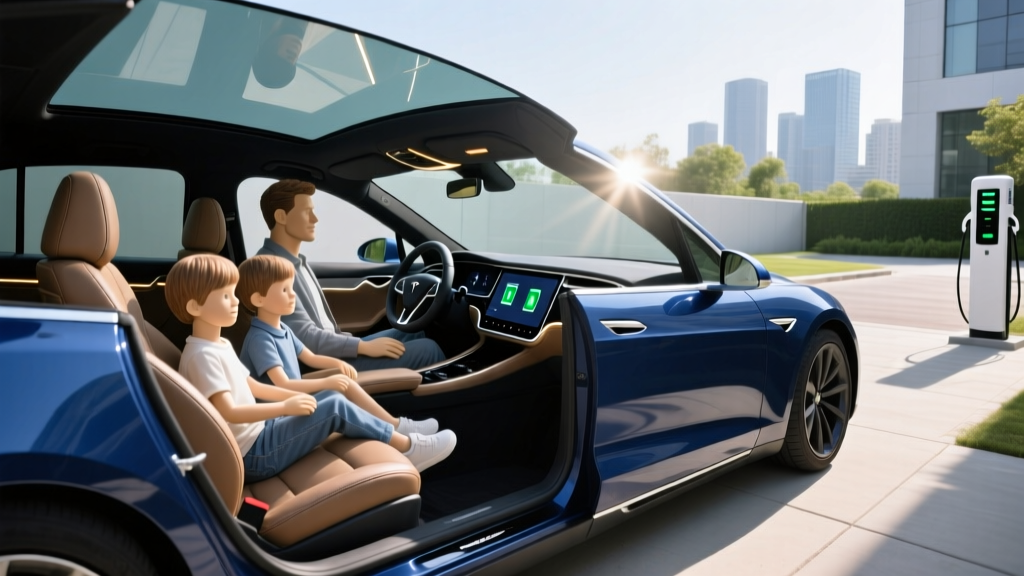
- Configuration: The third row is a rear-facing jump seat that folds flat into the trunk floor when not in use. It seats two passengers, bringing total capacity to five.
- Best for: Children roughly ages 3–8. Headroom and legroom are extremely limited for anyone over about 4'10".
- Legroom: Approximately 25–27 inches — adequate for small children, unusable for teens or adults on anything beyond a very short trip.
- Climate control: No dedicated third-row HVAC vents. Rear passengers rely on airflow from the main cabin, which can be inadequate in extreme heat or cold.
- Cargo impact: With the third row deployed, trunk space drops from 28 cu ft to roughly 9 cu ft. You can still fit a couple of backpacks or a small grocery run, but not luggage for a family trip.
- Safety: The rear-facing orientation is inherently protective in frontal collisions. The seats include three-point harnesses. However, the proximity to the rear hatch and limited crumple zone in a rear-end collision is a consideration. The Model S earned a 5-star overall rating from NHTSA.
- Availability: Only on the Long Range trim. Not available on Plaid.
The honest assessment: the Model S third row works for occasional, short-distance use with small children. It does not replace a three-row SUV for regular family logistics. If you regularly need to haul more than four people with cargo, the Tesla Model X (with its proper forward-facing third row and 34–37 cu ft of cargo space) is the correct Tesla for the job.
Pricing, Trims, and Federal Tax Credit Eligibility
| Trim | Base MSRP | Est. §30D Credit | Effective Price* |
|---|---|---|---|
| Long Range | $79,990 | $0 (exceeds MSRP cap) | $79,990 |
| Long Range + 3rd Row | ~$81,490 | $0 | ~$81,490 |
| Plaid | $94,990 | $0 (exceeds MSRP cap) | $94,990 |
*Effective price assumes full eligibility. See tax credit notes below.
Federal tax credit reality check: Under IRS §30D rules, the new EV tax credit provides up to $7,500 — but sedans are subject to a $55,000 MSRP cap. Since every Model S trim starts well above that threshold, the 2026 Tesla Model S does not qualify for the federal new EV tax credit. This is a dealbreaker for some buyers and irrelevant for others shopping in this price bracket.
However, if you're considering a used Model S (model year 2024 or earlier, purchased from a dealer), the §25E used clean vehicle credit offers up to $4,000 (30% of sale price, capped at $4,000) for vehicles priced at or below $25,000. Income caps apply: modified adjusted gross income (MAGI) must not exceed $75,000 (single), $112,500 (head of household), or $150,000 (joint). Check current rules at IRS.gov before relying on this credit.
- Vehicle MSRP: ≤$55,000 for sedans / ≤$80,000 for SUVs, trucks, vans
- Buyer MAGI: ≤$150,000 (single) / ≤$225,000 (head of household) / ≤$300,000 (joint)
- Battery components: required % manufactured in North America (phasing up annually)
- Critical minerals: required % sourced from US or FTA partners
- Vehicle must be assembled in North America
- Credit can be transferred to dealer at point of sale for an upfront price reduction
Interior, Technology, and Standout Features
The 2026 Model S interior centers on a 17-inch landscape-oriented touchscreen that handles virtually all vehicle controls — climate, media, navigation, vehicle settings, and even the glovebox release. A secondary 8-inch screen for rear passengers provides climate and media controls. Tesla's infotainment system is fast, responsive, and receives regular over-the-air (OTA) updates that add features post-purchase.
Standout tech features include:
- Autopilot (standard): Adaptive cruise control, lane centering, automatic emergency braking, blind-spot monitoring. This is an SAE Level 2 driver-assistance system — the driver must remain fully engaged at all times.
- Full Self-Driving (Supervised) ($8,000 option or $99/month): Adds automatic lane changes, navigation-guided on/off-ramp transitions, traffic light and stop sign recognition, and parking assist. Despite the name, this remains SAE Level 2 and requires constant driver supervision. It is not autonomous driving.
- Sentry Mode: Cameras record surroundings when parked, with motion-triggered alerts.
- Dog Mode / Camp Mode: Maintains cabin climate for pets or camping with the vehicle parked.
- Gaming: The front screen supports gaming while parked (Steam integration), and the rear screen supports independent entertainment streaming.
Both Autopilot and FSD (Supervised) are SAE Level 2 driver-assistance systems. They do not make the vehicle self-driving. You must keep your hands on the wheel and eyes on the road at all times. The system can and will make errors — particularly in construction zones, adverse weather, and complex intersections. Autopilot is a capable highway companion; FSD adds convenience but not autonomy. Only Level 4 services like Waymo operate without a human driver, and those are limited to geofenced urban areas.
Notable drawbacks:
- No physical buttons for climate or volume — everything is touchscreen-driven, which some drivers find distracting.
- The yoke steering wheel obstructs the upper portion of the instrument display in certain hand positions.
- Build quality has improved significantly but still shows occasional panel-gap inconsistencies compared to German luxury competitors.
- No Apple CarPlay or Android Auto — Tesla uses its proprietary infotainment exclusively.
Ownership Costs and Warranty
Tesla covers the Model S battery and drive unit for 8 years or 150,000 miles (whichever comes first), with a guarantee that the battery will retain at least 70% of its original capacity during that period. The basic vehicle limited warranty covers 4 years or 50,000 miles.
Based on NMC chemistry data from Tesla's fleet, Model S battery degradation typically follows this pattern: roughly 5–8% loss in the first 30,000 miles, then a very gradual linear decline of approximately 1–2% per year. Most Model S vehicles retain 85–90% of original capacity at 100,000 miles. Out-of-warranty battery replacement for a 100 kWh pack currently ranges from $13,000–$18,000 including labor, though this is expected to decrease as battery costs continue to fall.
Electricity costs for the Model S average roughly $0.04–$0.06 per mile when charging at home (at $0.14/kWh national average), compared to $0.12–$0.16 per mile for a comparable gasoline luxury sedan at 25 MPG combined and $3.50/gallon. Supercharging costs more — typically $0.28–$0.36 per kWh depending on location, bringing road-trip fuel costs to roughly $0.08–$0.10 per mile.
Insurance premiums for the Model S are higher than average for its class, typically $2,400–$3,600 per year depending on location, driving record, and coverage level. Tesla offers its own insurance product in many states, which uses real-time driving data and can be competitive for safe drivers.
Tesla Model S vs. Key Three-Row EV Competitors
| Vehicle | EPA Range | 3rd Row Type | 3rd Row Usability | Base MSRP | §30D Credit |
|---|---|---|---|---|---|
| Tesla Model S (w/ 3rd row) | 402 mi | Rear-facing jump seat | Small children only | ~$81,490 | No (MSRP cap) |
| Tesla Model X | 335 mi | Forward-facing bench | Children + small adults | $79,990 | No (MSRP cap) |
| Kia EV9 (3-row SUV) | 304 mi | Forward-facing bench | Adults on short trips | $54,900 | Potential (SUV cap $80K) |
| Rivian R1S (Dual-Motor) | 352 mi | Forward-facing bench | Adults on moderate trips | $75,900 | Potential (SUV cap $80K) |
The comparison makes the Model S third row's limitations clear. If genuine three-row usability is a priority, the Model X, Kia EV9, or Rivian R1S all offer forward-facing third rows with meaningfully more space. The Model S wins on range and efficiency but loses on passenger versatility.
Pros and Cons
- Class-leading 402-mile EPA range
- 670 hp with 3.1-second 0–60 — absurd performance for a family sedan
- 250 kW peak DC fast charging with Supercharger network access
- Excellent thermal management and heat pump
- OTA updates continuously add features
- Strong safety ratings (5-star NHTSA)
- Low running costs vs. gasoline luxury sedans
- Third row is rear-facing, cramped, and suitable only for small children
- No federal tax credit due to $55,000 sedan MSRP cap
- Third row eliminates most trunk cargo space when deployed
- No physical buttons — touchscreen-only controls
- Yoke steering wheel takes significant adjustment
- Insurance premiums above class average
- No Apple CarPlay / Android Auto
Is the Tesla Model S 3rd Row Seat Worth It?
Choose the Model S with 3rd row if: You primarily need a four-seat luxury sedan with exceptional range and performance, and only occasionally need a fifth seat for a small child on short trips. You value efficiency and driving dynamics over passenger space.
Choose the Model X instead if: You regularly carry five or more passengers, need a usable third row for older children or adults, or want cargo space with all seats occupied. The Model X starts at a similar price ($79,990) and offers a proper forward-facing third row plus falcon-wing rear doors for easier loading.
Choose the Kia EV9 or Rivian R1S if: You want genuine three-row SUV utility at a lower price point (EV9) or with more off-road capability and adventure features (R1S), and can accept somewhat less range than the Model S sedan.
Frequently Asked Questions
What is the real-world range of the Tesla Model S Long Range?
The EPA rates it at 402 miles. Expect 330–360 miles in real-world mixed highway driving at moderate speeds, and 270–300 miles in cold weather at highway speeds. City driving with regen braking can approach or exceed the EPA estimate.
How fast does the Model S charge at home and on the road?
At home on a Level 2 Tesla Wall Connector (48A/11.5 kW), you'll add roughly 44 miles of range per hour, or a full charge in about 9 hours. On a V3/V4 Supercharger at up to 250 kW peak, a 10–80% charge takes approximately 30 minutes with battery preconditioning.
Does the Tesla Model S qualify for the federal EV tax credit?
No. Under current IRS §30D rules, new sedans must have an MSRP at or below $55,000 to qualify. The Model S starts at $79,990, well above the cap. Buyer income limits and battery-sourcing requirements also apply to vehicles that do meet the MSRP threshold.
Can adults sit in the Model S third row?
Technically yes, but it's uncomfortable for anyone over about 4'10". The rear-facing jump seat has roughly 25–27 inches of legroom, no dedicated climate vents, and limited headroom. It's designed for small children, roughly ages 3–8.
Is the Model S third row available on the Plaid trim?
No. The third-row seat option is only available on the Long Range trim. The Plaid's rear subframe and performance hardware are incompatible with the jump seat configuration.
How does the Model S 3rd row affect cargo space?
With the third row deployed, rear trunk space drops from 28 cu ft to approximately 9 cu ft. The frunk (front trunk) remains 5.3 cu ft regardless. For family road trips with the third row in use, you'll need to pack light or use a roof cargo box.
What's the battery warranty on the Model S?
Tesla covers the battery and drive unit for 8 years or 150,000 miles, whichever comes first, with a minimum 70% capacity retention guarantee. The basic vehicle warranty is 4 years or 50,000 miles.
Is Autopilot or FSD self-driving?
No. Both are SAE Level 2 driver-assistance systems. The driver must remain fully engaged — hands on the wheel, eyes on the road — at all times. Autopilot handles highway cruising well; FSD (Supervised) adds more automated features but still requires constant supervision and makes errors. These systems are not autonomous.