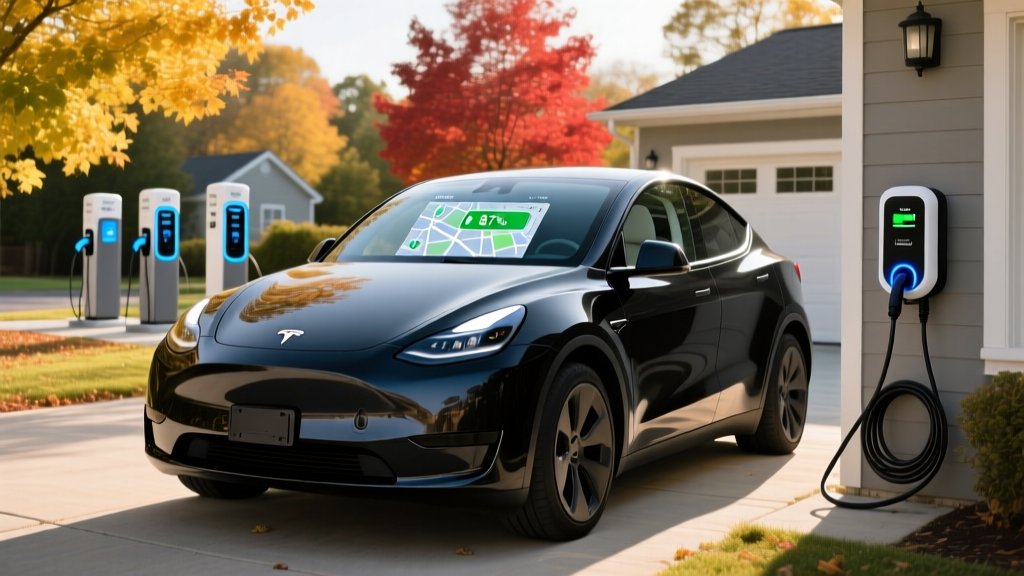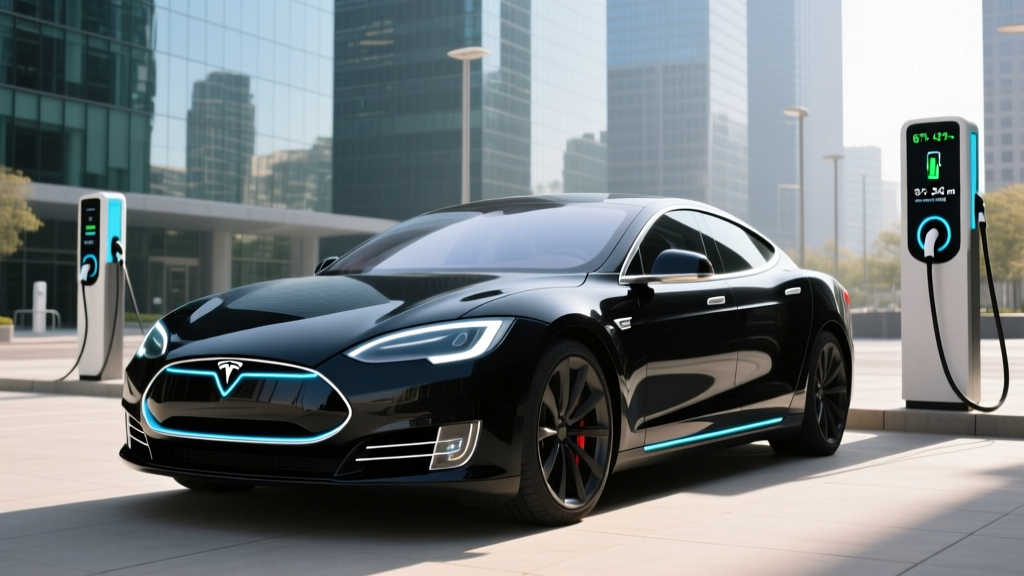
The Tesla Model S has held the title of the most desirable electric sedan since 2012, but as the EV market has flooded with competitors from Porsche, Lucid, BMW, and Mercedes, the question in 2026 is whether it still earns the crown. After extensive driving, charging, and spec analysis, we're calling the current Model S what it is: still arguably the sexiest Tesla in the lineup — not because it's the newest, but because no other Tesla combines this level of performance, range, and executive-sedan presence. That said, its age shows in specific ways that buyers need to understand before writing a check.
This review covers the 2026 Model S Long Range and Model S Plaid with exact EPA figures, real-world range data, charging curves, pricing after federal tax credits, and an honest look at where it wins — and where rivals have caught up.
2026 Tesla Model S: Quick Verdict
The Model S remains Tesla's flagship sedan and the most compelling performance-to-range proposition in the luxury EV space. The Long Range variant delivers class-leading EPA range, while the Plaid offers hypercar acceleration at a fraction of a hypercar price. The Supercharger network advantage, continuous OTA updates, and the sheer drama of a 1,020-hp Plaid launch keep it relevant. But interior material quality, panel gap consistency, and a starting price that now pushes well into six figures mean buyers cross-shopping a Porsche Taycan or Lucid Air will find legitimate alternatives.
| Spec | Long Range | Plaid |
|---|---|---|
| EPA Range | 402 mi | 359 mi |
| Battery (usable) | ~100 kWh (NMC) | ~100 kWh (NMC) |
| Drivetrain | Dual-Motor AWD | Tri-Motor AWD |
| Horsepower | 670 hp | 1,020 hp |
| 0-60 mph | 3.1 sec | 1.99 sec |
| Top Speed | 155 mph | 200 mph |
| Peak DC Charge Rate | 250 kW | 250 kW |
| 10-80% DC Fast Charge | ~30 min | ~30 min |
| Level 2 Home Charge | 11.5 kW (~34 mi/hr) | 11.5 kW (~34 mi/hr) |
| MPGe (combined) | 120 MPGe | 116 MPGe |
| Efficiency | 28 kWh/100 mi | 29 kWh/100 mi |
| Cargo Volume | 28 cu ft (rear) + frunk | 28 cu ft (rear) + frunk |
| Rear Legroom | 35.4 in | 35.4 in |
| Base MSRP | $79,990 | $94,990 |
| Battery Warranty | 8 yr / 150,000 mi | 8 yr / 150,000 mi |
Range and Efficiency: EPA vs. the Real World
The Model S Long Range posts an EPA-estimated 402 miles of range — a figure that still leads the luxury EV sedan segment. The Plaid, with its tri-motor setup and stickier rubber, drops to 359 miles EPA. Both use a ~100 kWh usable NMC (nickel manganese cobalt) battery pack. Tesla does not offer an LFP option in the Model S, which makes sense given the energy-density requirements for this range class.
Real-World Range Expectations
EPA Sticker: 402 mi (Long Range) / 359 mi (Plaid)
Highway (70-75 mph, moderate climate): Expect ~320-340 mi (Long Range) and ~290-310 mi (Plaid). Aerodynamic drag at sustained highway speeds cuts into the 100 kWh pack faster than the EPA mixed cycle suggests.
Cold Weather (below 32°F): Plan for 20-30% range reduction. A 402-mile Long Range may deliver ~280-320 miles in freezing conditions without preconditioning. Tesla's heat pump helps, but physics is physics — cold batteries hold less usable energy and cabin heating draws significant power.
City/Commuting: This is where the Model S shines closest to its EPA number. Regenerative braking recovers energy in stop-and-go traffic, and you can realistically see 370-390 mi in mild-climate urban driving.
Efficiency-wise, the Long Range achieves 120 MPGe combined (28 kWh/100 mi), which is respectable for a 4,500+ lb sedan with this much power. The Plaid's extra motor and wider tires bump consumption slightly to 116 MPGe (29 kWh/100 mi). For comparison, the Lucid Air Grand Touring achieves up to 131 MPGe thanks to its smaller, more efficient powertrain, while the Porsche Taycan Turbo S sits around 75 MPGe — efficiency is not Porsche's priority.
Charging Speed: DC Fast, Level 2, and the Supercharger Advantage
Charging remains one of the Model S's strongest ownership pillars, largely because of Tesla's Supercharger network rather than raw charging speed. The Model S peaks at 250 kW on V3 Superchargers, which is competitive but no longer class-leading — the Hyundai Ioniq 5 and Porsche Taycan both exceed 250 kW, and the Lucid Air can accept over 300 kW on compatible chargers.
| Charge Level | Power (kW) | Speed | Notes |
|---|---|---|---|
| Level 1 (120V household) | ~1.4 kW | ~3-4 mi/hr | Emergency/trickle only |
| Level 2 (240V, 48A Wall Connector) | 11.5 kW | ~34 mi/hr | Full charge in ~9-10 hours |
| DC Fast (V3 Supercharger) | Peak 250 kW | ~200 mi in 15 min | 10-80% in ~30 min |
| DC Fast (CCS adapter, EA/others) | Up to 250 kW | Varies by station | Requires Tesla CCS adapter (included) |
Charge curve reality check: The Model S does not sustain 250 kW for the entire session. Peak rate occurs between roughly 10-30% state of charge, then tapers progressively. Expect ~150 kW average from 10-50%, dropping to ~80 kW by 70%, and ~40 kW above 85%. This is why the 10-80% time is ~30 minutes rather than the theoretical ~24 minutes a flat 250 kW rate would suggest. Always precondition the battery (the car does this automatically when you navigate to a Supercharger) to hit peak rates.
The Level 2 home charging story is straightforward: Tesla's Wall Connector at 48 amps delivers 11.5 kW, adding roughly 34 miles of range per hour. An overnight charge (8 hours) replenishes ~270 miles — more than enough for daily driving. Installation typically requires a 60A circuit; budget $800-$2,000 for a licensed electrician depending on panel proximity and local permit requirements.
The real differentiator is the Tesla Supercharger network: over 6,000 V3/V4 stalls across North America with near-flawless plug-and-charge reliability. While non-Tesla networks (Electrify America, EVgo) have improved, Tesla owners consistently report higher uptime and fewer payment frustrations on road trips.
Performance: From Quick to Absurd
The Model S Long Range hits 0-60 mph in 3.1 seconds with 670 horsepower from its dual-motor all-wheel-drive setup. That's sports-car territory from a five-passenger sedan with a trunk. The acceleration is instant, linear, and relentless — no gear shifts, no turbo lag, just a relentless surge that never feels like it's winding down.
The Plaid takes this to a level that redefines the word "quick." With three motors producing 1,020 horsepower, it rockets to 60 mph in 1.99 seconds (with rollout subtracted, as Tesla publishes). In real-world testing on prepped surfaces, expect 2.1-2.3 seconds — still devastatingly fast. The tri-motor setup enables torque vectoring across the rear axle, giving the Plaid cornering composure that the dual-motor Long Range can't match. Top speed is electronically limited to 200 mph with the optional track package.
Both models feature adaptive air suspension that adjusts ride height based on speed and road conditions. The ride quality in "Comfort" mode is genuinely plush for a performance sedan, though firm in "Sport." Steering is precise but somewhat numb — a common Tesla trait — and the brake-by-wire system in the Plaid takes a few miles to build confidence.
Interior, Tech, and the Yoke Question
The Model S interior is minimalist by design: a 17-inch landscape-oriented touchscreen dominates the dash, a secondary 8-inch screen serves rear passengers, and a 12.3-inch instrument cluster sits behind the steering wheel (or yoke). Material quality has improved since the 2021 refresh — ventilated front seats, genuine aluminum and wood trim, and a 22-speaker audio system are all standard. However, panel gap consistency still varies car-to-car, and some hard plastics on the lower door panels feel out of place at this price point.
Cargo and passenger space: The rear trunk offers 28 cubic feet (with seats up), expanding to ~58 cu ft with the 60/40 split rear seats folded. The front trunk (frunk) adds ~3 cu ft for charging cables or a small bag. Rear legroom measures 35.4 inches — adequate for adults under 6 feet, but tighter than a BMW i7 or Mercedes EQS. The floor is flat (no transmission tunnel), which helps the middle-seat passenger.
The yoke: Tesla's yoke-style steering wheel remains standard on the Model S (a round wheel is now available as a no-cost option). The yoke offers unobstructed instrument visibility and a futuristic feel, but it demands a learning curve for low-speed maneuvers like three-point turns where hand-over-hand steering is natural. Most owners adapt within a week; some never prefer it.
Tech highlights:
- Tesla's infotainment system is the fastest and most responsive in the industry — Netflix, YouTube, and a full web browser while parked
- Over-the-air updates continuously add features (recent additions include improved battery preconditioning algorithms and UI refinements)
- Autopilot is standard; Full Self-Driving (Supervised) is an $8,000 add-on or $99/month subscription
- Phone-as-key with Bluetooth proximity, no fob required
Autopilot & FSD: Level 2, Not Self-Driving
Tesla Autopilot and Full Self-Driving (Supervised) are SAE Level 2 driver-assistance systems. The driver must remain fully engaged, hands on the wheel (or yoke), and eyes on the road at all times. FSD can navigate highway interchanges, stop at traffic lights, and handle some city streets, but it makes errors and requires constant supervision. It is not autonomous driving. Only Level 4 services like Waymo operate without a human driver — and those are geofenced to specific cities.
Pricing, Trims, and Federal Tax Credit Eligibility
The 2026 Model S is offered in two trims:
| Trim | Base MSRP | As-Tested (typical options) | §30D Federal Credit | Effective Price |
|---|---|---|---|---|
| Long Range | $79,990 | $84,000-$88,000 | Not eligible (MSRP cap) | $79,990+ |
| Plaid | $94,990 | $100,000-$110,000 | Not eligible (MSRP cap) | $94,990+ |
Tax credit reality: Under current IRS §30D rules, the federal EV tax credit is capped at $7,500 for new clean vehicles, but eligibility requires the vehicle MSRP to be $55,000 or less for sedans (or $80,000 for SUVs/trucks/vans). The Model S, classified as a sedan, exceeds the $55,000 MSRP cap in both trims and therefore does not qualify for the federal purchase credit. Additionally, buyer income caps apply ($150,000 single / $300,000 joint filers for modified AGI), and critical mineral/battery component sourcing requirements must be met — but the MSRP cap alone disqualifies the Model S regardless of buyer income.
Some buyers may offset cost through state-level incentives (check your state's energy office or AFDC state incentive database) and potential lease pass-through structures, but the federal credit is off the table. Budget accordingly.
Ownership: Warranty, Maintenance, and Long-Term Costs
Tesla covers the Model S battery and drive unit for 8 years or 150,000 miles (whichever comes first), with a minimum 70% battery capacity retention guarantee over that period. The limited vehicle warranty is 4 years / 50,000 miles. These terms are competitive with Porsche (8 yr / 100,000 mi battery) and Lucid (8 yr / 100,000 mi), though some legacy luxury brands now offer longer bumper-to-bumper coverage.
Real-world battery degradation data from Tesla's fleet suggests the Model S NMC pack retains approximately 88-92% of original capacity after 100,000 miles under normal use. Owners who frequently charge to 100% or regularly use DC fast charging in extreme heat may see slightly higher degradation — keeping daily charge limits at 80-90% and preconditioning before Supercharging are best practices.
Maintenance costs are minimal compared to ICE luxury sedans: no oil changes, no spark plugs, no transmission fluid. Brake pad life is extended significantly by regenerative braking (many owners report 80,000+ miles on original pads). The primary recurring costs are tire replacement (the Plaid's Michelin Pilot Sport 4S tires run $350-$450 each and may need replacement every 15,000-25,000 miles under spirited driving), cabin air filter replacement (~$100-150 every 2 years), and windshield washer fluid.
Insurance premiums for the Model S run 20-40% higher than comparable ICE luxury sedans due to repair cost data and Tesla's aluminum-intensive construction. Get quotes before purchasing — this is a real ownership cost that surprises some buyers.
Pros, Cons, and Who Should Buy
Pros
- Class-leading 402-mile EPA range (Long Range)
- Supercharger network reliability for road trips
- Hypercar acceleration in the Plaid at sedan pricing
- Continuous OTA updates add real features over time
- Strong efficiency (120 MPGe) for a performance sedan
- Spacious hatchback trunk with 28 cu ft cargo
- Minimal maintenance costs vs. ICE luxury rivals
Cons
- No federal §30D tax credit (exceeds sedan MSRP cap)
- Peak 250 kW DC charge rate trails newer competitors
- Rear legroom (35.4 in) is tight for the luxury segment
- Panel gap and interior material inconsistency
- Yoke steering has a polarizing learning curve
- Insurance premiums 20-40% higher than ICE equivalents
- Base platform dates to 2012 (refreshed 2021, but aging)
Who the Model S Is For
Choose the Model S Long Range if: You want the longest-range luxury EV sedan available, regularly road-trip on the Supercharger network, and value instant passing power without needing hypercar-level acceleration.
Choose the Model S Plaid if: You want the fastest-accelerating production sedan on earth, track-day capability in a daily driver, and don't mind sacrificing ~43 miles of range for tri-motor performance.
Look elsewhere if: You need maximum rear-seat space (BMW i7), the absolute fastest DC charging (Lucid Air, Porsche Taycan), or require federal tax credit eligibility (consider the Tesla Model 3, which starts under the MSRP cap).
How the Model S Stacks Up Against Key Rivals
The Model S no longer competes in a vacuum. Here's how it compares to the three most common cross-shops:
- Lucid Air Grand Touring: 516 mi EPA range, 819 hp, 300+ kW peak charging, starting ~$125,000. The Air wins on range, charging speed, rear-seat space, and interior quality — but costs significantly more and lacks the Supercharger network.
- Porsche Taycan Turbo S: ~280 mi EPA, 750 hp (overboost), 320 kW peak charging, starting ~$190,000. The Taycan wins on build quality, driving dynamics, and charging speed — but costs more than double and has half the range.
- BMW i7 xDrive60: ~318 mi EPA, 536 hp, 195 kW peak charging, starting ~$120,000. The i7 wins on rear-seat luxury, ride comfort, and traditional build quality — but it's heavier, slower, and less efficient.
The Model S occupies a specific niche: the best performance-per-dollar proposition in the luxury EV sedan space, with the most reliable road-trip charging infrastructure. If that combination matters to you, it's still the one to beat.
Frequently Asked Questions
What is the real-world range of the 2026 Tesla Model S?
The Long Range delivers ~320-340 miles at highway speeds in moderate weather, dropping to ~280-320 miles in freezing conditions. City driving in mild climates can approach the 402-mile EPA estimate. The Plaid averages ~290-310 miles highway.
How fast does the Model S charge at home and on the road?
At home on a Level 2 Tesla Wall Connector (11.5 kW), it adds ~34 miles of range per hour — a full overnight session replenishes ~270 miles. On a V3 Supercharger, it peaks at 250 kW and charges from 10-80% in approximately 30 minutes, adding up to 200 miles in 15 minutes under ideal conditions.
Does the Tesla Model S qualify for the federal EV tax credit?
No. Under current IRS §30D rules, sedans must have an MSRP of $55,000 or less to qualify. The Model S starts at $79,990, well above the cap. Buyer income limits and battery sourcing rules are moot — the MSRP alone disqualifies it.
Is the Model S worth buying over the Lucid Air or Porsche Taycan?
The Model S offers the best value proposition if Supercharger network access, strong range (402 mi), and high performance at a sub-$100K starting price matter most. The Lucid Air wins on range and luxury but costs more; the Taycan wins on build quality and driving dynamics but sacrifices range and costs nearly double.
How long will the Model S battery last?
Tesla warranties the battery for 8 years / 150,000 miles with a minimum 70% capacity retention guarantee. Fleet data suggests NMC packs in the Model S retain ~88-92% capacity at 100,000 miles under normal use. Many high-mileage examples exceed 200,000 miles on the original pack.
Is the yoke steering wheel safe and practical?
The yoke is legal and passes all NHTSA requirements. Most owners adapt within a week, but it requires relearning low-speed, tight-turning maneuvers. A conventional round steering wheel is available as a no-cost option if you prefer traditional steering.