Quick Verdict: The 2023 Tesla Model S at a Glance
The 2023 Tesla Model S remains one of the most capable luxury electric sedans on the road, blending class-leading efficiency, access to the Supercharger network, and blistering performance — particularly in Plaid trim. Now that we're evaluating it from a 2026 vantage point, the 2023 model year represents a compelling entry on the used-EV market, especially for buyers who want proven long-range capability without paying new-car premiums. But it isn't without trade-offs: interior material quality still trails German rivals, the yoke steering option remains polarizing, and federal tax credit eligibility on new units was constrained by MSRP caps.
This review covers the 2023 Model S Long Range and Plaid trims with exact specs, real-world range data, charging curves, and ownership economics so you can decide whether it's the right EV for your garage.
| Spec | Long Range | Plaid |
|---|---|---|
| EPA Range | 405 mi | 396 mi |
| Battery (usable) | ~95 kWh, NMC | ~95 kWh, NMC |
| Drivetrain | Dual-Motor AWD | Tri-Motor AWD |
| Horsepower | 670 hp | 1,020 hp |
| 0–60 mph | 3.1 sec | 1.99 sec |
| Top Speed | 155 mph | 200 mph |
| Peak DC Fast Charge | 250 kW | 250 kW |
| 10–80% DC Time | ~30 min | ~30 min |
| Level 2 Charge Rate | 11.5 kW (44 mi/hr) | 11.5 kW (44 mi/hr) |
| MPGe (combined) | 120 MPGe | 116 MPGe |
| kWh/100 mi | 28 kWh | 29 kWh |
| Cargo (rear + frunk) | 26.3 + 2.8 cu ft | 26.3 + 2.8 cu ft |
| Rear Legroom | 35.4 in | 35.4 in |
| Base MSRP (2023) | $89,990 | $108,490 |
| Battery Warranty | 8 yr / 150,000 mi | 8 yr / 150,000 mi |
Range and Efficiency: EPA Numbers vs. Real-World Reality
The 2023 Model S Long Range carries an EPA-estimated 405 miles of range, placing it among the longest-range production EVs available. The Plaid, with its tri-motor setup and wider tires, drops slightly to 396 miles. Both figures are impressive on paper, but real-world results depend heavily on driving conditions.
- City / moderate driving (65°F): 370–400 mi — close to EPA sticker
- Highway at 75 mph (65°F): ~310–340 mi — sustained high speed cuts range 15–20%
- Cold weather (20°F, highway): ~250–290 mi — expect 30–35% loss without preconditioning
- Cold weather, city with heat pump: ~310–340 mi — the heat pump helps significantly
Tesla's heat pump (standard since the 2021 refresh) mitigates cold-weather losses better than resistive heating systems, but any EV will shed range in freezing temps. Preconditioning the battery before departure — which the Model S does automatically when a navigation destination is set — helps preserve range and enables faster DC charging in cold weather.
Efficiency is where Tesla's engineering shows. At 28 kWh per 100 miles (Long Range), the Model S converts electricity to motion more effectively than nearly any competing luxury sedan. For comparison, the 2023 Lucid Air Grand Touring achieves roughly 26 kWh/100 mi, while the Mercedes EQS 450+ sits around 31 kWh/100 mi. Lower kWh/100 mi means lower electricity cost per mile and more range from the same battery size.
Charging Speed: Supercharger Access and Home Charging
Charging infrastructure is often the deciding factor for EV buyers, and the 2023 Model S benefits from native access to Tesla's Supercharger network — the most reliable and extensive DC fast-charging system in North America. With the industry's shift toward the North American Charging Standard (NACS), this advantage has become less exclusive, but Tesla owners still enjoy seamless plug-and-charge functionality without adapter hassles.
| Charging Level | Power | Speed (miles added) | Use Case |
|---|---|---|---|
| Level 1 (120V household) | ~1.4 kW | ~4 mi/hr | Emergency / trickle top-up |
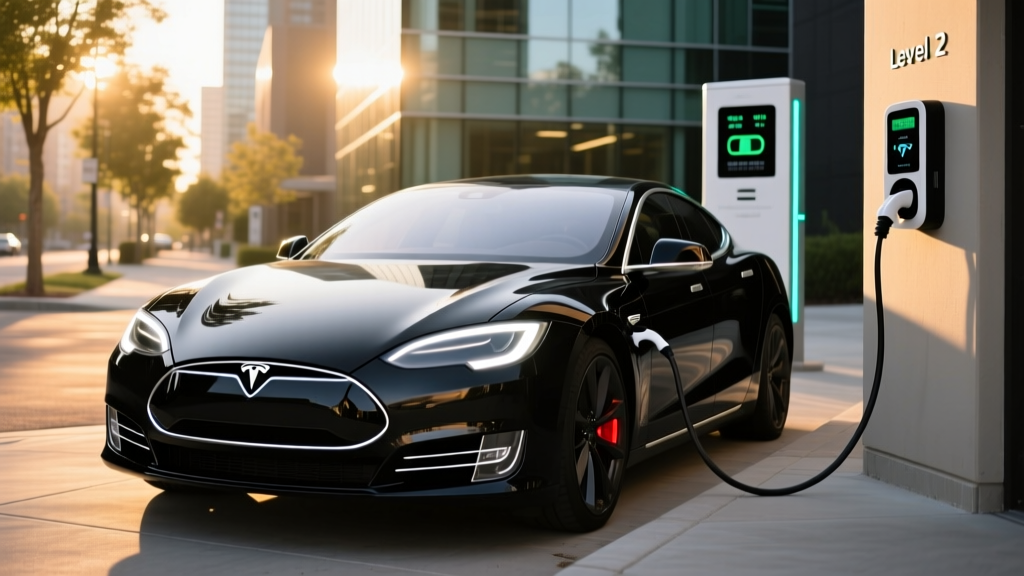
| Level 2 (240V, Wall Connector) | 11.5 kW | ~44 mi/hr | Overnight home charging |
| Level 2 (public J1772 w/ adapter) | Up to 11.5 kW | ~44 mi/hr | Destination / workplace |
| DC Fast (V3 Supercharger) | Peak 250 kW | ~200 mi in 15 min | Road trips |
| DC Fast (CCS via adapter) | Up to 250 kW | Varies by station | Non-Tesla networks |
DC fast-charging reality check: The 250 kW peak rate applies only at V3 Superchargers and only when the battery is preconditioned and at a low state of charge (typically below 30%). The charge curve tapers significantly above 60% SoC, and by 80% you're pulling closer to 60–80 kW. A 10–80% session takes roughly 30 minutes under ideal conditions — plan for 35–40 minutes in cold weather or at older V2 stations capped at 150 kW.
For home charging, Tesla's Wall Connector on a 60-amp circuit delivers 11.5 kW (48 amps continuous). That translates to roughly 44 miles of range per hour of charging, meaning a full overnight session (8–10 hours) easily replenishes a depleted battery. Most owners who charge nightly at home rarely visit a public charger except on road trips.
Performance: Long Range vs. Plaid
The Model S Long Range's dual-motor all-wheel-drive powertrain produces 670 horsepower and rockets to 60 mph in 3.1 seconds — figures that would have defined a supercar a decade ago. For virtually all real-world driving, this is more than sufficient, delivering effortless highway merging and instant torque from a standstill.
The Plaid trim adds a third rear motor for 1,020 horsepower and a claimed 1.99-second 0–60 time (with rollout subtracted, on a prepared surface). In independent testing, the Plaid consistently delivers sub-2.1-second runs, making it one of the quickest production cars ever built. The tri-motor setup also enables torque vectoring across the rear axle, improving cornering stability at the limit.
Both trims feature adaptive air suspension with automatic ride-height adjustment, which lowers the car at highway speeds for improved aerodynamics and raises it for steep driveways or rough roads. The steering is quick and precise, though the optional yoke steering wheel requires an adjustment period and can be frustrating during low-speed maneuvers like parking or U-turns. The conventional round wheel remains available and is the more practical choice for most drivers.
Interior, Tech, and Daily Livability
The Model S interior is minimalist by design — a 17-inch landscape touchscreen dominates the dashboard, controlling virtually every vehicle function from climate to mirror adjustment. A second 8-inch screen serves rear passengers for climate and entertainment. The 12.3-inch digital instrument cluster ahead of the driver provides speed, range, and navigation information.
What works well:
- Over-the-air (OTA) updates continuously add features and improve existing ones
- The infotainment system is responsive, with native navigation, streaming, and gaming
- The glass roof creates an airy cabin, though it lacks a retractable shade
- HEPA air filtration (Bioweapon Defense Mode) is genuinely effective
Where it falls short:
- Interior materials — while improved since the 2021 refresh — still don't match the leather, wood, and metal finishes in a Mercedes EQS or BMW i7
- Panel gap consistency remains a known concern; inspect any used example carefully
- The lack of Apple CarPlay and Android Auto frustrates some buyers, though the native system is capable
- Rear seat cushion height is low, resulting in a "knees-up" seating position for tall adults
Cargo space is generous for a sedan: 26.3 cubic feet behind the rear seats (with a hatchback-style liftgate) plus a 2.8-cubic-foot front trunk (frunk). The rear seats fold 60/40 for longer items. Rear legroom measures 35.4 inches — adequate for average-height adults but tighter than a full-size luxury sedan like the EQS.
Driver Assistance: Autopilot and Full Self-Driving
Tesla's Autopilot and Full Self-Driving (Supervised) are Level 2 driver-assistance systems under the SAE J3016 framework. This means the vehicle can control steering, acceleration, and braking under certain conditions, but the driver must remain fully engaged, monitor the road at all times, and be prepared to take over immediately. These systems are not self-driving. Only Level 4 services like Waymo operate without a human driver in geofenced areas.
Standard Autopilot includes Traffic-Aware Cruise Control and Autosteer (lane-centering on highways). The optional FSD (Supervised) package — priced at $15,000 outright or available as a subscription — adds automatic lane changes, Navigate on Autopilot (highway on-ramp to off-ramp), traffic light and stop sign recognition, and Autopark. As of 2026, FSD remains a supervised system requiring active driver oversight.
- They do not eliminate the need for driver attention — NHTSA has investigated multiple incidents involving driver inattention with Autopilot engaged
- They do not handle all construction zones, unmapped roads, or severe weather reliably
- FSD (Supervised) does not make the vehicle autonomous — you are legally responsible for the car's operation at all times
- Performance degrades in heavy rain, snow, and faded lane markings
Pricing, Tax Credits, and Used-EV Value
When new, the 2023 Model S Long Range started at $89,990 (including destination), and the Plaid at $108,490. Options like FSD, premium paint colors, and 21-inch wheels could push the as-tested price well above $120,000 for a Plaid.
| Item | Long Range | Plaid |
|---|---|---|
| Base MSRP | $89,990 | $108,490 |
| FSD (Supervised) Add-On | +$15,000 | +$15,000 |
| Federal §30D Tax Credit (New) | $0 (exceeds MSRP cap) | $0 (exceeds MSRP cap) |
| Used EV Credit (§25E, if eligible) | Up to $4,000 (30% of sale price, max $4,000) | |
Federal tax credit note: The IRS §30D new clean vehicle credit of up to $7,500 has an MSRP cap of $55,000 for sedans. Both the Model S Long Range and Plaid far exceed this threshold, meaning neither qualified for the new-vehicle federal tax credit. This was a significant disadvantage versus lower-priced EVs when buying new.
However, if you're purchasing a 2023 Model S on the used market in 2026, the §25E used clean vehicle credit may apply. This credit provides 30% of the sale price, up to a maximum of $4,000, subject to buyer income limits (AGI ≤ $75,000 single / $150,000 joint) and the vehicle must be purchased from a licensed dealer for under $25,000. Given that most 2023 Model S examples command well above $25,000 on the used market, qualifying for this credit is unlikely in practice. Always consult a tax professional for your specific situation.
Warranty and Long-Term Battery Outlook
Tesla covers the 2023 Model S battery and drive unit with an 8-year/150,000-mile warranty, whichever comes first, with a minimum 70% capacity retention threshold. The vehicle's basic limited warranty runs 4 years / 50,000 miles.
The NMC (nickel manganese cobalt) battery chemistry in the Model S offers high energy density — necessary for the 400+ mile range — but historically shows slightly faster long-term degradation than LFP (lithium iron phosphate) chemistries found in standard-range Teslas. Based on fleet data from 2020–2023 Model S vehicles, most owners report approximately 5–8% capacity loss over the first 100,000 miles, with the rate of loss slowing significantly after the initial break-in period. Tesla's battery management system (BMS) includes a buffer that protects against deep discharge and overcharge, extending pack life.
Battery care tips for NMC chemistry:
- Set daily charge limit to 80–90% — reserve 100% for road trips
- Avoid letting the battery sit at very low SoC (below 10%) for extended periods
- Use scheduled charging to minimize time spent at high SoC
- Precondition in cold weather to reduce stress on the pack
2023 Model S vs. Key Competitors
The Model S competes in the luxury electric sedan segment against formidable alternatives. Here's how it compares to the most relevant rivals:
- Lucid Air Pure / Touring: The Air offers more interior space, superior material quality, and up to 516 miles of range (Grand Touring). However, it lacks the Supercharger network advantage (though now gaining NACS access) and has a smaller service footprint.
- Mercedes-Benz EQS 450+: More luxurious cabin, exceptional ride comfort, and available rear-axle steering. But it's heavier, less efficient (~31 kWh/100 mi), and limited to ~350 miles of range.
- BMW i7 eDrive50: Flagship luxury with executive rear seating, but starts above $119,000 and offers only ~318 miles of range. Best for chauffeur-driven buyers.
- Porsche Taycan: Superior driving dynamics and 800V architecture for faster charging peaks, but significantly less range (~246 mi for the base model) and a higher starting price.
- Choose the Model S if: You prioritize range, Supercharger access, software updates, and performance-per-dollar in a luxury sedan. Ideal for tech-forward commuters and road trippers who value charging infrastructure reliability.
- Look elsewhere if: Interior luxury and material quality are your top priorities (consider the EQS or Lucid Air), you want the sharpest handling dynamics (Porsche Taycan), or you need a true full-size rear seat (BMW i7).
Pros and Cons
- Class-leading 405-mile EPA range (Long Range)
- Native Supercharger network access — most reliable DC fast-charging in North America
- Exceptional performance even in base dual-motor trim
- Continuous OTA updates add new features post-purchase
- Spacious hatchback cargo area + frunk
- Strong efficiency (28 kWh/100 mi) keeps per-mile costs low
- HEPA air filtration standard
- No federal new-vehicle tax credit (MSRP exceeds $55K sedan cap)
- Interior materials still trail Mercedes, BMW, and Lucid
- Yoke steering is impractical for low-speed maneuvers
- No Apple CarPlay or Android Auto
- Rear seat comfort is compromised for tall passengers
- FSD is expensive and remains Level 2 (supervised)
- Panel gap inconsistency on some examples
Frequently Asked Questions
What is the real-world range of the 2023 Tesla Model S?
The EPA rates the Long Range at 405 miles and the Plaid at 396 miles. In real-world driving, expect 310–340 miles on the highway at 75 mph in mild weather, and as low as 250–290 miles in cold-weather highway driving (20°F). City driving in moderate temperatures can approach the EPA estimate. The heat pump helps reduce cold-weather losses compared to older EVs with resistive heaters.
How fast does the 2023 Model S charge?
On a V3 Supercharger (250 kW peak), the Model S can add approximately 200 miles in 15 minutes and charge from 10–80% in about 30 minutes under ideal conditions. At home on a Level 2 Wall Connector (11.5 kW / 48A), it gains roughly 44 miles of range per hour, fully replenishing overnight. On a standard 120V outlet (Level 1), expect only about 4 miles per hour — useful only for emergencies or very low daily mileage.
Does the 2023 Model S qualify for the federal EV tax credit?
Not when purchased new. The IRS §30D credit has a $55,000 MSRP cap for sedans, and the Model S starts at $89,990 — well above the threshold. On the used market, the §25E credit (up to $4,000) requires a sale price below $25,000 and buyer income limits, which most Model S transactions won't meet. Check IRS.gov for current rules and consult a tax professional.
Is the 2023 Model S worth buying versus competitors?
It depends on your priorities. The Model S wins on range, charging infrastructure (Superchargers), efficiency, and software. It loses to the Lucid Air on interior space and luxury, to the Mercedes EQS on ride comfort and cabin quality, and to the Porsche Taycan on handling precision. If Supercharger reliability and maximum range are your top concerns, the Model S remains an excellent choice.
How long will the Model S battery last?
Tesla warranties the battery for 8 years or 150,000 miles with at least 70% capacity retention. Real-world fleet data suggests most Model S packs lose 5–8% capacity in the first 100,000 miles, with degradation slowing considerably afterward. Following best practices — daily charging to 80–90%, avoiding prolonged low SoC, and preconditioning in cold weather — can help preserve long-term battery health. Full battery replacement, if ever needed outside warranty, currently costs approximately $15,000–$22,000 depending on the pack and service provider.
Is Tesla's Full Self-Driving worth the cost?
FSD (Supervised) is a Level 2 driver-assist system — it is not autonomous driving. At $15,000 (or a monthly subscription), it adds features like automatic lane changes and Navigate on Autopilot, but requires constant driver supervision. Many owners find standard Autopilot sufficient for highway driving. Evaluate whether the additional features justify the cost for your commute, and remember that you remain legally responsible for the vehicle's operation at all times.