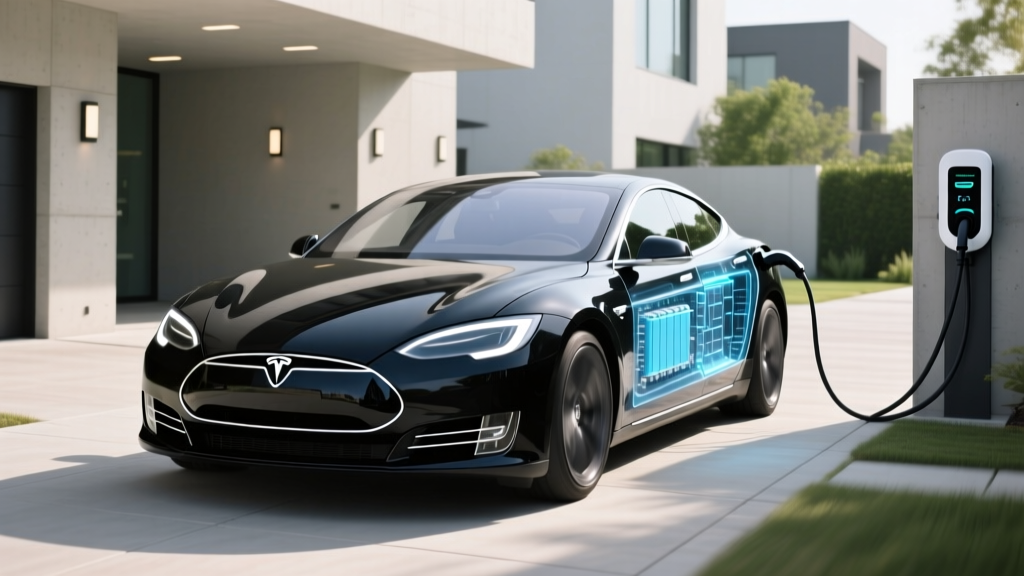
The 2022 Tesla Model S received a major interior and powertrain refresh (codenamed "Palladium") that repositioned it as a legitimate luxury performance sedan rather than just a tech showcase. With up to 405 miles of EPA-estimated range, a 250 kW peak DC fast-charge rate, and a cabin that finally rivals its German competitors in material quality, the 2022 Model S remains a benchmark in the large electric sedan segment. But as newer rivals like the Lucid Air and Mercedes-Benz EQS have entered the market, how does the 2022 Model S stack up in real-world driving, charging, and ownership costs? This review breaks down every spec that matters.
EPA Estimated: 405 miles (Long Range) / 348 miles (Plaid)
Real-World Highway (70 mph, mild weather): ~320–350 miles (Long Range), ~270–300 miles (Plaid)
Cold Weather (below 30°F): Expect 20–30% range reduction, dropping the Long Range to roughly 280–320 miles in winter highway driving. The Model S heat pump helps mitigate cabin energy draw, but battery chemistry still loses efficiency in the cold.
City / Mixed Driving: Closer to EPA estimates; regenerative braking recovers energy in stop-and-go traffic.
Range, Battery, and Efficiency
The 2022 Model S Long Range carries a usable battery capacity of approximately 98 kWh out of a gross ~100 kWh pack. Tesla uses NMC (nickel manganese cobalt) chemistry in the Model S — chosen for its high energy density, which is critical for achieving 400+ mile range in a sedan form factor. This differs from the LFP (lithium iron phosphate) chemistry used in the base Model 3 and Model Y RWD, which trades energy density for longevity and lower cost.
NMC trade-offs: higher energy density and better cold-weather performance than LFP, but a more constrained state-of-charge window for daily use (Tesla recommends 80% daily charge for NMC, versus 100% for LFP). Over a 200,000-mile lifespan, NMC packs typically retain 85–90% of original capacity based on fleet data.
| Spec | Long Range | Plaid |
|---|---|---|
| EPA Range | 405 miles | 348 miles |
| Battery (usable) | ~98 kWh (NMC) | ~98 kWh (NMC) |
| Drivetrain | Dual Motor AWD | Tri-Motor AWD |
| Horsepower | 670 hp | 1,020 hp |
| 0–60 mph | 3.1 seconds | 1.99 seconds |
| Top Speed | 155 mph | 200 mph |
| MPGe (combined) | 120 MPGe | 116 MPGe |
| Efficiency (kWh/100 mi) | 28 kWh/100 mi | 29 kWh/100 mi |
| Cargo Volume | 28 cu ft (rear) + frunk | 28 cu ft (rear) + frunk |
| Rear Legroom | 41.7 inches | 41.7 inches |
| Curb Weight | 4,561 lbs | 4,766 lbs |
Efficiency is a Tesla strong suit. At 28 kWh per 100 miles (combined), the Model S Long Range is one of the most efficient large luxury sedans on the market. For context, the Mercedes EQS 450+ consumes roughly 31 kWh/100 mi, and the Lucid Air Grand Touring achieves about 26 kWh/100 mi. According to EPA data on fueleconomy.gov, the Model S Long Range posts 120 MPGe combined — competitive within its class.
Charging Speed: DC Fast, Level 2, and the Supercharger Advantage
Charging speed remains one of the Model S's strongest ownership advantages, largely because of Tesla's proprietary Supercharger network — the most reliable and widely deployed DC fast-charging ecosystem in North America.
| Charging Level | Power | Speed / Time | Notes |
|---|---|---|---|
| Level 1 (120V household) | ~1.4 kW | ~3–4 miles per hour | Emergency / trickle only |
| Level 2 (240V home, 48A) | 11.5 kW | ~34 miles per hour / ~12 hrs (0–100%) | Tesla Wall Connector recommended |
| Level 2 (240V home, 32A Mobile Connector) | 7.7 kW | ~23 miles per hour | Included Mobile Connector |
| DC Fast (Tesla Supercharger V3) | 250 kW peak | 10–80% in ~27 minutes | Peak rate tapers above 50% SoC |
| DC Fast (CCS adapter, third-party) | Up to 250 kW | Varies by station | CCS adapter sold separately by Tesla |
Charging curve reality: The 250 kW peak rate is not sustained. In real-world testing, the Model S holds approximately 200–250 kW from roughly 10% to 35% state of charge, then progressively tapers. From 50% to 80%, expect rates closer to 80–120 kW. This is why the 10–80% time is ~27 minutes rather than the theoretical ~17 minutes a sustained 250 kW would deliver. Battery preconditioning — initiated automatically when you navigate to a Supercharger — is essential for achieving peak rates, especially in cold weather.
Home charging setup: The Tesla Wall Connector at 48 amps on a 60-amp circuit delivers 11.5 kW, adding roughly 34 miles of range per hour. An overnight charge (10 hours) recovers about 340 miles — more than enough for any daily commute. Installation costs typically range from $800 to $2,500 depending on whether your electrical panel needs an upgrade to 200 amps.
With Tesla's CCS adapter (approximately $175 from the Tesla shop), Model S owners can access Electrify America, EVgo, and other CCS-equipped public networks. This expands charging options significantly on non-Tesla road-trip routes, though Superchargers remain the most reliable option.
Performance and Driving Dynamics
The 2022 Model S Long Range delivers 670 horsepower from its dual-motor all-wheel-drive powertrain, achieving a 3.1-second 0–60 mph time. That figure, verified by multiple independent tests, places it in supercar territory from just a few years ago — in a five-seat luxury sedan with 28 cubic feet of cargo space.
The Plaid variant uses a tri-motor configuration (one front, two rear) producing 1,020 horsepower and a claimed 1.99-second 0–60 mph time (with rollout subtracted, per drag-strip convention). Real-world tests on prepared surfaces have recorded 2.1–2.3 seconds, which is still astonishing. However, the Plaid's 348-mile EPA range and firmer ride are meaningful trade-offs.
Ride quality improved significantly with the Palladium refresh. The adaptive air suspension provides a compliant highway cruise and competent cornering, though the Model S still favors comfort over the sharp handling of a BMW 5 Series or Porsche Taycan. Steering is precise but light, and the yoke steering wheel (standard on 2022 models, with a round wheel available by request) remains divisive — particularly at low speeds and during three-point turns where hand-over-hand input is natural.
Interior, Tech, and Cargo
The 2022 interior redesign brought genuine material improvements: ventilated front seats, genuine wood and aluminum trim, a 17-inch center touchscreen with 2200 x 1300 resolution, a rear-seat 8-inch touchscreen for climate and entertainment, and a 22-speaker 960-watt audio system. Build quality on 2022 models is noticeably better than pre-2021 cars, though panel-gap consistency still varies by unit.
Infotainment: Tesla's vertically oriented interface is fast, visually clean, and integrates navigation, media, climate, and vehicle settings. Wireless phone mirroring is not supported — Tesla uses its own app ecosystem. The integrated web browser, Netflix/YouTube streaming (while parked), and over-the-air updates keep the system current without dealer visits.
Driver assistance: Basic Autopilot (Traffic-Aware Cruise Control and Autosteer) is standard. Full Self-Driving (FSD) Capability, a $15,000 option at the time of 2022 model sales, adds Navigate on Autopilot, Auto Lane Change, Autopark, and Smart Summon. FSD remains an SAE Level 2 system — the driver must keep hands on the wheel and eyes on the road at all times. This is not autonomous driving.
Tesla's Autopilot and FSD (Supervised) are SAE Level 2 driver-assistance systems, not self-driving. The driver is legally and operationally responsible for the vehicle at all times. These systems can fail to detect stationary objects, construction zones, and emergency vehicles. NHTSA has issued multiple investigations into Autopilot-involved crashes. Never use these systems while fatigued, distracted, or impaired.
Cargo and passenger space: The Model S offers 28 cubic feet of rear cargo space (with seats up) — generous for a sedan, aided by the hatchback liftgate design. A front trunk (frunk) adds additional storage for charging cables and small bags. Rear legroom measures 41.7 inches, sufficient for adults on long trips. Front headroom is ample at 40.5 inches.
Pricing, Tax Credit Eligibility, and Ownership Costs
| Trim | Base MSRP | Typical As-Tested | Federal Tax Credit (§30D) |
|---|---|---|---|
| Long Range | $94,990 | $96,000–$105,000 | Not eligible (MSRP exceeds $55,000 sedan cap) |
| Plaid | $129,990 | $135,000–$150,000 | Not eligible (MSRP exceeds $55,000 sedan cap) |
Federal tax credit reality: The 2022 Tesla Model S does not qualify for the federal §30D EV tax credit. Under current IRS rules, sedans must have an MSRP at or below $55,000 to be eligible — and the Model S starts nearly $40,000 above that threshold. Additionally, buyer income caps apply ($150,000 single / $300,000 joint filing for new EVs). Per IRS §30D guidelines, battery component and critical mineral sourcing requirements further restrict eligibility across the industry. The Model S fails the MSRP cap regardless of other factors.
Used Model S consideration: If purchasing a 2022 Model S on the used market in 2026, the Used Clean Vehicle Credit (§25E) may apply — up to $4,000 or 30% of the sale price (whichever is lower) for used EVs priced at $25,000 or less. However, most 2022 Model S examples still trade well above $25,000, making this credit unavailable for typical used listings.
Estimated 5-year ownership cost: Electricity for 15,000 miles/year at the national average of $0.16/kWh and 28 kWh/100 mi works out to roughly $672 per year in energy costs — compared to approximately $2,100 per year for a comparable BMW 540i at 25 MPG combined and $3.50/gallon. Insurance premiums for the Model S tend to run 20–40% higher than equivalent gas sedans due to repair costs and performance classification.
Warranty Coverage
Tesla provides the following warranty coverage for the 2022 Model S:
- Basic Vehicle Limited Warranty: 4 years or 50,000 miles
- Battery and Drive Unit Warranty: 8 years or 150,000 miles (whichever comes first), with a minimum 70% battery capacity retention guaranteed over the warranty period
- Restraint System: 5 years or 60,000 miles
- Corrosion: 12 years with no mileage limit
The 8-year/150,000-mile battery warranty is competitive. Tesla's 70% retention threshold is standard for the industry — most manufacturers guarantee 60–70% over their warranty period. Fleet data from sources like Recurrent Auto suggests that Tesla NMC packs typically retain 88–92% capacity at 100,000 miles, well within the warranty buffer.
Pros, Cons, and Who Should Buy
- Class-leading 405-mile EPA range (Long Range)
- Access to Tesla Supercharger network — most reliable DC fast-charging in North America
- 670 hp / 3.1s 0–60 in Long Range; 1,020 hp Plaid is the quickest production sedan ever built
- Over-the-air updates add features post-purchase
- Hatchback cargo versatility (28 cu ft) exceeds traditional sedan trunks
- Excellent efficiency at 28 kWh/100 mi
- Improved interior quality with Palladium refresh
- No federal tax credit eligibility (MSRP exceeds $55K sedan cap)
- Yoke steering wheel is impractical for low-speed maneuvers
- Service center wait times can stretch to weeks in some metro areas
- FSD is a $15K option that remains SAE Level 2 — not autonomous
- Insurance costs run 20–40% higher than comparable gas sedans
- Rear-seat headroom is tighter than the Lucid Air or Mercedes EQS
- Plaid sacrifices 57 miles of range for tri-motor performance
Choose the Model S Long Range if: You need a 400-mile daily-driver sedan with Supercharger access for frequent road trips, value performance without sacrificing efficiency, and can absorb the premium price without relying on federal tax credits.
Choose the Model S Plaid if: Track-capable acceleration is a priority and you accept the range and price trade-offs. This is a specialty vehicle.
Consider alternatives if: Federal tax credit eligibility is essential to your budget (look at the Model 3 or Model Y), you prioritize rear-seat luxury and headroom (Lucid Air, Mercedes EQS), or you want a more traditional steering interface and dealer service network (Porsche Taycan, BMW i5).
How the 2022 Model S Compares to Key Rivals
| Spec | 2022 Model S LR | 2022 Lucid Air GT | 2022 Mercedes EQS 450+ | 2022 Porsche Taycan 4S |
|---|---|---|---|---|
| EPA Range | 405 mi | 516 mi | 350 mi | 227 mi |
| 0–60 mph | 3.1s | 3.0s | 5.5s | 3.8s |
| Peak DC Charge | 250 kW | 300 kW | 200 kW | 270 kW |
| Base MSRP | $94,990 | $125,600 | $102,310 | $103,800 |
| Charging Network | Supercharger + CCS | CCS (EA, etc.) | CCS (EA, etc.) | CCS (Electrify America 3 yrs free) |
| Tax Credit | No | No | No | No |
The Lucid Air Grand Touring surpasses the Model S in range (516 vs. 405 miles) and rear-seat space, but costs $30,000 more and lacks Supercharger access. The EQS offers a more opulent interior and Mercedes dealer service, but trails in range and performance. The Taycan excels in driving dynamics and 800V charging architecture, but its 227-mile range is a significant limitation for road trips. The Model S occupies a unique middle ground: strong range, exceptional performance, and the best charging network — at a relatively competitive price within this tier.
Frequently Asked Questions
What is the real-world range of the 2022 Tesla Model S?
In mild weather at highway speeds (70 mph), expect 320–350 miles from the Long Range variant — roughly 15% below the 405-mile EPA estimate. In freezing temperatures, that drops to approximately 280–320 miles. City and mixed driving with regenerative braking returns figures closer to the EPA sticker.
How fast does the 2022 Model S charge at home and on the road?
On a Tesla Wall Connector (48A, 240V), the Model S charges at 11.5 kW, adding about 34 miles of range per hour — a full overnight charge covers even the longest daily drives. On a V3 Supercharger, it peaks at 250 kW and charges from 10% to 80% in approximately 27 minutes, with charge rate tapering above 50% state of charge.
Does the 2022 Tesla Model S qualify for the federal EV tax credit?
No. The IRS §30D credit caps sedan eligibility at an MSRP of $55,000. The Model S Long Range starts at $94,990, making it ineligible regardless of buyer income or battery sourcing. Per IRS guidelines, no variant of the Model S qualifies for the new-vehicle credit.
Is the 2022 Model S worth buying versus the Lucid Air or Mercedes EQS?
If Supercharger network access and the best balance of range, performance, and price matter most, yes. If maximum range is the priority and budget allows, the Lucid Air Grand Touring (516 mi EPA) is superior. If interior luxury and traditional dealer service are paramount, the Mercedes EQS is a strong alternative. The Model S remains the most well-rounded option for high-mileage road-trippers who value charging infrastructure.
What are the biggest ownership concerns with the 2022 Model S?
Service center availability and wait times are the most common complaint — Tesla's service network has not scaled as quickly as its sales volume. Insurance costs are higher than average for the class. The yoke steering wheel requires an adjustment period and remains impractical for parking maneuvers. Long-term battery degradation on the NMC pack is minimal based on fleet data, but out-of-warranty replacement would cost approximately $15,000–$22,000 if needed beyond the 8-year/150,000-mile warranty.
Can I charge a 2022 Model S at non-Tesla charging stations?
Yes, with Tesla's CCS adapter (sold through Tesla for approximately $175). The adapter enables access to Electrify America, EVgo, ChargePoint, and other CCS-equipped public DC fast chargers. For Level 2 public charging, the included Mobile Connector with a J1772 adapter works at any standard public Level 2 station.
The 2022 Tesla Model S remains a compelling package for buyers who prioritize range, performance, and charging infrastructure in a luxury sedan — and who can absorb a six-figure price without federal incentive assistance. Its Palladium-generation interior and 405-mile range keep it competitive against newer entrants, even as the EV sedan segment grows more crowded.