The 2021 Tesla Model S occupies a unique space in the used EV market in 2026. It represents the final model year before Tesla's radical interior refresh (the "Palladium" platform with yoke steering and horizontal screen) and the introduction of the tri-motor Plaid powertrain in its current form. For used-car shoppers, the 2021 Model S is a bridge vehicle: it carries the older-but-proven vertical touchscreen interior, the revised Long Range dual-motor powertrain, and EPA range figures that still compete with brand-new 2026 sedans. But buying a 4-to-5-year-old luxury EV comes with specific battery, warranty, and charging considerations that differ sharply from buying new. This profile breaks down exactly what you're getting.
2021 Model S Lineup: Trims, Powertrains, and Specs
Tesla simplified the Model S lineup for 2021 after dropping the Performance and Standard Range variants in prior years. Buyers encountered two main configurations, though naming shifted mid-year as Tesla transitioned to the Palladium architecture:
| Specification | Model S Long Range | Model S Plaid |
|---|---|---|
| Drivetrain | Dual-Motor AWD | Tri-Motor AWD |
| Horsepower | 670 hp | 1,020 hp |
| 0–60 mph | 3.1 seconds | 1.99 seconds |
| EPA Range | 405 miles | 390 miles |
| Battery (usable) | ~95 kWh (NMC) | ~95 kWh (NMC) |
| Top Speed | 155 mph | 200 mph |
| MPGe (combined) | 120 MPGe | 116 MPGe |
| EPA Efficiency | 28 kWh/100 mi | 29 kWh/100 mi |
Both variants use nickel-manganese-cobalt (NMC) lithium-ion cells in Tesla's established 100 kWh-class pack. LFP chemistry was not offered in the 2021 Model S — that chemistry was reserved for the Standard Range Model 3 and Model Y. The NMC pack delivers higher energy density, which is necessary to push range past 400 miles in a sedan of this size, but it also means Tesla recommends daily charging to 80–90% for longevity, reserving 100% for trips.
Real-World Range: What the EPA Number Doesn't Tell You
Real-World Highway (70 mph, mild weather): ~320–345 miles
Real-World City/Mixed: ~350–380 miles
Cold Weather (below 32°F): ~260–310 miles depending on cabin heat usage
The 405-mile EPA figure on the Long Range was class-leading in 2021 and remains highly competitive in 2026. However, as with every EV, the EPA test cycle includes significant low-speed and city driving where regenerative braking recovers energy. On a sustained 70–75 mph highway run at moderate temperatures (60–75°F), expect to use roughly 28–30 kWh per 100 miles, yielding about 320–345 miles from a full charge.
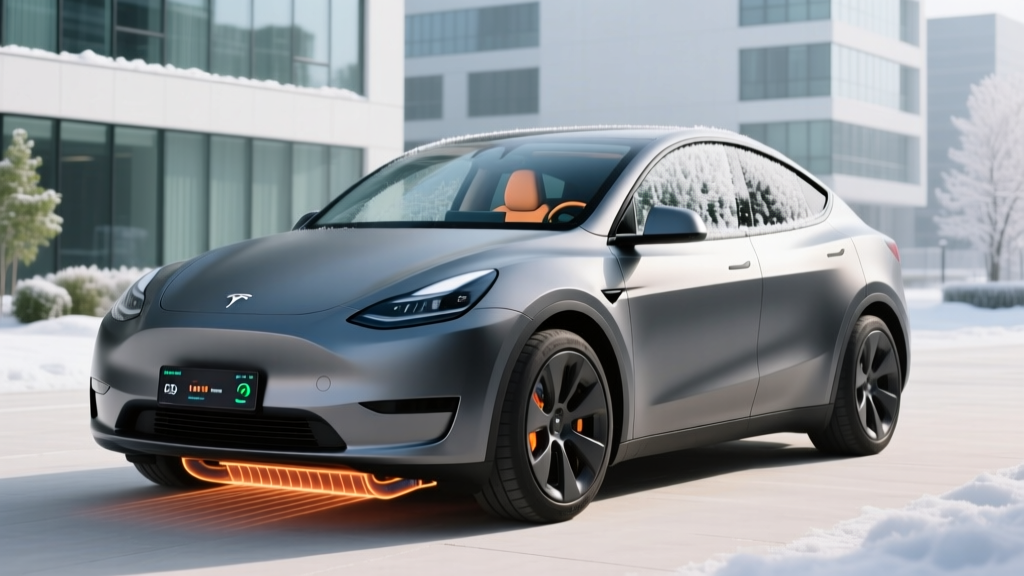
Cold weather hits the 2021 Model S harder than newer EVs equipped with standard heat pumps. Tesla did not equip a dedicated heat pump on the Model S until the Palladium refresh (late 2021 into 2022). Pre-refresh 2021 cars use resistive cabin heating, which can pull 3–6 kW of power in freezing conditions. This explains the 20–35% range reduction many owners report in sub-freezing winters. If you live in a cold climate and are choosing between an early 2021 build and a late 2021 Palladium build, the heat pump is a meaningful daily-use advantage on the newer platform.
According to fueleconomy.gov, the 2021 Model S Long Range achieves 120 MPGe combined, which translates to roughly 28 kWh per 100 miles. That efficiency is impressive for a 4,500+ lb luxury sedan and a key reason the Model S maintained its range crown for years.
Charging Speed: DC Fast Charging and Home Level 2
The 2021 Model S uses Tesla's proprietary connector (now being adopted industry-wide as NACS) and accesses the Tesla Supercharger network, which remains the most reliable DC fast-charging infrastructure in the U.S. as of 2026.
| Charging Method | Max Power (kW) | Speed / Time |
|---|---|---|
| DC Fast Charge (V3 Supercharger) | 250 kW peak | 10–80% in ~27 min; ~200 mi in 15 min |
| DC Fast Charge (V2 Supercharger) | 150 kW peak | 10–80% in ~40 min |
| Level 2 Home (48A / 11.5 kW) | 11.5 kW | ~34 miles of range per hour; full charge ~9 hrs |
| Level 2 Home (32A / 7.7 kW) | 7.7 kW | ~23 miles of range per hour; full charge ~13 hrs |
| Level 1 (120V outlet) | ~1.4 kW | ~4 miles of range per hour |
The 250 kW peak rate on V3 Superchargers is strong, but the charge curve matters more than the peak number. The 2021 Model S sustains roughly 200–250 kW between 10–30% state of charge, then tapers progressively. By 60% SoC, you're typically seeing 100–120 kW, and above 80%, charging slows dramatically to protect the NMC cells. This is why Tesla and most EV analysts quote 10–80% times rather than 0–100%.
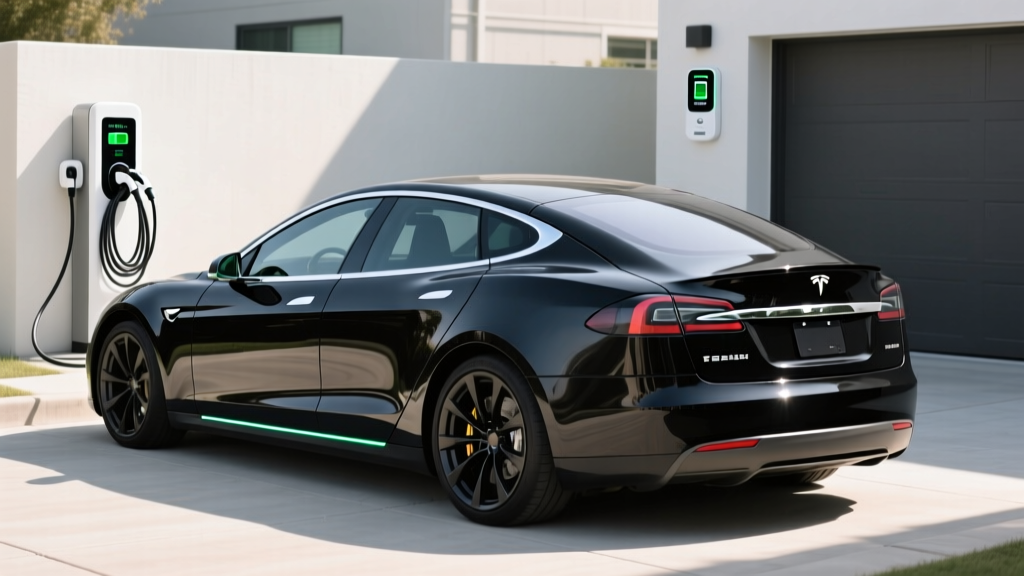
For home charging, the 2021 Model S supports up to 48 amps (11.5 kW) on a Level 2 Wall Connector installed on a 60-amp circuit. This adds roughly 34 miles of range per hour of charging, meaning an overnight session easily replenishes a full day's driving. Most owners install a Tesla Wall Connector ($400–$500 for the unit, plus $500–$2,000 for electrician installation depending on panel proximity and local permit costs).
Preconditioning note: When you navigate to a Supercharger in the Tesla navigation system, the car automatically warms the battery to optimal charging temperature. This can shave 5–10 minutes off your charging session in cold weather. Always navigate to the charger rather than just driving there.
Performance and Driving Dynamics
Even in 2026, the 2021 Model S Long Range's 3.1-second 0–60 mph time places it firmly in supercar territory for a five-passenger sedan. The dual-motor all-wheel-drive system provides instant torque vectoring, and the adaptive air suspension (standard on all 2021 Model S trims) adjusts ride height based on speed and road conditions.
The Plaid variant's 1,020 hp and 1.99-second 0–60 time made it the quickest production car in the world at launch. However, achieving that figure requires a prepared surface, drag-strip mode preconditioning, and specific tire conditions. In everyday driving, the Plaid delivers absurd passing power but the Long Range is more than sufficient for any real-world scenario.
One mechanical note for used buyers: the 2021 Model S still uses a conventional round steering wheel and traditional stalk-mounted turn signals and gear selector. The controversial yoke steering and screen-based gear selection arrived with the Palladium refresh. Many buyers specifically seek the 2021 pre-refresh interior for this reason — it's more conventional and, arguably, more ergonomic for daily use.
Interior, Cargo, and Technology
The 2021 Model S (pre-Palladium) interior features the signature 17-inch vertical touchscreen, a 12.3-inch digital instrument cluster behind the wheel, and a secondary rear-seat touchscreen for climate and entertainment. Build quality on 2021 models improved over earlier years but still drew criticism for panel gaps and material choices relative to German luxury competitors.
Passenger space:
- Front headroom: 38.8 inches
- Front legroom: 42.7 inches
- Rear headroom: 38.1 inches
- Rear legroom: 35.4 inches
Cargo capacity:
- Rear trunk: 26.3 cubic feet (with rear seats up)
- Frunk (front trunk): 5.3 cubic feet
- Total with seats folded: 58.1 cubic feet
The frunk is smaller than the Model 3's due to the larger front motor and HVAC components. The rear hatch design (liftback, not a traditional sedan trunk) makes loading bulky items easier than in competitors like the BMW i7 or Mercedes EQS.
Standout tech:
- Over-the-air software updates that add features years after purchase
- Tesla Arcade with gaming support (including wireless controller compatibility)
- Sentry Mode dashcam system with USB storage
- Autopilot standard; Full Self-Driving (Supervised) available as a paid add-on
- HEPA air filtration with "Bioweapon Defense Mode"
Pricing, Used Market Value, and Tax Credit Eligibility
The 2021 Model S Long Range originally carried a base MSRP of approximately $79,990 before incentives, with the Plaid starting around $129,990. In the 2026 used market, pricing varies significantly based on mileage, condition, and battery state of health:
| Configuration | Original MSRP (2021) | Typical Used Price (2026) | Used EV Tax Credit (§25E) |
|---|---|---|---|
| Long Range (30–50k mi) | $79,990 | $38,000 – $48,000 | Up to $4,000 (if eligible) |
| Plaid (20–40k mi) | $129,990 | $62,000 – $78,000 | Not eligible (over $25k cap for used credit) |
Critical tax credit distinction for used buyers: The federal §25E Used Clean Vehicle Credit (not §30D, which applies to new vehicles) offers up to $4,000 or 30% of the sale price — whichever is less — for qualifying used EVs. However, the vehicle's sale price must be $25,000 or less to qualify. Most 2021 Model S examples in 2026 sell above this threshold, meaning the majority of buyers will not qualify for the used EV tax credit.
If you find a high-mileage Long Range example listed at or below $25,000, the §25E credit requires:
- Buyer adjusted gross income ≤ $75,000 (single) / $150,000 (joint)
- Purchase from a licensed dealer (private-party sales don't qualify)
- Vehicle must be at least 2 model years old (2021 qualifies in 2026)
- Sale price ≤ $25,000
- Credit can only be claimed once per vehicle (check history)
For most buyers, the 2021 Model S will be a full-price used purchase without federal incentive offset. Some states offer their own used-EV rebates — check your local energy agency or DMV for current programs.
Battery Health, Warranty, and Long-Term Ownership
The 2021 Model S carries Tesla's standard battery and drive unit warranty: 8 years or 150,000 miles (whichever comes first), with a guaranteed minimum 70% battery capacity retention over that period. For a 2021 model in 2026, approximately 3 years of factory battery warranty remain.
This is a crucial data point for used buyers. Tesla's NMC packs in the Model S have demonstrated relatively mild degradation in real-world data — typically 8–12% capacity loss over the first 100,000 miles, with the curve flattening significantly afterward. A 2021 Model S with 50,000 miles and 92% state of health (SoH) is well within normal parameters.
How to check battery health before buying:
- In the car, navigate to Settings → Software → Additional Vehicle Information to view the battery's rated range vs. original EPA figure
- Request a third-party battery health report from services like Recurrent or TeslaFi if the owner uses them
- Check for any battery replacement history in the service records — Tesla replaces packs under warranty if capacity drops below 70%
Out-of-warranty battery replacement for the Model S currently ranges from $12,000 to $18,000 at Tesla service centers, depending on whether a new or remanufactured pack is installed. This is a meaningful long-term cost to factor if you plan to keep the vehicle past the 8-year/150,000-mile warranty window.
The basic vehicle limited warranty (bumper-to-bumper) was 4 years / 50,000 miles on the 2021 Model S, meaning it has expired on virtually all examples in 2026. Extended warranty options are limited — Tesla does not sell extended service contracts on used vehicles, and third-party EV warranties remain expensive and restrictive.
Pros
- 405-mile EPA range still class-leading among used luxury sedans
- Access to Tesla Supercharger network (most reliable in the U.S.)
- 670 hp dual-motor AWD with 3.1s 0–60 in Long Range trim
- OTA software updates keep the car current years after purchase
- Conventional steering wheel and stalks (pre-yoke ergonomics)
- Liftback cargo design with 26.3 cu ft trunk + frunk
- 3+ years of battery/drive unit warranty remaining
Cons
- No heat pump on pre-Palladium builds (higher winter range loss)
- Used EV tax credit (§25E) unlikely to apply due to $25k price cap
- Basic bumper-to-bumper warranty has expired
- Out-of-warranty battery replacement: $12,000–$18,000
- Build quality inconsistent — panel gaps, interior rattles on some examples
- No CCS adapter included (must purchase separately for non-Tesla DC charging)
- Insurance costs remain high ($2,500–$4,000/year depending on state and driving record)
Who Should Buy the 2021 Model S in 2026?
Best for: High-mileage commuters who need 300+ real-world miles of range, road-trip enthusiasts who value Supercharger network access, and performance-oriented buyers who want supercar acceleration in a practical five-seat sedan — all at roughly half the price of a new Model S.
Think twice if: You live in an extremely cold climate (consider a 2022+ with heat pump), you need the latest interior tech (Palladium refresh), you're counting on the used EV tax credit (price cap makes it unlikely), or you want remaining bumper-to-bumper warranty coverage.
Choose a 2022+ Model S instead if: You need a heat pump for cold climates, want the refreshed interior, or prefer the Plaid's tri-motor setup with updated thermal management.
Look at a BMW i7 or Mercedes EQS if: Build quality, ride refinement, and dealer service experience are higher priorities than outright range and charging speed.
Frequently Asked Questions
What is the real-world range of the 2021 Tesla Model S?
The EPA rates the Long Range at 405 miles and the Plaid at 390 miles. In real-world highway driving at 70 mph in mild weather, expect 320–345 miles. In freezing temperatures without a heat pump (pre-Palladium builds), range can drop to 260–310 miles. City and mixed driving with regenerative braking recovers more energy, yielding 350–380 miles.
How fast does the 2021 Model S charge?
On a V3 Supercharger (250 kW peak), the 2021 Model S charges from 10–80% in approximately 27 minutes, adding up to 200 miles in 15 minutes under ideal conditions. On a home Level 2 charger at 48 amps (11.5 kW), it adds about 34 miles of range per hour, fully charging overnight in roughly 9 hours. Always precondition the battery by navigating to the charger in the car's navigation system.
Does the 2021 Model S qualify for any federal tax credit?
The §30D new vehicle credit no longer applies. The §25E used EV credit offers up to $4,000 but requires the sale price to be $25,000 or less — most 2021 Model S examples sell above this cap. If you find one at or below $25,000, you must also meet income limits ($75k single / $150k joint) and purchase from a licensed dealer. Consult a tax professional and check IRS §25E guidelines for current rules.
Is the 2021 Model S worth buying vs. competitors?
Against a used 2021 Porsche Taycan, the Model S wins on range (405 vs. 227 miles for the Taycan 4S) and charging infrastructure (Superchargers vs. the still-maturing Electrify America network). Against a used Lucid Air (2022+), the Lucid offers more range (516 mi EPA for the Grand Touring) but costs significantly more on the used market and has a smaller service footprint. The Model S remains the balanced choice for range, charging access, and performance in the used luxury EV segment.
What are the biggest concerns when buying a used 2021 Model S?
Check battery state of health (aim for 90%+ at 50,000 miles), verify no salvage or accident history, inspect for panel gaps and interior rattles, and confirm whether the car has the pre-Palladium or Palladium interior (heat pump presence affects winter usability). Budget for higher insurance premiums and understand that bumper-to-bumper warranty has expired — only the 8-year/150,000-mile battery and drive unit warranty remains.
Does the 2021 Model S have a heat pump?
Early 2021 builds (pre-Palladium) use resistive cabin heating, which draws more battery power in cold weather and reduces winter range by 20–35%. Late 2021 builds on the Palladium platform include a heat pump, which is significantly more efficient. Check the build date and interior layout (vertical screen = pre-Palladium; horizontal screen = Palladium) to confirm.