The Original EV Benchmark: What a 2013 Model S Means Today
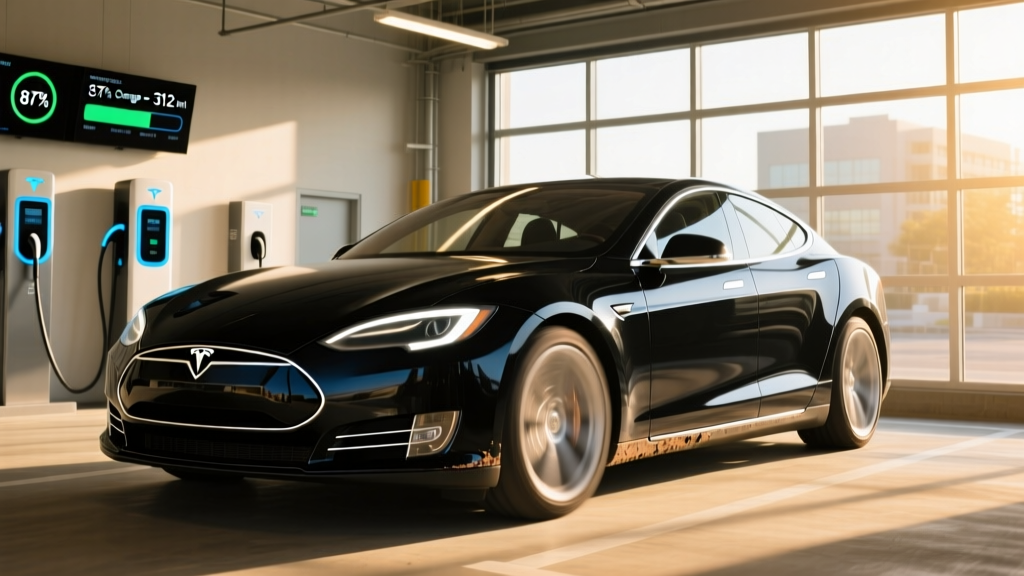
When Tesla delivered the first Model S sedans in mid-2012, the 2013 model year became the car that proved a battery-electric vehicle could compete with luxury sedans on performance, range, and tech. Over a decade later, the 2013 Tesla Model S occupies a unique space in the used EV market: an attainable entry into the Tesla Supercharger network and a spacious, quick luxury sedan — but one that demands careful scrutiny of battery health, outdated hardware, and ownership costs that can surprise unprepared buyers.
This review evaluates the 2013 Model S from a 2026 ownership perspective, covering the 60 kWh and 85 kWh variants that dominated that model year, real-world range expectations on aged packs, charging infrastructure compatibility, and the economics of keeping a 13-year-old EV on the road.
2013 Model S Specifications at a Glance
| Specification | Model S 60 | Model S 85 | Model S P85 (Performance) |
|---|---|---|---|
| Original EPA Range | 208 miles | 265 miles | 265 miles |
| Battery (Gross / Usable) | ~60 kWh / ~54 kWh | ~85 kWh / ~77 kWh | ~85 kWh / ~77 kWh |
| Battery Chemistry | NMC (Nickel Manganese Cobalt) | NMC | NMC |
| Drivetrain | Rear-Wheel Drive (RWD) | RWD | RWD |
| Horsepower | 302 hp | 362 hp | 416 hp |
| 0–60 mph | 5.9 sec | 5.4 sec | 4.2 sec |
| EPA Efficiency | 95 MPGe (35 kWh/100mi) | 89 MPGe (38 kWh/100mi) | 89 MPGe (38 kWh/100mi) |
| Original Base MSRP | $69,900 | $79,900 | $89,900 |
| DC Fast Charge (Max) | ~90 kW (Supercharger) | ~120 kW (Supercharger) | ~120 kW (Supercharger) |
| Level 2 Home Charge | Up to 10 kW (29 mi/hr) | Up to 10 kW (29 mi/hr) | Up to 10 kW (29 mi/hr) |
| Battery Warranty | 8 yr / 125,000 mi | 8 yr / Unlimited mi | 8 yr / Unlimited mi |
Sources: EPA fueleconomy.gov, Tesla 2013 press specifications.
Real-World Range in 2026: Degradation Is the Deciding Factor
Model S 60: Original EPA 208 mi → Expect 140–175 mi today depending on pack State of Health (SoH).
Model S 85 / P85: Original EPA 265 mi → Expect 180–220 mi today depending on SoH.
Highway driving at 75 mph reduces range by ~10–15%. Cold-weather (below 32°F) can reduce range by an additional 20–30% due to cabin heating and increased internal battery resistance. The 2013 Model S lacks a heat pump, relying on resistive HVAC, which draws heavily from the pack in winter.
The NMC cells in the 2013 Model S have aged over 12–13 years of calendar degradation, independent of mileage. Most 85 kWh packs in 2026 show between 70% and 85% State of Health, meaning usable capacity has fallen from roughly 77 kWh to somewhere between 54 and 65 kWh. The 60 kWh packs, already limited in original capacity, are the most range-challenged in the used market.
Before purchasing any 2013 Model S, request a battery health reading. Tesla service centers can pull SoH data, and third-party tools like the TeslaFi app or Scan My Tesla via OBD-II can provide cell-level voltage data. A pack below 70% SoH will meaningfully limit usability as a daily driver and may not justify the purchase price without a replacement plan.
Charging Speeds: Supercharger Access and Home Setup
The 2013 Model S uses Tesla's proprietary connector (pre-NACS standardization), which is mechanically compatible with today's Tesla Supercharger network and the growing number of NACS-open stations from other networks. However, the charge architecture is fundamentally older than current-generation EVs.
| Charging Level | Max Power | Rate (Approx.) | Notes |
|---|---|---|---|
| Level 1 (120V outlet) | ~1.4 kW | ~4 mi/hr | Emergency/trickle only |
| Level 2 (240V, HPWC or J1772 w/ adapter) | 10 kW (single charger) / 20 kW (twin chargers option) | 29 mi/hr (single) / 58 mi/hr (twin) | Twin onboard chargers were a $3,650 option in 2013 |
| DC Fast Charge (Supercharger V1/V2) | ~90–120 kW peak | 10–80% in ~45–55 min | Charge curve tapers significantly above 60% SoC; sustained rate averages ~60–70 kW |
Key charging realities for 2026 buyers:
- Peak kW is not sustained kW. The 2013 Model S may peak near 120 kW at low SoC on a V2 Supercharger, but the charge curve drops steeply after 50–60%. A 10–80% session typically takes 45–55 minutes, compared to 15–20 minutes on a 2025 EV with 250+ kW capability.
- CHAdeMO adapter availability. The 2013 Model S was sold with optional CHAdeMO compatibility in some markets. If you need non-Tesla DC fast charging, confirm the car has the CHAdeMO inlet or use a Tesla-to-CCS adapter (available from third parties, ~$200–$300) for Electrify America and other CCS networks.
- Supercharger access is a major advantage. Unlike 2013-era Nissan Leafs or Chevy Volts, the Model S retains full access to Tesla's Supercharger network — the most reliable and extensive DC fast-charging system in North America.
- Preconditioning matters. Navigate to a Supercharger using the built-in navigation, and the car will precondition the battery for faster charging. Skipping this step in cold weather can double your charge time.
Performance, Ride, and Daily Drivability
Even by 2026 standards, a 2013 Model S P85 with its 416 hp and 4.2-second 0–60 time delivers thrilling acceleration. The instant torque from the rear-mounted AC induction motor remains a hallmark EV experience. The standard 85 and 60 models are no slouches at 5.4 and 5.9 seconds respectively — still quicker than most gas sedans from the same era.
The 2013 Model S rides on an adaptive air suspension (standard on most trims), which provides a comfortable highway cruise and adjustable ride height. However, air suspension struts are a known failure point on early Model S vehicles, and replacement runs $1,500–$2,500 per corner. Many 2013 examples have already had at least one strut replacement; verify maintenance records.
Interior and cargo:
- Passenger space: 42.7 inches front legroom, 35.4 inches rear legroom — competitive with the BMW 5 Series and Mercedes E-Class of the era.
- Cargo volume: 26.3 cu ft trunk + 5.3 cu ft front trunk (frunk) = 31.6 cu ft total. With rear seats folded, cargo expands to 58.1 cu ft.
- Infotainment: The iconic 17-inch touchscreen was revolutionary in 2013 but runs older hardware. Navigation, media, and climate controls all route through the screen. Over-the-air updates have kept some features current, but expect slower response times compared to Tesla's HW4/Automotive-grade infotainment in newer models.
- Driver assistance: 2013 Model S vehicles were built before Tesla introduced Autopilot hardware (HW1 debuted in late 2014). This means no Autopilot, no FSD, no adaptive cruise control, and no automatic emergency braking. You get basic cruise control and parking sensors only. This is a significant safety and convenience gap versus any 2018+ EV.
Used Pricing, Tax Credits, and Total Cost of Ownership
In the 2026 used market, the 2013 Model S has depreciated substantially from its original $70,000–$100,000+ window sticker. Pricing varies heavily based on mileage, battery SoH, and condition:
| Variant | Typical Price Range | Mileage Range | Key Price Factor |
|---|---|---|---|
| Model S 60 | $11,000 – $16,000 | 90,000 – 150,000 mi | Limited range makes least desirable |
| Model S 85 | $14,000 – $22,000 | 70,000 – 130,000 mi | Battery SoH drives price spread |
| Model S P85 | $17,000 – $28,000 | 60,000 – 120,000 mi | Performance premium; collector interest |
Federal Tax Credit Eligibility (IRS §30D Used EV Credit)
The 2013 Model S may qualify for the federal used clean vehicle credit under IRS §25E (formerly §30D for new vehicles). Key rules for 2026:
- Credit amount: 30% of the sale price, up to a maximum of $4,000.
- Price cap: The vehicle must sell for $25,000 or less to qualify.
- Buyer income cap: Adjusted gross income must not exceed $75,000 (single), $112,500 (head of household), or $150,000 (joint filers).
- Dealer requirement: The sale must be through a licensed dealer (private-party sales do not qualify).
- Model eligibility: The 2013 Model S is on the IRS eligible used EV list as a qualifying battery electric vehicle.
- Point-of-sale transfer: The credit can be transferred to the dealer at purchase, reducing your out-of-pocket cost immediately.
Source: IRS.gov — Used Clean Vehicle Credit. Eligibility rules are subject to change; consult a tax professional before purchase.
Example: A 2013 Model S 85 purchased from a dealer for $18,000 by a qualifying buyer would receive 30% × $18,000 = $4,000 (the maximum), bringing the effective cost to $14,000.
Ownership Costs to Budget For
The purchase price is only the beginning. Critical cost considerations for a 2013 Model S in 2026:
- Battery replacement: If the pack fails outside warranty (all 2013 packs are now beyond the 8-year window), a refurbished 85 kWh replacement from Tesla runs approximately $12,000–$16,000 including labor. Third-party refurbishers may offer packs for $8,000–$12,000.
- Drive unit (motor) replacement: The rear drive unit is a known wear item. Replacement costs $4,000–$7,000.
- Air suspension: $1,500–$2,500 per corner if struts have not been replaced.
- Insurance: Expect $1,800–$3,000/year depending on your profile — higher than comparable gas sedans due to repair costs.
- Charging cost: At $0.15/kWh (national average home electricity), fully charging an 85 kWh pack (at 75% SoH = ~58 kWh usable) costs roughly $8.70, yielding a cost per mile of about $0.04–$0.05 — significantly cheaper than gasoline.
Pros, Cons, and Who Should Buy
- Supercharger network access — best road-trip charging in North America
- Spacious interior with frunk + large trunk (31.6 cu ft total)
- Strong acceleration even in base 60 trim
- Over-the-air updates still provide some feature improvements
- Very low cost per mile when charging at home
- Potential $4,000 federal used EV credit brings effective price down significantly
- No Autopilot or any driver-assistance features (SAE Level 0)
- Battery degradation reduces range to 140–220 mi depending on variant and SoH
- All original battery warranties have expired — replacement is a $10K+ risk
- Slow DC fast charging vs. modern EVs (45–55 min for 10–80%)
- Air suspension and drive unit are expensive failure points
- Outdated infotainment hardware; no native Apple CarPlay/Android Auto
- No heat pump — significant winter range loss
Who the 2013 Model S Suits Best
Ideal buyer: A budget-conscious EV enthusiast who wants Tesla Supercharger access for occasional road trips, has home Level 2 charging, and can absorb potential battery or drivetrain repair costs. Works well as a comfortable commuter with spacious cargo for families willing to accept the range limitations.
Not ideal for: Buyers who need modern driver-assistance safety features, those in very cold climates (severe range loss without a heat pump), anyone without access to home charging (reliance on public Level 2 or DC charging with a degraded pack is inconvenient), or buyers who cannot budget $5,000–$15,000 for potential major repairs.
How the 2013 Model S Compares to Alternatives
At the $12,000–$25,000 used price point in 2026, the 2013 Model S competes with several other used EVs:
- 2017–2018 Chevy Bolt EV: Similar price, 238-mile EPA range (less degraded), CCS charging (no Supercharger access), smaller but practical. Better battery longevity due to newer chemistry and active thermal management.
- 2016–2018 Nissan Leaf (30/40 kWh): Cheaper ($8K–$15K), but CHAdeMO charging, passive air cooling leads to faster degradation, 107–151 mi range. Less practical for road trips.
- 2018–2019 Tesla Model 3 (Standard Range): $18K–$25K, 220–240 mi EPA, Autopilot HW2.5/3 included, NACS Supercharger access, newer platform. The strongest alternative if Autopilot and modern tech matter.
- 2013–2014 BMW i3: Unique design, 81–114 mi range (limited), expensive parts. More of a city car than a road-trip vehicle.
The 2013 Model S wins on interior space, Supercharger access, and performance-per-dollar. It loses on battery risk, lack of driver assistance, and charging speed versus any post-2018 EV.
Frequently Asked Questions
What is the real-world range of a 2013 Tesla Model S in 2026?
Expect 140–175 miles for the Model S 60 and 180–220 miles for the 85/P85, depending on battery State of Health, driving style, and climate. Highway driving at 75+ mph and cold weather below freezing will push you toward the lower end of those ranges. Always check pack SoH before purchasing.
How fast does the 2013 Model S charge?
On a Tesla V2 Supercharger, the 85 kWh model peaks near 120 kW but tapers significantly, averaging 60–70 kW sustained. A 10–80% charge takes approximately 45–55 minutes. At home on a 240V Level 2 charger (single onboard charger), you add about 29 miles of range per hour. Models with the optional twin chargers can accept up to 20 kW on Level 2, adding ~58 miles per hour.
Does the 2013 Model S qualify for any federal tax credit?
Yes, it may qualify for the IRS §25E used clean vehicle credit: up to $4,000 (30% of sale price) if purchased from a dealer for $25,000 or less, and if the buyer meets income caps ($75K single / $150K joint). The credit can be applied at the point of sale. Confirm eligibility at IRS.gov and with your tax professional.
Is the 2013 Model S battery warranty still valid?
No. The original battery warranty was 8 years / 125,000 miles (60 kWh) or 8 years / unlimited miles (85 kWh). All 2013 model year warranties expired by 2021 at the latest. Any battery failure is an out-of-pocket expense, typically $10,000–$16,000 for a replacement pack.
Can I use non-Tesla chargers with a 2013 Model S?
Yes, with adapters. The 2013 Model S has a Tesla-proprietary inlet. You can use a Tesla-to-J1772 adapter for Level 2 public chargers (often included with the car). For CCS DC fast chargers (Electrify America, EVgo), third-party Tesla-to-CCS adapters are available. Some early Model S vehicles also have a CHAdeMO inlet as a factory option.
Is the 2013 Model S worth buying vs. a newer used EV?
It depends on your priorities. If you want maximum space, Supercharger road-trip capability, and strong performance at the lowest price, the 2013 Model S is compelling — especially with the $4,000 used EV credit. If you prioritize modern safety features (AEB, lane-keeping), reliable battery health, and faster charging, a 2018+ Model 3 or Chevy Bolt EV is a safer bet. Budget at least $5,000 beyond the purchase price for potential repairs.
Does the 2013 Model S have Autopilot or Full Self-Driving?
No. The 2013 Model S predates Tesla's Autopilot hardware (introduced in late 2014 as HW1). There is no adaptive cruise control, lane-keeping, automatic emergency braking, or any driver-assistance capability. The car is SAE Level 0 — full manual driving at all times. Note: even newer Teslas with Autopilot and FSD (Supervised) remain SAE Level 2, requiring active driver supervision.