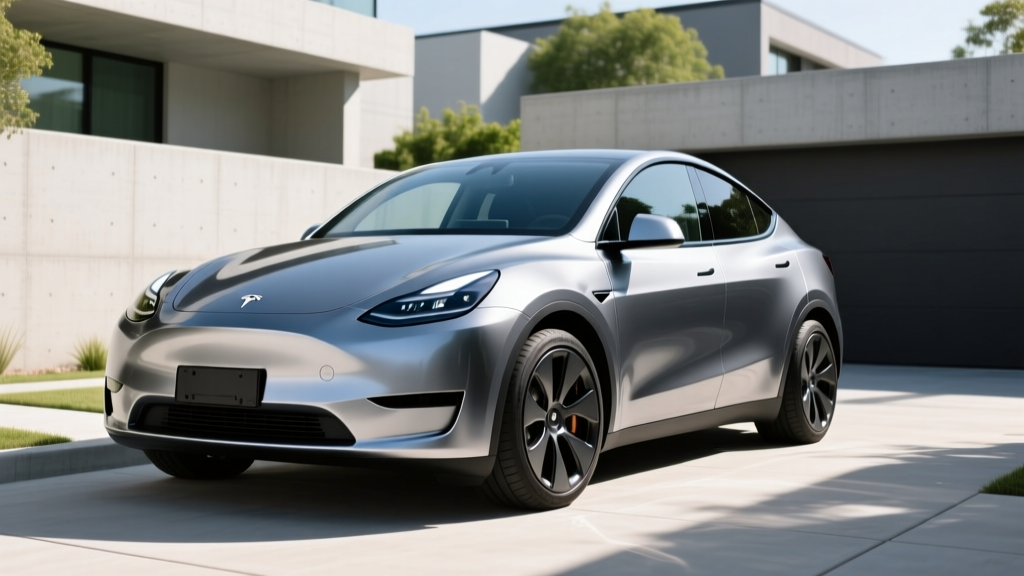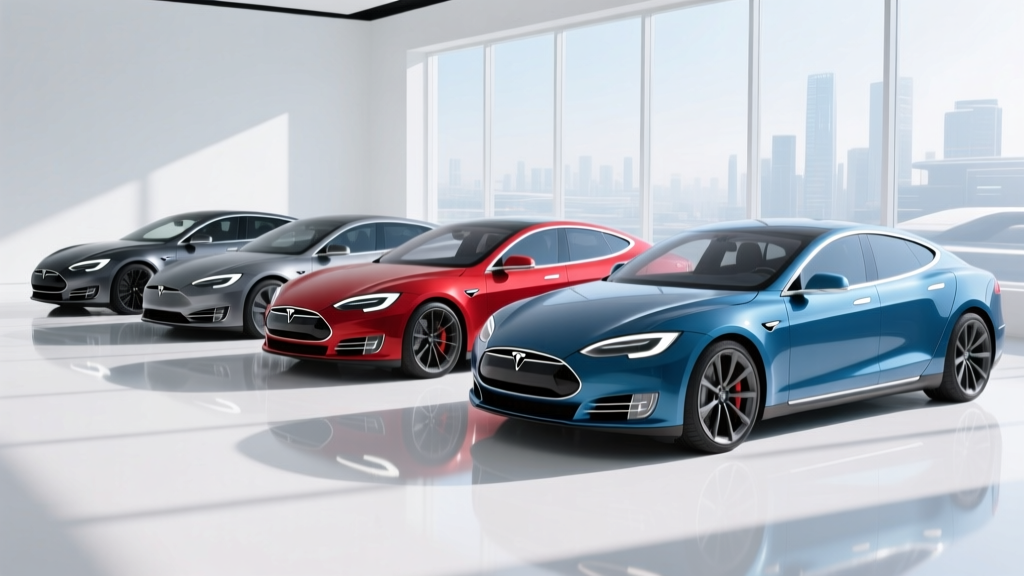
The 2010 Tesla That Started It All: Roadster to Model S Prototype
When enthusiasts search for "Tesla 2010," they're usually hunting for one of two vehicles: the original Tesla Roadster (produced 2008–2012, with 2010 being a peak production year) or the Model S prototype that Tesla unveiled in 2009 and began refining through 2010 before deliveries started in 2012. Neither vehicle is available new today, but understanding what Tesla built in 2010 is essential context for evaluating the 2026 Model S — the direct descendant of that early vision.
The 2010 Tesla Roadster shipped with a 53 kWh lithium-cobalt battery, an EPA-estimated 244 miles of range (updated retroactively under modern testing), and a 3.7-second 0–60 mph time. It proved that a battery-electric sports car could outperform gasoline exotics, but at $109,000, it was a halo car for early adopters. The Model S, which Tesla was actively engineering throughout 2010, would become the company's real market-maker when it launched for the 2012 model year.
This review covers the 2026 Tesla Model S — what you can actually buy today — while acknowledging the 2010-era engineering DNA that shaped it.
2026 Tesla Model S: Full Specifications at a Glance
| Specification | Model S Long Range | Model S Plaid |
|---|---|---|
| EPA Range | 402 miles | 359 miles |
| Battery (usable) | ~100 kWh, NMC | ~100 kWh, NMC |
| Drivetrain | Dual-Motor AWD | Tri-Motor AWD |
| Horsepower | 670 hp | 1,020 hp |
| 0–60 mph | 3.1 seconds | 1.99 seconds |
| Top Speed | 155 mph | 200 mph |
| Peak DC Fast Charge | 250 kW | 250 kW |
| 10–80% DC Charge Time | ~30 minutes | ~30 minutes |
| Level 2 Charge Rate | 11.5 kW (~44 mi/hr) | 11.5 kW (~44 mi/hr) |
| MPGe (combined) | 120 MPGe | 116 MPGe |
| Base MSRP | $79,990 | $94,990 |
| Battery Warranty | 8 yr / 150,000 mi | 8 yr / 150,000 mi |
Source: fueleconomy.gov and Tesla's official 2026 spec sheets.
Real-World Range: What the EPA Sticker Doesn't Tell You
EPA Estimate: 402 miles (Long Range) / 359 miles (Plaid)
Real-World Expectation: 310–350 miles on highway road trips at 70–80 mph; 280–320 miles in sub-freezing temperatures; 370–395 miles in mixed city/suburban driving with regenerative braking.
The Model S Long Range's 402-mile EPA figure remains among the highest of any production EV sold in 2026. However, EPA testing uses a blended cycle with generous regenerative braking assumptions that favor stop-and-go driving. On a 75-mph highway cruise in 40°F weather with the heat pump running, expect roughly 300–320 miles before reaching a 10% state of charge. In mild conditions (65°F, 55–65 mph, mixed roads), owners consistently report 360–390 miles.
The Plaid's tri-motor setup and stickier Michelin Pilot Sport 4S tires increase rolling resistance, shaving range further. Plan for 270–300 miles on aggressive highway drives. Tesla's thermal management system — including the heat pump introduced in the 2021 refresh — mitigates cold-weather losses better than most competitors, keeping range degradation to roughly 15–20% at 20°F, compared to 25–35% for EVs without heat pumps.
Charging Speed: Supercharger Network vs. Home Level 2
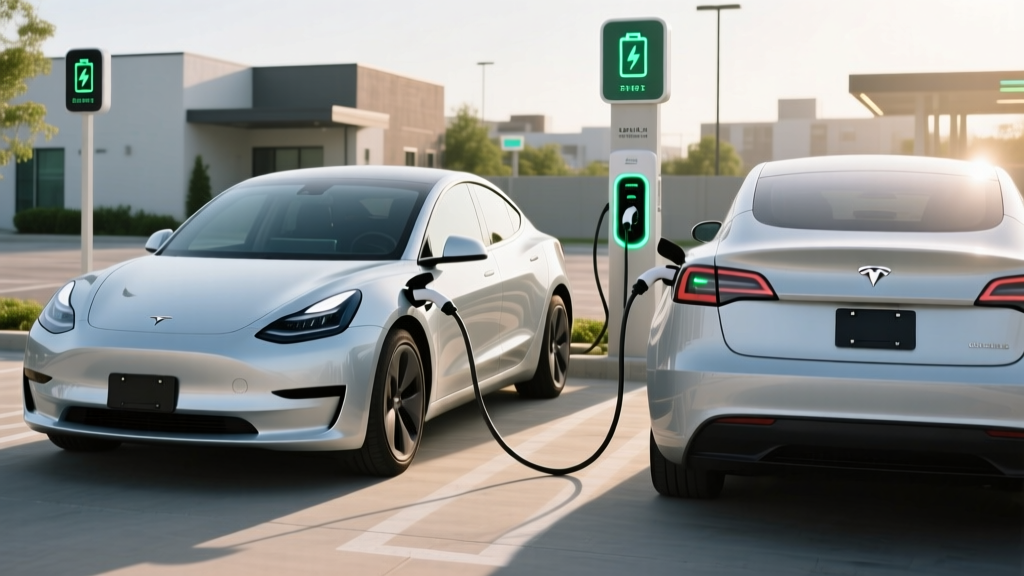
The 2026 Model S charges at up to 250 kW on Tesla's V3 and V4 Superchargers using the native NACS connector. No adapter is needed for the Tesla Supercharger network, which remains the most reliable DC fast-charging ecosystem in the U.S., with over 7,000 stalls nationwide.
| Charging Method | Power (kW) | Miles Added per Hour | Notes |
|---|---|---|---|
| Level 1 (120V outlet) | ~1.4 kW | ~5 mi/hr | Emergency/trickle only |
| Level 2 (240V, Wall Connector) | 11.5 kW | ~44 mi/hr | Full charge in ~9 hours |
| DC Fast (V3 Supercharger) | 250 kW peak | ~200 mi in 15 min | 10–80% in ~30 min; tapers above 80% |
| DC Fast (CCS station w/ adapter) | Up to 150 kW | Varies | Requires Tesla CCS adapter (sold separately) |
At home, Tesla's Wall Connector on a 60-amp circuit delivers 11.5 kW, adding roughly 44 miles of range per hour. A full overnight charge from 10% to 90% takes about 8–9 hours. Installation costs typically range from $800 to $2,500 depending on panel capacity and conduit runs — consult a licensed electrician for a site-specific quote.
The charge curve matters: the Model S pulls its peak 250 kW only between roughly 10% and 35% state of charge. Above 60%, the rate drops to ~100 kW, and above 80%, it slows further to protect battery longevity. Preconditioning the battery (automatic when a Supercharger is set as your navigation destination) is essential for achieving peak charge rates — without it, cold-soaked batteries may start charging at under 50 kW.
Performance, Interior, and Technology
The Model S Plaid's 1.99-second 0–60 mph time remains the quickest production sedan ever sold. Even the Long Range variant's 3.1 seconds outruns most sports cars. Both trims feature adaptive air suspension that adjusts ride height by up to 2.3 inches, providing highway aero efficiency and clearance for rough driveways.
Inside, the 17-inch center touchscreen runs Tesla's latest infotainment software with a responsive UI, integrated navigation with real-time Supercharger routing, and a gaming-capable AMD Ryzen processor. The 22-speaker audio system delivers concert-hall clarity. Rear-seat passengers get 35.4 inches of legroom (competitive with the BMW 5 Series) and a 12.3-inch rear entertainment screen. Cargo capacity is 28 cubic feet behind the rear seats, expanding to 79 cubic feet with seats folded — plus a 5.3-cubic-foot frunk.
Tesla's Autopilot comes standard and includes adaptive cruise control, lane centering, and automatic emergency braking. Full Self-Driving (Supervised), available as a $8,000 add-on, adds automated lane changes, traffic light recognition, and city-street navigation — but remains an SAE Level 2 system requiring full driver attention at all times.
Important: Tesla FSD (Supervised) is SAE Level 2 driver assistance, not autonomous driving. You must keep your hands on the wheel and eyes on the road at all times. It does not make the vehicle self-driving.
Pricing, Tax Credits, and Ownership Costs
The 2026 Model S starts at $79,990 for Long Range and $94,990 for Plaid. Add-ons like FSD ($8,000), premium paint ($1,500–$2,500), and 21-inch wheels ($4,500) push as-tested prices to $90,000–$110,000+.
| Cost Factor | Details |
|---|---|
| Long Range MSRP | $79,990 |
| Plaid MSRP | $94,990 |
| Federal Tax Credit (§30D) | Up to $7,500 if eligible — see rules below |
| Destination Fee | $1,390 |
| Est. Annual Insurance | $2,800–$3,600 (varies by state/driver) |
| Est. Annual Electricity (15k mi) | $550–$750 (at $0.14/kWh national avg) |
Federal tax credit eligibility is complex. Under IRS §30D, the 2026 Model S qualifies for up to $7,500 in point-of-sale credit only if:
- MSRP cap: Sedans must be under $55,000 — the Model S exceeds this cap, so it does not qualify for the new-vehicle §30D credit.
- Income cap: Modified AGI must be ≤$150,000 (single) / $300,000 (joint).
- Battery sourcing: Critical minerals and battery components must meet phased-in domestic-content thresholds.
Because the Model S MSRP exceeds the $55,000 sedan cap, buyers cannot claim the federal new-vehicle credit. However, a used Model S (model year 2022 or older, purchased from a dealer for under $25,000) may qualify for up to $4,000 under the pre-owned clean vehicle credit — consult a tax professional for eligibility.
2026 Model S vs. the Competition
The luxury EV sedan segment has matured significantly since Tesla first sketched the Model S in 2010. Here's how it stacks up against key 2026 rivals:
| Category | 2026 Tesla Model S LR | 2026 Lucid Air Pure | 2026 BMW i5 M60 | 2026 Mercedes EQS 450+ |
|---|---|---|---|---|
| EPA Range | 402 mi | 419 mi | 295 mi | 390 mi |
| Base Price | $79,990 | $74,900 | $84,300 | $104,400 |
| 0–60 mph | 3.1 sec | 5.2 sec | 3.7 sec | 5.9 sec |
| DC Fast Charge | 250 kW | 200 kW | 205 kW | 200 kW |
| Supercharger Access | Native NACS | Adapter needed | Adapter needed | Adapter needed |
| Tax Credit | No (MSRP cap) | No (MSRP cap) | No (MSRP cap) | No (MSRP cap) |
The Lucid Air Pure edges the Model S on range and undercuts it on price, but Tesla's Supercharger network, superior DC fast-charge speed, and performance advantage keep the Model S compelling for road-trip-heavy buyers. The BMW i5 and Mercedes EQS offer more traditional luxury interiors and dealer-service infrastructure but sacrifice significant range and charging speed.
Warranty and Long-Term Battery Outlook
Tesla covers the Model S battery and drive units for 8 years or 150,000 miles, whichever comes first, with a guaranteed minimum 70% capacity retention. The basic vehicle limited warranty runs 4 years / 50,000 miles.
NMC (nickel-manganese-cobalt) chemistry in the Model S prioritizes energy density over cycle life compared to LFP batteries found in the Model 3 RWD. Real-world degradation data from high-mileage owners suggests approximately 10–15% capacity loss at 100,000 miles — consistent with Tesla's warranty threshold. To maximize longevity, Tesla recommends daily charging to 80–90% and reserving 100% charges for road trips.
Pros and Cons
Pros
- Class-leading 402-mile EPA range (Long Range)
- Native NACS Supercharger access — no adapter, highest reliability
- 250 kW DC fast charging among the fastest in its class
- Plaid's 1.99-sec 0–60 is unmatched by any sedan
- Spacious cargo (28 cu ft + 5.3 cu ft frunk)
- Over-the-air updates continuously add features
Cons
- No federal tax credit — MSRP exceeds $55,000 sedan cap
- Interior materials lag behind BMW/Mercedes at this price point
- Touchscreen-dependent controls frustrate some drivers
- Insurance premiums above segment average
- Service center wait times in some metro areas
- FSD (Supervised) remains Level 2 despite the name
Who Should Buy the 2026 Tesla Model S?
Choose the Model S Long Range if: You need 350+ real-world miles for frequent road trips, want the most reliable DC fast-charging network, and value performance without paying Plaid premium.
Choose the Model S Plaid if: Track-capable acceleration matters, you want tri-motor torque vectoring, and budget allows a $95K+ sedan.
Look elsewhere if: You need the federal tax credit (consider a Model 3, which may qualify depending on trim and sourcing), prefer a traditional luxury interior (BMW i5, Mercedes EQS), or want maximum range at a lower price (Lucid Air Pure).
Frequently Asked Questions
What was the original 2010 Tesla?
In 2010, Tesla was producing the first-generation Roadster (a $109,000 electric sports car with 244 miles of range) and actively developing the Model S prototype. The Model S did not enter production until 2012.
What is the real-world range of the 2026 Tesla Model S?
Expect 310–350 miles on highway road trips, 280–320 miles in freezing weather, and up to 395 miles in mild city/suburban driving. The EPA estimates 402 miles for Long Range and 359 miles for Plaid.
How fast does the Model S charge at home and on the road?
At home on a Level 2 Wall Connector (11.5 kW), the Model S adds ~44 miles per hour, fully charging overnight in about 9 hours. On a V3 Supercharger (250 kW peak), it gains up to 200 miles in 15 minutes, with a 10–80% charge taking approximately 30 minutes.
Does the 2026 Model S qualify for the federal EV tax credit?
No. Under IRS §30D rules, new sedans must have an MSRP under $55,000 to qualify. The Model S starts at $79,990 and is ineligible. A used Model S may qualify for up to $4,000 under the pre-owned vehicle credit if purchased under $25,000.
Is the Model S worth buying over the Lucid Air or BMW i5?
The Model S wins on charging speed, Supercharger network access, and performance. The Lucid Air Pure offers more range at a lower price. The BMW i5 provides a more traditional luxury experience with dealer service. Your priority — range, performance, or interior refinement — should guide the choice.
What battery chemistry does the Model S use?
The 2026 Model S uses NMC (nickel-manganese-cobalt) lithium-ion cells optimized for energy density. This differs from the LFP (lithium iron phosphate) chemistry in the base Model 3, which offers longer cycle life but lower energy density.