Quick Verdict: The Tesla Model S 100D in 2026
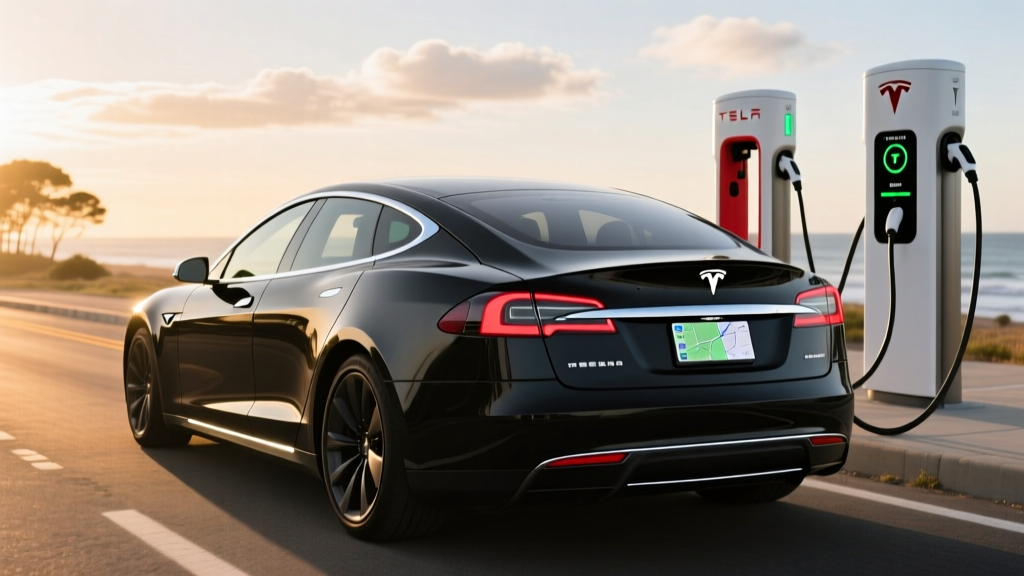
The Tesla Model S 100D is no longer sold new — Tesla replaced it with the refreshed Model S Long Range and Plaid trims in 2021, and subsequent battery/price updates have further shifted the lineup. But the 100D remains one of the most sought-after vehicles on the used EV market in 2026, prized for its 100 kWh battery pack, dual-motor all-wheel drive, and Supercharger network access. If you're evaluating a pre-owned 100D (model years 2017–2020), this review gives you the exact specs, real-world range expectations, charging behavior, and ownership economics you need to make a confident decision.
Tesla Model S 100D: Full Specification Sheet
| Spec | Value |
|---|---|
| EPA Range | 335 miles (2019–2020 model years) |
| Battery Capacity | 100 kWh (usable ~98 kWh), NMC chemistry |
| Drivetrain | Dual Motor AWD |
| Horsepower | ~518 hp (combined) |
| 0–60 mph | 4.2 seconds |
| EPA Efficiency | 102 MPGe combined / 33 kWh per 100 mi |
| Max DC Fast Charge | ~120 kW (Supercharger V2) / up to 150 kW (V3, limited) |
| 10–80% DC Charge | ~40–45 minutes |
| Level 2 Home Charge | 16.5 kW max (Model S onboard charger); ~44 mi/hr |
| Cargo Volume | 26.3 cu ft (rear) + ~5.3 cu ft (frunk) |
| Rear Legroom | 35.4 inches |
| Original MSRP (2019) | ~$94,000–$105,000 depending on options |
| Used Market (2026) | $28,000–$42,000 depending on mileage & condition |
| Battery/Drive Unit Warranty | 8 years / 150,000 miles (70% capacity retention) |
Real-World Range: What to Actually Expect
Real-World Highway (70–80 mph): ~260–290 miles
Real-World City/Mixed: ~290–320 miles
Cold Weather (below 30°F): ~210–250 miles (30–35% reduction possible)
The 335-mile EPA figure was class-leading when the 100D launched and still holds up well in 2026. However, the Model S 100D is a large, heavy sedan with a drag coefficient of 0.24 — efficient for its class, but highway speeds above 75 mph erode range noticeably. In real-world road-trip testing at 75 mph on flat terrain in moderate temperatures (65–75°F), expect roughly 270–285 miles before hitting 10% State of Charge.
Cold weather is the bigger concern. The 100D uses an NMC (nickel manganese cobalt) battery, which experiences increased internal resistance in freezing temperatures. Tesla's thermal management system helps, but preconditioning is essential. In sub-30°F conditions without preconditioning, range loss of 30–35% is well documented. Always precondition the battery while still plugged in — this draws grid power rather than battery energy and warms the pack for better efficiency and faster charging on departure.
According to fueleconomy.gov, the 2019 Model S 100D achieves 102 MPGe combined. Owners report real-world efficiency of 31–35 kWh per 100 miles in mixed driving, rising to 36–40 kWh per 100 miles at sustained highway speeds.
Charging Speeds: DC Fast Charge and Home Level 2
| Charge Level | Power (kW) | Speed (mi/hr added) | Notes |
|---|---|---|---|
| Level 1 (120V) | ~1.4 kW | ~3–4 mi/hr | Emergency/trickle only |
| Level 2 (240V, 48A) | 11.5 kW | ~30 mi/hr | Standard home Wall Connector setup |
| Level 2 (240V, 72A) | 16.5 kW | ~44 mi/hr | Requires dual onboard chargers (option on early 100D) |
| DC Fast (Supercharger V2) | ~120 kW peak | ~250–300 mi/hr (peak) | Tapers significantly above 60% SoC |
| DC Fast (Supercharger V3) | ~150 kW peak | ~300–350 mi/hr (peak) | 100D capped below V3's 250 kW max |
The 100D's charging architecture predates Tesla's current 250 kW V3 Supercharger optimization. While V3 stalls can deliver up to 250 kW to newer vehicles (Model 3/Y, refreshed Model S), the 100D's battery management system caps the charge rate lower — typically peaking around 120–150 kW depending on state of charge, pack temperature, and station load.
The charge curve matters more than peak rate. The 100D sustains roughly 100–120 kW from 10% to about 50% SoC, then tapers to 60–70 kW through 70%, and drops further to 30–40 kW above 80%. A realistic 10–80% charge takes 40–45 minutes at a V2 Supercharger and 35–40 minutes at a V3 stall. Plan road-trip stops accordingly — the last 20% of the battery takes nearly as long as the first 50%.
For home charging, the 100D supports up to 72 amps AC via dual onboard chargers (a $1,500 option when new). Most 100Ds on the used market have the standard 48-amp single charger, which delivers about 30 miles of range per hour on a Tesla Wall Connector or equivalent 11.5 kW Level 2 station. A full overnight charge from 20% to 100% takes roughly 8–9 hours at 48 amps.
Performance and Driving Dynamics
The 100D's dual-motor AWD system produces approximately 518 horsepower and delivers a 4.2-second 0–60 mph time. That's quick by any standard — and notably quicker than the rear-wheel-drive Model S variants of the same era. The instant torque delivery makes highway merging and passing effortless, and the low center of gravity (battery pack mounted under the floor) gives the sedan surprisingly composed handling for its 4,900+ pound curb weight.
The 100D does not include the Ludicrous Mode acceleration boost found on the P100D (which hits 0–60 in 2.5 seconds). If you see "P100D" badging, that's the performance variant — a different vehicle with its own spec profile. The standard 100D prioritizes range and comfort over outright acceleration, though 4.2 seconds is hardly slow.
Ride quality on the 100D's adaptive air suspension is generally excellent, with adjustable ride height for clearing driveways or lowering at highway speed for efficiency. Note that air suspension systems on 2017–2019 Model S vehicles are known to develop leaks or compressor failures after 80,000–120,000 miles — budget $1,500–$3,000 for potential replacement if not already addressed by a previous owner.
Interior, Tech, and Driver Assistance
The 100D-era Model S interior is defined by the 17-inch portrait touchscreen that controls nearly every vehicle function — climate, media, navigation, vehicle settings, and even the glovebox. The 2018+ models received the refreshed interior with improved materials, but pre-2018 examples still use the older dash design with more physical buttons below the screen.
Autopilot and FSD: All 100D vehicles include basic Autopilot (Traffic-Aware Cruise Control and Autosteer) as standard. Enhanced Autopilot (Auto Lane Change, Navigate on Autopilot, Autopark, Summon) was a $6,000–$7,000 option. Full Self-Driving (FSD) capability was available as an additional purchase, though its value on a used vehicle depends on whether the license was transferred with the car.
Infotainment highlights include native Spotify and Tidal streaming, over-the-air software updates (the 100D continues to receive them in 2026), a web browser, and Tesla's excellent navigation with real-time Supercharger routing. One drawback: the 100D-era Model S does not support Apple CarPlay or Android Auto — a notable omission that persists across all Tesla vehicles.
Pricing, Used Market Value, and Tax Credit Eligibility
| Scenario | Price Range | Notes |
|---|---|---|
| Original MSRP (2019) | $94,000–$105,000 | Varied by options (FSD, Enhanced AP, paint, wheels) |
| Used Market (2026) | $28,000–$42,000 | Based on 60k–120k miles, condition, and FSD transfer |
| Used EV Tax Credit (§25E) | Up to $4,000 (30% of sale price, max $4,000) | Vehicle must be under $25,000; buyer income caps apply |
| New-Vehicle §30D Credit | N/A (no longer sold new) | Does not apply to used purchases |
The Used Clean Vehicle Credit (IRS §25E) is the relevant incentive for a 100D purchase in 2026. This credit provides 30% of the sale price, up to a maximum of $4,000, for qualifying used EVs. Key eligibility requirements per the IRS:
- Price cap: The used vehicle must sell for $25,000 or less. Many 100Ds on the market in 2026 are priced between $28,000–$42,000, meaning they exceed this cap and do NOT qualify.
- Income cap: Modified adjusted gross income must not exceed $75,000 (single), $112,500 (head of household), or $150,000 (joint filers).
- Vehicle age: Must be at least 2 model years old (all 100Ds qualify).
- Dealer requirement: Must be purchased from a licensed dealer (not private party) for the credit to apply, and the dealer must report the sale to the IRS.
- First-time transfer: The credit can only be claimed once per vehicle VIN after its original sale.
Practical reality: Most 100Ds in 2026 sell above the $25,000 cap. To claim the $4,000 credit, you'd need to find a higher-mileage or cosmetically challenged 100D priced at or below $25,000 from a participating dealer. This is possible but uncommon — set alerts and be prepared to act quickly if one appears.
Pros, Cons, and Key Competitors
Pros
- 335-mile EPA range remains competitive in 2026
- Access to Tesla Supercharger network (17,000+ stalls in North America)
- Over-the-air updates keep software current
- Spacious liftback cargo area (26.3 cu ft + frunk)
- Strong dual-motor AWD performance (4.2s 0–60)
- Air suspension with adjustable ride height
- Continued software support and feature additions
Cons
- DC fast charge capped at ~120–150 kW (slower than modern EVs)
- NMC battery degradation more pronounced than LFP packs
- No Apple CarPlay or Android Auto
- Air suspension failures common after 80k–120k miles
- Older interior design (pre-2018 models)
- Limited rear-seat headroom for tall passengers
- Insurance costs above average for the segment
- Used EV tax credit eligibility difficult due to $25k price cap
Key Competitors on the Used Market
At the $30,000–$40,000 price point in 2026, the 100D competes against:
- 2020–2021 Tesla Model 3 Long Range AWD: Newer platform, faster charging (up to 250 kW), but less cargo space and a smaller 75–82 kWh battery (~322–353 mi EPA).
- 2020–2022 Ford Mustang Mach-E Extended Range: Crossover form factor, CCS charging, CarPlay support, but no Supercharger access (unless equipped with NACS adapter).
- 2021–2022 Hyundai Ioniq 5 / Kia EV6: 800V architecture enables 10–80% in ~18 minutes, but smaller battery (~77 kWh) means ~260–310 mi range.
The 100D's advantage is its combination of large battery, proven range, and Supercharger access. Its disadvantage is age — these vehicles are 6–9 years old, and components like the air suspension, drive unit, and 12V systems may require attention.
Warranty Coverage and Battery Longevity
Tesla's battery and drive unit warranty for the 100D covers 8 years or 150,000 miles (whichever comes first), with a guaranteed minimum of 70% capacity retention over that period. For a 2019 model, the warranty extends through 2027 or 150,000 miles — meaning many 100Ds in 2026 still have 1–2 years of battery warranty remaining.
NMC battery degradation data from Tesla's fleet shows an average capacity loss of approximately 10–12% over the first 100,000 miles, with the degradation curve flattening significantly after the initial break-in period. A 100D with 80,000 miles and 88–90% State of Health (SoH) is typical and nothing to be concerned about. Use the vehicle's built-in battery health screen or third-party tools like Scan My Tesla (via OBD-II adapter) to check SoH before purchasing.
According to NHTSA, the 2019 Model S received a 5-star overall safety rating. The IIHS did not rate the 2019 Model S in all categories, so check specific test results if crash safety is a priority.
Who Should Buy a Tesla Model S 100D?
- You want maximum range for long road trips and Supercharger access is a priority
- You need a spacious liftback sedan with room for family cargo
- You value AWD traction in snow/rain climates
- You're comfortable buying a 6–9 year old vehicle and budgeting for potential air suspension or cosmetic repairs
- You want continued OTA software updates on a proven platform
- You want the fastest possible DC charging (consider Ioniq 5/EV6 with 800V or a newer Model 3/Y)
- You need Apple CarPlay or Android Auto
- You want a new-vehicle warranty or the §30D $7,500 federal tax credit
- Your budget is strictly under $25,000 and you want to claim the used-EV credit
Frequently Asked Questions
What is the real-world range of the Tesla Model S 100D?
The EPA rates the 2019–2020 Model S 100D at 335 miles. In real-world highway driving at 75 mph, expect 260–290 miles. In cold weather below 30°F, range can drop to 210–250 miles without preconditioning. City and mixed driving typically yields 290–320 miles.
How fast does the 100D charge at home and on the road?
At home on a 48-amp Level 2 charger, the 100D gains about 30 miles of range per hour (11.5 kW). On Tesla Superchargers, it peaks at roughly 120–150 kW, with a 10–80% charge taking 35–45 minutes depending on station type (V2 vs V3) and battery temperature. The charge rate tapers significantly above 80% SoC.
Does the Tesla Model S 100D qualify for any federal tax credit?
The new-vehicle §30D credit does not apply since the 100D is no longer sold new. The Used Clean Vehicle Credit (§25E) offers up to $4,000, but only if the purchase price is $25,000 or less and buyer income is within caps ($75k single / $150k joint). Most 100Ds in 2026 sell above $25,000, making credit eligibility uncommon. Consult a tax professional or the IRS for your specific situation.
Is a used 100D worth buying versus a newer Model 3 Long Range?
It depends on priorities. The 100D offers more interior space, a larger battery (100 kWh vs ~82 kWh), and a liftback cargo area. The Model 3 Long Range charges faster (up to 250 kW), has a more modern interior, and costs less to maintain due to its newer platform. If road-trip comfort and cargo space matter, the 100D wins. If charging speed and lower maintenance risk are priorities, the Model 3 is the better choice.
How long will the 100D battery last?
Tesla's fleet data suggests NMC packs lose roughly 10–12% capacity over the first 100,000 miles, with degradation slowing significantly afterward. Many 100D owners report 85–90% State of Health at 80,000–100,000 miles. The battery warranty covers 8 years/150,000 miles with a 70% minimum retention guarantee. Replacement cost, if needed out of warranty, ranges from $12,000–$18,000 depending on the service center and whether a refurbished pack is available.
What are the most common problems with the 100D?
The most frequently reported issues include air suspension failures (leaking struts, compressor wear), MCU1 (Media Control Unit) yellowing/delamination on pre-2018 models (Tesla offered a recall replacement), door handle mechanism failures, and 12V battery drain. The drive units and high-voltage battery have proven generally reliable. Budget $2,000–$4,000 for potential maintenance in the first year of ownership of a high-mileage example.