The Quickest Sedan You Can Buy — But Does the Model S Still Make Sense?
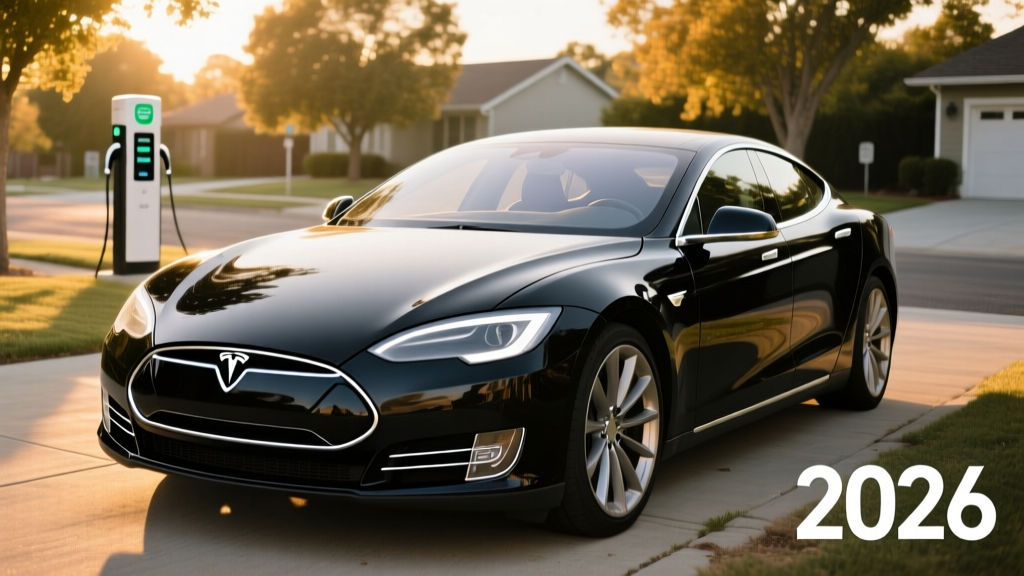
The Tesla Model S Plaid's headline 0-60 mph time of 1.99 seconds has held the automotive world's attention since its debut, and heading into the 2026 model year, it remains the quickest-accelerating production sedan on the market. But raw acceleration tells only part of the story. The Model S Long Range delivers a 3.1-second 0-60 mph run alongside a 402-mile EPA range — figures that make it one of the most capable daily-driver EVs available. This review breaks down every spec that matters: real-world range, charging curves, interior practicality, tax-credit eligibility, and how the Model S stacks up against the Lucid Air, Porsche Taycan, and BMW i7 in 2026.
| Spec | Long Range (Dual-Motor AWD) | Plaid (Tri-Motor AWD) |
|---|---|---|
| EPA Range | 402 miles | 359 miles |
| Battery (usable) | ~95 kWh (NMC) | ~95 kWh (NMC) |
| 0-60 mph | 3.1 sec | 1.99 sec |
| Horsepower | 670 hp | 1,020 hp |
| Top Speed | 155 mph | 200 mph |
| Peak DC Fast Charge | 250 kW | 250 kW |
| 10-80% DCFC Time | ~27 min | ~27 min |
| MPGe (combined) | 120 MPGe | 116 MPGe |
| Base MSRP | $74,990 | $89,990 |
Performance: Tesla Model S 0-60 MPH and Beyond
The Model S Plaid's tri-motor powertrain (one front, two rear) produces 1,020 horsepower and delivers a verified 0-60 mph time of 1.99 seconds with rollout subtracted — a figure Tesla has demonstrated repeatedly and that independent testers at outlets like Motor Trend and Car and Driver have confirmed within hundredths of a second. That puts the Plaid ahead of the Lucid Air Sapphire (1.89 sec claimed, with rollout) and far ahead of the Porsche Taycan Turbo GT (2.1 sec).
The Long Range dual-motor variant is hardly slow. Its 670 hp and 3.1-second 0-60 mph run beat most sports cars, and the instant torque delivery means real-world passing maneuvers feel even quicker than the numbers suggest. Both trims use a single-speed transmission with no gear hunting, and the AWD system can vector torque between axles in milliseconds.
One practical note: achieving the Plaid's 1.99-second time requires the car to be in Drag Strip mode with a preconditioned battery and sticky tires at optimal temperature. In everyday driving, expect 0-60 times closer to 2.3-2.5 seconds — still devastatingly quick, but the headline figure requires setup.
Range and Efficiency: EPA vs. Real-World
The Long Range Model S carries an EPA-estimated 402 miles of range, while the Plaid is rated at 359 miles. Both use an approximately 95 kWh usable NMC (nickel-manganese-cobalt) battery pack — Tesla has not transitioned the Model S to LFP chemistry, which is reserved for the lower-cost Model 3 and Model Y Standard Range variants.
EPA Sticker: 402 mi (Long Range) / 359 mi (Plaid)
Highway (70-80 mph): Expect ~320-350 mi (Long Range) / ~285-310 mi (Plaid). Aerodynamic drag hits large sedans hard at sustained speed.
Cold Weather (below 32°F): Subtract 20-30%. A Long Range Model S in a Minnesota winter may deliver 280-320 miles on a full charge.
City/Mixed Driving: Closest to EPA figures — regenerative braking recovers energy in stop-and-go traffic.
Efficiency is rated at 120 MPGe combined for the Long Range (28 kWh/100 mi) and 116 MPGe for the Plaid (29 kWh/100 mi), per fueleconomy.gov. These are strong numbers for a 4,500+ lb luxury sedan, reflecting Tesla's industry-leading powertrain efficiency and thermal management.
Charging Speed: DC Fast, Level 2, and the 250 kW Curve
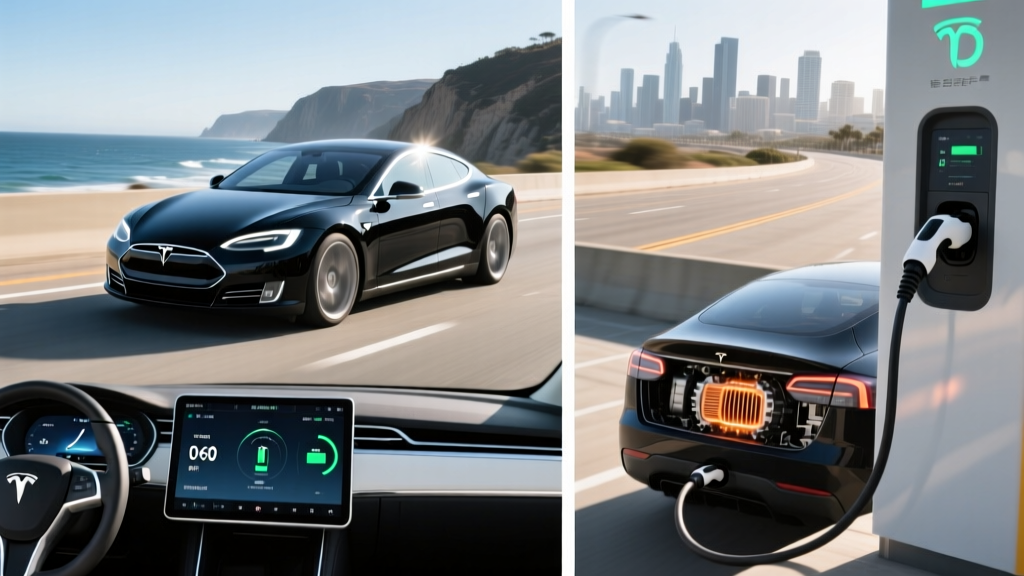
The Model S supports peak DC fast charging at 250 kW on Tesla's V3 Superchargers. In practice, that peak rate holds only between roughly 10-30% state of charge before tapering. The charge curve looks approximately like this:
| Charging Method | Max Power | Miles Added per Hour | Notes |
|---|---|---|---|
| Level 1 (120V household) | ~1.4 kW | ~3-4 mi/hr | Emergency/trickle only |
| Level 2 (240V, 48A Mobile Connector) | 11.5 kW | ~34 mi/hr | Standard home charging; full charge in ~9 hrs |
| Level 2 (240V, Wall Connector 72A) | 17.3 kW | ~51 mi/hr | Requires 90A+ circuit; full charge in ~6 hrs |
| DC Fast (V3 Supercharger) | 250 kW peak | ~200 mi in 15 min | 10-80% in ~27 min; tapers above 50% |
| DC Fast (CCS adapter on V4 stalls) | Up to 250 kW | Varies | Tesla includes CCS adapter; non-Tesla networks accessible |
The 10-80% DCFC session takes approximately 27 minutes under ideal conditions (warm battery, V3 stall not shared). Above 80%, charging slows dramatically — expect the final 20% to take an additional 20+ minutes. For road trips, the practical strategy is charging to 80% and moving on, which Tesla's navigation system optimizes automatically.
At home, most owners install a Tesla Wall Connector on a 60A circuit (delivering 48A continuous), yielding about 34 miles of range per hour. That's enough to fully replenish overnight. A 100A circuit with the 72A Wall Connector cuts that to roughly 6 hours, useful for high-mileage drivers. Always have a licensed electrician assess your panel capacity before installation.
Pricing, Trims, and Federal Tax Credit Eligibility
The 2026 Model S is offered in two trims:
- Long Range: $74,990 MSRP (before destination)
- Plaid: $89,990 MSRP (before destination)
Neither trim qualifies for the $7,500 federal EV tax credit under IRS §30D. The reason is straightforward: the credit has an MSRP cap of $55,000 for sedans, and the Model S far exceeds it. (SUVs, vans, and trucks have a higher $80,000 cap, but the Model S is classified as a sedan.) Additionally, battery-critical-mineral and component-sourcing requirements must be met — and even if they were, the price cap is disqualifying.
| Item | Long Range | Plaid |
|---|---|---|
| Base MSRP | $74,990 | $89,990 |
| Destination Fee | $1,390 | $1,390 |
| Federal Tax Credit (§30D) | $0 (MSRP exceeds $55K sedan cap) | $0 (MSRP exceeds $55K sedan cap) |
| Estimated Out-the-Door | ~$76,380+ | ~$91,380+ |
Source: IRS §30D Clean Vehicle Credit rules. State incentives may apply — check your local DMV or energy office. Consult a tax professional for personal eligibility.
Popular options that push the as-tested price higher include Ultra Red paint ($2,500), 21-inch Arachnid wheels ($4,500), and Full Self-Driving (Supervised) capability ($8,000). A fully optioned Plaid can approach $105,000.
Interior, Cargo, and Daily Practicality
The Model S seats five adults with generous dimensions: 42.1 inches of front legroom and 35.4 inches of rear legroom. The cabin is minimalist by design — a 17-inch landscape touchscreen dominates the dash, with a secondary 8-inch screen for rear passengers and a 12.3-inch driver instrument cluster.
Cargo space is a genuine advantage over traditional sedans thanks to the hatchback liftgate and front trunk (frunk):
- Rear cargo (seats up): 28 cu ft
- Rear cargo (seats folded): 79 cu ft
- Frunk: ~3 cu ft (enough for a charging cable bag or small duffel)
The hatchback design makes the Model S far more practical than the Porsche Taycan or BMW i7 for loading bulky items. However, rear-seat comfort — while improved with recent updates — still trails the BMW i7 and Mercedes EQS in terms of cushioning, sound isolation, and available luxury amenities like massage and reclining.
Technology and Driver Assistance
The Model S includes Tesla's Basic Autopilot (SAE Level 2) standard, providing adaptive cruise control and lane-centering. The optional Full Self-Driving (Supervised) package ($8,000) adds automatic lane changes, traffic-light recognition, and city-street navigation — but it remains a Level 2 system requiring constant driver supervision, despite the "Full Self-Driving" name.
Both Autopilot and FSD (Supervised) are SAE Level 2 driver-assistance systems. The driver must remain attentive, keep hands on the wheel, and be prepared to take over at any moment. Tesla's system is not autonomous — it does not replace the driver. Only Level 4 services like Waymo operate without a human driver.
The infotainment system is fast and feature-rich, with Netflix/YouTube streaming while parked, a built-in browser, and over-the-air updates that regularly add features. However, the absence of Apple CarPlay and Android Auto remains a dealbreaker for some buyers at this price point. Tesla's native navigation and media apps are capable, but phone integration is limited to Bluetooth audio and calls.
Warranty and Long-Term Ownership
Tesla covers the Model S with the following warranty structure:
- Basic Vehicle: 4 years / 50,000 miles
- Battery & Drive Unit: 8 years / 150,000 miles (Long Range & Plaid), with a minimum 70% capacity retention guarantee
The 150,000-mile battery warranty is among the most generous in the segment, though the 70% retention threshold means Tesla will only replace a pack that has degraded beyond 30% — a level most owners won't reach based on current degradation curves showing roughly 10-12% loss over 150,000 miles for NMC packs with proper charging habits.
One ownership consideration: Tesla does not publish fixed maintenance schedules, but owners should budget for tire replacement (high-torque EVs wear tires faster — expect 20,000-30,000 miles on performance rubber), cabin air filter changes, and brake fluid checks. Insurance costs are above average for the segment; expect annual premiums of $2,800-$4,200 depending on your state and driving record.
Pros
- Class-leading 402-mi EPA range (Long Range)
- Plaid's 1.99-sec 0-60 mph is the quickest sedan available
- 250 kW Supercharger network is the most reliable public DC network in the US
- Hatchback cargo versatility (79 cu ft max) beats every competitor
- Over-the-air updates continuously improve the vehicle
Cons
- No federal tax credit eligibility (MSRP exceeds $55K sedan cap)
- No Apple CarPlay or Android Auto
- Rear-seat luxury and ride comfort trail BMW i7 and Mercedes EQS
- FSD (Supervised) costs $8,000 and remains Level 2 — not autonomous
- Insurance premiums run 25-40% higher than comparable gas sedans
How the Model S Compares: Lucid Air, Taycan, and BMW i7
The Model S occupies a unique space: it's the only EV sedan combining 400+ miles of range, sub-2-second 0-60 capability (Plaid), and a mature charging network. Here's how key rivals stack up:
- Lucid Air Grand Touring: 516-mi EPA range (best in class), 0-60 in 3.0 sec, starts at ~$125,600. More range and a more luxurious interior, but significantly pricier and a less proven service network.
- Porsche Taycan Turbo GT: 0-60 in ~2.1 sec, EPA range ~269 mi, starts at ~$185,000. Superior handling and build quality, but half the range and double the price.
- BMW i7 xDrive50: 0-60 in 4.5 sec, EPA range ~318 mi, starts at ~$120,500. The luxury benchmark with an opulent rear seat, but not a performance contender.
The Model S is the value pick in this group — it undercuts all three on price while matching or exceeding their performance. The trade-off is interior refinement and ride quality, where the Germans and Lucid hold an edge.
Who Should Buy the Model S?
Choose the Model S Long Range if: You want a 400-mile daily driver that can road-trip comfortably, seat five, and still hit 60 mph in 3.1 seconds. It's the best all-around EV sedan for tech-forward buyers who prioritize range and charging infrastructure over traditional luxury.
Choose the Model S Plaid if: You want the ultimate performance sedan and can accept a ~40-mile range penalty and a $15,000 price premium. The 1,020-hp tri-motor setup is unmatched at any price below six figures.
Look elsewhere if: Rear-seat comfort, traditional luxury materials, Apple CarPlay, or federal tax-credit eligibility are top priorities. The BMW i7, Mercedes EQS, or a lower-priced Model 3/Y (which may qualify for credits) might serve you better.
Frequently Asked Questions
What is the real-world range of the Tesla Model S?
The EPA rates the Long Range at 402 miles and the Plaid at 359 miles. In real-world highway driving at 75-80 mph, expect 320-350 miles (Long Range) and 285-310 miles (Plaid). Cold weather below freezing can reduce range by 20-30%.
How fast does the Model S charge at home and on the road?
On a V3 Supercharger at 250 kW peak, the Model S charges from 10-80% in about 27 minutes, adding up to 200 miles in 15 minutes. At home on a 240V/48A Level 2 charger, you get roughly 34 miles of range per hour — a full overnight charge from empty.
Does the Tesla Model S qualify for the $7,500 federal EV tax credit?
No. Under current IRS §30D rules, the federal clean vehicle credit has a $55,000 MSRP cap for sedans. The Model S starts at $74,990, making it ineligible regardless of battery sourcing or buyer income. State-level incentives may still apply — check your local energy office.
Is the Model S Plaid's 1.99-second 0-60 time achievable in normal conditions?
The 1.99-second figure requires Drag Strip mode, a preconditioned battery, warm tires, and a prepared surface. In everyday driving, expect 2.3-2.5 seconds — still among the quickest production cars ever made.
How does the Model S compare to the Lucid Air on range?
The Lucid Air Grand Touring leads with 516 miles EPA — 114 miles more than the Model S Long Range. However, the Air Grand Touring costs roughly $50,000 more and lacks Tesla's Supercharger network access (though Lucid is expanding its own network and CCS compatibility).
What is the battery warranty on the Model S?
Tesla covers the battery and drive unit for 8 years or 150,000 miles, whichever comes first, guaranteeing at least 70% capacity retention. If the battery degrades beyond 30% within that period, Tesla will repair or replace it.
Is Full Self-Driving worth the $8,000 cost?
FSD (Supervised) adds city-street navigation and automatic lane changes, but it remains an SAE Level 2 system — you must supervise it at all times. For most drivers, the included Basic Autopilot (adaptive cruise + lane centering) is sufficient. Consider FSD only if you regularly drive complex urban routes and want the latest assist features, understanding it is not autonomous driving.