Quick Verdict: The Benchmark That Still Sets the Pace
The Tesla Model S remains the original luxury electric sedan that forced an entire industry to accelerate its EV plans. For 2026, it continues to offer a compelling mix of class-leading range, access to the largest fast-charging network, and performance figures that embarrass supercars costing three times as much. But with rivals like the Lucid Air, BMW i7, and Mercedes EQS closing the gap in interior refinement and ride quality, the Model S must now justify its $74,990+ starting price on more than just straight-line speed.
This review covers both the Long Range and Plaid variants — including the 0-60 and 0-100 km/h acceleration data shoppers searching for Tesla Model S 0 100 times actually need — along with real-world range, charging behavior, tax-credit eligibility, and the ownership trade-offs that spec sheets don't reveal.
Range, Battery & Efficiency: 402 Miles on Paper, Less in Practice
Long Range AWD: EPA 402 miles | Real-world highway: ~330–350 mi | Cold weather (below 32°F): ~280–310 mi
Plaid: EPA 359 miles (19" wheels) / 320 miles (21" wheels) | Real-world highway: ~290–310 mi | Cold weather: ~240–270 mi
Highway driving at 75+ mph, aggressive acceleration, and cold temperatures all reduce range materially. Plan road trips around 250–300 miles between stops for comfort.
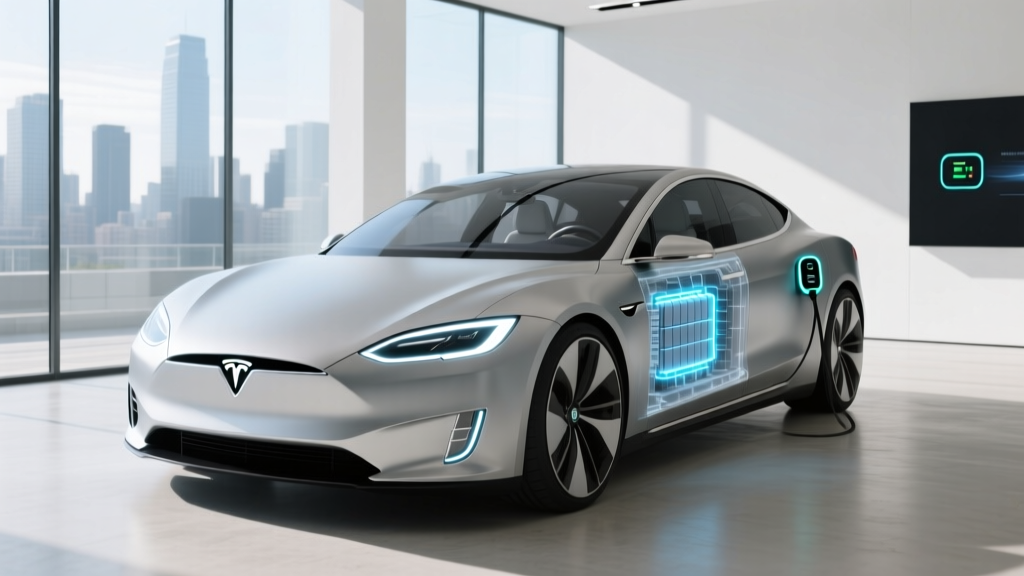
The Model S Long Range uses a ~100 kWh (usable) NMC (nickel manganese cobalt) lithium-ion battery pack. Tesla does not publish exact usable capacity figures, but independent teardowns and consumption data consistently place it between 95–100 kWh usable, with a buffer above and below to protect long-term cell health. The NMC chemistry prioritizes energy density over the LFP (lithium iron phosphate) chemistry Tesla uses in the base Model 3 — meaning more range per pound, but a recommendation to keep daily charge at 80–90% rather than 100% to minimize degradation.
| Spec | Long Range AWD | Plaid |
|---|---|---|
| EPA Range | 402 mi | 359 mi (19") / 320 mi (21") |
| Battery (usable) | ~100 kWh, NMC | ~100 kWh, NMC |
| EPA Efficiency | 124 MPGe / 27 kWh/100mi | 116 MPGe / 29 kWh/100mi |
| Horsepower | 670 hp | 1,020 hp |
| 0-60 mph | 3.1 sec | 1.99 sec |
| 0-100 km/h (0-62 mph) | ~3.3 sec | ~2.1 sec |
| Top Speed | 155 mph | 200 mph |
| Drivetrain | Dual Motor AWD | Tri Motor AWD |
| Max DC Charge Rate | 250 kW | 250 kW |
| 10-80% DC Fast Charge | ~30 min | ~30 min |
| Level 2 (11.5 kW) | ~44 mi/hr | ~44 mi/hr |
| Base MSRP | $74,990 | $89,990 |
| Battery Warranty | 8 yr / 150,000 mi | 8 yr / 150,000 mi |
Efficiency is where the Model S shows its age advantage. At roughly 27 kWh per 100 miles (Long Range), it converts battery energy into miles more effectively than heavier competitors like the Mercedes EQS or BMW i7. The heat pump — standard across all trims — plays a big role here, reclaiming waste heat from the drivetrain and cabin to reduce energy loss in cold weather. Per fueleconomy.gov, the Long Range achieves a combined 124 MPGe, which translates to lower per-mile electricity costs than nearly any other luxury EV.
0-60, 0-100 km/h, and the Acceleration Numbers Explained
The search intent behind "Tesla Model S 0 100" typically refers to either the 0-100 km/h sprint (the international standard, equivalent to 0-62 mph) or the quarter-mile conversation around 0-100 mph. Here are both, measured with rollout subtracted as Tesla reports:
- Long Range AWD: 0-60 mph in 3.1 seconds, 0-100 km/h in approximately 3.3 seconds, 0-100 mph in roughly 7.5 seconds.
- Plaid (Tri Motor): 0-60 mph in 1.99 seconds, 0-100 km/h in approximately 2.1 seconds, 0-100 mph in approximately 4.4 seconds. The quarter mile arrives in 9.23 seconds at 155 mph — verified at drag strips and independently tested.
The Plaid achieves this via three independent motors (one front, two rear) with carbon-sleeved rotors that can sustain 20,000+ RPM. The torque-vectoring rear axle can distribute power side-to-side in milliseconds, which is why the Plaid hooks up so effectively even on street tires. For context, the Plaid's 1.99-second 0-60 time beats the Bugatti Chiron and is within tenths of the Rimac Nevera — at one-tenth the price.
One important caveat: Tesla's 1.99-second claim requires a prepared surface with rollout subtracted (the first 12 inches of travel are excluded, per drag-racing convention). On a typical street surface, expect 2.1–2.3 seconds. Still astonishing, but manage expectations accordingly.
Charging Speed: 250 kW Peak, but the Curve Matters
| Level | Power | Speed (approx.) | Use Case |
|---|---|---|---|
| Level 1 (120V) | ~1.4 kW | ~4 mi/hr | Emergency / overnight trickle |
| Level 2 (240V, 48A) | 11.5 kW | ~44 mi/hr | Home daily charging |
| DC Fast Charge | 250 kW peak | 10-80% in ~30 min | Road trips (Supercharger) |
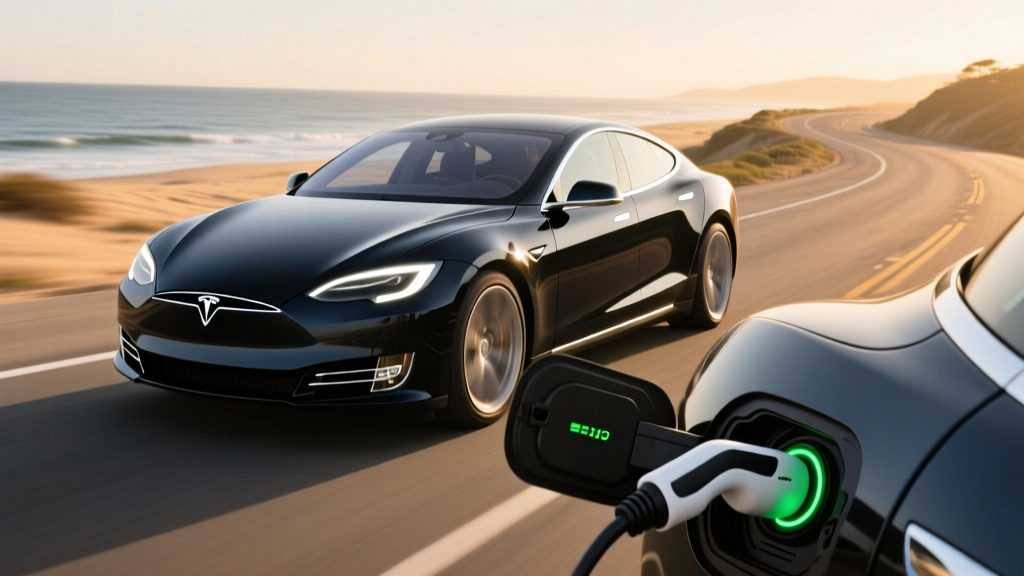
The Model S charges at a peak of 250 kW on Tesla Superchargers (V3 and V4 stalls). However, peak rate is not sustained rate. Here's what the charge curve actually looks like:
- 5–30% SoC: Peak ~250 kW — this is where the fastest charging happens
- 30–60% SoC: Tapers to ~180–200 kW
- 60–80% SoC: Drops to ~120–150 kW
- 80–100% SoC: Dramatic taper to under 50 kW — avoid charging past 80% on road trips unless necessary
The ~30-minute 10-80% time is competitive but no longer class-leading. The Hyundai Ioniq 5 and Kia EV6 (with 800V architectures) achieve 10-80% in roughly 18 minutes at 350 kW chargers. Tesla's 400V electrical architecture limits peak charge rate compared to these 800V rivals. For a 100 kWh battery, 250 kW peak simply cannot match the sustained charging speeds of 800V platforms — a factor worth considering for frequent road-trippers.
Preconditioning matters. When you navigate to a Supercharger in the Tesla app or onboard nav, the car preheats the battery to optimal temperature. Without preconditioning — especially in cold weather — peak charge rate can be cut by 30–50% for the first 10–15 minutes. Always route through a Supercharger in the nav system, even if you know the way.
At home on a Level 2 Wall Connector (up to 48 amps / 11.5 kW), the Model S adds roughly 44 miles of range per hour. A full 10–80% home charge takes about 7–8 hours, making overnight charging effortless for daily use. Installation of a 240V/60A circuit typically costs $800–$2,000 depending on panel proximity and local permitting, on top of the ~$400 Wall Connector hardware cost.
Pricing, Tax Credits & Total Cost
| Trim | Base MSRP | §30D Federal Credit | Effective Price (if eligible) |
|---|---|---|---|
| Long Range AWD | $74,990 | $0 (exceeds MSRP cap) | $74,990 |
| Plaid | $89,990 | $0 (exceeds MSRP cap) | $89,990 |
Common options that push the as-tested price higher include:
- 21" Arachnid wheels (Plaid): included, but reduce range by ~39 miles
- Full Self-Driving (Supervised) capability: $8,000 one-time or $99/month
- Premium interior colors (e.g., Cream, Black/White): $1,000–$2,000
- Yoke steering wheel: no-cost option (controversial — try before committing)
A well-optioned Plaid with FSD can easily reach $98,000+ before state incentives. Some states — like California, Colorado, and New York — offer additional rebates that may apply; check your local DMV or energy office for current programs, as these change frequently.
Interior, Cargo & Technology
The Model S interior is minimalist in the Tesla tradition: a 17-inch center touchscreen dominates the dash, with a 12.3-inch driver display and a small 8-inch rear passenger screen. Build quality has improved substantially since the 2021 refresh, with better panel gaps, ventilated front seats, and genuine materials. However, rivals like the Lucid Air and Mercedes EQS still offer more plush, traditional luxury with massaging seats, ambient lighting depth, and acoustic isolation the Model S doesn't quite match at highway speed.
Cargo and passenger space:
- Rear cargo (behind second row): 28 cu ft
- Cargo with rear seats folded (60/40 split): 79.3 cu ft
- Front trunk (frunk): 3.1 cu ft — small, fits a charging cable bag or small backpack
- Rear legroom: 40.9 inches — generous for a sedan
- Front headroom: 39.9 inches
- Seating: 5 passengers standard (no third-row option, unlike Model X)
The 28-cubic-foot trunk is large for a sedan, aided by the hatchback liftgate design that opens the entire rear glass. This makes loading bulky items significantly easier than a traditional trunk sedan like the BMW i7.
Standout tech features:
- 17-inch cinematic touchscreen with Netflix, YouTube, and gaming (including Cyberpunk 2077-level titles using the AMD Ryzen processor)
- 22-speaker, 960-watt audio system — among the best in any car at any price
- Over-the-air updates that add features monthly
- Sentry Mode dashcam recording, Dog Mode, and Camp Mode
- Tesla Supercharger network: 6,000+ V3/V4 stalls in North America, with NACS connector now the industry standard
Notable drawbacks:
- No Apple CarPlay or Android Auto — Tesla's ecosystem is closed
- Yoke steering requires adaptation and is controversial for low-speed/parking maneuvers
- Touchscreen-controlled climate vents and glovebox — no physical buttons
- Rear-seat entertainment screen is small (8") compared to rivals offering dual rear tablets
- Ride quality on 21" wheels is firm over broken pavement
Driver Assistance: Autopilot and FSD (Supervised)
Both Autopilot (standard) and Full Self-Driving Supervised ($8,000 option) are SAE Level 2 driver-assistance systems. The driver must remain fully engaged, hands on wheel (or torque-applied), eyes on road, and ready to take over at any moment. These are not self-driving systems. Only Level 4 services like Waymo operate without a human driver in geofenced areas.
Standard Autopilot includes Traffic-Aware Cruise Control and Autosteer (lane centering on highways). The FSD (Supervised) upgrade adds automatic lane changes, on-ramp-to-off-ramp highway navigation, traffic light and stop sign recognition, and city-street autosteer. As of 2026, FSD Supervised has improved markedly in urban environments but still requires active monitoring — it can misjudge construction zones, unprotected left turns, and unusual intersections.
Per NHTSA, Tesla vehicles using Autopilot have been involved in reported incidents that underscore the need for driver vigilance. The system is best understood as an advanced cruise control that reduces fatigue on long highway drives — not a replacement for an attentive driver.
Pros, Cons & Who Should Buy
- Class-leading 402-mile EPA range (Long Range)
- Plaid's 1.99s 0-60 is supercar territory at sedan pricing
- Access to Tesla Supercharger network — the most reliable DC fast-charging network in North America
- Spacious hatchback cargo area (28 cu ft + frunk)
- Industry-leading OTA software updates
- Excellent efficiency (27 kWh/100 mi) keeps per-mile cost low
- Standard heat pump for cold-climate efficiency
- No federal §30D tax credit — MSRP exceeds the $55K sedan cap
- 250 kW peak charge rate lags 800V competitors (Ioniq 5, EV6, Taycan)
- No Apple CarPlay / Android Auto
- Interior luxury doesn't match Lucid Air, BMW i7, or Mercedes EQS at this price
- Touchscreen-only controls frustrate some drivers
- FSD (Supervised) is expensive and still requires full driver attention
- Firm ride on 21" wheels; road noise at highway speed
- Choose the Model S Long Range if: You want maximum range in a luxury sedan, rely on road-trip charging infrastructure (Superchargers), and value software/tech over traditional luxury materials. Ideal for tech-forward commuters and frequent highway drivers.
- Choose the Model S Plaid if: Performance is the priority, you want supercar acceleration with daily-driver practicality, and you accept the range trade-off (~359 mi) and higher price.
- Look elsewhere if: You need the $7,500 federal tax credit (consider Model 3, Ioniq 6, or BMW i4), you prioritize traditional luxury materials (Lucid Air, EQS), or you want the fastest possible DC charging (800V vehicles like Taycan or Ioniq 5).
Model S vs. Key Competitors
The luxury EV sedan segment has matured considerably. Here's how the Model S stacks up against its most relevant rivals:
| Vehicle | EPA Range | 0-60 mph | Max DC kW | Base MSRP | §30D Credit |
|---|---|---|---|---|---|
| Tesla Model S LR | 402 mi | 3.1s | 250 kW | $74,990 | No |
| Lucid Air Pure | 419 mi | 3.5s | 200+ kW | $69,900 | No |
| BMW i7 xDrive50 | 318 mi | 4.5s | 195 kW | $105,700 | No |
| Mercedes EQS 450+ | 390 mi | 5.9s | 200 kW | $104,400 | No |
| Porsche Taycan 4S | 288 mi | 3.8s | 270 kW | $90,900 | No |
The Model S Long Range remains the efficiency and range benchmark in this group, while the Plaid has no true rival in acceleration at any price point below $200,000. The Lucid Air Pure offers more range and a lower starting price but has a smaller charging network. The BMW i7 and Mercedes EQS win on interior luxury but cost significantly more and offer less range. The Taycan charges faster (800V architecture) but gives up substantial range.
Frequently Asked Questions
What is the real-world range of the Tesla Model S?
The Long Range achieves an EPA-estimated 402 miles, but real-world highway driving at 75 mph typically yields 330–350 miles. In cold weather (below 32°F), expect 280–310 miles. The Plaid delivers 359 miles EPA on 19" wheels, with real-world highway driving around 290–310 miles. Battery preconditioning, moderate speeds, and mild weather all help maximize range.
How fast does the Tesla Model S charge at home and on the road?
At home on a Level 2 Wall Connector (11.5 kW / 48A), the Model S adds approximately 44 miles of range per hour — a full overnight session easily replenishes daily driving. On Tesla Superchargers, it peaks at 250 kW DC, reaching 10–80% in approximately 30 minutes. However, charge speed tapers significantly above 60% SoC, and the 400V architecture means it can't match the sustained speeds of 800V competitors like the Hyundai Ioniq 5 or Porsche Taycan.
Does the Tesla Model S qualify for the federal EV tax credit?
No. Under current IRS §30D rules, the Model S exceeds the $55,000 MSRP cap that applies to sedans (SUVs, vans, and trucks have an $80,000 cap). Even the base Long Range at $74,990 is ineligible. Buyers should also be aware of income limits ($150K single / $300K joint) and battery-sourcing requirements that affect other EVs. State-level incentives may still apply — check your local programs.
How fast is the Tesla Model S from 0 to 100 km/h?
The Model S Long Range AWD reaches 0-100 km/h (0-62 mph) in approximately 3.3 seconds. The Plaid tri-motor variant does it in approximately 2.1 seconds — one of the fastest production-car acceleration times ever recorded. Note that Tesla's official 1.99-second 0-60 mph time for the Plaid uses a 1-foot rollout subtraction per drag-racing convention; on a typical street surface, expect 2.1–2.3 seconds to 60 mph.
Is the Tesla Model S worth buying over the Lucid Air or BMW i7?
It depends on priorities. The Model S wins on charging infrastructure (Supercharger network), efficiency, and (in Plaid form) unmatched acceleration. The Lucid Air Pure offers more EPA range (419 mi) at a lower starting price with a more spacious, luxurious interior, but relies on Electrify America and other third-party networks. The BMW i7 offers superior ride comfort, interior materials, and traditional luxury at a substantially higher price ($105K+). If Supercharger access and software matter most, the Model S still has an edge. If luxury refinement is the priority, test-drive the Lucid and BMW before committing.
What is the battery warranty on the Tesla Model S?
Tesla covers the Model S battery and drive unit for 8 years or 150,000 miles (whichever comes first), with a guarantee that the battery will retain at least 70% of its original capacity during that period. This is among the best battery warranties in the luxury EV segment. Real-world data from high-mileage Model S owners suggests NMC packs typically degrade 10–15% over the first 100,000 miles, with the curve flattening afterward.
How much does it cost to charge a Tesla Model S?
At the US average residential electricity rate of ~$0.17/kWh, a full 100 kWh home charge costs roughly $17 — enough for ~350 real-world miles. That's approximately $0.049 per mile. Supercharger pricing varies by location and time of day but typically ranges from $0.25–$0.50/kWh, putting road-trip cost at $0.07–$0.14 per mile. Compare this to a gas sedan at 30 MPG and $3.50/gallon: ~$0.117 per mile. Home charging offers significant savings; Supercharging savings depend on local rates.