If you've typed "how much costs Tesla" into a search bar, you're not alone — Tesla's pricing shifts frequently, trim structures are unconventional, and the federal tax credit landscape adds another layer of complexity. As of early 2026, Tesla sells four core models in the U.S., with prices spanning from the mid-$30,000s to well over $100,000 before incentives.
This guide cuts through the noise. We'll cover every current Tesla model's real sticker price, what you'll actually pay after the IRS §30D federal tax credit, real-world range expectations, charging speeds, and whether each model earns its asking price against 2026's crowded EV market.
Tesla's 2026 Lineup at a Glance
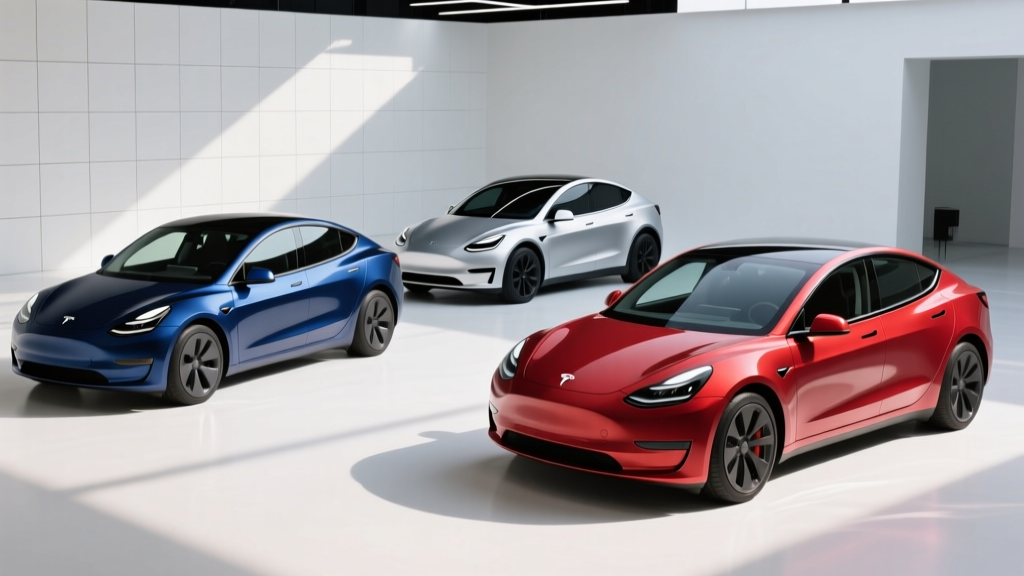
Tesla currently offers the Model 3 sedan, Model Y crossover, Model S luxury sedan, and Model X luxury SUV. The Cybertruck is also in production but occupies a niche category we'll address separately. Here's how the core lineup stacks up on paper:
| Model | Base MSRP | EPA Range | Battery (kWh) | 0-60 mph | Drivetrain | MPGe (Combined) |
|---|---|---|---|---|---|---|
| Model 3 RWD | $38,990 | 272 mi | 60 kWh (LFP) | 5.8 sec | RWD | 132 MPGe |
| Model 3 Long Range AWD | $45,490 | 341 mi | 79 kWh (NMC) | 4.2 sec | Dual-Motor AWD | 132 MPGe |
| Model 3 Performance | $52,990 | 315 mi | 79 kWh (NMC) | 2.9 sec | Dual-Motor AWD | 119 MPGe |
| Model Y RWD | $44,990 | 260 mi | 60 kWh (LFP) | 6.6 sec | RWD | 127 MPGe |
| Model Y Long Range AWD | $49,990 | 310 mi | 79 kWh (NMC) | 4.8 sec | Dual-Motor AWD | 122 MPGe |
| Model Y Performance | $53,990 | 285 mi | 79 kWh (NMC) | 3.5 sec | Dual-Motor AWD | 115 MPGe |
| Model S Long Range | $79,990 | 402 mi | 100 kWh (NMC) | 3.1 sec | Dual-Motor AWD | 120 MPGe |
| Model S Plaid | $89,990 | 359 mi | 100 kWh (NMC) | 1.99 sec | Tri-Motor AWD | 116 MPGe |
| Model X Long Range | $84,990 | 335 mi | 100 kWh (NMC) | 3.8 sec | Dual-Motor AWD | 109 MPGe |
| Model X Plaid | $94,990 | 311 mi | 100 kWh (NMC) | 2.5 sec | Tri-Motor AWD | 103 MPGe |
Sources: fueleconomy.gov, Tesla.com official specifications. Prices reflect MSRP before destination fees and before any federal or state incentives.
Real-World Range: What the EPA Sticker Doesn't Tell You
EPA vs. Reality: Tesla's EPA range estimates are generally achievable in mixed city/suburban driving at moderate temperatures (60-75°F). Expect the following real-world adjustments:
- Highway driving (75+ mph): Subtract 10-15% from EPA. A Model 3 Long Range rated at 341 miles typically delivers 285-305 miles at sustained highway speed.
- Cold weather (below 32°F): Subtract 20-30%. The same Model 3 Long Range may deliver 230-260 miles in freezing conditions, even with Tesla's heat pump and battery preconditioning.
- Cold + highway combined: The worst-case scenario. Plan for 30-40% reduction — roughly 200-230 miles from a 341-mile rated pack.
Tesla's LFP (lithium iron phosphate) packs in the RWD trims offer a different ownership trade-off than the NMC (nickel manganese cobalt) packs in Long Range and Performance trims. LFP batteries tolerate regular 100% charging without accelerated degradation, meaning a 272-mile Model 3 RWD owner can charge to full daily. NMC owners should typically set charge limits to 80% for daily use, effectively reducing their usable daily range to roughly 273 miles on a 341-mile Long Range model.
The practical takeaway: if your commute is under 60 miles round-trip and you have home charging, the RWD LFP models are more than sufficient. If you road-trip frequently or live in a cold climate, the Long Range AWD trims provide a critical buffer.
Charging Speed: Home, Destination, and DC Fast Charging
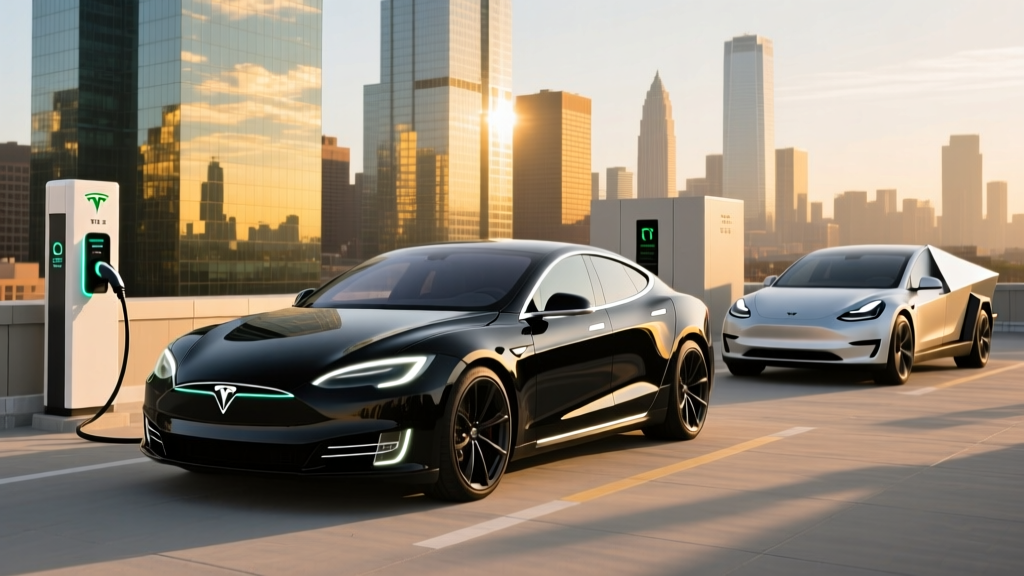
Charging speed is where Tesla still holds a significant edge over most competitors, thanks to both vehicle architecture and the Tesla Supercharger network. Here's what each model can accept:
| Model | Max DC Fast Charge | 10-80% Time | Level 2 Home (kW) | Level 2 Miles/Hour |
|---|---|---|---|---|
| Model 3 RWD (LFP) | 170 kW | ~25 min | 11.5 kW | ~44 mi/hr |
| Model 3 Long Range / Perf | 250 kW | ~18 min | 11.5 kW | ~44 mi/hr |
| Model Y RWD (LFP) | 170 kW | ~27 min | 11.5 kW | ~44 mi/hr |
| Model Y Long Range / Perf | 250 kW | ~20 min | 11.5 kW | ~44 mi/hr |
| Model S / X Long Range | 250 kW | ~24 min | 11.5 kW | ~37 mi/hr |
| Model S / X Plaid | 250 kW | ~22 min | 11.5 kW | ~37 mi/hr |
Important charging-curve reality: Peak kW is not sustained kW. A Model 3 Long Range may peak at 250 kW between 10-20% SoC, but the curve tapers significantly above 60%, dropping below 100 kW past 80%. The 10-80% times above reflect the integrated curve, not a sustained peak rate.
For home charging, Tesla's Wall Connector at 48 amps (11.5 kW) on a 60-amp circuit adds roughly 44 miles of range per hour for Model 3/Y. That means an overnight charge from 20% to 80% takes about 5-6 hours — easily handled while you sleep. Installation typically runs $500-$1,500 if your electrical panel has capacity; panel upgrades can push that to $2,500-$4,000.
All 2026 Teslas come with the NACS (North American Charging Standard) connector natively. This matters increasingly as other automakers adopt NACS access to Superchargers, but Tesla owners already benefit from the most reliable and extensive DC fast-charging network in North America — over 6,000 stations and 60,000+ stalls as of early 2026.
Federal Tax Credit: How Much Will You Actually Pay?
This is where the "how much does a Tesla cost" question gets complicated. The IRS §30D clean vehicle credit offers up to $7,500 for qualifying new EVs, but eligibility depends on three interlocking requirements that change periodically:
2026 §30D Federal Tax Credit Requirements:
- MSRP cap: Sedans (Model 3, Model S) must be under $55,000. SUVs, vans, and trucks (Model Y, Model X) must be under $80,000.
- Buyer income cap: Modified AGI must not exceed $150,000 (single), $225,000 (head of household), or $300,000 (joint filing).
- Battery sourcing: Critical minerals and battery components must meet escalating domestic/free-trade-agreement sourcing thresholds. As of 2026, these thresholds are stringent and subject to annual adjustment.
- Point-of-sale transfer: Eligible buyers can transfer the credit to the dealer at purchase, reducing the purchase price directly rather than waiting for a tax refund.
Always verify current eligibility on fueleconomy.gov and consult a tax professional. Rules change and vary by VIN.
| Model | MSRP | Under MSRP Cap? | Est. Credit | Effective Price |
|---|---|---|---|---|
| Model 3 RWD | $38,990 | Yes (<$55K sedan) | $3,750-$7,500* | $31,490-$35,240 |
| Model 3 Long Range AWD | $45,490 | Yes (<$55K sedan) | $3,750-$7,500* | $37,990-$41,740 |
| Model 3 Performance | $52,990 | Yes (<$55K sedan) | $3,750-$7,500* | $45,490-$49,240 |
| Model Y RWD | $44,990 | Yes (<$80K SUV) | $3,750-$7,500* | $37,490-$41,240 |
| Model Y Long Range AWD | $49,990 | Yes (<$80K SUV) | $3,750-$7,500* | $42,490-$46,240 |
| Model Y Performance | $53,990 | Yes (<$80K SUV) | $3,750-$7,500* | $46,490-$50,240 |
| Model S Long Range | $79,990 | No (>$55K sedan) | $0 | $79,990 |
| Model S Plaid | $89,990 | No (>$55K sedan) | $0 | $89,990 |
| Model X Long Range | $84,990 | No (>$80K SUV) | $0 | $84,990 |
| Model X Plaid | $94,990 | No (>$80K SUV) | $0 | $94,990 |
*Credit amount varies based on battery component and critical mineral sourcing compliance. Some Tesla trims may qualify for only $3,750 (critical minerals only) or the full $7,500. Verify per VIN at purchase. State incentives may stack on top — check your state's energy office.
The key insight: Model 3 and Model Y are the credit-eligible workhorses. Model S and Model X exceed the MSRP caps entirely and receive no federal credit — a factor that significantly widens the value gap between Tesla's mainstream and luxury offerings.
Performance, Interior, and Technology
Tesla's performance figures remain class-leading in several segments. The Model 3 Performance hits 60 mph in 2.9 seconds for $52,990 — a number that would have required a six-figure supercar a decade ago. The Model S Plaid's 1.99-second run is effectively the quickest production sedan ever sold.
But performance is only one axis. Here's how the ownership experience breaks down:
Interior Space and Cargo
- Model 3: 23 cu ft trunk + rear seat fold-down. Rear legroom is 35.2 inches — adequate for adults but tighter than a Hyundai Ioniq 6 or BMW i4.
- Model Y: 30 cu ft behind the second row, 76 cu ft with seats folded. Optional third row (very small) available. Front trunk (frunk) adds 4.1 cu ft.
- Model S: 28 cu ft trunk, 79 cu ft folded. Significantly more rear legroom (40.5 inches) than Model 3.
- Model X: Up to 88 cu ft with all rear seats folded. Falcon Wing doors aid third-row access but add mechanical complexity.
Tech and Driver Assistance
Every Tesla ships with a 15.4-inch center touchscreen (Model S/X get a 17-inch unit plus a rear passenger screen), over-the-air updates, and Tesla's Basic Autopilot (lane centering + adaptive cruise). Full Self-Driving (Supervised) remains a $8,000 add-on or $99/month subscription.
SAE Automation Level: Tesla Autopilot and FSD (Supervised) are SAE Level 2 driver-assistance systems. Despite the "Full Self-Driving" name, the driver must remain fully engaged, hands on or near the wheel, and eyes on the road at all times. These are not autonomous systems. Only Level 4 services like Waymo operate without a driver.
Notable Drawbacks
Tesla's minimalist interior philosophy isn't for everyone. There are no physical buttons for climate, mirrors, or glovebox — everything routes through the touchscreen. The Model 3 Highland refresh improved materials and added ventilated seats and ambient lighting, but the Model Y's interior still feels dated compared to rivals like the Hyundai Ioniq 5 or Ford Mustang Mach-E. Panel gap quality has improved but remains inconsistent across Fremont and Austin build origins.
Warranty and Long-Term Battery Health
Tesla's warranty structure is competitive but not class-leading:
- Basic vehicle warranty: 4 years / 50,000 miles (all models)
- Battery and drive unit warranty:
- Model 3 RWD (LFP): 8 years / 100,000 miles, minimum 70% capacity retention
- Model 3 Long Range/Performance, Model Y AWD: 8 years / 120,000 miles, minimum 70% retention
- Model S/X: 8 years / 150,000 miles, minimum 70% retention
The 70% retention threshold is industry-standard, matching Hyundai, Ford, and GM. Real-world degradation data from fleet analyses suggests Tesla's NMC packs lose roughly 5-8% capacity over the first 50,000 miles, then degrade more slowly. LFP packs show slower initial degradation but are heavier and less energy-dense, which is why they're reserved for the RWD trims with smaller battery enclosures.
Out-of-warranty battery replacement remains expensive: $12,000-$16,000 for Model 3/Y packs, $18,000-$22,000 for Model S/X. This is a real ownership risk that buyers planning to keep their vehicle past 150,000 miles should budget for.
Is a Tesla Worth It vs. the Competition?
Pros:
- Supercharger network access — still the most reliable DC fast-charging ecosystem in North America
- Class-leading efficiency (kWh/100mi) translates to lower charging costs and more range per kWh
- Over-the-air updates continuously add features post-purchase
- Strong resale value relative to most EV competitors
- Model 3 and Model Y eligible for up to $7,500 federal credit (income/sourcing permitting)
Cons:
- Minimalist interior lacks physical controls — steep learning curve for some drivers
- Model Y interior quality lags behind newer competitors (Ioniq 5, Mach-E, EV6)
- No Apple CarPlay or Android Auto — Tesla's proprietary infotainment only
- Insurance costs run 15-30% higher than equivalent gas vehicles in most states
- Model S/X exceed MSRP caps — no federal tax credit
- Repair costs and wait times for body/paint damage remain above industry average
Choose Tesla if: You prioritize Supercharger network access for road trips, want maximum range per dollar (especially Model 3 Long Range at 341 miles), value OTA software updates, and are comfortable with a touchscreen-first interface.
Look elsewhere if: You want Apple CarPlay, prefer physical buttons, need the most spacious rear seat (Ioniq 5 or EV9), want a luxury interior at the Model S price point (BMW i5, Mercedes EQE), or need a truck bed (Rivian R1T, F-150 Lightning).
Frequently Asked Questions
What is the cheapest Tesla available in 2026?
The Model 3 RWD at $38,990 MSRP. If you qualify for the full $7,500 federal tax credit (income, sourcing, and MSRP requirements met), the effective price drops to approximately $31,490 — making it one of the most affordable long-range EVs on the market.
Does every Tesla qualify for the $7,500 federal tax credit?
No. Only the Model 3 and Model Y fall under the IRS MSRP caps ($55,000 for sedans, $80,000 for SUVs/trucks). Model S and Model X exceed these caps and are ineligible regardless of buyer income. Additionally, buyer income must be under $150K/$225K/$300K (single/HOH/joint), and battery sourcing requirements must be met per VIN.
How much does it cost to charge a Tesla at home per month?
At the U.S. average electricity rate of ~$0.17/kWh and an average commute of 30 miles/day, a Model 3 Long Range (consuming roughly 25 kWh/100 mi) costs about $38-$45/month to charge at home. That's roughly one-third the cost of fueling an equivalent gas sedan at 30 MPG and $3.50/gallon.
Is Tesla's Full Self-Driving worth the $8,000 cost?
For most buyers, no. FSD (Supervised) is a Level 2 driver-assist system that requires constant driver engagement. It handles some highway and city driving scenarios but does not drive autonomously. The $99/month subscription is a lower-risk way to test it. Basic Autopilot (included free) covers adaptive cruise and lane centering for highway commuting adequately.
How long do Tesla batteries last before replacement?
Based on fleet data, Tesla NMC batteries typically retain 85-92% capacity at 100,000 miles and 78-88% at 200,000 miles. LFP packs in RWD models show even slower degradation. Most Tesla owners will sell or trade the vehicle before the battery falls below the 70% warranty threshold. However, if you plan to keep a Tesla past 200,000 miles, budget for a potential $12,000-$22,000 battery replacement.
What's the real-world range of a Tesla Model Y Long Range on a road trip?
With the EPA rating of 310 miles, expect roughly 260-280 miles at 75 mph in mild weather. In winter conditions (below freezing), plan for 200-230 miles between charges. Tesla's navigation system automatically factors in temperature, elevation, and speed when estimating range to your next Supercharger stop.