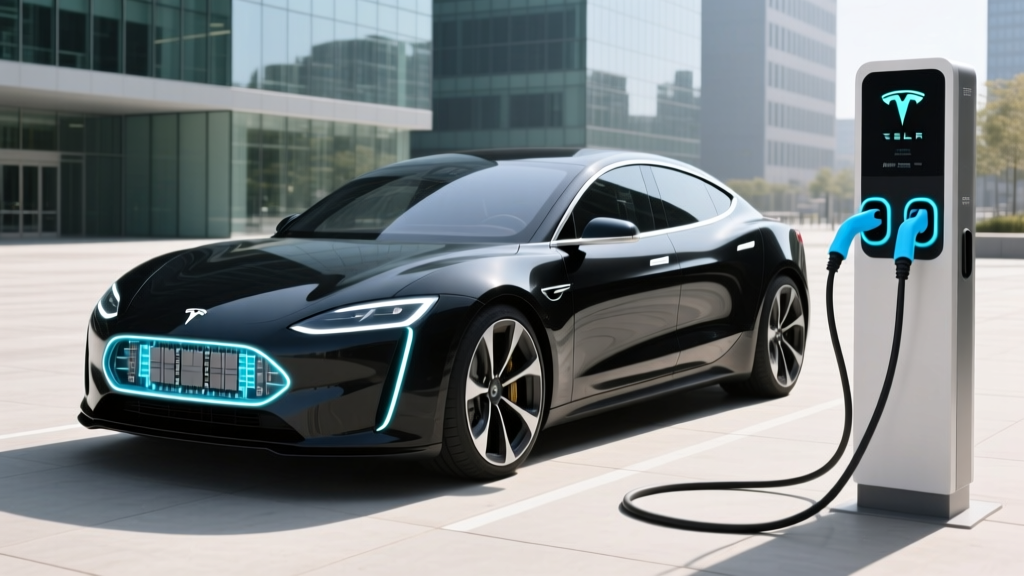
Tesla's flagship sedan has been the subject of relentless speculation, but as of early 2026, the Tesla Model 9 remains an announced and previewed vehicle — not yet available for customer delivery. Tesla has showcased design elements and shared preliminary powertrain targets at its most recent investor events, positioning the Model 9 (sometimes referenced in media as the next-generation Tesla sedan platform) as a direct competitor to the Lucid Air, Mercedes EQS, and BMW i7 in the premium full-size electric sedan segment.
This review compiles every confirmed and estimated specification Tesla has published or demonstrated, clearly distinguishing between announced/preliminary figures and finalized production data. We'll update this page the moment Tesla begins deliveries and final EPA certification numbers are posted. If you're researching the Tesla 9 to decide whether to wait or buy a competitor now, this guide gives you the data to make that call.
What We Know About the Tesla Model 9 (Announced Specs)
Tesla has previewed the Model 9 as a full-size luxury sedan built on an evolution of its structural battery pack architecture. The vehicle is expected to slot above the Model S in both size and price, targeting the executive-sedan buyer who wants maximum range, rapid charging, and Tesla's software ecosystem. Below are the preliminary specifications based on Tesla's public disclosures and industry analysis.
| Specification | Value (Estimated) | Status |
|---|---|---|
| EPA Range | ~420 miles (Long Range AWD) | Announced target |
| Battery Capacity | ~100 kWh usable | Estimated |
| Battery Chemistry | NMC (high-nickel) for Long Range; LFP variant possible | Estimated |
| Drivetrain | Dual-Motor AWD (Long Range); Tri-Motor AWD (Performance) | Announced |
| Horsepower | ~600 hp (Long Range); ~850+ hp (Performance) | Estimated |
| 0–60 mph | ~3.8 sec (Long Range); ~2.5 sec (Performance) | Estimated |
| Max DC Fast Charge | ~250 kW (V3 Supercharger); potential 350 kW on V4 | Estimated |
| 10–80% DC Charge Time | ~22–25 minutes (est.) | Estimated |
| Level 2 Home Charge Rate | 11.5 kW (~44 mi/hr) | Estimated |
| Efficiency | ~130 MPGe combined / ~26 kWh/100 mi | Estimated |
| Base MSRP (Long Range) | $54,990 | Announced target |
| Performance Trim MSRP | ~$72,000+ | Estimated |
| Battery Warranty | 8 years / 120,000 miles (expected) | Based on Tesla precedent |
Important note: All figures above are preliminary. Tesla has a history of adjusting specifications between announcement and production delivery. We will revise this table with final EPA-certified data once available.
Real-World Range: What to Actually Expect
Real-World Highway (70–75 mph): Expect ~330–360 miles
Real-World Cold Weather (below 32°F): Expect ~270–310 miles
Mixed Commute (city + suburban): Expect ~370–400 miles
Tesla's announced 420-mile target for the Model 9 Long Range would make it one of the longest-range production EVs on the market, rivaling the Lucid Air Grand Touring's EPA-certified 516 miles. However, as with every EV, the EPA sticker is an idealized blend. In real-world highway driving at sustained speeds above 70 mph, aerodynamic drag increases energy consumption significantly — expect a 15–20% reduction from the EPA figure.
Cold-weather impact is the larger variable. Tesla's heat pump system (standard on recent Model S/3/Y/X) recovers waste heat from the drivetrain to warm the cabin and battery, reducing the typical 30–40% range loss seen in older EVs to roughly 25–30%. If you live in northern climates and commute in sub-freezing temperatures, budget for ~280–310 miles of practical range between charges.
The structural battery pack design, combined with Tesla's thermal management system, should offer excellent preconditioning performance — meaning the battery reaches optimal temperature before you arrive at a Supercharger, sustaining peak charge rates longer. This is where Tesla's integrated ecosystem provides a tangible advantage over competitors relying on third-party charging networks.
Charging Speed: DC Fast Charging and Home Setup
Charging speed is where the Model 9's value proposition becomes concrete — or falls short, depending on your expectations. Tesla's preliminary specs suggest the Model 9 will support the existing V3 Supercharger network at up to 250 kW, with potential support for the newer V4 Supercharger cabinets that can deliver up to 350 kW (though sustained vehicle-side acceptance rates depend on the pack's C-rate and thermal limits).
| Charging Level | Power (kW) | Speed (Miles Added/Hour) | Notes |
|---|---|---|---|
| Level 1 (120V household) | ~1.4 kW | ~5 mi/hr | Emergency/trickle only |
| Level 2 (240V, 48A Wall Connector) | 11.5 kW | ~44 mi/hr | Overnight full charge in ~9 hrs |
| DC Fast (V3 Supercharger) | Peak 250 kW | ~1,000+ mi/hr (peak) | 10–80% in ~22–25 min |
| DC Fast (V4 Supercharger) | Up to 350 kW (est.) | ~1,200+ mi/hr (peak) | 10–80% potentially ~18 min |
Understanding the charge curve: The peak kW number is only sustained for a portion of the session. A typical Tesla charge curve peaks early (between 10–30% State of Charge) and tapers progressively. By 60% SoC, you'll likely see ~150 kW; by 80%, roughly ~80–100 kW. This is why the 10–80% time (~22–25 minutes) is a more useful metric than peak kW alone. Charging past 80% slows dramatically to protect battery longevity — plan to charge to 80% on road trips and top off only when necessary.
For home charging, Tesla's Wall Connector at 48 amps on a 60-amp circuit delivers 11.5 kW — enough to replenish the entire ~100 kWh pack overnight. Installation typically requires a 240V/60A dedicated circuit; budget $800–$2,000 for a licensed electrician depending on your panel capacity and conduit run distance. Homes with 100-amp main panels may need a panel upgrade ($1,500–$3,000) before adding a Level 2 charger.
Performance, Efficiency, and Driving Dynamics
The Model 9 Long Range is expected to use a dual-motor all-wheel-drive layout producing approximately 600 horsepower, delivering a 0–60 mph time around 3.8 seconds. The Performance variant, likely featuring a tri-motor setup (one front, two rear), could push output above 850 hp with a 0–60 time near 2.5 seconds — placing it in hypercar territory for acceleration.
Efficiency is where Tesla typically excels. The company's powertrain engineering consistently achieves class-leading kWh-per-mile figures. An estimated 26 kWh/100 miles (roughly 130 MPGe combined) for the Long Range AWD would be competitive with the BMW i7 eDrive50 (~85 MPGe combined per EPA data) and substantially more efficient than the Mercedes EQS 580.
Tesla's regenerative braking system offers one-pedal driving with strong deceleration — a hallmark of the brand. Expect the Model 9 to feature adaptive air suspension (similar to the refreshed Model S) with adjustable ride height and damping, balancing comfort on highway cruises with firmness during spirited driving.
Pricing, Trims, and Federal Tax Credit Eligibility
Tesla's announced target MSRP for the Model 9 Long Range is approximately $54,990, positioning it below the current Model S ($74,990 base in 2025) and aggressively undercutting the Lucid Air Pure (~$69,900). A Performance variant is expected near $72,000–$78,000.
| Trim | Est. MSRP | Federal Credit (§30D) | Effective Price (Est.) |
|---|---|---|---|
| Long Range AWD | $54,990 | Up to $7,500* | ~$47,490 |
| Performance AWD | ~$74,990 | $0 (MSRP cap exceeded) | ~$74,990 |
Federal tax credit eligibility (§30D) — critical caveats:
- MSRP cap: Sedans must have an MSRP at or below $55,000 to qualify. The Long Range at $54,990 clears this threshold; the Performance trim does not.
- Income cap: Modified adjusted gross income must not exceed $150,000 (single), $225,000 (head of household), or $300,000 (joint filers).
- Battery sourcing: The vehicle must meet critical mineral and battery component requirements that phase in annually. Tesla's domestic battery production (Gigafactory Nevada, Gigafactory Texas) positions it well, but final eligibility depends on the specific model-year sourcing percentages.
- Point-of-sale transfer: As of 2024+, eligible buyers can transfer the credit to the dealer at purchase, reducing the out-of-pocket price immediately rather than waiting for tax filing.
For the latest rules, always verify with the IRS clean vehicle credit page. State and local incentives may stack on top — check your state's energy office or DOE Alternative Fuels Data Center for details.
Interior Space, Cargo, and Technology
As a full-size sedan, the Model 9 is expected to offer substantially more rear-seat legroom and cargo volume than the Model S. Target dimensions suggest approximately 42 inches of rear legroom (vs. ~35.4 inches in the Model S) and a trunk volume around 22–25 cubic feet, plus a front trunk (frunk) of approximately 4–5 cubic feet. These figures would place it squarely in competition with the Lucid Air (32 cu ft combined) and Mercedes EQS (22 cu ft trunk).
Tesla's interior design language — minimalist, screen-centric — will likely carry forward with a large 17-inch center touchscreen, a rear passenger entertainment display, and a yoke or conventional steering wheel option. Expect the full Tesla software suite: over-the-air updates, Tesla Theater, gaming, Dashcam/Sentry Mode, and the Premium Connectivity package.
Autopilot and FSD (Supervised): The Model 9 will ship with Tesla's latest hardware suite (expected HW5 or later). Autopilot (adaptive cruise + lane centering) will be standard; Full Self-Driving (Supervised) will remain an optional upgrade. Crucially, FSD is an SAE Level 2 driver-assistance system — it requires continuous driver supervision and is not autonomous driving. Tesla's naming convention is misleading; treat FSD as an advanced cruise-and-steering assist, not a chauffeur.
Who the Tesla Model 9 Is For — and Who Should Look Elsewhere
- You want maximum range in a premium sedan and are willing to wait for production
- You're invested in the Tesla Supercharger ecosystem and Tesla software
- You prioritize efficiency (low kWh/mi) over traditional luxury materials
- You want a full-size sedan at a price below the Lucid Air and Mercedes EQS
- You need a vehicle now — the Model 9 is not yet available for delivery
- You prefer traditional luxury interiors (leather, wood, ambient lighting) — consider Lucid Air or BMW i7
- You want proven build quality and dealer service networks — consider Mercedes EQS or BMW i7
- You need a wagon/hatchback for maximum cargo flexibility — consider the Audi A6 e-tron or Porsche Taycan Cross Turismo
Pros and Cons at a Glance
- Class-leading range target (~420 mi EPA)
- Access to Tesla Supercharger network
- Aggressive pricing for a full-size EV sedan
- Best-in-class software and OTA updates
- Strong efficiency (low kWh/100 mi)
- Not yet available — delivery timeline uncertain
- Minimalist interior not for traditional luxury buyers
- Tesla build quality consistency remains a concern
- FSD naming is misleading (still Level 2, not autonomous)
- Performance trim exceeds $55K tax credit MSRP cap
Frequently Asked Questions
What is the real-world range of the Tesla Model 9?
The announced EPA target is ~420 miles for the Long Range AWD. Real-world highway driving at 70–75 mph will likely yield 330–360 miles. In cold weather (below 32°F), expect 270–310 miles. Mixed city commuting should return close to the EPA figure, around 370–400 miles.
How fast does the Tesla Model 9 charge?
On a V3 Supercharger (250 kW peak), the estimated 10–80% charge time is 22–25 minutes. On V4 Superchargers (up to 350 kW), this could drop to ~18 minutes if the battery pack supports the higher C-rate. At home on a Level 2 Wall Connector (11.5 kW), a full charge takes approximately 9 hours.
How much does the Tesla Model 9 cost after tax credits?
The Long Range AWD at an estimated $54,990 MSRP could qualify for the full $7,500 federal tax credit under §30D (subject to income caps and battery sourcing rules), bringing the effective price to approximately $47,490. The Performance trim (~$74,990) exceeds the $55,000 sedan MSRP cap and would not qualify for the federal credit.
Is the Tesla Model 9 worth waiting for vs. competitors?
If you need a vehicle now, the Lucid Air Pure ($69,900, 419 mi EPA) and BMW i7 eDrive50 (~$97,000, 318 mi EPA) are available today. The Model 9's value proposition hinges on its ~$55,000 price point and Tesla's Supercharger network — a compelling combination if the timeline works for you. However, Tesla's delivery timelines have historically slipped, so factor in uncertainty.
What are the biggest pros and cons?
Pros: exceptional range target, Supercharger access, aggressive pricing, strong efficiency, best-in-class software. Cons: not yet available, minimalist interior polarizes buyers, Tesla build quality inconsistency, FSD is Level 2 (not self-driving), Performance trim misses the tax credit.
Does the Tesla Model 9 qualify for the federal EV tax credit?
The Long Range trim ($54,990 estimated MSRP) falls under the $55,000 sedan cap and may qualify for up to $7,500 under IRS §30D — provided the buyer meets income thresholds ($150K single / $300K joint) and the vehicle meets battery critical-mineral and component sourcing requirements for the model year. The Performance trim exceeds the MSRP cap. Always verify current eligibility on IRS.gov before purchasing.