The Tesla Model 3 remains the benchmark compact electric sedan, and for many shoppers, the first question is always about straight-line speed. But Tesla zero to 60 figures only tell part of the story. A 3.1-second sprint in the Performance trim is thrilling, yet daily drivability hinges on real-world range, charging speed, efficiency, and whether you actually qualify for the federal tax credit. This review breaks down every current 2026 Model 3 trim — RWD, Long Range AWD, and Performance — with exact EPA numbers, battery chemistry details, charging curves, and ownership economics so you can match the right variant to your actual driving life.
2026 Tesla Model 3 Lineup: Trims, Pricing, and Quick Specs
Tesla has streamlined the Model 3 into three distinct configurations for 2026, following the "Highland" refresh that brought improved NVH, a rear touchscreen, ambient lighting, and ventilated seats. Here's the complete spec breakdown:
| Spec | Model 3 RWD | Model 3 Long Range AWD | Model 3 Performance |
|---|---|---|---|
| Base MSRP | $38,990 | $45,990 | $52,990 |
| 0-60 mph | 5.8 sec | 4.2 sec | 3.1 sec |
| Horsepower | ~271 hp | ~346 hp | ~510 hp |
| Drivetrain | RWD (single motor) | AWD (dual motor) | AWD (dual motor) |
| EPA Range | 272 mi | 341 mi | 315 mi |
| Battery (usable) | ~57.5 kWh (LFP) | ~75 kWh (NMC) | ~75 kWh (NMC) |
| MPGe (combined) | 132 MPGe | 132 MPGe | 121 MPGe |
| kWh/100 mi | 25 | 25 | 28 |
| Max DC Fast Charge | 170 kW | 250 kW | 250 kW |
| 10-80% DC Time | ~25 min | ~22 min | ~22 min |
| Level 2 Home Rate | 11.5 kW (~44 mi/hr) | 11.5 kW (~44 mi/hr) | 11.5 kW (~44 mi/hr) |
| Cargo Volume | 23 cu ft (rear trunk + frunk) | ||
| Rear Legroom | 35.3 in | ||
| Battery Warranty | 8 yr / 100,000 mi | 8 yr / 120,000 mi | |
Source: EPA / fueleconomy.gov and Tesla.com specifications.
Tesla Model 3 Zero to 60: What Each Trim Actually Delivers
The headline Tesla zero to 60 number depends entirely on which Model 3 you pick. The Performance trim's 3.1-second run puts it in sports-car territory — comparable to a Porsche 911 Carrera — but it achieves this through dual-motor torque vectoring and a track-tuned suspension with adaptive dampers. The Long Range AWD splits the difference at 4.2 seconds, which is genuinely quick for a daily commuter and more than adequate for highway merging. The RWD's 5.8 seconds is the slowest of the bunch but still quicker than most gas-powered compact sedans in this price bracket.
What matters beyond the stopwatch: the Performance model includes a Track Mode that adjusts torque distribution, regenerative braking strength, and cooling management for sustained lapping. The Long Range and RWD trims prioritize comfort-oriented damping. If you're not heading to autocross events, the Long Range's 4.2-second sprint paired with 341 miles of range is the sweet spot for most buyers.
Real-World Range: Beyond the EPA Sticker
- EPA sticker: 341 miles
- Real-world highway (70 mph, 72°F): ~285-305 miles
- Real-world mixed city/highway: ~310-330 miles
- Cold weather (25°F, highway): ~220-255 miles (30-35% reduction)
Efficiency on the Long Range hovers around 250-270 Wh/mi in moderate conditions. The RWD, with its lighter LFP pack, often matches or slightly beats its EPA number in city driving. The Performance, with stickier tires and a sportier tune, typically returns 260-280 real-world highway miles on a full charge.
Range variability is physics, not a flaw. Cold temperatures increase battery internal resistance, cabin heating draws 2-5 kW continuously, and sustained 80+ mph driving increases aerodynamic drag exponentially. The Model 3's heat pump (standard on all 2026 trims) mitigates cold-weather losses better than resistive heaters, but you should still plan for 25-35% range reduction in sub-freezing road trips.
Charging Speed: DC Fast Charging and Home Setup
Charging speed is where the RWD and Long Range/Performance trims diverge significantly. The RWD's LFP battery tops out at 170 kW on DC fast chargers, while the NMC packs in the Long Range and Performance accept up to 250 kW at V3 Superchargers and compatible third-party stations.
| Charging Level | Power | RWD (LFP) | Long Range / Performance (NMC) |
|---|---|---|---|
| Level 1 (120V) | ~1.4 kW | ~4 mi/hr | ~4 mi/hr |
| Level 2 (240V, 48A) | 11.5 kW | ~44 mi/hr | ~44 mi/hr |
| DC Fast (peak) | 170 / 250 kW | ~170 kW peak | ~250 kW peak |
| DC 10-80% time | — | ~25 min | ~22 min |
| DC 10-50% time | — | ~13 min | ~11 min |
Charging curve reality check: The 250 kW peak on Long Range and Performance models only holds between roughly 10-30% State of Charge. From 30-60%, expect ~150-180 kW, and above 80% the rate drops sharply to protect the battery — often below 50 kW. This is why Tesla (and every other automaker) quotes 10-80% times rather than 0-100%. On a road trip, plan your stops around the 10-80% window for the fastest experience.
For home Level 2 charging, Tesla's Wall Connector ($475) on a 60-amp circuit delivers the full 11.5 kW (48A). A typical overnight charge from 20% to 80% takes about 4-5 hours — more than enough for daily driving. Installation costs range from $800-$2,000 depending on your electrical panel's capacity and the run length to your parking spot. If you have a 200-amp panel with spare capacity, expect the lower end. A panel upgrade to 200A can add $1,500-$3,000.
Battery Chemistry: LFP vs. NMC in the Model 3
The RWD Model 3 uses a lithium iron phosphate (LFP) battery, while the Long Range and Performance use nickel manganese cobalt (NMC). This isn't just a trivia detail — it affects your ownership experience in meaningful ways:
| Factor | LFP (RWD) | NMC (Long Range / Performance) |
|---|---|---|
| Energy density | Lower (smaller pack, less range) | Higher (more range per kg) |
| Cycle life | 3,000+ cycles | 1,500-2,000 cycles |
| Recommended daily SoC | 100% OK | 80% for daily, 100% for trips |
| Cold-weather performance | More range loss in cold | Better cold-weather output |
| Cost | Lower (enables lower MSRP) | Higher |
| DC fast-charge speed | Slower (170 kW peak) | Faster (250 kW peak) |
The practical takeaway: if you charge at home nightly and want a car you can set to 100% without battery-care anxiety, the LFP-equipped RWD is genuinely low-maintenance. If you need maximum range or take frequent road trips where fast DC charging matters, the NMC pack in the Long Range or Performance is the better fit.
Federal Tax Credit and True Cost of Ownership
Under current IRS §30D rules, the Model 3's federal tax credit eligibility depends on battery-component and critical-mineral sourcing requirements that have tightened significantly since the Inflation Reduction Act. As of 2026:
- Model 3 RWD: Typically qualifies for the full $7,500 credit (battery sourcing compliant)
- Model 3 Long Range AWD: Typically qualifies for $7,500 (sourcing-dependent; verify at purchase)
- Model 3 Performance: Typically qualifies for $7,500 (verify at purchase)
Buyer eligibility requirements (per IRS §30D):
- Adjusted gross income: ≤$150,000 (single), ≤$225,000 (head of household), ≤$300,000 (joint)
- Vehicle MSRP cap: ≤$55,000 for sedans (all Model 3 trims qualify)
- Credit is now transferable at point of sale, reducing your purchase price directly
- Battery components and critical minerals must meet phased-in domestic/content thresholds
| Trim | Base MSRP | Est. Destination | §30D Credit | Effective Price |
|---|---|---|---|---|
| RWD | $38,990 | $1,390 | -$7,500 | ~$32,880 |
| Long Range AWD | $45,990 | $1,390 | -$7,500 | ~$39,880 |
| Performance | $52,990 | $1,390 | -$7,500 | ~$46,880 |
Note: Tesla pricing fluctuates frequently. Always confirm current MSRP and credit eligibility on Tesla.com and with your tax professional before purchase. State incentives (California, Colorado, etc.) may stack on top.
Interior, Tech, and Driver Assistance
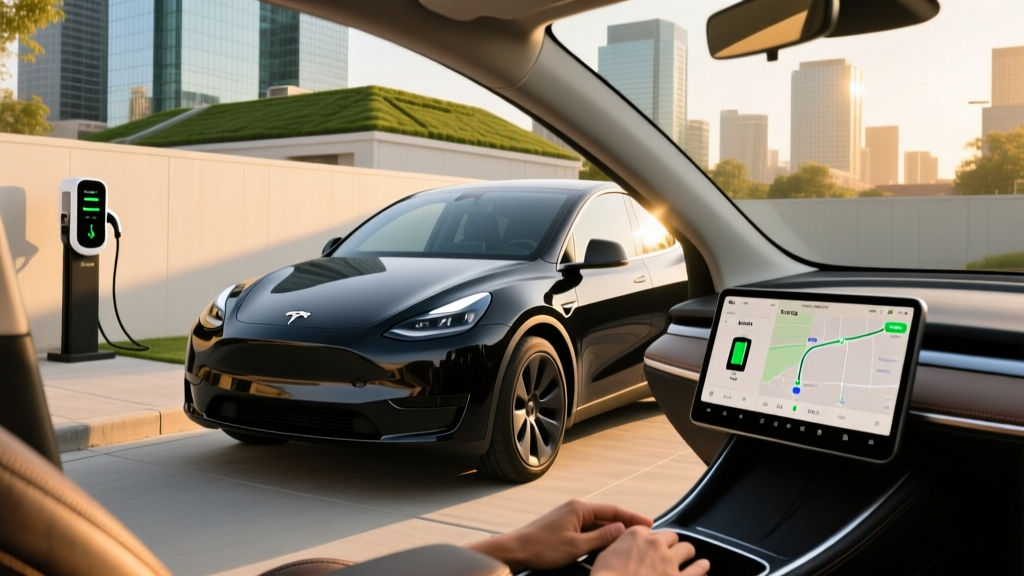
The post-Highland Model 3 interior is a noticeable step up from pre-2024 models. Cabin noise is significantly reduced thanks to acoustic glass and additional sound deadening. The 15.4-inch front touchscreen handles all vehicle controls, navigation, and entertainment, while an 8-inch rear touchscreen gives back-seat passengers climate and media control. Ventilated front seats, ambient lighting, and power-folding mirrors are now standard across all trims.
Driver assistance: Basic Autopilot (Traffic-Aware Cruise Control and Autosteer) is included. Full Self-Driving (Supervised) remains an $8,000 option or $99/month subscription. FSD is an SAE Level 2 system — it does not make the car self-driving. You must remain attentive, keep hands available for steering input, and be prepared to take over at any moment. Tesla's camera-only vision stack has improved substantially, but it still struggles with construction zones, faded lane markings, and certain edge cases that a LiDAR-equipped system might handle better.
Tesla Autopilot and FSD (Supervised) are Level 2 driver-assistance systems. The driver must continuously monitor the road and remain prepared to intervene immediately. This is fundamentally different from Level 4 robotaxi services (Waymo, Zoox) that operate without a human driver in geofenced areas.
Cargo space is 23 cubic feet total (including the front trunk), which is competitive with the BMW i4 and Hyundai Ioniq 6. Rear legroom at 35.3 inches is adequate for adults but tighter than a Polestar 2 or the outgoing Model S. The glass roof creates an airy feel but offers no retractable shade — in hot climates, aftermarket tinting or a mesh cover is a common owner upgrade.
Who Should Buy Which Model 3?
- You charge at home every night and drive under 40 miles/day
- You want the lowest entry price (~$32,880 after credit)
- You prefer LFP's 100% daily charging convenience
- You live in a mild climate where cold-weather LFP losses are manageable
- You take regular road trips and need 300+ real-world miles
- You live in a cold-weather state and need AWD traction
- You want fast 250 kW DC charging for highway travel
- You want the best balance of range, speed, and value
- You care about the 3.1-second zero to 60 time and track capability
- You want adaptive dampers, performance brakes, and 20-inch wheels
- 315 miles of EPA range is sufficient for your typical driving
- Budget allows ~$46,880 after the federal credit
Pros and Cons
- Class-leading Supercharger network access (17,000+ stalls in North America)
- Over-the-air updates continuously add features and improvements
- Excellent efficiency (25 kWh/100 mi) keeps charging costs low
- LFP battery in RWD offers exceptional cycle life and daily 100% charging
- Highland refresh significantly improved ride quality and cabin quietness
- Strong resale value relative to most EV competitors
- No physical buttons or instrument cluster — everything through the touchscreen
- Rear seat space tighter than some rivals (Polestar 2, Hyundai Ioniq 6)
- Glass roof has no built-in shade; cabin heat soak in summer
- FSD (Supervised) remains Level 2 at $8,000 — expensive for what it delivers
- RWD's 170 kW DC charge speed is noticeably slower on road trips
- Insurance costs run 15-25% higher than comparable gas sedans
Frequently Asked Questions
What is the fastest Tesla Model 3 zero to 60 time?
The 2026 Model 3 Performance achieves a 3.1-second 0-60 mph time with dual-motor AWD and 510 horsepower. This requires a fully charged battery and ideal conditions; expect 3.3-3.5 seconds in real-world warm-weather launches.
Does the Tesla Model 3 qualify for the $7,500 federal tax credit?
All three Model 3 trims currently qualify for the full $7,500 §30D credit, provided the buyer meets income caps ($150K single / $300K joint) and the vehicle's battery sourcing meets current-year critical mineral and component thresholds. The credit can be transferred at point of sale to reduce your purchase price directly. Always verify eligibility on IRS.gov and with a tax professional.
How much does it cost to charge a Model 3 at home?
At the US average electricity rate of ~$0.16/kWh, a full charge of the Long Range (75 kWh) costs about $12. For the RWD (57.5 kWh), it's about $9.20. That translates to roughly $3.50-$4.50 per 100 miles of driving — compared to $12-$15 for a 30 MPG gas car at $3.50/gallon.
Is the Model 3 Long Range worth the premium over the RWD?
If you drive more than 200 miles between charges regularly, take road trips, or live in a cold climate, the $7,000 premium for the Long Range buys you 69 additional EPA miles, dual-motor AWD, a faster 4.2-second 0-60, and 250 kW DC fast charging. For a pure city commuter with home charging, the RWD at ~$32,880 after the credit is hard to beat.
How long will the Model 3 battery last?
Tesla warranties the LFP battery (RWD) for 8 years/100,000 miles and the NMC battery (Long Range/Performance) for 8 years/120,000 miles, guaranteeing at least 70% capacity retention. Real-world fleet data suggests Tesla batteries typically retain 85-90% capacity at 100,000 miles. LFP packs generally outlast NMC in total cycle life.
How does the Model 3 compare to the Hyundai Ioniq 6 or BMW i4?
The Ioniq 6 offers comparable range (361 mi SE) with 800V architecture for faster charging but lacks Tesla's Supercharger network. The BMW i4 is more luxurious with a traditional cockpit layout but starts higher and delivers less range. The Model 3's combination of range, efficiency, Supercharger access, and post-credit pricing remains the strongest overall value proposition in the segment.