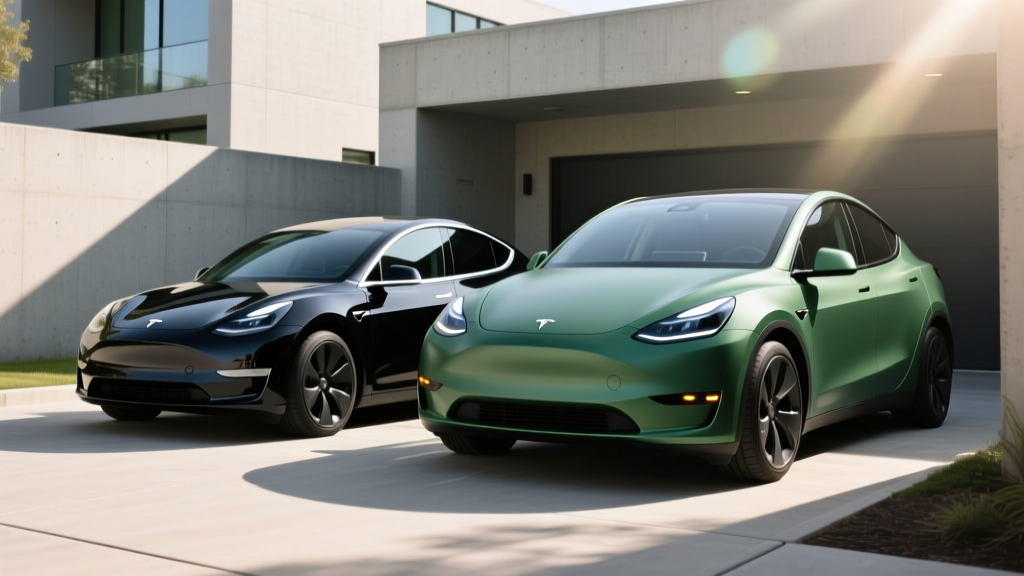
If you're searching for how much is new Tesla Model 3 or Y, the answer depends on trim, drivetrain, and whether you qualify for the federal EV tax credit. As of early 2026, the Tesla Model 3 starts at $38,990 (RWD) and the Model Y starts at $44,990 (Long Range AWD), before destination fees and potential incentives. But sticker price is only part of the equation — battery chemistry, real-world range, charging speed, and §30D tax credit eligibility all shape the true cost of ownership.
This review covers the current 2026 Tesla Model 3 and Model Y lineups side by side, with exact EPA figures, real-world range expectations, charging data, and a clear breakdown of what you'll actually pay after credits.
2026 Tesla Model 3 vs Model Y: Pricing and Trim Breakdown
Tesla restructured both lineups for the 2025–2026 model years. The Model 3 received its "Highland" refresh (updated styling, ventilated seats, ambient lighting, rear touchscreen), while the Model Y received the "Juniper" update for 2026 with a similar interior overhaul, new light bar, and improved NVH. Here's what each model costs at every trim level:
| Model / Trim | Drivetrain | Base MSRP | Est. After §30D Credit* |
|---|---|---|---|
| Model 3 RWD | Rear-Wheel Drive | $38,990 | $31,490 |
| Model 3 Long Range AWD | Dual-Motor AWD | $45,490 | $37,990 |
| Model 3 Performance | Dual-Motor AWD | $52,990 | $45,490 |
| Model Y Long Range AWD | Dual-Motor AWD | $44,990 | $37,490 |
| Model Y Performance | Dual-Motor AWD | $49,990 | $42,490 |
*Prices exclude the $1,390 destination fee. §30D credit assumes full $7,500 eligibility — see the tax credit section below for income, MSRP, and sourcing requirements. Tesla's point-of-sale transfer option lets you apply the credit as a down payment reduction at delivery.
Real-World Range: What the EPA Sticker Doesn't Tell You
EPA range estimates for the 2026 Model 3 and Model Y are among the best in their respective segments, but real-world results vary significantly based on driving style, temperature, and terrain. Tesla's thermal management system (heat pump standard on all trims) helps mitigate cold-weather losses compared to older EVs, but physics still applies.
Model 3 RWD: EPA 272 miles. Real-world highway: ~225–245 miles. Cold weather: ~190–215 miles.
Model Y Long Range AWD: EPA 320 miles. Real-world highway: ~265–285 miles. Cold weather: ~220–250 miles.
Model Y Performance: EPA 285 miles. Real-world highway: ~235–255 miles. Cold weather: ~195–220 miles.
The RWD Model 3 uses a 60 kWh LFP (lithium iron phosphate) battery pack. LFP chemistry is heavier and less energy-dense than NMC, but offers longer cycle life and can be charged to 100% daily without accelerating degradation — a major practical advantage for commuters who need every mile every day.
All Long Range and Performance trims use NMC (nickel manganese cobalt) chemistry with usable capacities of approximately 79 kWh (Model 3 LR) and 75 kWh (Model Y LR). Tesla recommends daily charging to 80% for NMC packs, reserving 100% for road trips.
Charging Speed: DC Fast Charging and Home Level 2
Charging speed is often more important than total range for road-trip usability. Both the Model 3 and Model Y support the NACS (North American Charging Standard) connector natively, giving them access to Tesla's Supercharger network — currently the most reliable and extensive DC fast-charging network in the U.S. Non-Tesla networks like Electrify America and EVgo are accessible via NACS-to-CCS adapters, though compatibility varies.
| Spec | Model 3 RWD (LFP) | Model 3 LR / Perf (NMC) | Model Y LR / Perf (NMC) |
|---|---|---|---|
| Max DC Fast Charge | 170 kW peak | 250 kW peak | 250 kW peak |
| 10–80% DCFC Time | ~28 min | ~18–22 min | ~20–25 min |
| Level 2 (240V / 48A) | 11.5 kW (~37 mi/hr) | 11.5 kW (~44 mi/hr) | 11.5 kW (~40 mi/hr) |
| Level 1 (120V / 12A) | ~1.4 kW (~4 mi/hr) | ~1.4 kW (~5 mi/hr) | ~1.4 kW (~4 mi/hr) |
| Connector | NACS | NACS | NACS |
Charging curve reality: The 250 kW peak rate on Long Range and Performance trims is not sustained. You'll see 250 kW only briefly at a low state of charge (around 10–20% SoC). The rate tapers progressively — dropping to roughly 150 kW by 50% SoC and below 75 kW past 80%. This is why Tesla quotes 10–80% times rather than 0–100%. For road trips, plan stops around the 10–80% window to minimize time plugged in.
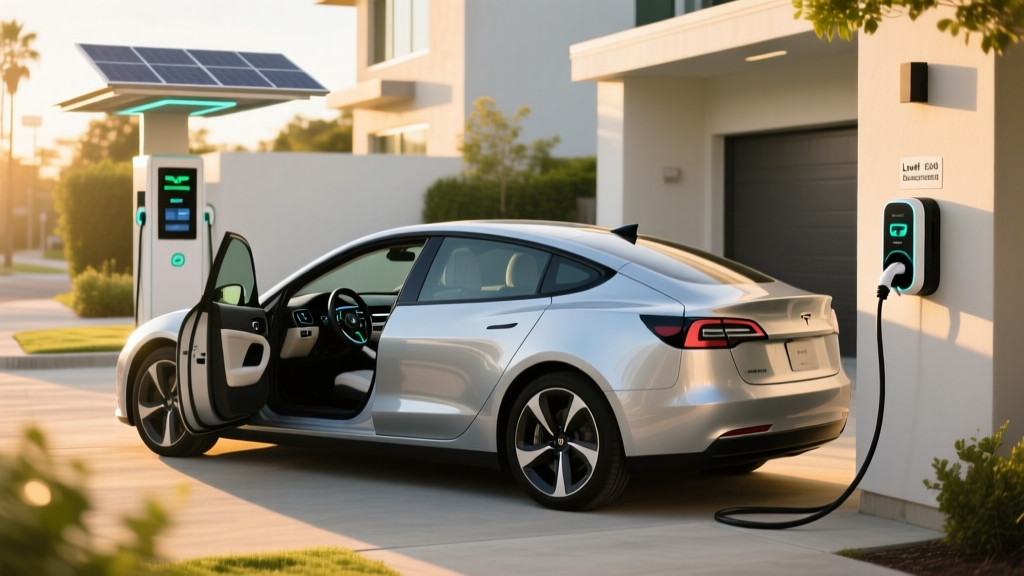
At home, a Tesla Wall Connector on a 60-amp circuit (48A continuous) delivers 11.5 kW, which fully replenishes any Model 3 or Y overnight in roughly 7–9 hours. A standard NEMA 14-50 outlet on a 50-amp circuit provides about 9.6 kW (40A continuous), adding roughly 30–35 miles per hour of charging.
Performance, Efficiency, and Drivetrain Specs
| Trim | 0–60 mph | Horsepower | MPGe (Combined) | kWh/100mi |
|---|---|---|---|---|
| Model 3 RWD | 5.8 sec | 271 hp | 132 MPGe | 25 kWh |
| Model 3 Long Range AWD | 4.2 sec | 346 hp | 129 MPGe | 26 kWh |
| Model 3 Performance | 2.9 sec | 510 hp | 113 MPGe | 30 kWh |
| Model Y Long Range AWD | 4.8 sec | 384 hp | 122 MPGe | 28 kWh |
| Model Y Performance | 3.5 sec | 456 hp | 111 MPGe | 30 kWh |
The Model 3 is lighter and more aerodynamic (drag coefficient ~0.219), which gives it a measurable efficiency advantage over the taller, heavier Model Y (~0.23 Cd). On a per-mile basis, the Model 3 Long Range costs roughly 1–2 cents less to charge than the Model Y Long Range at the same electricity rate — a small gap per charge, but meaningful over thousands of miles.
All 2026 trims feature regenerative braking with one-pedal driving capability. Tesla removed the user-adjustable regen setting several years ago; regen strength is fixed and aggressive, which most owners adapt to quickly but can surprise first-time EV drivers.
Cargo, Passenger Space, and Practicality
The Model Y's crossover form factor delivers substantially more cargo volume, which is the core reason many buyers choose it over the Model 3 despite the higher price and lower range.
| Dimension | Model 3 | Model Y |
|---|---|---|
| Cargo (rear seats up) | 23 cu ft (trunk + frunk) | 34 cu ft (rear + frunk) |
| Cargo (rear seats folded) | ~50 cu ft | ~72 cu ft |
| Front Legroom | 42.7 in | 41.8 in |
| Rear Legroom | 35.2 in | 37.5 in |
| Seating Capacity | 5 | 5 (optional 7 in prior years; 5 standard for 2026) |
| Towing Capacity | Not rated | 3,500 lbs (LR AWD) |
The Model Y's 3,500-pound towing rating (with the factory tow hitch) makes it viable for light trailers, bike racks, or small campers. The Model 3 has no official tow rating. If towing is even an occasional need, the Model Y is the only option in this pairing.
Federal Tax Credit Eligibility (§30D): Do You Qualify?
Both the Model 3 and Model Y have historically qualified for the full $7,500 federal EV tax credit under IRS §30D, but eligibility is not automatic. Current rules impose several requirements that buyers must verify:
- MSRP Caps: Sedans (Model 3) must be ≤$55,000. SUVs/crossovers (Model Y) must be ≤$80,000. All current trims fall within these limits.
- Buyer Income Caps: Modified adjusted gross income must not exceed $150,000 (single), $225,000 (head of household), or $300,000 (joint filers).
- Battery Sourcing: Critical minerals and battery components must meet phased-in domestic-content and free-trade-agreement thresholds that tighten each year. Tesla's North American supply chain has so far kept both models eligible, but the IRS eligible-vehicle list should be checked at time of purchase.
- Point-of-Sale Transfer: You can transfer the credit to Tesla at delivery, reducing your down payment by $7,500 rather than waiting to claim it on your tax return.
- One Vehicle Per VIN: The credit is claimed once per vehicle, not per buyer. A used Tesla does not qualify for the new-vehicle §30D credit (but may qualify for the separate §25E used-EV credit of up to $4,000).
Bottom line on price: A Model 3 RWD buyer who qualifies for the full credit and applies it at point of sale pays an effective price of roughly $31,490 + destination ($1,390) = $32,880 before state incentives, taxes, or registration. A Model Y Long Range AWD drops to approximately $38,880 out the door (before state fees). These are among the most competitive prices in their respective segments for 2026.
For the latest eligibility details, consult IRS.gov's clean vehicle credit page and verify with a tax professional before purchase.
Tech, Driver Assistance, and Warranty
Every 2026 Model 3 and Model Y includes:
- 15.4-inch center touchscreen (front) with navigation, streaming, and gaming
- 8-inch rear touchscreen (Model 3 Highland / Model Y Juniper) for climate, media, and ventilation controls
- Tesla Autopilot (SAE Level 2): adaptive cruise control, lane-keeping, automatic emergency braking, blind-spot monitoring
- Full Self-Driving (Supervised) available as an $8,000 add-on or $99/month subscription — still requires active driver supervision at all times
- Over-the-air updates, Sentry Mode dashcam, phone-as-key, and Tesla app integration
- HEPA air filtration (Bioweapon Defense Mode) on Model Y; standard cabin air filtration on Model 3
Warranty coverage:
- Basic Vehicle: 4 years / 50,000 miles
- Battery & Drive Unit (RWD): 8 years / 100,000 miles
- Battery & Drive Unit (Long Range / Performance): 8 years / 120,000 miles
- Battery capacity retention threshold: 70% during warranty period
Tesla's battery warranty guarantees that the pack will retain at least 70% of its original capacity over the warranty term. Real-world degradation data from Tesla's fleet suggests most NMC packs lose roughly 5–8% capacity in the first 50,000 miles, then plateau. LFP packs in the RWD Model 3 show similar or slightly better longevity due to the chemistry's inherent stability and the ability to charge to 100% regularly for accurate BMS calibration.
Pros, Cons, and Verdict: Which Should You Buy?
Pros — Model 3
- Best efficiency in class (132 MPGe combined)
- Lowest entry price after tax credit (~$32,880)
- LFP battery allows daily 100% charging
- Superior aerodynamics = better real-world highway range
- Engaging driving dynamics, low center of gravity
Cons — Model 3
- Tight rear seat legroom (35.2 in)
- Modest cargo space (23 cu ft total)
- No tow rating
- RWD only on base trim — less capable in snow/ice
- No physical instrument cluster or turn-signal stalk (Highland)
Pros — Model Y
- Class-leading cargo volume (72 cu ft folded)
- 3,500-lb tow rating (LR AWD)
- More rear legroom than Model 3 (37.5 in)
- AWD standard on all trims
- Higher ride height — easier entry/exit
Cons — Model Y
- $6,000+ more expensive than equivalent Model 3
- Lower efficiency (122 MPGe vs 132 MPGe)
- Shorter real-world range due to weight and aero
- Higher tire replacement cost (heavier vehicle)
- No NMC daily 100% charging recommended
Decision Framework
Choose the Model 3 if: You commute solo or as a couple, prioritize maximum range and efficiency, want the lowest possible price, and don't need cargo space or towing.
Choose the Model Y if: You regularly carry rear-seat passengers, need cargo flexibility (strollers, gear, furniture), tow a light trailer, or live in a region where AWD is essential year-round.
Competitor Comparison: Is Tesla Still Worth It?
The Model 3 and Model Y don't exist in a vacuum. Key 2026 competitors include:
- Hyundai Ioniq 6 (sedan rival): 361-mile EPA range on the top trim, 800V architecture for 350 kW DC charging (10–80% in ~18 min), but less Supercharger access and a smaller service network.
- Hyundai Ioniq 5 (crossover rival): 305-mile range, 800V charging, NACS port starting 2025, strong value. Slightly less cargo space than Model Y.
- Ford Mustang Mach-E: 320-mile Extended Range, comfortable ride, BlueCruise hands-free highway driving. Charging speed lags Tesla at 150 kW peak.
- Chevrolet Equinox EV: Lower starting price, 319-mile range, but slower DC charging and less performance.
Tesla's enduring advantages in 2026 are the Supercharger network (over 25,000 stalls in North America with industry-leading uptime), over-the-air update cadence, and resale value. The main drawbacks remain the lack of a physical instrument cluster, panel gap quality inconsistency, and a service center network that can have long wait times in some metro areas.
Frequently Asked Questions
What is the real-world range of the Tesla Model 3 and Model Y?
The Model 3 Long Range AWD delivers roughly 285–305 miles on the highway in moderate weather, dropping to 240–270 miles in freezing temperatures. The Model Y Long Range AWD returns about 265–285 highway miles, or 220–250 in cold weather. RWD Model 3 owners should expect 225–245 highway miles. These figures assume 70–75 mph cruising; higher speeds reduce range further due to aerodynamic drag.
How fast does the Model 3 or Y charge at home and on the road?
On a Level 2 home charger (11.5 kW / 48A), both vehicles add roughly 37–44 miles of range per hour and fully charge overnight. On a Tesla Supercharger, Long Range and Performance trims peak at 250 kW, reaching 10–80% in about 18–25 minutes. The RWD Model 3 peaks at 170 kW and takes roughly 28 minutes for the same 10–80% window.
How much does a Tesla Model 3 or Y cost after tax credits?
If you qualify for the full $7,500 §30D credit and apply it at point of sale, the 2026 Model 3 RWD costs approximately $32,880 (including destination), and the Model Y Long Range AWD costs roughly $38,880. Eligibility depends on your income, the vehicle's MSRP, and battery component sourcing — always verify on IRS.gov before purchasing.
Does the Tesla Model 3 or Y qualify for the federal EV tax credit?
As of early 2026, both models appear on the IRS eligible vehicle list for the full $7,500 credit. However, you must meet income caps ($150K single / $300K joint), the vehicle MSRP must be under $55K (sedans) or $80K (SUVs), and battery sourcing requirements must be satisfied. Rules can change — confirm eligibility at purchase time.
Is the Model 3 or Model Y better for families?
The Model Y is the clear family pick. It offers more rear legroom (37.5 in vs 35.2 in), 72 cu ft of cargo space with seats folded, AWD standard, and a 3,500-lb tow rating. The Model 3 is better suited for singles, couples, or commuters who prioritize efficiency and lower cost over space.
Should I get the LFP (RWD) or NMC (Long Range) battery?
Choose LFP (Model 3 RWD) if you want the lowest price, longest cycle life, and the convenience of charging to 100% daily without degradation concerns. Choose NMC (Long Range or Performance) if you need maximum range, AWD, or faster DC charging speeds — but plan to charge to 80% daily and reserve 100% for road trips.