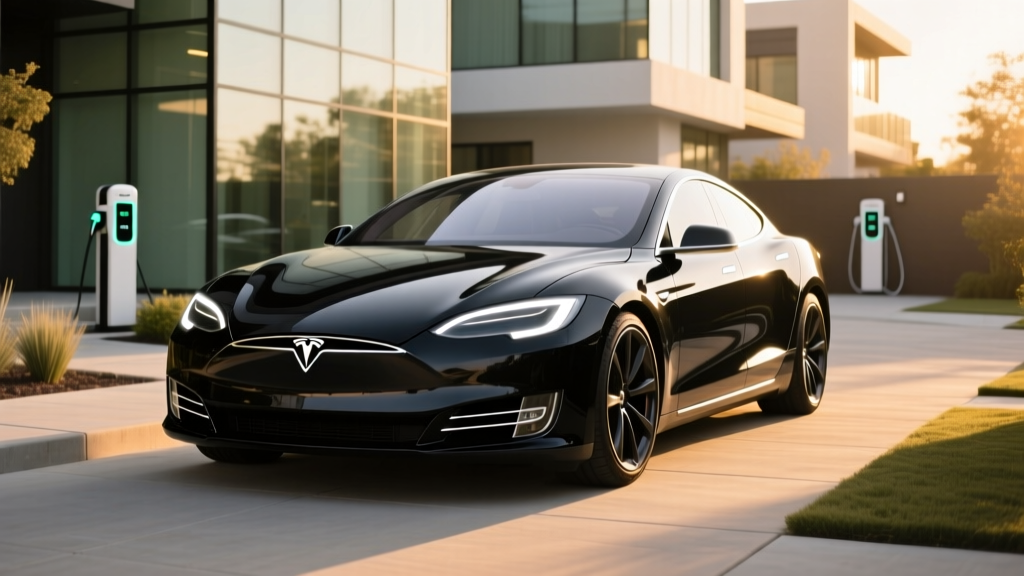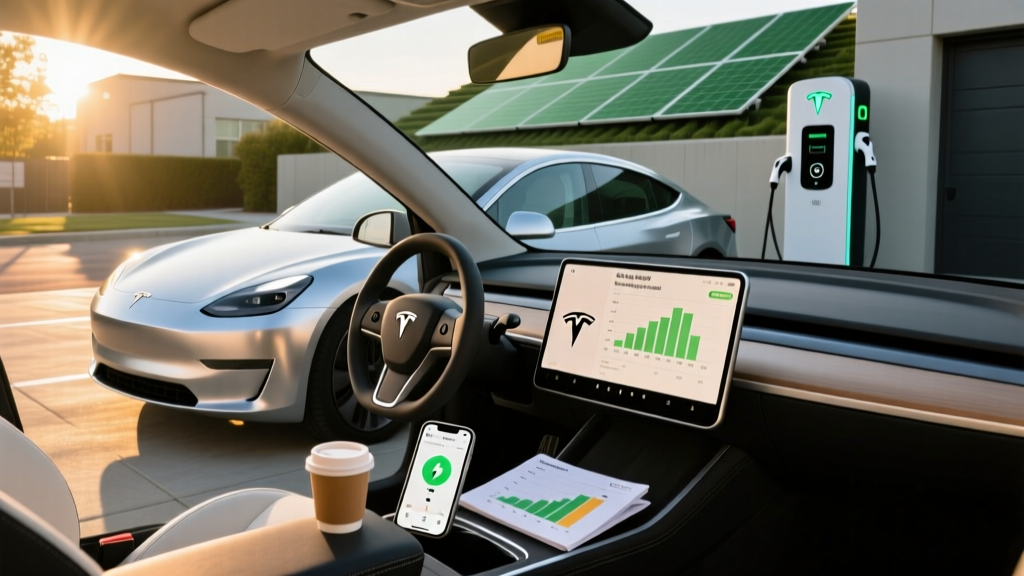
The Tesla Model 3 has been the default electric sedan for nearly a decade, but the 2025-2026 "Highland" refresh and intensifying competition from Hyundai, BMW, and Polestar have changed the calculus. If you're asking whether a Tesla Model 3 is worth it today, the answer depends on which trim you choose, how you charge, and what you value in an EV. Below, we put exact numbers to range, charging, price, and ownership so you can decide without the marketing noise.
2026 Tesla Model 3: Quick Verdict
The Model 3 Long Range AWD remains the sweet spot of the lineup: 341 miles of EPA range, dual-motor all-wheel drive, and access to the most reliable DC fast-charging network in North America. The base RWD trim undercuts rivals on price after the federal tax credit, while the Performance trim trades range for supercar-rivaling acceleration. Where the Model 3 still wins is efficiency — it converts electrons into miles better than almost any EV on sale. Where it trails is interior material quality, ride refinement on rough pavement, and the absence of a traditional instrument cluster or turn-signal stalk.
Range, Battery, and Real-World Efficiency
Tesla offers three distinct powertrains for the 2026 Model 3, each with a different battery chemistry and usable capacity. Understanding these differences is essential because they affect not just range but long-term degradation and charging behavior.
| Trim | Drivetrain | Battery (usable kWh) | Chemistry | EPA Range | MPGe (combined) | kWh/100 mi |
|---|---|---|---|---|---|---|
| RWD (Base) | Rear-Wheel Drive | ~57.5 kWh | LFP (CATL) | 272 mi | 132 MPGe | 25 |
| Long Range AWD | Dual-Motor AWD | ~75 kWh | NMC (Panasonic) | 341 mi | 132 MPGe | 25 |
| Performance | Dual-Motor AWD | ~75 kWh | NMC (Panasonic) | 315 mi | 121 MPGe | 28 |
Real-World Range vs. EPA Sticker
EPA 341 mi (Long Range AWD) — expect ~280–305 mi at sustained 75 mph highway speeds in moderate weather. In cold temperatures (below 32°F / 0°C), range drops to roughly 230–260 mi due to cabin heating demand and battery resistance. City driving with regenerative braking can match or slightly exceed the EPA figure. The RWD trim's LFP battery tolerates 100% daily charging without degradation concerns, which effectively narrows the real-world gap to the Long Range for commuters who charge at home every night.
The LFP (lithium iron phosphate) pack in the RWD model is a significant ownership advantage: Tesla recommends charging it to 100% regularly, meaning you get the full 272 miles every day. NMC packs in the Long Range and Performance trims benefit from an 80% daily charge limit for longevity, reserving 100% for road trips. Over 100,000+ miles, LFP chemistry typically shows slower capacity fade than NMC, though it is heavier and less energy-dense — hence the lower range in a smaller pack.
Efficiency is where the Model 3 shines. At 25 kWh per 100 miles (Long Range), it matches the Hyundai Ioniq 6 and beats most competitors. That translates directly into lower electricity costs and faster effective charging — every minute at a DC fast charger adds more miles than a less-efficient rival.
Charging Speed: DC Fast, Level 2, and Home Setup
Charging speed is often the deciding factor for EV buyers who road-trip regularly. The Model 3 Highland refresh brought meaningful improvements here, particularly for the Long Range and Performance trims.
| Charging Method | RWD (LFP) | Long Range / Performance (NMC) | Miles Added per Hour |
|---|---|---|---|
| DC Fast Charge (peak) | 170 kW | 250 kW | — |
| 10–80% DC Fast Time | ~25 min | ~18 min | — |
| Level 2 (11.5 kW / 48A) | 11.5 kW | 11.5 kW | ~44 mi/hr |
| Level 2 (7.7 kW / 32A) | 7.7 kW | 7.7 kW | ~30 mi/hr |
| Level 1 (120V / 12A) | 1.4 kW | 1.4 kW | ~5 mi/hr |
A critical nuance: the 250 kW peak on Long Range and Performance models is not sustained across the entire charging session. The Model 3's charge curve peaks near 250 kW at low states of charge (roughly 10–30%), then tapers to ~150 kW through the mid-range and drops sharply above 80%. This is normal for NMC chemistry and thermal management, but it means your average charging power over a 10–80% session is closer to 170–180 kW, not 250.
The RWD trim's 170 kW peak is less impressive on paper, but LFP batteries can accept higher C-rates at higher states of charge, so the charge curve is flatter. In practice, the 10–80% time difference between trims is smaller than the peak-kW numbers suggest.
For home charging, the Model 3's 11.5 kW onboard charger is among the best in its class. A Wall Connector on a 60-amp circuit delivers a full overnight charge in roughly 6–8 hours for any trim. If your electrical panel supports only a 40-amp circuit (common in older homes), you'll get 7.7 kW and roughly 30 miles of range per hour — still sufficient for most daily driving. Installation costs for a Level 2 home charger typically range from $800 to $2,500 depending on panel capacity and conduit runs; budget extra if your home needs a 200-amp service upgrade.
Tesla's NACS connector is now the North American standard, and the Supercharger network — over 6,000 stations and 60,000+ stalls in the U.S. — remains the most reliable public DC fast-charging infrastructure available, with real-world uptime consistently above 95%.
Performance and Driving Dynamics
The 2026 Model 3 lineup covers a wide performance spectrum:
- RWD: 271 hp, 0–60 mph in 5.8 seconds. Adequate for merging and passing, but this is the comfort-oriented trim.
- Long Range AWD: 346 hp, 0–60 mph in 4.2 seconds. Genuinely quick, with dual-motor torque vectoring that shines in rain and snow.
- Performance: 510 hp, 0–60 mph in 2.9 seconds. Track-capable, with adaptive dampers, larger brakes, and a subtle rear spoiler.
The Highland refresh addressed one of the original Model 3's most common complaints: ride quality. Revised suspension tuning, new frequency-selective dampers, and acoustic glass significantly reduce road noise and improve compliance over broken pavement. It's still a firm, sport-oriented ride — not a luxury cruiser — but the gap to the BMW i4 and Polestar 2 has narrowed considerably.
Regenerative braking remains strong and predictable. Tesla removed the user-adjustable regen setting years ago; you get one aggressive calibration that enables near one-pedal driving in most conditions. If you prefer a coasting feel, this may require an adjustment period.
Pricing, Trims, and Federal Tax Credit Eligibility
The Model 3's value proposition shifts significantly once you factor in the IRS §30D federal tax credit. As of 2026, the credit offers up to $7,500 — split into $3,750 for critical-minerals sourcing and $3,750 for battery-component sourcing — and can be transferred to the dealer as a point-of-sale discount.
| Trim | Base MSRP | Est. §30D Credit | Effective Price (before state incentives) |
|---|---|---|---|
| RWD | $38,990 | Up to $7,500* | ~$31,490 |
| Long Range AWD | $45,740 | Up to $7,500* | ~$38,240 |
| Performance | $52,990 | Up to $7,500* | ~$45,490 |
*Eligibility depends on buyer income caps (AGI ≤ $150K single / $300K joint), vehicle MSRP cap ($55,000 for sedans), and battery-sourcing requirements that shift annually. Verify your eligibility on IRS.gov and at fueleconomy.gov before purchasing. State and utility incentives may stack on top.
The RWD Model 3 at an effective ~$31,500 is one of the most affordable new EVs with over 270 miles of range. The Long Range AWD at ~$38,200 undercuts comparably equipped rivals like the BMW i4 eDrive40 and Polestar 2 Long Range Dual Motor by $5,000–$10,000. The Performance trim's $55,000 MSRP cap for sedan tax-credit eligibility means it qualifies, but only just — and any factory-installed options that push the MSRP above $55,000 would disqualify it.
Interior, Cargo, and Daily Practicality
The Model 3's cabin is minimalist by design — some would say aggressively so. There is no instrument cluster, no head-up display, and no physical turn-signal stalk (signals are activated via steering-wheel buttons, with a backup strip on the touchscreen edge). Everything routes through the 15.4-inch center display, including climate controls, mirror adjustment, and the glovebox release.
Practical dimensions:
- Front legroom: 42.2 inches
- Rear legroom: 35.3 inches (tight for tall passengers on long trips)
- Cargo (trunk + frunk): 23 cu ft combined (19.8 trunk + 3.1 frunk)
- Rear seats: 60/40 split fold, but no pass-through
Compared to the Hyundai Ioniq 6 (12.3 cu ft trunk, no frunk) or the BMW i4 (16.6 cu ft trunk, no frunk), the Model 3 offers meaningfully more cargo space. However, the trunk opening is a conventional sedan lid, not a hatchback or liftback, which limits what you can load. If you regularly haul bulky items, the Model Y or Ioniq 5's hatchback designs are more practical.
The 2026 Highland interior materials are a clear step up: ventilated front seats, ambient lighting, a rear 8-inch touchscreen for passengers, and improved sound insulation. It still doesn't match the BMW i4 or Mercedes EQB for perceived luxury, but it's no longer the spartan cabin of the 2018–2023 models.
Technology, Driver Assistance, and Safety
Every Model 3 comes with Tesla's Basic Autopilot — adaptive cruise control and lane-centering on highways. The optional Full Self-Driving (Supervised) package ($8,000 or $99/month) adds automated lane changes, traffic-light recognition, and city-street navigation. It is critical to understand that FSD is an SAE Level 2 driver-assistance system: you must keep your hands on the wheel and eyes on the road at all times. It is not autonomous driving.
⚠ Autopilot & FSD (Supervised) — What They Do NOT Do
Neither Basic Autopilot nor FSD (Supervised) is self-driving. Both are SAE Level 2 systems requiring continuous driver supervision. They may not detect construction zones, emergency vehicles, debris, or faded lane markings. You are legally and operationally responsible for the vehicle at all times. For context, only Waymo and Zoox robotaxi services operate at SAE Level 4 (true driverless) in limited, geofenced areas.
The infotainment system is fast and responsive, with native navigation, Spotify, Netflix/YouTube (while parked), and a built-in dashcam viewer. There is no Apple CarPlay or Android Auto — a dealbreaker for some buyers who prefer phone-mirrored interfaces. Tesla's native navigation is excellent for EV-specific route planning, automatically routing through Superchargers and preconditioning the battery for optimal charging speed on arrival.
Safety ratings are top-tier: the Model 3 earned a 5-star NHTSA overall rating and IIHS Top Safety Pick+ (when equipped with acceptable headlights on higher trims).
Warranty and Long-Term Ownership
- Basic vehicle warranty: 4 years / 50,000 miles
- Battery & drive unit: 8 years / 100,000 miles (RWD) or 8 years / 120,000 miles (Long Range & Performance)
- Battery capacity retention threshold: 70% of original capacity during the warranty period
Tesla's battery warranty is competitive but not class-leading — Hyundai offers 10 years / 100,000 miles on the Ioniq 6's battery. That said, real-world degradation data from Tesla's fleet suggests most Model 3 NMC batteries retain 88–92% capacity at 100,000 miles, well above the warranty threshold. LFP batteries in the RWD trim may show slightly faster initial degradation but tend to plateau, and the ability to charge to 100% daily means usable range remains more consistent over time.
Insurance costs for the Model 3 are above average for its segment — expect $1,800–$2,800 annually depending on your state, age, and driving record. Tesla's own insurance product, available in most states, uses real-time driving data and can be 10–20% cheaper for safe drivers.
Is the Model 3 Worth It vs. Key Competitors?
✅ Pros
- Best-in-class efficiency (25 kWh/100 mi)
- Supercharger network reliability (>95% uptime)
- Strong real-world range (341 mi EPA Long Range)
- Over-the-air updates continuously add features
- Competitive pricing after federal tax credit
- LFP option (RWD) for worry-free 100% daily charging
❌ Cons
- No Apple CarPlay or Android Auto
- Stalkless turn signals require adaptation
- Firm ride on rough roads vs. luxury rivals
- Higher insurance premiums than segment average
- FSD ($8K) remains Level 2, not autonomous
- Sedan trunk limits cargo flexibility vs. hatchbacks
Choose the Model 3 if: you prioritize charging-network reliability, efficiency, and a lower effective price after tax credits. The Long Range AWD is the best all-around EV sedan under $45,000 for road-trippers and daily commuters with home charging.
Look at competitors if: you need Apple CarPlay (Hyundai Ioniq 6, BMW i4), a hatchback cargo area (Polestar 2, Ioniq 5), or a more luxurious interior (BMW i4, Mercedes EQE). The Ioniq 6 offers comparable range and efficiency with a longer battery warranty; the BMW i4 delivers superior ride quality and CarPlay at a higher price.
Frequently Asked Questions
What is the real-world range of the Tesla Model 3?
The Long Range AWD's EPA estimate is 341 miles, but sustained highway driving at 75 mph yields roughly 280–305 miles. In freezing weather, expect 230–260 miles. The RWD's 272-mile EPA figure is more achievable in mixed driving because Tesla recommends 100% daily charges for its LFP battery.
How fast does the Model 3 charge at home and on the road?
On a DC fast charger, the Long Range peaks at 250 kW and charges 10–80% in approximately 18 minutes. At home on a Level 2 Wall Connector (11.5 kW), you add about 44 miles of range per hour — a full overnight charge for any trim.
Does the Tesla Model 3 qualify for the $7,500 federal tax credit?
Yes, all three trims qualify under current §30D rules, provided you meet income caps (AGI ≤ $150K single / $300K joint) and the vehicle's MSRP stays under the $55,000 sedan cap. Battery-sourcing requirements change annually — confirm eligibility at fueleconomy.gov before purchasing. The credit can be applied as a point-of-sale discount at Tesla.
How much does a Tesla Model 3 cost after incentives?
The RWD starts at $38,990 and drops to approximately $31,490 after the full $7,500 federal credit. The Long Range AWD falls from $45,740 to roughly $38,240. State incentives (e.g., California's CVRP, Colorado's $5,000 credit) and utility rebates can reduce the price further.
Is the Tesla Model 3 worth it compared to the Hyundai Ioniq 6 or BMW i4?
The Model 3 wins on efficiency, charging-network access, and price after tax credits. The Ioniq 6 matches its efficiency and offers a longer battery warranty plus CarPlay. The BMW i4 delivers a more refined interior and ride but costs $10,000+ more for comparable range. For most buyers with home charging, the Model 3 Long Range AWD remains the strongest value.
How long will the Model 3 battery last?
Tesla warranties the battery for 8 years / 100,000–120,000 miles (depending on trim) at a 70% capacity-retention threshold. Fleet data suggests most NMC packs retain ~90% at 100,000 miles. A full out-of-warranty battery replacement currently costs approximately $12,000–$16,000, though prices continue to decline.