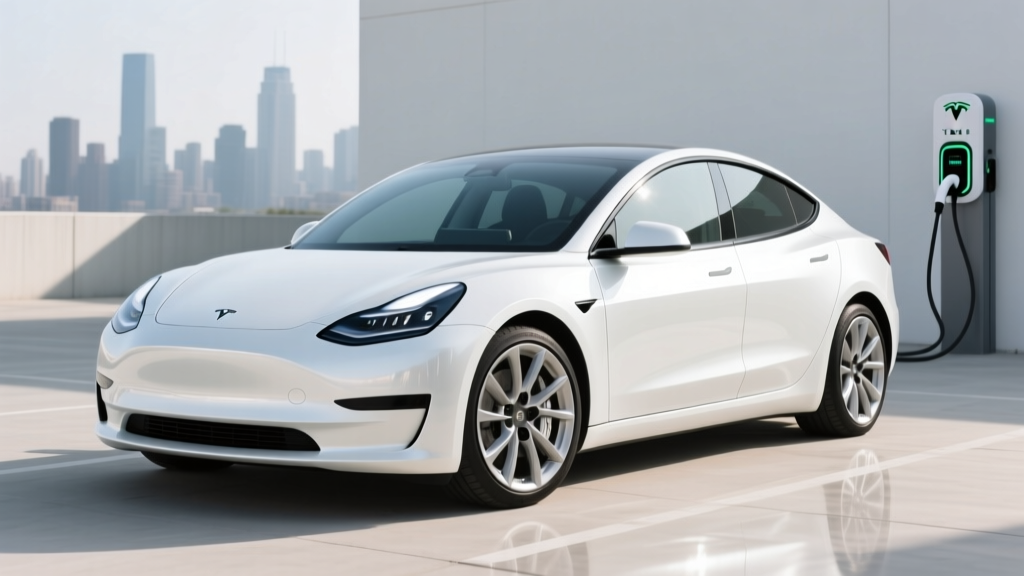
The Tesla Model 3 Highland refresh brought meaningful updates to an already dominant sedan, and choosing the Pearl White Multi-Coat paint ($1,000 option) remains one of the most popular configurations among buyers. This review breaks down the 2025-2026 Model 3 Long Range RWD and AWD with exact specs, real-world range data, charging performance, and total cost — so you can decide if the white Model 3 is the right EV for your driveway.
Quick Verdict: Who the White Model 3 Is For
The Model 3 Long Range in Pearl White suits daily commuters and road-trippers who want a proven, efficient EV sedan with access to the Supercharger network. Its combination of class-leading efficiency, strong DC fast-charging speeds, and minimal maintenance costs make it a benchmark in the $40,000–$50,000 EV segment. The Pearl White paint is a premium multi-coat finish that holds up well to swirl marks compared to the flat Solid Black, though it does add to the bottom line.
- You commute 30–80 miles daily and want to charge at home overnight
- You value access to the most reliable public DC fast-charging network (Superchargers)
- You want a sedan with 300+ miles of real-world range and top-tier efficiency
- You need hatchback/SUV cargo flexibility (consider Model Y or Ioniq 5)
- You want Apple CarPlay/Android Auto (Tesla uses its proprietary OS only)
- You prefer traditional dealership service and physical buttons
Spec Table: 2025 Tesla Model 3 Long Range at a Glance
| Specification | Long Range RWD | Long Range AWD |
|---|---|---|
| EPA Range | 363 miles | 341 miles |
| Battery (usable) | ~75 kWh (NMC) | ~75 kWh (NMC) |
| MPGe (combined) | 132 MPGe | 124 MPGe |
| Efficiency | 25 kWh/100 mi | 27 kWh/100 mi |
| 0–60 mph | 5.8 sec | 4.2 sec |
| Horsepower | ~271 hp | ~346 hp |
| Drivetrain | RWD (single motor) | AWD (dual motor) |
| Max DC Fast Charge | 170 kW | 170 kW |
| 10–80% DC Time | ~28 min | ~28 min |
| Level 2 Home Charge | 11.5 kW (~44 mi/hr) | 11.5 kW (~44 mi/hr) |
| Base MSRP | $44,130 | $47,130 |
| Battery Warranty | 8 yr / 120,000 mi | 8 yr / 120,000 mi |
Sources: EPA fueleconomy.gov, Tesla.com Model 3 configurator. Prices reflect 2025 model year; destination fee included. MSRP subject to change.
Real-World Range: What the EPA Sticker Doesn't Tell You
EPA Estimate: 363 mi (RWD) / 341 mi (AWD)
Real-World Highway (70 mph, 72°F): ~290–310 mi
Cold Weather Highway (32°F): ~240–270 mi
City/Commuter Mixed: ~330–355 mi (regen braking helps in stop-and-go)
The Model 3 Long Range remains one of the most efficient EVs on the market. Its NMC battery pack and heat-pump-equipped thermal management system deliver strong results, but physics still applies. At sustained 70–75 mph highway speeds, expect to use roughly 27–29 kWh/100 mi in mild weather, translating to about 290–310 miles before the pack is depleted. That's still excellent for a 3,800-pound sedan, but it's roughly 15–20% below the EPA combined sticker.
In freezing temperatures, the heat pump helps cabin efficiency, but battery internal resistance increases and regenerative braking is limited until the pack warms up. Plan for 240–270 miles of usable range on cold highway trips. Preconditioning the battery via the Tesla app or navigation routing to a Supercharger mitigates some of this loss and is critical for achieving peak DC charging speeds in winter.
Charging Speed: DC Fast Charge and Home Level 2
The Model 3 Long Range supports a peak 170 kW DC fast-charge rate via its NACS (North American Charging Standard) port — the native Tesla connector now being adopted industry-wide. Here's what that means in practice:
| Charging Level | Power (kW) | Miles Added per Hour | Notes |
|---|---|---|---|
| Level 1 (120V) | ~1.4 kW | ~4 mi/hr | Emergency/trickle only |
| Level 2 (240V, 48A) | 11.5 kW | ~44 mi/hr | Full overnight charge in ~8 hr |
| DC Fast (V3 Supercharger) | 170 kW peak | ~200 mi in 15 min | 10–80% in ~28 min; tapers above 80% |
The charge curve matters more than peak kW. The Model 3 hits 170 kW briefly between 10–30% State of Charge (SoC), then steps down progressively — roughly 120 kW at 50%, 80 kW at 70%, and below 40 kW above 85%. This is why Tesla (and most EV makers) quote 10–80% times rather than 0–100%. For a 200-mile road-trip top-up, plan on 15 minutes at a V3 Supercharger.
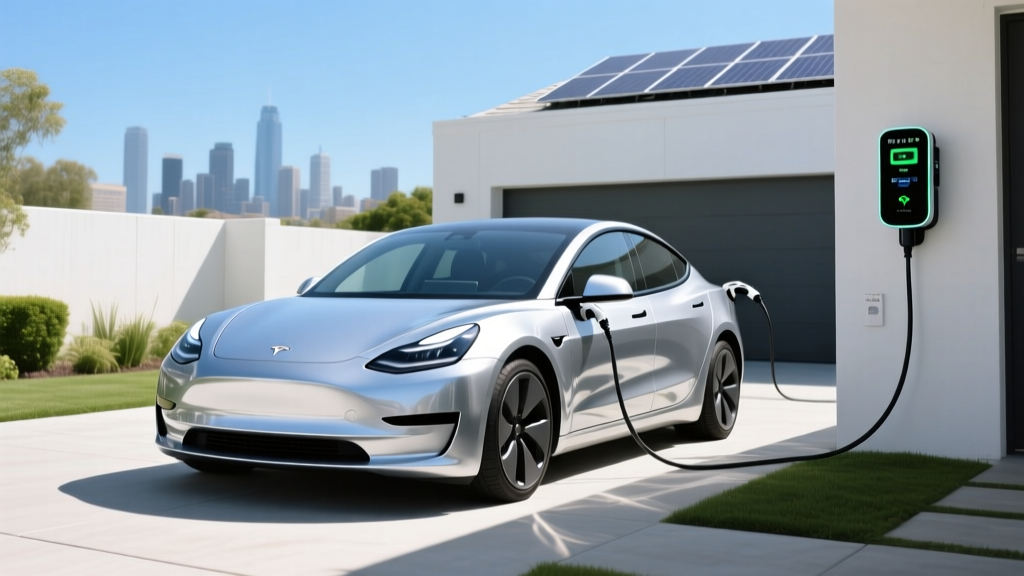
At home, the onboard 11.5 kW charger is competitive. On a 48-amp Level 2 circuit (requiring a 60-amp breaker), you'll add about 44 miles of range per hour. A full 10–100% charge takes roughly 7.5–8 hours, meaning you wake up to a full battery every morning. Home installation costs for a Level 2 setup typically run $500–$2,000 depending on panel capacity and run length — budget for a licensed electrician and any necessary panel upgrade.
Performance and Driving Dynamics
The Long Range AWD's dual-motor setup delivers 346 hp and a 4.2-second 0–60 mph sprint — quick enough to merge confidently onto any freeway and genuinely fun on a back road. The RWD version at 5.8 seconds is no slouch either, and its lighter front end yields slightly sharper turn-in feel.
The Highland refresh improved ride quality substantially. Revised suspension tuning, acoustic glass, and added sound deadening make the 2025 Model 3 noticeably quieter at highway speeds than pre-2024 models. The steering remains precise and well-weighted, though some drivers still find the lack of a traditional instrument cluster and turn-signal stalks (now integrated into the steering wheel and touchscreen) to be an adjustment period.
Regenerative braking is strong and predictable, enabling one-pedal driving in most conditions. The Model 3's low center of gravity (battery pack under the floor) gives it planted, sporty handling that outclasses taller EV crossovers in cornering confidence.
Interior, Tech, and Cargo Space
The Model 3's minimalist cabin centers on a 15.4-inch touchscreen that handles everything: navigation, climate, media, vehicle settings, and the optional FSD (Supervised) visualization. The Highland update added ventilated front seats, ambient lighting, rear-seat ventilation controls via an 8-inch rear screen, and improved material quality throughout.
| Dimension | Measurement |
|---|---|
| Front Legroom | 42.3 in |
| Rear Legroom | 34.9 in |
| Cargo (trunk + frunk) | 23.1 cu ft (trunk) + 3.1 cu ft (frunk) = 26.2 cu ft total |
| Seating | 5 passengers |
The trunk is a traditional sedan design (not a hatchback), which limits loading large items compared to a Model Y or Hyundai Ioniq 5. Rear legroom is adequate for adults under 6 feet but tight for taller passengers on long trips. The 3.1 cu ft frunk is useful for charging cables or a small bag.
Standout tech: Tesla's navigation with real-time Supercharger routing, over-the-air software updates, Sentry Mode dashcam recording, and the optional Autopilot/FSD (Supervised) driver-assist suite. Notable drawbacks: No Apple CarPlay or Android Auto, no physical buttons for climate or volume, and turn signals on the steering wheel rim take practice.
Tesla's Autopilot and Full Self-Driving (Supervised) are SAE Level 2 driver-assistance systems. The driver must remain fully attentive, keep hands on the wheel, and be prepared to take over at any moment. These are not self-driving systems. Only SAE Level 4 services like Waymo operate without a human driver in defined areas.
Pricing, Pearl White Paint, and Federal Tax Credit
The Pearl White Multi-Coat paint adds $1,000 to any Model 3 configuration. It's a tri-coat finish with a subtle metallic flake that photographs well and shows fewer swirl marks than Tesla's flat Solid Black (which is the no-cost default). Here's how pricing breaks down:
| Configuration | MSRP (incl. destination) | With Pearl White | Est. After §30D Credit* |
|---|---|---|---|
| Long Range RWD | $44,130 | $45,130 | ~$37,630 |
| Long Range AWD | $47,130 | $48,130 | ~$40,630 |
| Performance AWD | $54,630 | $55,630 | ~$48,130 |
*Federal tax credit estimates assume full eligibility. See checklist below.
-
§30D Federal EV Tax Credit — Eligibility Checklist (2025–2026 rules):
- MSRP Cap: Sedans must be under $55,000 (all Model 3 trims qualify)
- Buyer Income Cap: AGI ≤ $150,000 (single) / $225,000 (head of household) / $300,000 (joint)
- Battery Sourcing: Critical minerals and battery components must meet phased-in domestic/free-trade-partner thresholds — Tesla's US-built Model 3 has historically qualified for the full $7,500, but verify current-year status at IRS.gov
- Point-of-Sale Transfer: You can transfer the credit to the dealer at purchase to reduce the sale price directly (effective Jan 2024)
- Tax Liability: The credit is non-refundable — you need sufficient federal tax liability to claim it (unless transferred at POS)
Always confirm eligibility with a tax professional and check the latest fueleconomy.gov tax credit listings before purchasing, as battery-sourcing rules tighten annually.
Pros and Cons of the White Model 3
- Class-leading efficiency (132 MPGe combined RWD)
- 363-mile EPA range (RWD) — among the highest of any EV sedan
- Supercharger network access — the most reliable DC charging ecosystem
- Highland ride quality and cabin noise improvements
- Strong OTA update track record (new features added post-purchase)
- Pearl White paint hides swirl marks well vs. Solid Black
- Sedan trunk limits cargo vs. hatchback/crossover rivals
- No Apple CarPlay or Android Auto
- Turn signals on steering wheel rim are unintuitive initially
- Rear legroom tight for tall passengers (34.9 in)
- 170 kW peak DC charge is slower than Hyundai/Kia's 800V architecture (~240 kW)
- No physical volume knob or climate buttons
Is the White Model 3 Worth It vs. Competitors?
Against the Hyundai Ioniq 6 (EPA 361 mi, 800V architecture with ~350 kW peak charging), the Model 3 trades slightly slower DC charging for better Supercharger network reliability and a more refined software ecosystem. The Ioniq 6's swoopy design cuts into rear headroom, and its charging advantage only materializes at compatible 350 kW stations.
The BMW i4 eDrive40 (EPA 301 mi) offers a more traditional luxury interior and physical controls but gives up 60+ miles of range and costs roughly $10,000 more before incentives.
For buyers prioritizing maximum range, charging infrastructure reliability, and software polish, the Model 3 Long Range remains the benchmark. The Pearl White finish adds a premium look without the maintenance concerns of darker paints. If cargo flexibility or Apple CarPlay are non-negotiable, cross-shop the Ioniq 5 or Model Y.
Frequently Asked Questions
What is the real-world range of the Tesla Model 3 Long Range?
Expect 290–310 miles on the highway at 70 mph in mild weather, and 330–355 miles in mixed city commuting where regenerative braking recovers energy. In freezing temperatures on the highway, plan for 240–270 miles. The EPA combined rating of 363 miles (RWD) assumes a mix of conditions and moderate speeds.
How fast does the Model 3 charge at home and on the road?
At home on a 48-amp Level 2 charger (240V), the Model 3 charges at 11.5 kW, adding roughly 44 miles of range per hour — a full charge takes about 8 hours. On a Tesla V3 Supercharger, it peaks at 170 kW and charges from 10–80% in approximately 28 minutes, adding up to 200 miles in 15 minutes under ideal conditions.
Does the Tesla Model 3 qualify for the $7,500 federal tax credit?
The Model 3 has historically qualified for the full $7,500 §30D credit, but eligibility depends on your income (AGI caps apply), the vehicle's MSRP (under $55,000 for sedans — all Model 3 trims qualify), and battery-sourcing requirements that tighten each year. Verify current eligibility at IRS.gov and consult a tax professional. The credit can be transferred at point of sale to reduce your purchase price directly.
Is Pearl White worth the $1,000 upcharge?
Pearl White Multi-Coat is a tri-coat finish with metallic flake that gives depth in sunlight and hides light swirl marks and water spots better than Tesla's no-cost Solid Black. If you plan to keep the car 3+ years and care about paint appearance, the $1,000 is a reasonable investment. Free Solid Black is the most prone to showing scratches.
How does the Model 3 compare to the Model Y?
The Model Y sacrifices roughly 30–40 miles of range and some efficiency for significantly more cargo space (76 cu ft with seats folded) and a hatchback design. If you regularly haul gear, kids' equipment, or large items, the Model Y is the more practical choice. If range, efficiency, and a sportier driving feel matter more, the Model 3 wins.
Data sourced from EPA fueleconomy.gov, Tesla.com, and IRS.gov §30D guidelines. Real-world range estimates based on independent testing and owner reports. Specifications reflect 2025 model year and are subject to change. Always confirm pricing and tax credit eligibility before purchase.