The Tesla Model 3 White Interior: Quick Verdict
The Tesla Model 3 remains the benchmark compact electric sedan in 2026, and the optional white interior ($1,000) continues to be the most popular cabin upgrade among buyers. With the refreshed "Highland" platform now fully mature into its second model year, the Model 3 Long Range AWD delivers an EPA-estimated 363 miles of range, peaks at 250 kW on DC fast chargers, and undercuts key rivals on price after the federal tax credit. The white vegan leather interior amplifies the cabin's minimalist aesthetic, though it demands more frequent cleaning than the default black. For commuters and road-trippers who can charge at home, the Model 3 Long Range is still the EV to beat in the $40,000-$50,000 segment.
EPA Estimate: 363 miles (Long Range AWD, 19" wheels)
Real-World Highway (70 mph, moderate climate): ~300-320 miles
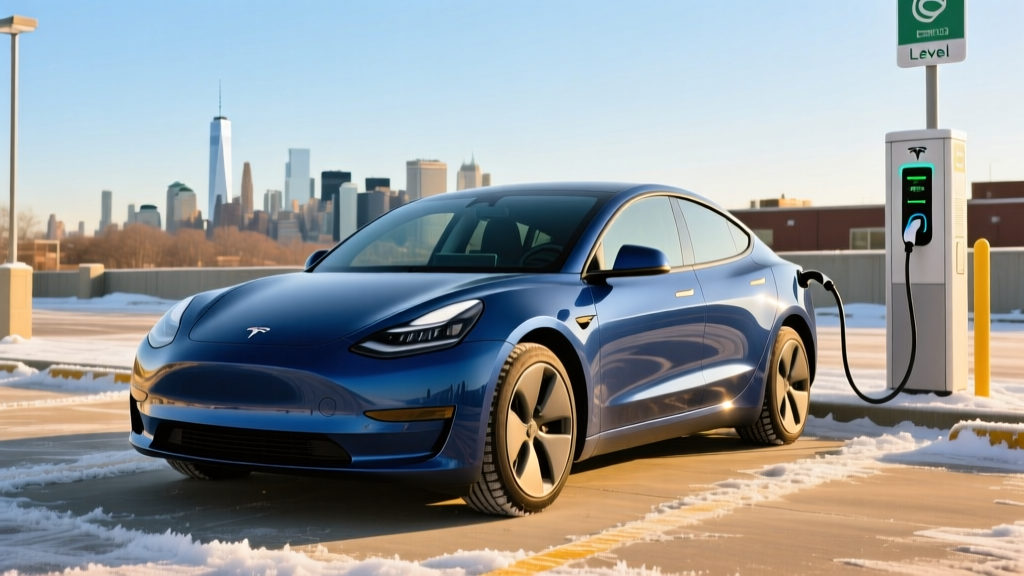
Cold Weather (below 32°F, highway): ~240-270 miles
City/Stop-and-Go with Regen: ~340-360 miles
Range, Battery, and Efficiency
The 2026 Model 3 Long Range AWD uses an 82 kWh usable battery pack (approximately 79 kWh in the RWD variant) built with NMC (nickel manganese cobalt) chemistry. NMC offers higher energy density than LFP, which is why Tesla reserves it for Long Range and Performance trims — the RWD base model uses an LFP pack with lower energy density but a 100% daily charging recommendation.
| Spec | RWD | Long Range AWD | Performance |
|---|---|---|---|
| EPA Range | 341 mi | 363 mi | 315 mi |
| Battery (usable) | ~60 kWh (LFP) | ~82 kWh (NMC) | ~82 kWh (NMC) |
| MPGe (combined) | 132 MPGe | 125 MPGe | 113 MPGe |
| kWh/100 mi | 25 | 27 | 30 |
| Drivetrain | Rear-Wheel Drive | Dual-Motor AWD | Dual-Motor AWD |
| 0-60 mph | 5.8 sec | 4.2 sec | 2.9 sec |
| Horsepower | 271 hp | 346 hp | 510 hp |
Efficiency is where the Model 3 shines against heavier competitors. At 27 kWh per 100 miles (Long Range AWD), it sips electrons compared to the Ford Mustang Mach-E Extended Range (~34 kWh/100 mi) or the Hyundai Ioniq 6 (~28 kWh/100 mi). According to fueleconomy.gov, the Long Range AWD achieves 125 MPGe combined — translating to roughly $0.04-$0.05 per mile on residential electricity at $0.16/kWh.
Real-world range reconciliation: The EPA test cycle includes generous low-speed and regen-heavy segments. On a sustained 70-mph highway run in 65°F weather, expect 300-320 miles before the buffer depletes. In sub-freezing temperatures, battery thermal management and cabin heating can reduce range by 25-35%. Preconditioning the battery while plugged in mitigates some of this loss and is critical for achieving peak DC charging speeds.
Charging Speed: DC Fast, Level 2, and Level 1
The Model 3 Long Range supports a peak DC fast-charge rate of 250 kW on Tesla Superchargers (V3 and V4 stalls). On third-party CCS networks via the included NACS-to-CCS adapter (or native NACS at networks that have adopted the Tesla connector standard), speeds are similar on chargers capable of 250+ kW.
| Charging Level | Power | Speed | Notes |
|---|---|---|---|
| Level 1 (120V) | ~1.4 kW | ~4-5 mi/hr | Emergency/trickle only |
| Level 2 (240V, 48A) | 11.5 kW | ~37-44 mi/hr | Home Wall Connector; full charge ~8-9 hrs |
| Level 2 (240V, 32A) | 7.7 kW | ~25-30 mi/hr | Mobile Connector on dryer outlet |
| DC Fast (peak) | 250 kW | 10-80% in ~25 min | Requires preconditioned battery |
| DC Fast (sustained avg) | ~150-170 kW | ~180 mi in 25 min | Charge curve tapers above 60% SoC |
Charge curve reality: The 250 kW peak is achieved between roughly 10-30% State of Charge. Above 50%, the rate tapers to ~120 kW; above 80%, it drops below 50 kW. This is why Tesla's navigation system routes you through multiple shorter Supercharger stops rather than one long session to 100%. On a road trip, plan for 20-25 minute stops every 200-220 miles rather than attempting to charge past 80%.
At home, the Tesla Wall Connector on a 60A circuit (48A continuous) adds approximately 37-44 miles of range per hour — enough to fully replenish a daily commute overnight. Installation costs vary from $500 (simple short-run on a 200A panel) to $2,500+ if a panel upgrade is required.
White Interior: What You Get and What to Know
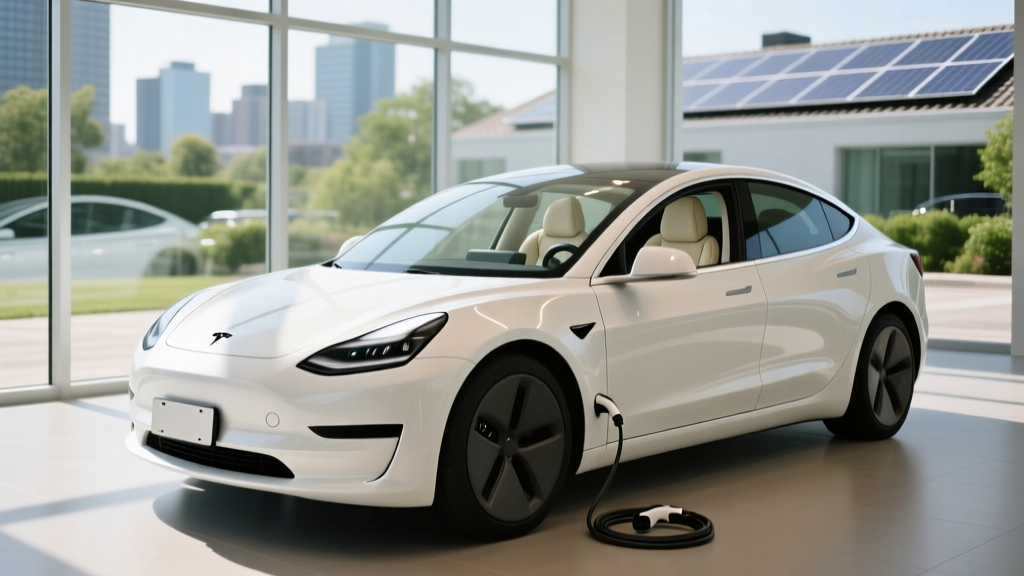
The $1,000 white interior option replaces the standard black vegan leather seats with a premium white vegan leather (polyurethane-based) throughout the cabin. It extends to the dashboard trim and door panel accents, creating a stark, airy contrast with the black exterior or complementing white, gray, and blue paint options.
Durability and maintenance: Tesla's vegan leather is stain-resistant and wipes clean with a damp microfiber cloth. However, denim dye transfer is a real concern on white seats — particularly in warm weather when friction increases. Owners report that monthly wipe-downs with isopropyl alcohol-based cleaners keep the seats looking new, but this is more effort than the black interior requires. The white material does not yellow or crack any faster than the black variant based on multi-year ownership data.
Cabin space: The Model 3 offers 97.1 cubic feet of passenger volume with 42.3 inches of front legroom and 35.2 inches of rear legroom. Cargo space is 23 cubic feet (15.3 cu ft trunk + 3.1 cu ft frunk + under-floor storage). Rear-seat comfort improved significantly with the Highland refresh — the seat cushion is longer, the backrest angle is more reclined, and a rear touchscreen gives passengers climate and media control.
Pricing, Trims, and Federal Tax Credit
The 2026 Tesla Model 3 is available in three trims. The white interior is a $1,000 add-on across all trims. FSD (Supervised) remains a $8,000 option or $99/month subscription, though it is a Level 2 driver-assist system — not self-driving — and requires full driver attention at all times.
| Trim | Base MSRP | With White Interior | Est. After §30D Credit |
|---|---|---|---|
| RWD | $38,990 | $39,990 | ~$32,490* |
| Long Range AWD | $45,990 | $46,990 | ~$39,490* |
| Performance | $52,990 | $53,990 | ~$46,490* |
*Federal tax credit caveats: The $7,500 credit under IRS §30D is subject to:
- MSRP Cap: Sedans must be under $55,000 (all Model 3 trims qualify)
- Income Cap: AGI ≤ $150,000 (single), $225,000 (head of household), $300,000 (joint)
- Battery Sourcing: Critical minerals and battery components must meet escalating North American/free-trade-partner thresholds (Tesla has restructured supply chains; verify current-year compliance on fueleconomy.gov)
- Point-of-Sale Transfer: Eligible buyers can apply the credit as a down-payment reduction at purchase rather than waiting for tax filing
The RWD trim uses an LFP battery with a higher proportion of Chinese-sourced minerals, which has periodically affected its §30D eligibility. Always verify current-year sourcing compliance before purchasing — rules tighten annually. The Long Range AWD with NMC chemistry has maintained more consistent eligibility.
Technology, Driver Assists, and Drawbacks
The Model 3's 15.4-inch center touchscreen runs Tesla's proprietary infotainment system, which remains the most responsive and feature-rich in the EV segment. Wireless Apple CarPlay and Android Auto are still not supported — a persistent complaint. Navigation, media (Spotify, Apple Music, Tidal), and a built-in web browser are native. The Highland refresh added ventilated front seats, ambient lighting, rear passenger screen, power-folding side mirrors, and significantly improved cabin insulation reducing road noise by approximately 30% over the pre-2024 model.
Tesla's Autopilot (standard) and FSD Supervised ($8,000 option) are SAE Level 2 driver-assist systems. They provide lane-centering, adaptive cruise control, and automated lane changes — but the driver must remain fully engaged, hands on the wheel (or torque-monitored), and eyes on the road at all times. This is not autonomous driving. Only Level 4 services like Waymo operate without driver supervision.
Notable drawbacks:
- No Apple CarPlay/Android Auto — a dealbreaker for some buyers
- No physical stalks for turn signals (steering-wheel buttons) or gear selection (touchscreen swipe) — a learning curve that frustrates some drivers
- Rear visibility is limited by the sloping roofline; the camera-based mirror option helps
- Insurance premiums run 15-30% higher than comparable gas sedans due to repair costs
- No heads-up display
- Class-leading efficiency (27 kWh/100 mi)
- 250 kW DC fast charging with extensive Supercharger network
- 363-mile EPA range (Long Range)
- Best-in-class infotainment responsiveness
- Over-the-air updates continuously add features
- Strong resale value relative to EV peers
- No smartphone projection (CarPlay/Android Auto)
- Stalkless turn signals and gear selection require adaptation
- White interior requires more maintenance
- FSD remains Level 2 despite premium pricing
- Rear seat still tighter than midsize competitors
- Insurance costs above segment average
Warranty and Long-Term Ownership
Tesla covers the Model 3 with:
- Basic Vehicle: 4 years / 50,000 miles
- Battery & Drive Unit: 8 years / 120,000 miles (Long Range/Performance); 8 years / 100,000 miles (RWD)
- Battery Capacity Retention: Warranty guarantees minimum 70% capacity retention during the coverage period
Real-world degradation data from high-mileage Model 3 owners shows approximately 8-12% capacity loss at 100,000 miles for NMC packs, with the steepest drop occurring in the first 20,000 miles before leveling off. LFP packs in the RWD model show slightly slower degradation and can be charged to 100% daily without the same longevity concerns — an advantage for drivers who need maximum daily range from a smaller pack.
A full battery replacement outside warranty currently costs between $12,000-$16,000 depending on pack size, though this is rarely needed within the first 150,000 miles based on fleet data.
Who Should Buy the Tesla Model 3 with White Interior?
- You commute 30-80 miles daily and can charge at home on Level 2
- You take 2-4 road trips per year and want access to the Supercharger network
- You value efficiency and tech-forward features over rear-seat space
- You want the cleanest, most minimalist cabin aesthetic available
- You qualify for the §30D credit and want a sub-$40,000 effective price on a 360+ mile EV
- You need CarPlay/Android Auto (consider Hyundai Ioniq 6 or BMW i4)
- You regularly carry rear-seat adults over 6' tall (consider Model Y or Ioniq 5)
- You want physical controls for climate and turn signals
- You cannot install home charging and rely exclusively on public infrastructure in a charging-desert area
Frequently Asked Questions
What is the real-world range of the Tesla Model 3 Long Range?
The EPA rates it at 363 miles, but sustained highway driving at 70 mph yields approximately 300-320 miles in moderate temperatures. In sub-freezing conditions, expect 240-270 miles. City driving with regenerative braking can approach or match the EPA figure.
How fast does the Model 3 charge at home and on DC fast chargers?
On a home Level 2 Tesla Wall Connector (48A/11.5 kW), it gains 37-44 miles per hour — a full charge takes about 8-9 hours. On a 250 kW DC fast charger with a preconditioned battery, it charges from 10-80% in approximately 25 minutes, though sustained average power is closer to 150-170 kW due to charge-curve tapering.
How much does the Model 3 cost after the federal tax credit?
The Long Range AWD starts at $45,990 ($46,990 with white interior). If you meet the §30D income caps (≤$300,000 joint AGI) and the vehicle meets battery-sourcing requirements, the effective price drops to approximately $39,490. Verify current-year eligibility on fueleconomy.gov before purchasing.
Is the white interior hard to keep clean?
It requires more attention than black — denim dye transfer is the primary concern. Monthly wipe-downs with an isopropyl-based cleaner and avoiding new dark jeans for the first few wears prevents most staining. The vegan leather material itself is durable and does not crack or yellow prematurely.
Is the Model 3 worth buying over the Hyundai Ioniq 6 or BMW i4?
The Model 3 wins on efficiency, Supercharger network access, and infotainment. The Ioniq 6 offers CarPlay/Android Auto and a slightly more comfortable rear seat. The BMW i4 provides a more traditional luxury interior and physical controls but at a higher price point and lower EPA range. For most buyers prioritizing total cost of ownership and charging infrastructure, the Model 3 remains the strongest choice.
Does the Tesla Model 3 qualify for the federal EV tax credit in 2026?
All trims fall under the $55,000 sedan MSRP cap. Eligibility depends on your income (AGI limits apply) and the vehicle's battery-sourcing compliance for the current tax year. The Long Range AWD (NMC battery) has maintained more consistent eligibility than the RWD (LFP battery). Always confirm on fueleconomy.gov and consult a tax professional for your specific situation.