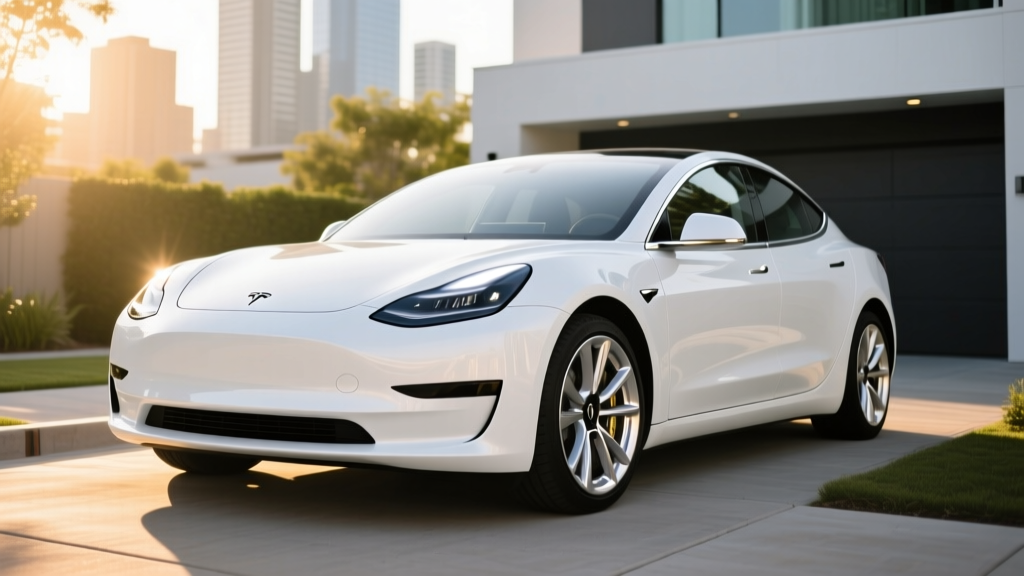
The Tesla Model 3 remains one of the most efficient and widely adopted electric sedans on the market, and for 2026, the refreshed "Highland" platform continues to refine what made it a benchmark. While color choice might seem cosmetic, the Tesla Model 3 in white — specifically Pearl White Multi-Coat — is not only the brand's most popular exterior option but also carries practical implications for thermal management and paint durability. This review breaks down every spec that matters to a real buyer: EPA and real-world range, charging curves, battery chemistry, tax credit eligibility, and whether it still holds up against a rapidly growing competitor set.
Range and Efficiency: EPA vs. Reality
The 2026 Tesla Model 3 lineup offers three trims with distinct range profiles. The Rear-Wheel Drive (RWD) base model uses a lithium iron phosphate (LFP) battery, while the Long Range AWD and Performance trims use nickel-manganese-cobalt (NMC) chemistries for higher energy density.
| Trim | EPA Range | Battery (usable kWh) | Chemistry | MPGe (combined) | kWh/100 mi |
|---|---|---|---|---|---|
| RWD (Base) | 272 mi | 57.5 kWh | LFP | 132 MPGe | 25.4 |
| Long Range AWD | 341 mi | 75.0 kWh | NMC | 134 MPGe | 25.0 |
| Performance AWD | 315 mi | 75.0 kWh | NMC | 121 MPGe | 27.8 |
Efficiency is where the Model 3 continues to lead the segment. At roughly 25 kWh/100 miles for the Long Range, it sips less energy per mile than nearly every competing electric sedan. That translates directly into lower charging costs and more miles per minute at a DC fast charger — a factor many spec sheets obscure.
Charging Speed: DC Fast, Level 2, and the Curve
Charging speed is a top concern for EV buyers, and the Model 3's architecture supports robust DC fast-charging rates. However, peak kW is not sustained kW — understanding the charge curve is essential for trip planning.
| Charging Method | Power (kW) | Rate / Time | Notes |
|---|---|---|---|
| DC Fast Charge (Supercharger V4 / CCS-compatible) | Peak 250 kW (Long Range/Performance); 170 kW (RWD) | 10–80% in ~25 min (LR); ~30 min (RWD) | Rate tapers significantly above 60% SoC; preconditioning required for peak speed |
| Level 2 Home (Tesla Wall Connector, 48A / 11.5 kW) | 11.5 kW | ~44 miles of range per hour; full charge in ~7–8 hrs | Requires 60A dedicated circuit; NACS connector native |
| Level 1 (120V household outlet) | ~1.4 kW | ~3–5 miles of range per hour | Emergency/top-up only; not viable for daily use |
The Long Range and Performance trims can accept up to 250 kW at a V3 or V4 Supercharger, but that peak rate only holds between roughly 10–35% state of charge. From 35–60%, the rate typically settles around 120–150 kW, and above 80% it drops to under 50 kW. This is standard lithium-ion charge-curve behavior, but it means a 10–80% session takes about 25 minutes, while a 10–95% session can stretch past 45 minutes. For road trips, the practical strategy is to charge to 80% and move on.
The RWD trim's LFP battery charges at a lower peak rate (170 kW), but LFP cells tolerate regular 100% charging better than NMC — Tesla recommends daily charging to 100% for LFP packs, which offsets the smaller usable capacity somewhat.
At home, the Tesla Wall Connector at 48 amps (11.5 kW) adds roughly 44 miles per hour of charging, easily replenishing a full day's driving overnight. Installation typically requires a 60-amp breaker on a 240V circuit; budget $500–$1,500 for electrician labor depending on panel proximity and local permit costs.
Performance and Drivetrain
The 2026 Model 3 offers three distinct performance personalities:
| Trim | Drivetrain | Horsepower | 0–60 mph | Top Speed |
|---|---|---|---|---|
| RWD | Rear-Wheel Drive (single motor) | 271 hp | 5.8 sec | 125 mph |
| Long Range AWD | Dual-Motor AWD | 346 hp | 4.2 sec | 125 mph |
| Performance AWD | Dual-Motor AWD | 510 hp | 2.9 sec | 163 mph |
Even the base RWD model delivers brisk acceleration that outpaces most gas-powered compact sedans. The Long Range AWD strikes the best balance for most buyers — dual-motor traction in rain and snow, 4.2-second sprints, and the longest range in the lineup. The Performance trim is genuinely sports-car quick at 2.9 seconds, with track-tuned suspension, larger brakes, and 20-inch wheels, though those wheels reduce range and increase tire replacement costs.
All trims feature regenerative braking with one-pedal driving capability. The Highland refresh also brought improved suspension tuning — the ride is noticeably more compliant over rough pavement than pre-2024 models, a frequent complaint that Tesla addressed with revised dampers and additional sound deadening.
Interior, Cargo, and Practicality
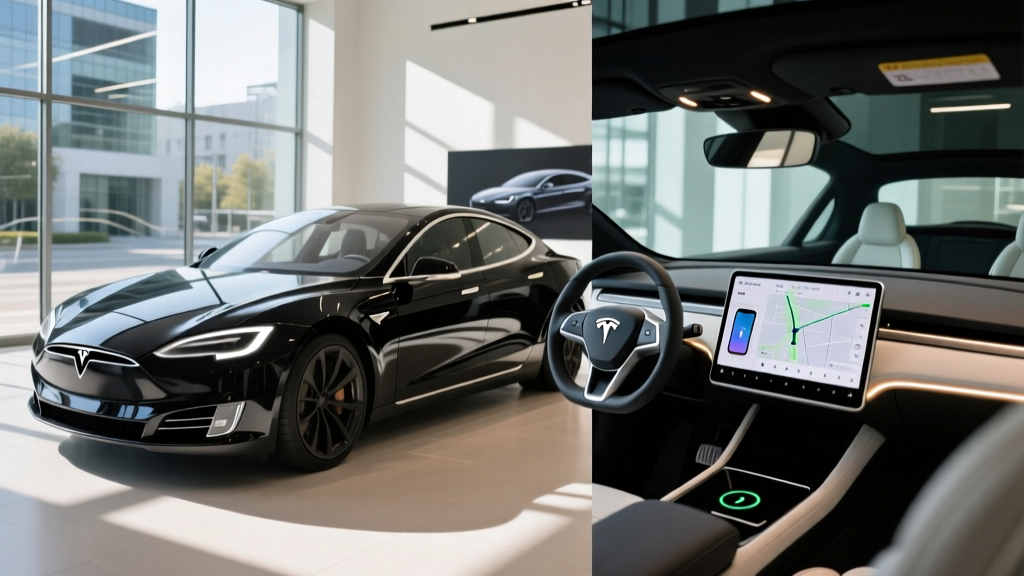
The Model 3's cabin is minimalist by design, which draws strong reactions. There is no instrument cluster — all information routes through the 15.4-inch center touchscreen. Physical controls are essentially absent; even glovebox release and mirror adjustments live in the software. For some, this is sleek simplicity; for others, it's frustrating distraction.
Practical dimensions for 2026:
- Front legroom: 42.7 inches
- Rear legroom: 35.2 inches
- Cargo volume (trunk + frunk): 23.1 cu ft total (19.8 trunk + 3.3 frunk)
- Seating: 5 passengers (rear middle seat is narrow and best for short trips)
The rear trunk opening is a conventional sedan lid, not a hatchback or liftback, which limits loading flexibility compared to rivals like the Hyundai Ioniq 6 or the Model Y. The frunk (front trunk) is modest — useful for charging cables or a small bag, but not a major cargo area.
The 15.4-inch touchscreen runs Tesla's proprietary infotainment system with native navigation, streaming apps (Netflix, YouTube, Spotify while parked), and over-the-air updates that periodically add features. A rear 8-inch touchscreen for climate and entertainment controls was added in the Highland refresh. Wireless phone charging, ventilated front seats, and ambient lighting are now standard across all trims.
Pricing, Trims, and Federal Tax Credit Eligibility
| Trim | Base MSRP | Federal §30D Credit | Effective Price (est.) |
|---|---|---|---|
| RWD | $38,990 | Up to $7,500 (if eligible) | ~$31,490 |
| Long Range AWD | $45,990 | Up to $7,500 (if eligible) | ~$38,490 |
| Performance AWD | $52,990 | Up to $7,500 (if eligible) | ~$45,490 |
The IRS §30D clean vehicle credit offers up to $7,500, but eligibility depends on several conditions that change periodically:
- MSRP cap: Sedans must be at or below $55,000 (all Model 3 trims qualify)
- Buyer income cap: Modified AGI must not exceed $150,000 (single), $225,000 (head of household), or $300,000 (joint)
- Battery sourcing: Critical minerals and battery components must meet phased-in domestic/free-trade sourcing thresholds — Tesla has largely met these requirements for US-built Model 3 vehicles, but the specific dollar amount ($3,750 vs. $7,500) can vary by production batch and model year
- Point-of-sale transfer: As of 2024, eligible buyers can transfer the credit to the dealer at purchase, reducing the upfront cost rather than waiting for a tax refund
Always verify current eligibility on the IRS website or with a tax professional before relying on the credit in your purchase decision. State and local incentives (California, Colorado, and others) may stack on top but vary by jurisdiction.
A note on the white paint: Pearl White Multi-Coat is a $0-cost standard color on the Model 3, making it the most value-neutral exterior choice. It also shows fewer swirl marks than solid black and reflects more solar heat than darker colors — a minor but real benefit for cabin preconditioning energy use in hot climates.
Battery Warranty, Degradation, and Longevity
Tesla provides the following warranty coverage for the 2026 Model 3:
- Battery and drive unit: 8 years / 100,000 miles (RWD); 8 years / 120,000 miles (Long Range and Performance)
- Capacity retention threshold: 70% of original capacity during the warranty period
- Vehicle limited warranty: 4 years / 50,000 miles
LFP batteries (in the RWD trim) generally exhibit slower degradation than NMC — many owners report less than 5% capacity loss after 60,000 miles. NMC packs in the Long Range and Performance trims typically see 8–12% degradation over the same distance, with the most rapid loss occurring in the first 20,000 miles before stabilizing. Tesla's 70% retention guarantee is conservative; full battery replacement outside warranty costs approximately $12,000–$16,000 depending on the pack, though this is rarely needed within the first 150,000 miles based on fleet data.
Driver Assistance: Autopilot and FSD (Supervised)
Standard Autopilot includes adaptive cruise control and lane-centering on highways. The optional FSD (Supervised) package ($8,000 one-time or $99/month) adds automated lane changes, traffic light and stop sign recognition, and city-street navigation assistance. While FSD has improved substantially, it still requires active supervision — unexpected construction zones, faded lane markings, and complex intersections can challenge the system. Insurance data from the IIHS shows the Model 3 earns top marks in crashworthiness, though driver-monitoring compliance remains a policy discussion point.
Pros, Cons, and Who Should Buy
Pros
- Best-in-class efficiency (25 kWh/100 mi on Long Range)
- Extensive Supercharger network — the most reliable public charging ecosystem
- Over-the-air updates continuously add features
- Strong resale value relative to EV segment average
- LFP battery option (RWD) allows daily 100% charging without degradation concern
- Excellent safety ratings from NHTSA and IIHS
Cons
- Minimalist interior frustrates some drivers — no physical controls, no instrument cluster
- Sedan trunk limits cargo flexibility vs. hatchback/crossover rivals
- Rear seat comfort is adequate but not generous for tall passengers
- FSD (Supervised) remains Level 2 despite the name — expectations often exceed reality
- Insurance premiums tend to run 15–25% higher than comparable gas sedans
- Commuters: Ideal. Efficiency, home charging convenience, and Autopilot reduce daily fatigue. The RWD at ~$31,500 after the tax credit is one of the most affordable premium EVs available.
- Road trippers: The Long Range AWD with 341 EPA miles and Supercharger access makes multi-state travel practical. Plan for 20–25 minute charge stops every 200–250 miles.
- Small families: Workable for two adults and one or two children, but the rear seat and trunk space lag behind the Model Y or Ioniq 5 for stroller and gear hauling.
- Cold-climate buyers: The heat pump helps, but NMC range loss in winter is real. Consider the Long Range for the capacity buffer, and invest in a home Level 2 charger to precondition while plugged in.
Frequently Asked Questions
What is the real-world range of the Tesla Model 3?
The EPA rates the Long Range AWD at 341 miles, but real-world highway driving at 70–80 mph typically yields 280–305 miles in moderate temperatures. In freezing weather, expect 210–240 miles. The RWD base model delivers roughly 215–240 real-world miles in mild conditions, dropping to 175–200 in winter cold.
How fast does the Tesla Model 3 charge?
On a 250 kW Supercharger, the Long Range charges from 10–80% in approximately 25 minutes. The RWD peaks at 170 kW, taking about 30 minutes. At home on a Level 2 Wall Connector (11.5 kW), a full charge takes 7–8 hours and adds roughly 44 miles of range per hour.
Does the Tesla Model 3 qualify for the federal EV tax credit?
All 2026 Model 3 trims fall under the $55,000 MSRP sedan cap. Buyers must meet IRS income limits ($150K single / $300K joint) and the vehicle must satisfy battery-sourcing requirements. Most US-built Model 3 vehicles qualify for the full $7,500, but verify on irs.gov before purchasing.
Is the Tesla Model 3 worth buying vs. competitors?
Against the Hyundai Ioniq 6, BMW i4, and Polestar 2, the Model 3 wins on efficiency, Supercharger network access, and software. The Ioniq 6 offers faster 800V charging and a more conventional interior. The BMW i4 provides a more premium cabin and physical controls. If Supercharger reliability and software are top priorities, the Model 3 remains the benchmark.
What are the biggest pros and cons of the Tesla Model 3 in white?
Pros include class-leading efficiency, Supercharger access, strong safety ratings, and continuous OTA improvements. Cons include the touchscreen-only interface, limited trunk practicality, and higher-than-average insurance costs. Pearl White Multi-Coat is a no-cost standard color that resists swirl marks and reflects heat better than dark options.
How long will the Tesla Model 3 battery last?
Tesla warranties the battery for 8 years / 100,000–120,000 miles (depending on trim) with a 70% capacity retention guarantee. Fleet data suggests most packs retain 85–92% capacity at 100,000 miles. LFP packs in the RWD tend to degrade more slowly than NMC packs. Full replacement costs $12,000–$16,000 but is rarely needed in the vehicle's first 150,000 miles.