The Tesla Model 3 in 2026: More Than Just a Browser on Wheels
Searches for the Model 3 web browser reveal something telling about Tesla owners: they spend serious time interacting with the center screen — parked at Superchargers, waiting for kids at school, or camping overnight. The refreshed Model 3 (internally called "Highland" and now entering its third model year) ships with a 15.4-inch touchscreen running a full Chromium-based web browser, Netflix/YouTube/Disney+ streaming, a Steam-compatible gaming layer, and Tesla's latest infotainment build. But a browser is only useful if the car around it is worth owning. This review covers the complete 2026 Model 3 picture — real-world range, charging curves, pricing after federal credits, and whether it still earns its spot against a rapidly closing field.
Range, Battery, and Efficiency: The Real Numbers
EPA estimated range: 363 miles (Long Range RWD). Real-world expectation: ~290–320 miles on mixed highway driving at 70–75 mph; ~220–260 miles in sub-freezing weather with cabin heat. The Standard Range RWD trims drop to an EPA 272 miles, with real-world highway figures closer to 215–240 miles.
The 2026 Model 3 lineup uses two distinct battery chemistries depending on trim. The Standard Range RWD uses a ~60 kWh usable LFP (lithium iron phosphate) pack supplied by CATL. LFP cells tolerate repeated 100% charges without accelerated degradation, making them ideal for daily commuters who can charge at home every night. Tesla explicitly recommends charging LFP packs to 100% at least weekly to keep the battery management system calibrated.
The Long Range and Performance trims use an ~82 kWh usable NMC (nickel manganese cobalt) pack, which offers higher energy density and better cold-weather performance but prefers daily charge limits around 80% for longevity. For road-trippers who need every mile of range and don't mind managing state of charge, NMC remains the better choice.
| Spec | Standard Range RWD | Long Range RWD | Long Range AWD | Performance AWD |
|---|---|---|---|---|
| EPA Range | 272 mi | 363 mi | 346 mi | 315 mi |
| Battery (usable) | ~60 kWh LFP | ~82 kWh NMC | ~82 kWh NMC | ~82 kWh NMC |
| MPGe (combined) | 132 MPGe | 132 MPGe | 125 MPGe | 118 MPGe |
| kWh / 100 mi | 25 | 25 | 27 | 28 |
| 0–60 mph | 5.8 sec | 4.9 sec | 4.2 sec | 2.9 sec |
| Horsepower | 271 hp | 346 hp | 440 hp | 510 hp |
| Drivetrain | RWD | RWD | Dual-Motor AWD | Dual-Motor AWD |
| Base MSRP | $38,990 | $42,990 | $47,990 | $52,990 |
Efficiency remains a Tesla hallmark. At 25 kWh per 100 miles (combined) for the Long Range RWD, the Model 3 extracts more distance per electron than almost any competing sedan. For context, the Hyundai Ioniq 6 Long Range achieves ~24 kWh/100mi — nearly identical — while the BMW i4 eDrive40 sits closer to 28 kWh/100mi. Per fueleconomy.gov, the Model 3 Long Range posts 132 MPGe combined.
Charging Speed: DC Fast, Level 2, and the Supercharger Advantage
| Level | Max Power | Speed | Notes |
|---|---|---|---|
| Level 1 (120V) | ~1.4 kW | ~4–5 mi/hr | Emergency/trickle only |
| Level 2 (240V, 48A) | 11.5 kW | ~44 mi/hr | Full charge in ~7–9 hrs |
| DC Fast (V3 Supercharger) | 250 kW peak | 10–80% in ~25 min | Sustains ~170 kW avg to 50% |
| DC Fast (V4 Supercharger) | Up to 250 kW | 10–80% in ~22 min | Newer stations, CCS-native cabinets |
The Model 3's charging architecture peaks at 250 kW on V3 and V4 Superchargers. In real-world testing, the Long Range NMC pack sustains roughly 170–190 kW through the 10–50% state-of-charge window before tapering to ~100 kW near 70% and dropping further above 85%. This means a 10–80% session takes approximately 25 minutes under ideal thermal conditions — plan on 30–35 minutes in cold weather unless you precondition the battery via the car's navigation-routed Supercharger prep.
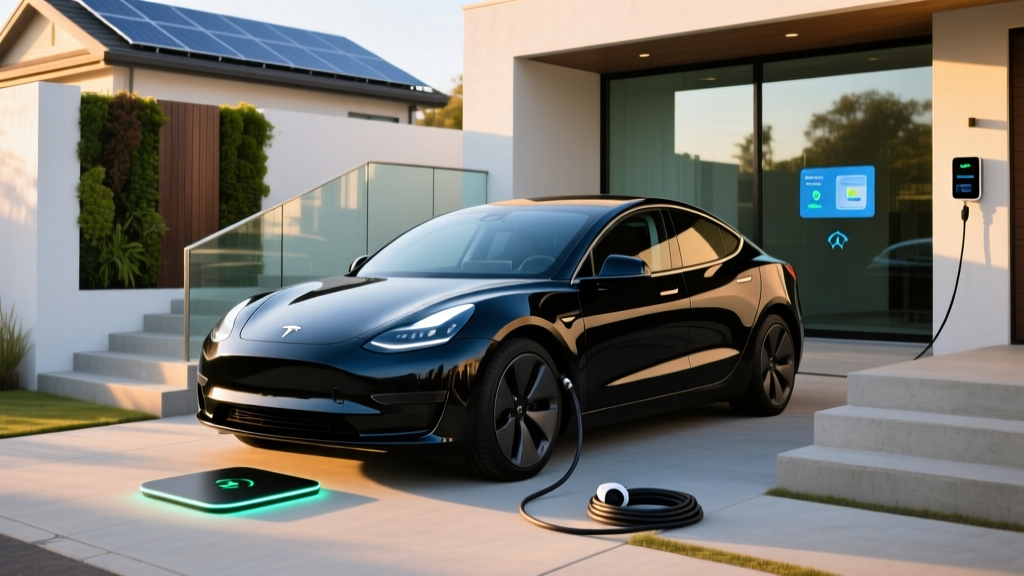
Level 2 home charging at 11.5 kW (48 amps on a 60-amp circuit) adds roughly 44 miles of range per hour, meaning a full overnight session easily refills even the Long Range pack. Installation typically runs $800–$2,000 for the Tesla Wall Connector plus electrician labor, assuming your panel has headroom. Homes with older 100-amp panels may need a $1,500–$3,000 service upgrade — a cost often overlooked in EV purchase budgets.
Tesla's NACS connector is now the North American standard, and the 2026 Model 3 ships with the native NACS port. Adapters are available for legacy CCS and CHAdeMO networks, though Tesla owners overwhelmingly rely on the Supercharger network, which remains the most reliable DC fast-charging ecosystem in the U.S.
The Model 3 Web Browser and Infotainment Ecosystem
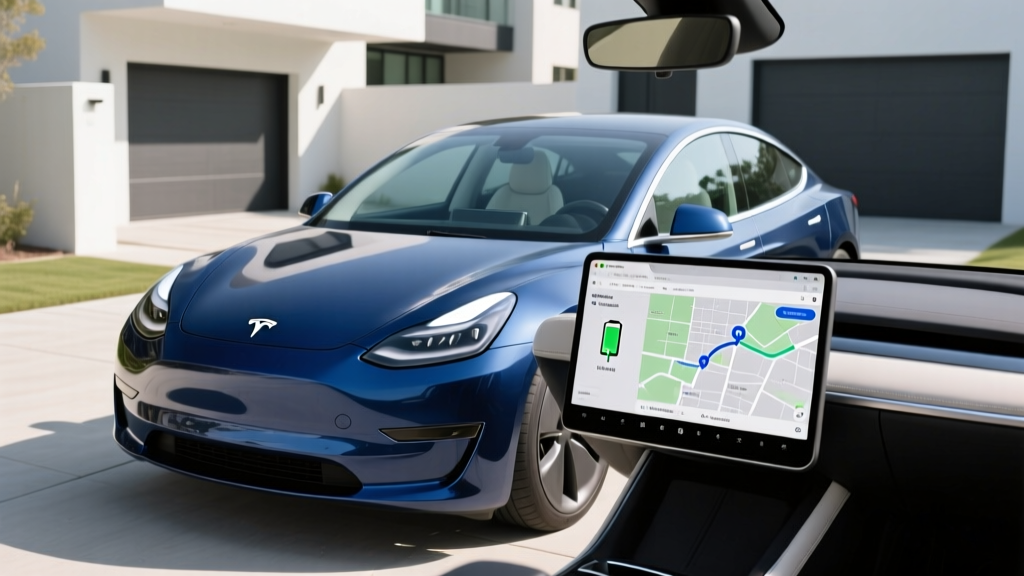
The feature that brought you here — the Model 3 web browser — is genuinely functional rather than a novelty. Built on a Chromium engine, it supports full HTML5 rendering, tabbed browsing, and JavaScript-heavy sites. Practical uses include looking up charging station reviews on PlugShare, reading restaurant menus while parked, checking work dashboards during a lunchtime charge, or pulling up camping reservation confirmations. Limitations exist: the browser blocks video-streaming URLs (those are handled by dedicated apps), and typing on the touchscreen keyboard is tedious for long URLs — voice input or Bluetooth keyboard pairing helps.
Beyond the browser, the 15.4-inch center display runs Tesla's latest software with:
- Streaming apps: Netflix, YouTube, Disney+, Twitch, and TikTok (parked only)
- Gaming: Cyberpunk 2077, Stardew Valley, and Steam library streaming via Bluetooth controller
- Audio: Spotify, Apple Music, Tidal, TuneIn, and native Bluetooth audio
- Navigation: Tesla's built-in nav with live Supercharger availability, trip energy prediction, and automatic battery preconditioning
- Phone integration: Bluetooth calls and media, but no Apple CarPlay or Android Auto — a deliberate Tesla omission that still frustrates some buyers
- Dashcam & Sentry Mode: Continuous recording via USB drive, viewable on-screen
The absence of CarPlay/Android Auto is the single most cited infotainment complaint. Tesla's position is that its native stack offers deeper vehicle integration (energy-aware navigation, preconditioning, Supercharger routing) than phone projection allows. That argument holds technical weight, but it doesn't satisfy users who prefer Apple Maps or Waze for daily navigation.
Performance, Ride, and Daily Livability
The 2026 Model 3 Performance AWD hits 0–60 mph in 2.9 seconds with 510 horsepower — supercar territory in a $53K sedan. But even the base Standard Range RWD at 5.8 seconds is quicker than most gas-powered compact sedans. The Highland refresh significantly improved ride quality: new frequency-selective dampers, additional acoustic glass, and revised suspension bushings have transformed the Model 3 from a harsh-riding tech pod into a genuinely comfortable highway cruiser.
Interior space remains a compromise relative to some competitors. Front legroom is generous at 42.7 inches, but rear legroom at 35.2 inches is tight for adults on longer trips — the Hyundai Ioniq 6 and BMW i4 both offer comparable or slightly better rear accommodation. Cargo volume stands at 23 cubic feet (trunk plus frunk combined), with the trunk alone offering 21 cu ft of usable space under the liftback opening.
- Class-leading efficiency (25 kWh/100mi)
- Supercharger network access — still the gold standard
- Full Chromium web browser + Steam gaming
- Over-the-air updates continuously add features
- Strong resale value relative to EV segment average
- Excellent ride refinement post-Highland refresh
- No Apple CarPlay / Android Auto
- Rear seat legroom is snug for tall adults
- Turn-signal buttons on steering wheel (no stalk) frustrate some drivers
- Panel gaps still inconsistent on some builds
- FSD (Supervised) remains Level 2 — not self-driving
- LFP pack in Standard Range loses more range in extreme cold
Driver Assistance: Autopilot and FSD Supervised
Tesla Autopilot and Full Self-Driving (Supervised) are Level 2 driver-assistance systems. The driver must remain fully engaged, hands on or near the wheel, and eyes on the road at all times. These are not self-driving systems. Tesla's own documentation and NHTSA guidance require continuous driver supervision.
Standard Autopilot includes Traffic-Aware Cruise Control and Autosteer (lane centering on marked highways). The $8,000 FSD (Supervised) upgrade adds automatic lane changes, navigate-on-autopilot for highway interchanges, traffic light and stop sign recognition, and parking summon. Real-world FSD performance in 2026 is markedly improved over earlier versions, particularly on divided highways, but urban and construction-zone handling still requires frequent driver takeovers. For a detailed breakdown of SAE automation levels, see SAE International's J3016 standard.
Pricing, Tax Credits, and Total Cost
| Trim | Base MSRP | Est. w/ FSD + Delivery | §30D Credit Potential | Effective Price (if eligible) |
|---|---|---|---|---|
| Standard Range RWD | $38,990 | $40,190 | Up to $7,500 | ~$32,690 |
| Long Range RWD | $42,990 | $44,190 | Up to $7,500 | ~$36,690 |
| Long Range AWD | $47,990 | $49,190 | Up to $7,500 | ~$41,690 |
| Performance AWD | $52,990 | $54,190 | Up to $7,500 | ~$46,690 |
Federal tax credit eligibility under IRS §30D requires meeting several conditions simultaneously, and the rules continue to evolve:
- MSRP cap: Sedans must be under $55,000 MSRP — all Model 3 trims qualify
- Buyer income cap: Modified AGI ≤ $150,000 (single) / $300,000 (joint) / $225,000 (head of household)
- Battery sourcing: Critical minerals and battery components must meet phased-in domestic/free-trade-partner thresholds — Tesla's U.S. production gives the Model 3 a structural advantage here, but confirm current-year compliance at purchase
- Point-of-sale transfer: Eligible buyers can apply the credit as an instant price reduction at delivery rather than waiting for tax filing
- VIN verification: The specific vehicle must appear on the IRS qualified vehicles list at time of purchase
Because sourcing requirements tighten annually, never assume credit eligibility without checking the current IRS qualified list and consulting a tax professional. Some buyers in 2025 saw partial credit amounts ($3,750) when their specific battery lot met only one of the two sourcing thresholds.
Warranty, Ownership Costs, and Long-Term Outlook
Tesla covers the Model 3 with a 4-year/50,000-mile basic warranty and an 8-year/100,000-mile battery and drive unit warranty (8 years/120,000 miles for Long Range and Performance trims). The battery warranty guarantees retention of at least 70% of original capacity during the coverage period. Real-world degradation data from fleet analytics sources suggests NMC Model 3 packs typically retain 90–93% capacity at 100,000 miles, while LFP packs show similar or slightly better retention thanks to the chemistry's inherent cycle-life advantage.
Insurance costs remain a consideration: Model 3 premiums average 15–25% higher than comparable gas sedans, driven by repair costs for aluminum and sensor-dense body panels. Tesla Insurance is available in many states and can be competitive, though experiences vary widely by driver profile and region.
Total cost of ownership over 5 years and 75,000 miles typically favors the Model 3 over gas competitors like the BMW 3 Series or Audi A4 when the buyer qualifies for the federal credit, charges primarily at home, and drives in states with moderate electricity rates. The breakeven versus a Toyota Camry Hybrid is longer — typically 6–8 years — given the Camry's lower purchase price and excellent fuel economy.
Who Should Buy the 2026 Model 3?
- You have reliable home Level 2 charging access
- You value over-the-air updates and a deep infotainment ecosystem (including that web browser)
- You take regular road trips and want Supercharger network reliability
- Efficiency and low per-mile energy cost are top priorities
- You're eligible for the full $7,500 federal credit
- You need spacious rear seating for adults regularly (consider Ioniq 6 or BMW i4)
- Apple CarPlay or Android Auto is non-negotiable
- You lack home charging and rely entirely on public infrastructure
- Your budget is firm below $35,000 even after credits (consider used Model 3 or Chevrolet Equinox EV)
Frequently Asked Questions
What is the real-world range of the Tesla Model 3?
The Long Range RWD achieves an EPA-estimated 363 miles, but expect 290–320 miles on real-world highway trips at 70+ mph and 220–260 miles in freezing temperatures. The Standard Range RWD delivers roughly 215–240 miles on the highway in mild conditions.
How fast does the Model 3 charge at home and on the road?
On a Level 2 home charger (11.5 kW / 48A), the Model 3 adds ~44 miles per hour and fully charges overnight. On a V3/V4 Supercharger at 250 kW peak, a 10–80% session takes approximately 25 minutes under good thermal conditions, longer in cold weather without preconditioning.
How much does the Model 3 cost after the federal tax credit?
If you meet all §30D requirements (income, MSRP, battery sourcing), the Standard Range RWD drops from $38,990 to approximately $31,490–$32,690 after the $7,500 credit. Confirm eligibility on the IRS qualified vehicles list before ordering, as sourcing rules change annually.
Is the Model 3 worth buying versus competitors in 2026?
Against the Hyundai Ioniq 6, BMW i4, and Polestar 2, the Model 3 wins on charging network access, efficiency, and software depth. The Ioniq 6 offers more rear space and CarPlay. The BMW i4 delivers superior build quality and traditional luxury. The Model 3 remains the best all-around value if Supercharger access and software matter to you.
Does the Model 3 web browser work while driving?
No. Tesla restricts the web browser, video streaming, and gaming to Park only. While driving, the browser is disabled for safety reasons. Navigation, media controls, and climate functions remain accessible.
Is Tesla's Full Self-Driving actually self-driving?
No. FSD (Supervised) is an SAE Level 2 system requiring continuous driver attention and intervention. It handles many highway and some urban scenarios well but is not autonomous. You are legally and operationally the driver at all times.