Quick Verdict: Is the Model 3 Warranty Enough Peace of Mind?
The Tesla Model 3 remains one of the most efficient, best-charging electric sedans you can buy in 2026. But for buyers researching long-term ownership, the Model 3 warranty is the real story. Tesla provides a 5-year/60,000-mile basic vehicle limited warranty and an 8-year/100,000-mile battery and drive unit warranty on the base Rear-Wheel Drive trim — extending to 8 years/120,000 miles on Long Range and Performance variants. That battery coverage is competitive, but the basic warranty falls short of Hyundai's 5-year/60,000-mile and Kia's 5-year/60,000-mile bumper-to-bumper, and well behind Genesis's 5-year/60,000-mile plus 10-year/100,000-mile powertrain coverage.
Below, we break down every layer of the Model 3 warranty, pair it with the real-world specs that matter — range, charging, efficiency, pricing — and explain who this car actually makes sense for in 2026.
2026 Tesla Model 3: Core Specifications at a Glance
| Spec | RWD (Base) | Long Range AWD | Performance AWD |
|---|---|---|---|
| EPA Range | 363 miles | 346 miles | 315 miles |
| Battery (usable) | ~60 kWh (LFP) | ~75 kWh (NMC) | ~75 kWh (NMC) |
| Drivetrain | RWD, single motor | AWD, dual motor | AWD, dual motor |
| Horsepower | 271 hp | 346 hp | 510 hp |
| 0–60 mph | 5.8 sec | 4.2 sec | 2.9 sec |
| Max DC Fast Charge | 175 kW | 250 kW | 250 kW |
| 10–80% DC Time | ~30 min | ~25 min | ~25 min |
| Level 2 Home Charge | 11.5 kW (~44 mi/hr) | 11.5 kW (~44 mi/hr) | 11.5 kW (~44 mi/hr) |
| Efficiency | 132 MPGe / 25 kWh/100mi | 132 MPGe / 25 kWh/100mi | 121 MPGe / 28 kWh/100mi |
| Base MSRP | $38,990 | $45,990 | $52,990 |
| Basic Warranty | 5 yr / 60,000 mi | 5 yr / 60,000 mi | 5 yr / 60,000 mi |
| Battery & Drive Unit Warranty | 8 yr / 100,000 mi | 8 yr / 120,000 mi | 8 yr / 120,000 mi |
Model 3 Warranty Breakdown: What's Actually Covered
Understanding the Model 3 warranty means separating Tesla's coverage into three distinct layers. Each has different terms, limitations, and real-world implications.
Basic Vehicle Limited Warranty (5 Years / 60,000 Miles)
This is Tesla's bumper-to-bumper equivalent. It covers repair or replacement of most vehicle components that fail due to manufacturing defects — including the touchscreen, power windows, HVAC system, suspension components, and interior hardware. What it does not cover: normal wear items like tires, brake pads, wiper blades, and the 12V auxiliary battery. It also excludes damage from accidents, misuse, or unauthorized modifications.
Five years or 60,000 miles (whichever comes first) is acceptable for the EV segment but not class-leading. The Hyundai Ioniq 6 matches it at 5/60,000 but adds a 10-year/100,000-mile powertrain warranty. BMW's i4 provides 4 years/50,000 miles — shorter still. If you plan to keep your Model 3 beyond year five, an extended service plan or third-party warranty becomes worth evaluating.
Battery and Drive Unit Warranty (8 Years / 100,000–120,000 Miles)
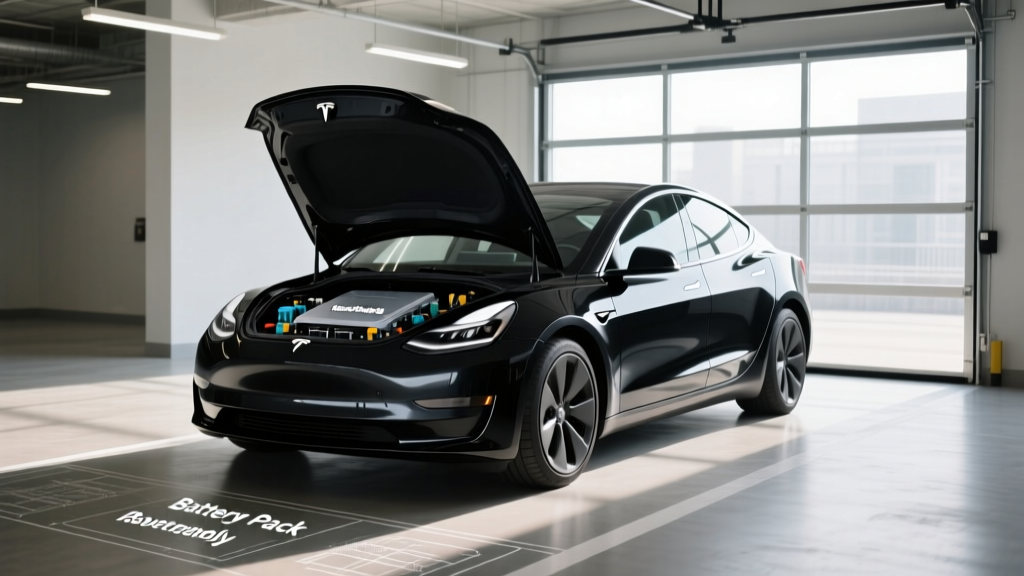
This is the coverage that matters most for EV ownership confidence. Tesla guarantees that the high-voltage battery will retain a minimum of 70% of its original capacity during the warranty period. If degradation exceeds 30% before 8 years or the mileage limit, Tesla will repair or replace the battery to bring it back above that 70% threshold.
The mileage split by trim is important:
- RWD (LFP battery): 8 years / 100,000 miles
- Long Range AWD (NMC battery): 8 years / 120,000 miles
- Performance AWD (NMC battery): 8 years / 120,000 miles
The drive unit (electric motor and associated power electronics) is covered under the same terms. Tesla's motor failure rate has historically been very low, but inverter and onboard charger replacements do occur — and they're expensive out of pocket ($2,000–$5,000+ depending on the component).
According to Tesla's official warranty documentation, the battery warranty also covers failures due to defects — not just degradation. However, it does not cover capacity loss from consistently charging to 100% on NMC batteries or leaving the vehicle at 0% state of charge for extended periods. LFP batteries in the RWD model tolerate 100% charging better and Tesla actually recommends periodic full charges for calibration.
What the Model 3 Warranty Does NOT Cover
Being clear-eyed about exclusions prevents unpleasant surprises:
- Tires: Covered by the tire manufacturer, not Tesla
- 12V lithium auxiliary battery: 4-year/50,000-mile coverage (separate from the traction battery)
- Paint and body: 4 years / 50,000 miles for corrosion perforation; cosmetic paint defects are 3 years
- Glass: Covered only for manufacturing defects, not rock chips or cracks
- Autopilot/FSD hardware: Covered under the basic warranty, but software subscriptions (FSD monthly) are not refundable
- Seat belts and airbags: 5 years / 60,000 miles (some competitors offer longer restraint coverage)
Real-World Range: Beyond the EPA Sticker
EPA estimated: 346 miles. Real-world highway (70–75 mph, mild weather): ~280–310 miles. Real-world highway in cold weather (below 32°F): ~220–260 miles. City/mixed driving with regen: ~300–330 miles.
Model 3 RWD:
EPA estimated: 363 miles. Real-world highway: ~290–320 miles. Cold-weather highway: ~230–270 miles.
The EPA range figures for the refreshed Model 3 are impressive on paper — especially the RWD's 363 miles, which benefits from the lighter LFP battery pack and Tesla's class-leading drivetrain efficiency. But the EPA test cycle includes significant low-speed and city driving where regenerative braking recaptures energy. On sustained highway trips at 70+ mph, aerodynamic drag dominates and range drops noticeably.
In real-world highway testing conducted by multiple outlets, the Long Range AWD consistently delivers between 280 and 310 miles in mild conditions (55–75°F), which is roughly 80–90% of its EPA rating. That's actually strong — many EVs fall to 70–75% of EPA on highway-only drives. Tesla's heat pump, standard across all trims, significantly reduces cold-weather HVAC energy consumption compared to older resistive-heater EVs, but you should still budget a 20–30% range reduction in sub-freezing temperatures.
For a 300-mile road trip in the Long Range, you'll arrive with roughly 10–15% state of charge in good weather — comfortable. In winter, plan one DC fast-charge stop. The RWD's longer EPA rating provides a slightly larger buffer, though the LFP battery's lower energy density means the pack is physically smaller.
Charging Speed and Infrastructure: Model 3's Enduring Advantage
| Charging Method | RWD | Long Range / Performance |
|---|---|---|
| Level 1 (120V, 12A) | ~3 mi/hr (1.4 kW) | ~3 mi/hr (1.4 kW) |
| Level 2 (240V, 48A) | ~44 mi/hr (11.5 kW) | ~44 mi/hr (11.5 kW) |
| DC Fast Charge (peak) | 175 kW | 250 kW |
| 10–80% DCFC Time | ~30 min | ~25 min |
| Charging Port / Connector | NACS (native) | NACS (native) |
| Supercharger Access | Yes (full network) | Yes (full network) |
Charging infrastructure access remains one of Tesla's strongest ownership advantages, even as the Supercharger network has opened to Ford, Rivian, and other NACS-equipped vehicles. The Model 3 connects natively — no adapter needed — and Tesla's onboard navigation automatically preconditions the battery when you route to a Supercharger, warming the pack to optimal temperature for peak charge rates.
The Long Range and Performance models peak at 250 kW on V3 Superchargers, but — and this is a critical detail many spec sheets gloss over — that peak rate is not sustained across the full charging session. The charge curve is aggressive between 10–40% state of charge, then progressively tapers. A typical 10–80% session takes roughly 25 minutes, but going from 80–100% can add another 20+ minutes due to the taper. For road trips, the practical strategy is to charge to 60–70% and hop to the next station, which can take as little as 12–15 minutes.
The RWD model's 175 kW peak is a function of its smaller LFP battery pack — smaller packs accept lower absolute power. However, LFP chemistry tolerates frequent 100% charging and high cycle counts better than NMC, which matters for daily-use longevity. At home on a 48-amp Level 2 charger (requiring a 60-amp circuit), all Model 3 trims add approximately 44 miles of range per hour of charging — enough to fully replenish overnight from any realistic daily driving.
Pricing, Trims, and Federal Tax Credit Eligibility
| Trim | Base MSRP | Federal §30D Credit | Effective Price (if eligible) |
|---|---|---|---|
| RWD | $38,990 | Up to $7,500 | ~$31,490 |
| Long Range AWD | $45,990 | Up to $7,500 | ~$38,490 |
| Performance AWD | $52,990 | Up to $7,500 | ~$45,490 |
All 2026 Model 3 trims fall under the IRS §30D MSRP cap of $55,000 for sedans. However, qualifying for the full $7,500 credit depends on several buyer-specific and vehicle-specific requirements that change periodically:
- Buyer income caps: Modified adjusted gross income must not exceed $300,000 (joint filers), $225,000 (head of household), or $150,000 (individual). Income is based on the year of delivery or the prior year — whichever is lower.
- Critical minerals requirement ($3,750): A percentage of the battery's critical minerals must be sourced from the U.S. or a free-trade-agreement country. This threshold increases annually.
- Battery components requirement ($3,750): A percentage of battery components must be manufactured or assembled in North America. This threshold also increases annually, and the foreign-entity-of-concern (FEOC) restriction disqualifies vehicles with battery components from prohibited foreign entities.
- Point-of-sale transfer: As of 2024, buyers can transfer the credit to the dealer at purchase, reducing the out-of-pocket price immediately rather than waiting for tax filing.
The credit landscape is shifting. Battery sourcing rules tighten each year, and some configurations that qualified in 2024 may not qualify in 2026 for the full $7,500. Always verify current eligibility on the fueleconomy.gov tax credit tracker before committing to a purchase. A tax professional can confirm your personal eligibility.
Interior, Cargo, Tech, and Daily Livability
The refreshed Model 3 (sometimes called the "Highland" refresh, carried into 2026 with minor updates) significantly improved cabin materials, ride quality, and noise isolation compared to pre-2024 models. The minimalist interior centers on a 15.4-inch touchscreen that handles virtually all vehicle controls — there are no physical buttons for climate, media, or glovebox release. This is polarizing: enthusiasts often prefer tactile controls, while minimalists appreciate the clean aesthetic.
Passenger space is competitive for the compact luxury sedan segment:
- Front legroom: 42.7 inches
- Rear legroom: 35.2 inches (adequate for adults, tight for tall passengers on long trips)
- Cargo volume (trunk): 23 cu ft
- Frunk (front trunk): ~3.1 cu ft (useful for charging cables, small bags)
- Total cargo: ~26 cu ft (less than the Model Y's hatchback layout, but deep and well-shaped)
Notable tech features include Tesla's Autopilot (standard, SAE Level 2 driver assistance with adaptive cruise and lane centering), over-the-air software updates that regularly add features, a built-in dashcam and Sentry Mode surveillance system, and access to Tesla's Supercharger network with automatic routing and preconditioning. The optional Full Self-Driving (Supervised) package — currently $8,000 upfront or $99/month — adds automatic lane changes, intersection handling, and navigate-on-Autopilot, but it remains SAE Level 2: you must keep your hands on the wheel and eyes on the road at all times.
Drawbacks worth flagging: the absence of physical climate controls or a speedometer directly in front of the driver (speed is displayed on the upper-left corner of the center screen) frustrates some buyers. The rear visibility is limited by the sloping roofline, though the backup camera partially compensates. And Tesla's service center network, while expanding, still has gaps in rural areas — mobile service handles many issues, but body damage or high-voltage work may require a tow to the nearest center.
Who Should Buy the Model 3 — and Who Shouldn't
- You prioritize efficiency and charging speed above all else in a sedan
- You want native Supercharger network access without adapters
- You're a daily commuter with home Level 2 charging and take occasional road trips under 400 miles
- You value OTA software updates and a tech-forward cabin
- You plan to keep the car 5–8 years and want the 8-year battery warranty as a safety net
- You need maximum rear-seat space or cargo versatility (consider the Model Y or Hyundai Ioniq 5)
- You want the longest basic warranty in the segment (Hyundai/Kia/Genesis offer more)
- You prefer physical buttons and a traditional instrument cluster
- You live in a rural area far from Tesla service centers and Superchargers
- You need towing capability (the Model 3 is not rated for towing in the U.S.)
Model 3 vs. Key Competitors: Warranty and Value Comparison
| Vehicle | EPA Range | Basic Warranty | Battery Warranty | Base MSRP |
|---|---|---|---|---|
| Tesla Model 3 LR AWD | 346 mi | 5 yr / 60k mi | 8 yr / 120k mi (70% retention) | $45,990 |
| Hyundai Ioniq 6 SE LR | 361 mi | 5 yr / 60k mi | 10 yr / 100k mi | $42,450 |
| BMW i4 eDrive40 | 301 mi | 4 yr / 50k mi | 8 yr / 100k mi | $57,900 |
| Polestar 2 LR SM | 320 mi | 4 yr / 50k mi | 8 yr / 100k mi | $51,300 |
The Ioniq 6 is the closest competitor on range and price, and it offers a longer battery warranty (10 years vs. Tesla's 8). However, it charges slower on DC (peak ~240 kW but with a less aggressive curve), uses CCS1 (requiring a NACS adapter for Superchargers), and doesn't match the Model 3's real-world efficiency. The BMW i4 and Polestar 2 cost significantly more and offer less range, though the BMW wins on interior build quality and dealership service access.
Frequently Asked Questions
What is the real-world range of the Tesla Model 3?
The EPA rates the Long Range AWD at 346 miles and the RWD at 363 miles. In real-world highway driving at 70–75 mph in mild weather, expect 280–320 miles depending on trim. Cold weather (below 32°F) reduces that to approximately 220–270 miles. The Model 3's heat pump and aerodynamic efficiency help it retain a higher percentage of EPA range than many competitors.
How fast does the Model 3 charge at home and on the road?
On DC fast charging, the Long Range and Performance peak at 250 kW and achieve 10–80% in roughly 25 minutes on a V3 Supercharger. The RWD peaks at 175 kW with a 10–80% time of about 30 minutes. At home on a 48-amp Level 2 charger (240V), all trims charge at up to 11.5 kW, adding approximately 44 miles of range per hour — a full overnight charge from near-empty.
Does the Tesla Model 3 qualify for the $7,500 federal EV tax credit?
All Model 3 trims are under the $55,000 MSRP cap for sedans under IRS §30D. However, full credit eligibility depends on the buyer's income (under $150K individual / $300K joint), the vehicle's battery critical-mineral sourcing, and battery component manufacturing requirements. These sourcing thresholds tighten annually. Verify current eligibility at fueleconomy.gov and consult a tax professional before relying on the credit.
Is the Model 3 worth buying over the Ioniq 6 or BMW i4?
If charging speed, Supercharger network access, and efficiency are your top priorities, the Model 3 remains the benchmark. If a longer basic and battery warranty matters more, the Hyundai Ioniq 6 offers 10-year/100,000-mile battery coverage at a similar price. The BMW i4 wins on luxury and dealer service but costs $10,000+ more with less range. Your decision should hinge on which ownership factor — network, warranty, or luxury — you value most.
How long will the Model 3 battery actually last?
Tesla's LFP batteries (RWD) are rated for 3,000+ full charge cycles before reaching 80% capacity, which translates to well over 300,000 miles in theory. NMC batteries (Long Range, Performance) typically sustain 1,500–2,000 cycles to 80%. Real-world fleet data suggests most Model 3 batteries retain 85–90% capacity at 100,000 miles. The 8-year warranty with a 70% retention floor provides a meaningful backstop, though few owners report needing a warranty replacement.
What does the Model 3 warranty NOT cover that surprises owners?
The most common surprises: the 12V auxiliary battery has only 4-year/50,000-mile coverage (separate from the 8-year traction battery warranty). Tire wear is excluded entirely. Cosmetic paint defects are covered for only 3 years. And if you modify the vehicle's software or install non-Tesla-approved accessories that cause electrical issues, related repairs may be denied. Always review the full Tesla New Vehicle Limited Warranty document before delivery.