The Tesla Model 3 remains one of the most data-transparent EVs on the road, but its warranty structure still trips up buyers. Is the 8-year battery warranty truly comprehensive? What counts as "excessive" degradation? And how does Tesla's coverage stack up against Hyundai's 10-year powertrain warranty or Ford's battery terms? This review breaks down every layer of the Model 3 warranty alongside the real-world range, charging, and pricing data you need before signing.
Tesla Model 3 at a Glance: 2026 Specs
| Specification | RWD (Base) | Long Range AWD | Performance |
|---|---|---|---|
| EPA Range | 363 miles | 341 miles | 315 miles |
| Battery Capacity (usable) | ~60 kWh (LFP) | ~79 kWh (NMC) | ~79 kWh (NMC) |
| Horsepower | 271 hp | 346 hp | 510 hp |
| 0-60 mph | 5.8 sec | 4.2 sec | 2.9 sec |
| Drivetrain | RWD (single motor) | AWD (dual motor) | AWD (dual motor) |
| Max DC Fast Charge | 170 kW | 250 kW | 250 kW |
| 10-80% DC Charge Time | ~30 min | ~25 min | ~25 min |
| Level 2 Home Charge Rate | 11.5 kW (~44 mi/hr) | 11.5 kW (~44 mi/hr) | 11.5 kW (~44 mi/hr) |
| MPGe (combined) | 132 MPGe | 125 MPGe | 113 MPGe |
| Efficiency | 25 kWh/100mi | 27 kWh/100mi | 30 kWh/100mi |
| Base MSRP | $38,990 | $45,990 | $52,990 |
Warranty Breakdown: What Tesla Actually Covers
The Model 3 warranty is split into three distinct coverage tiers. Understanding which component falls under which tier is critical — especially because Tesla's definitions of "defect" versus "normal wear" are narrower than some buyers assume.
Basic Vehicle Limited Warranty
Term: 4 years or 50,000 miles, whichever comes first.
This covers nearly everything not explicitly excluded: the touchscreen, power windows, suspension components, HVAC system, interior trim, and body electronics. Tesla's basic warranty is shorter than Hyundai's 5-year/60,000-mile bumper-to-bumper but matches most European luxury brands.
Battery and Drive Unit Limited Warranty
Term: 8 years, with mileage limits varying by trim:
- RWD: 8 years / 100,000 miles
- Long Range AWD & Performance: 8 years / 120,000 miles
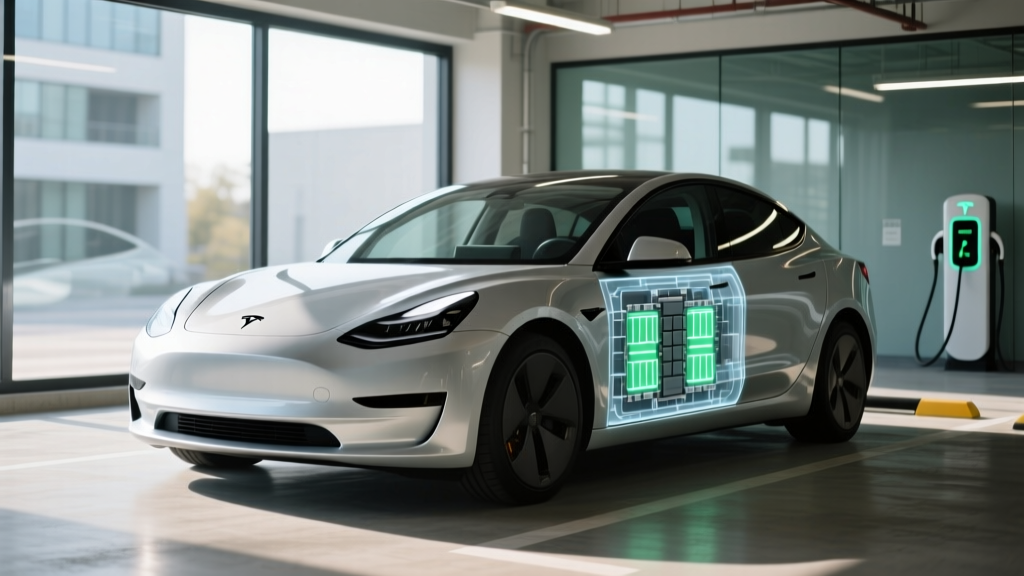
This is the warranty that matters most to long-term ownership. It covers the high-voltage battery pack and drive unit(s) against defects and excessive capacity loss. Tesla defines "excessive" as degradation below 70% of original capacity during the warranty period. If your 79 kWh Long Range pack drops to 55 kWh or less (verified by Tesla diagnostics), they will repair or replace it to bring retention above 70%.
What's Not Covered
- Normal battery degradation above the 70% threshold
- Damage from flooding, fire, or improper charging equipment
- Tires (covered by tire manufacturer warranty)
- Paint and cosmetic issues after the delivery inspection window
- Modifications or aftermarket parts that affect the powertrain
Battery Chemistry and Long-Term Degradation
The Model 3 RWD uses a lithium iron phosphate (LFP) battery, while the Long Range and Performance trims use nickel-manganese-cobalt (NMC). The chemistry choice has direct implications for warranty claims and daily ownership.
| Factor | LFP (RWD) | NMC (Long Range / Performance) |
|---|---|---|
| Energy Density | Lower (~160 Wh/kg) | Higher (~250 Wh/kg) |
| Cycle Life | 3,000+ cycles | 1,500-2,000 cycles |
| Daily Charge Recommendation | 100% OK (Tesla recommends weekly 100%) | 80% daily; 100% for trips only |
| Cold-Weather Performance | More range loss in freezing temps | Better cold-weather retention |
| Warranty Mileage Cap | 100,000 mi | 120,000 mi |
| Typical 100k-Mile Degradation | ~5-8% (based on fleet data) | ~8-12% (based on fleet data) |
LFP's longer cycle life and tolerance for 100% daily charging make it a pragmatic choice for commuters who want to charge fully every night without degradation guilt. However, LFP's lower energy density means a heavier pack for the same range, and its state-of-charge estimation can be less accurate unless you regularly charge to 100% — Tesla's software addresses this, but it's a quirk NMC owners don't face.
Charging Speed: From Home to Highway
| Charging Level | Power (kW) | Miles Added per Hour | Notes |
|---|---|---|---|
| Level 1 (120V outlet) | ~1.4 kW | ~5-6 mi/hr | Emergency/trickle only |
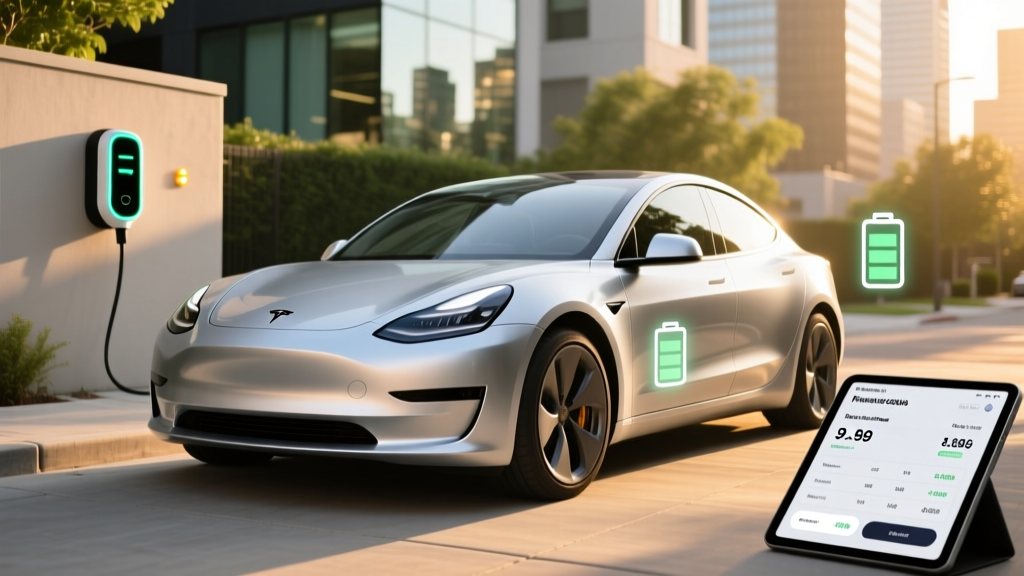
| Level 2 (240V, 48A) | 11.5 kW | ~44 mi/hr | Full overnight charge in 7-9 hrs |
| DC Fast (RWD max) | 170 kW peak | ~170 mi in 15 min | Tapers significantly above 60% SoC |
| DC Fast (LR/Perf max) | 250 kW peak | ~200 mi in 15 min | Peak only at low SoC; 10-80% ~25 min |
Charging curve reality: The 250 kW peak on Long Range and Performance trims is sustained only between roughly 5-25% state of charge. From 25-50%, you'll see 150-180 kW; from 50-80%, it tapers to 60-90 kW. The 10-80% time of ~25 minutes assumes you arrive at the Supercharger with preconditioning active (navigation set to the charger). Without preconditioning, add 5-10 minutes as the battery warms up.
The RWD's 170 kW peak is less dramatic on paper but adequate for most road-trip stops. At a typical rest-area break of 20-25 minutes, you'll add 150-180 miles — enough to sustain 70-75 mph driving for the next leg.
Pricing, Trims, and Federal Tax Credit Eligibility
| Trim | Base MSRP | Federal Credit (§30D) | Effective Price (if eligible) |
|---|---|---|---|
| RWD | $38,990 | Up to $7,500 | ~$31,490 |
| Long Range AWD | $45,990 | Up to $7,500 | ~$38,490 |
| Performance | $52,990 | Up to $7,500 | ~$45,490 |
Eligibility is not automatic. Under current IRS §30D rules, the $7,500 credit requires:
- MSRP cap: Sedans must be under $55,000 — the RWD and Long Range qualify; the Performance trim qualifies at $52,990 base but may exceed the cap with options
- Buyer income limits: Modified AGI ≤ $150,000 (single), $225,000 (head of household), $300,000 (joint)
- Battery sourcing: Critical minerals and battery components must meet phased-in domestic/free-trade-agreement thresholds that tighten annually through 2029
- Point-of-sale transfer: You can transfer the credit to the dealer at purchase for an immediate price reduction, or claim it on your tax return
Tesla publishes current credit eligibility on each model's order page, but battery sourcing compliance can shift mid-year. Always verify with your tax professional before finalizing a purchase based on the credit.
Interior, Tech, and Daily Livability
Cargo: 23 cu ft trunk (including under-floor storage) plus a ~3 cu ft frunk. Rear seats fold 60/40 for longer items. Legroom is 42.7 inches front / 35.2 inches rear — adequate for adults on shorter trips but tight for 6-footers on long drives.
Infotainment: The 15.4-inch center touchscreen handles everything — navigation, climate, media, vehicle settings. There is no instrument cluster; speed and range display on the upper-left corner of the main screen. Wireless phone charging, ventilated front seats, and ambient lighting are standard on all trims.
Driver Assistance: Basic Autopilot (traffic-aware cruise + lane centering) is standard. Full Self-Driving (Supervised) is an $8,000 option or $99/month subscription. Clarification: FSD is an SAE Level 2 system — the driver must remain fully engaged and hands-on (or eyes-on, depending on the monitoring mode). It is not autonomous driving. Tesla's camera-only vision approach performs well on highways but can struggle in construction zones, faded lane markings, and heavy rain.
Pros and Cons
Pros
- Class-leading efficiency (25 kWh/100mi on RWD) means lower charging costs per mile
- Supercharger network reliability — Tesla's proprietary network remains the most dependable DC fast-charging infrastructure in the U.S.
- LFP battery on RWD allows daily 100% charging without degradation concerns
- Over-the-air updates continuously add features (recent UI refreshes, security improvements)
- Strong resale value relative to EV segment average
Cons
- Rear seat space is tight for taller adults on long trips
- No Apple CarPlay or Android Auto — Tesla's ecosystem is closed
- Camera-only Autopilot/FSD can be unpredictable in adverse conditions
- Insurance premiums run 15-30% higher than comparable non-Tesla sedans in many states
- Minimal physical controls — everything through the touchscreen takes adjustment
Who Should Buy the Model 3?
Best for: Solo commuters or couples who prioritize efficiency, charging convenience, and tech-forward ownership. The RWD at ~$31,500 after the federal credit is one of the best value-per-mile-of-range EVs available. The Long Range AWD suits road-trippers who need 300+ real-world highway miles and dual-motor traction in snow.
Look elsewhere if: You regularly carry rear-seat adults (consider the Model Y or Hyundai Ioniq 6 for more space), you need Apple CarPlay integration, or you drive in areas with sparse Supercharger coverage and prefer CCS-native charging networks.
Frequently Asked Questions
What is the real-world range of the Tesla Model 3?
The EPA rates the RWD at 363 miles, Long Range at 341 miles, and Performance at 315 miles. In real-world mixed driving, expect 310-330 miles (RWD), 290-310 (Long Range), and 260-280 (Performance). Sustained highway speeds above 75 mph and freezing temperatures reduce these figures by 15-30%.
How fast does the Model 3 charge at home and on the road?
On a 48-amp Level 2 home charger (240V), all trims add ~44 miles per hour, reaching a full charge in 7-9 hours overnight. On DC fast charging, the RWD peaks at 170 kW (10-80% in ~30 minutes), while Long Range and Performance peak at 250 kW (10-80% in ~25 minutes) with battery preconditioning active.
How much does the Model 3 cost after the federal tax credit?
If you meet all IRS §30D requirements (income caps, MSRP under $55,000, battery sourcing thresholds), the RWD drops to ~$31,490, the Long Range to ~$38,490, and the Performance to ~$45,490. Verify eligibility before purchase — sourcing rules tighten annually.
Does the Model 3 qualify for the $7,500 federal EV tax credit?
Yes, all trims currently qualify on MSRP grounds (sedan cap is $55,000). However, buyer income limits ($150k/$225k/$300k by filing status) and battery critical-mineral sourcing rules must also be met. Check the IRS clean vehicle credit page and Tesla's order page for real-time compliance status.
Is the Model 3 worth buying over competitors like the Hyundai Ioniq 6 or BMW i4?
The Model 3 RWD undercuts both on price after tax credits and beats them on Supercharger network access. The Ioniq 6 offers more rear legroom and an 800V architecture for faster 10-80% charging (~18 minutes at 350 kW). The BMW i4 provides a more traditional luxury interior and Apple CarPlay but costs significantly more and lacks DC fast-charge speeds comparable to the Tesla. If charging infrastructure and software ecosystem matter most, the Model 3 remains the default choice.
What happens if the battery degrades past 70% after the warranty expires?
Out-of-warranty battery replacement costs range from $12,000 to $16,000 depending on the pack size and labor. However, fleet data from Tesla's Impact Reports show average degradation of only ~12% at 150,000 miles for NMC packs and less for LFP. Catastrophic failure outside the warranty period is statistically rare but possible — an extended warranty or self-insurance fund is worth considering for high-mileage owners.