Tesla Track Package: Built for the Circuit, Certified for the Commute
When Tesla reintroduced the Track Package as a standalone upgrade for the Model 3 Performance, it was aimed squarely at drivers who want a dual-purpose electric sedan — one that can log consistent lap times at a track day and still deliver over 300 miles of real-world commuting range. For 2026, the package adds high-speed-rated Michelin Pilot Sport 4S tires, an elevated top speed of 163 mph, enhanced Track Mode telemetry, and forged alloy wheels — all layered onto the already potent Model 3 Performance platform.
But track capability is only half the equation for most buyers. The real question is whether this package makes sense as a daily-driven EV. Below, we break down the exact range, charging speeds, battery chemistry, tax-credit eligibility, and ownership economics that determine whether the Tesla Track Package earns a spot in your garage.
| Spec | Value |
|---|---|
| EPA Estimated Range | 315 miles (Long Range AWD base); ~297 mi with Track Package wheels/tires |
| Battery Capacity | ~79 kWh usable (NMC chemistry) |
| Drivetrain | Dual-Motor AWD |
| Horsepower | 510 hp (combined) |
| 0–60 mph | 2.9 seconds |
| Top Speed | 163 mph (Track Package) |
| Max DC Fast Charge | 250 kW peak (V3 Supercharger) |
| 10–80% DC Charge Time | ~25 minutes |
| Level 2 Home Charging | 11.5 kW (~44 mi/hr) |
| EPA Efficiency | 113 MPGe combined / 29 kWh/100 mi |
| Cargo Volume | 23 cu ft (trunk + frunk combined) |
| Base MSRP (Performance) | $54,990 (before options/destination) |
| Track Package Add-On | +$5,000 |
| Battery & Drive Unit Warranty | 8 years / 120,000 miles |
Real-World Range: What the EPA Number Doesn't Tell You
The 2026 Model 3 Performance carries an EPA-estimated 315 miles of range on its standard 19-inch wheels. Equipping the Track Package swaps in 20-inch forged wheels with stickier, higher-rolling-resistance Michelin Pilot Sport 4S tires, which reduces efficiency. Expect the EPA sticker to land around 297 miles with the Track Package equipped.
Real-World Range Expectations — Track Package
- Mixed commuting (city/suburban): 290–310 miles — regen-heavy city driving recovers energy efficiently.
- Highway cruising (70–75 mph): 250–270 miles — aerodynamic drag and the stickier tire compound reduce efficiency at sustained speed.
- Cold weather (below 32°F): 210–240 miles — NMC batteries lose 15–25% range in freezing temps, even with Tesla's heat pump and battery preconditioning.
- Track use: Highly variable; expect 5–8 miles per hot lap depending on circuit length and ambient temperature.
The 79 kWh (usable) NMC battery pack provides strong energy density, but NMC chemistry is more temperature-sensitive than LFP. In practice, preconditioning the battery before DC fast charging and before cold-weather departures is essential to preserving both range and charge speed.
Charging Speed: Supercharger Network Advantage
The Model 3 Performance with Track Package peaks at 250 kW on Tesla's V3 Superchargers, which remain the most reliable public DC fast-charging network in the US. The charge curve holds near peak output through roughly 40% State of Charge before tapering, making the 10–80% session complete in approximately 25 minutes under ideal thermal conditions.
| Charge Level | Power | Miles Added per Hour | Notes |
|---|---|---|---|
| Level 1 (120V household) | ~1.4 kW | ~5 mi/hr | Emergency/trickle only |
| Level 2 (240V home, 48A) | 11.5 kW | ~44 mi/hr | Full charge in ~7 hours |
| DC Fast (V3 Supercharger) | 250 kW peak | ~1,000+ mi/hr (peak) | 10–80% in ~25 min |
| DC Fast (CCS adapter, 3rd-party) | Up to 150–250 kW | Varies by station | NACS native; CCS via adapter |
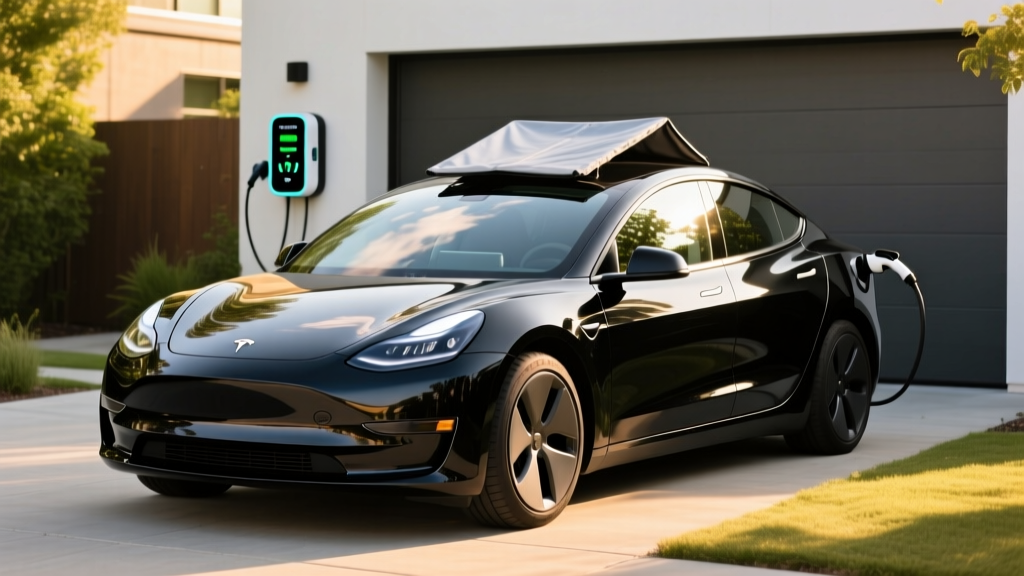
At home, a 48-amp Level 2 wall connector on a 60-amp circuit delivers the full 11.5 kW the onboard charger can accept. For Track Package owners who drive aggressively or attend track events, budgeting for a home Level 2 install (typically $800–$2,000 including equipment and electrician) is a near-mandatory ownership cost.
Performance and Driving Dynamics
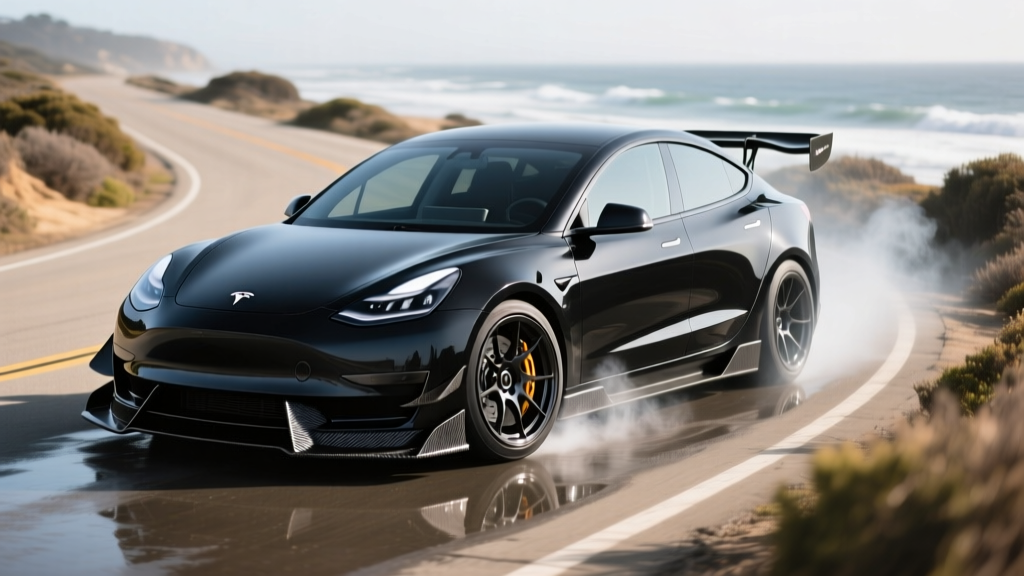
The Track Package doesn't change the powertrain — the dual-motor AWD setup still produces 510 hp and launches to 60 mph in 2.9 seconds. What it does change is the car's high-speed composure and lateral grip.
The Michelin Pilot Sport 4S tires provide significantly more mechanical grip than the standard all-season rubber, translating to higher cornering speeds and shorter braking distances. Track Mode, accessible through the touchscreen, allows you to adjust front/rear torque bias, stability control intervention, and regen strength — critical for managing battery temperature during repeated hot laps.
However, the tradeoff is ride quality. The 20-inch wheels with lower-profile tires transmit more road imperfections into the cabin, and the stickier compound generates more road noise at highway speeds. For daily commuting on rough pavement, the standard 19-inch setup is noticeably more comfortable.
Driver-Assist Note: Autopilot & FSD (Supervised)
Tesla's Autopilot and optional Full Self-Driving (Supervised) are SAE Level 2 driver-assist systems. The driver must remain fully engaged, hands on or near the wheel, with eyes on the road at all times. These systems do not make the vehicle self-driving.
Pricing, Trim Levels, and Federal Tax Credit Eligibility
The 2026 Model 3 Performance starts at $54,990 (including destination). The Track Package adds $5,000, bringing the as-tested price to $59,990 before any incentives. Adding FSD (Supervised) at $8,000 or the $99/month subscription pushes the total higher.
| Item | Cost |
|---|---|
| Model 3 Performance base MSRP | $54,990 |
| Track Package | +$5,000 |
| Destination fee | Included |
| FSD (Supervised) — optional | +$8,000 or $99/mo |
| Total before incentives | $59,990 |
| §30D Federal Tax Credit (if eligible) | Up to $7,500 |
| Effective price after max credit | ~$52,490 |
Does It Qualify for the §30D Federal EV Tax Credit?
Eligibility for the IRS §30D clean vehicle credit depends on several factors that change periodically:
- MSRP cap: Sedans must be priced at or below $55,000. The base Performance at $54,990 clears this threshold, but adding the $5,000 Track Package pushes the vehicle to $59,990 — which may exceed the sedan cap depending on how Tesla classifies the optioned vehicle. Verify the exact VIN-level eligibility at the point of sale.
- Buyer income limits: Modified AGI must not exceed $150,000 (single), $225,000 (head of household), or $300,000 (joint filers).
- Battery sourcing: Critical minerals and battery component requirements phase in annually. Tesla's supply chain has shifted significantly toward compliant sourcing, but the exact credit amount ($3,750 or $7,500) depends on the specific battery pack in your vehicle's production batch.
- Point-of-sale transfer: Eligible buyers can transfer the credit to the dealer at purchase, reducing the out-of-pocket price immediately rather than waiting for a tax refund.
Important: Tax credit rules are subject to legislative and regulatory changes. Consult a tax professional and verify eligibility on irs.gov before purchasing.
Interior, Cargo, and Daily Livability
The 2026 Model 3 cabin is Tesla's most refined yet, with ventilated front seats, ambient lighting, a rear-seat touchscreen, and improved sound insulation over earlier model years. The minimalist interior still routes nearly all controls through the 15.4-inch center display, which remains polarizing but is undeniably responsive.
Cargo capacity totals approximately 23 cubic feet across the trunk (19.8 cu ft) and front trunk (frunk, 3.1 cu ft). Rear legroom measures 35.2 inches — adequate for adults on shorter trips but tight for taller passengers on long drives. The rear seatback folds 60/40 for longer cargo.
For Track Package buyers, the cabin gains no specific track-oriented hardware (no roll bar, no harness provisions, no fire suppression). The upgrades are entirely wheel, tire, and software-based.
Pros and Cons
Pros
- Sub-3-second 0–60 with dual-motor AWD traction
- Access to Tesla Supercharger network — highest reliability in the US
- Track Mode with adjustable torque vectoring and regen
- Strong real-world range (~297 mi) for a performance sedan
- Over-the-air updates continuously improve vehicle functionality
- Class-leading efficiency at 113 MPGe combined
Cons
- Track Package may push MSRP above §30D sedan cap ($55,000)
- 20-inch wheels degrade ride quality on rough roads
- Increased tire noise at highway speed vs. standard wheels
- No physical instrument cluster or dedicated track display hardware
- Track use accelerates tire wear — replacement Michelin PS4S tires run ~$300+ each
- FSD (Supervised) remains Level 2 despite the "Full Self-Driving" name
Who Should Buy the Tesla Track Package?
Decision Framework
- Choose the Track Package if: You attend HPDE/track days 2–4 times per year, want a single car for daily driving and lapping, and prioritize lateral grip and high-speed stability over ride comfort.
- Skip the Track Package if: Your driving is 95% commuting and road trips. The standard 19-inch wheels deliver better range, a quieter cabin, and a smoother ride — and keep the MSRP within the §30D tax credit cap.
- Consider alternatives if: You need more cargo space (look at the Model Y Performance) or prefer a traditional performance sedan layout (the Hyundai Ioniq 5 N or BMW i4 M50 offer different tradeoffs).
Competitive Landscape: Track Package vs. Key Rivals
The Model 3 Performance with Track Package occupies a narrow niche. Its closest competitors include:
- Hyundai Ioniq 5 N: 641 hp (N Grin Boost), 221-mile EPA range, 84 kWh battery, ~$66,000. More raw power and simulated gear shifts, but significantly less range and no access to the Supercharger network.
- BMW i4 M50: 536 hp, 270-mile EPA range, ~$67,000. More traditional luxury build quality and a physical instrument cluster, but slower DC charging and higher price.
- Tesla Model 3 Performance (standard): Same 510 hp and 2.9-second 0–60 without the Track Package's grip and top-speed bump. Better daily-driver comfort and lower MSRP for tax-credit eligibility.
Frequently Asked Questions
What is the real-world range of the Model 3 with the Track Package?
Expect approximately 290–310 miles in mixed city driving, 250–270 miles at sustained highway speeds, and 210–240 miles in freezing temperatures. The EPA sticker drops from 315 to roughly 297 miles due to the larger wheels and stickier tires.
How fast does the Track Package Model 3 charge?
It peaks at 250 kW on V3 Superchargers, completing a 10–80% session in about 25 minutes. Home Level 2 charging at 11.5 kW adds roughly 44 miles per hour, filling the battery from empty in about 7 hours.
Does the Track Package Model 3 qualify for the $7,500 federal tax credit?
It depends. The base Performance MSRP of $54,990 falls under the $55,000 sedan cap, but the $5,000 Track Package may push the vehicle above it. Buyer income limits, battery-sourcing compliance, and current IRS rules all affect eligibility. Verify at point of sale and consult irs.gov.
Is the Track Package worth it over the standard Model 3 Performance?
If you plan to use the car at track events and value maximum grip and a 163-mph top speed, yes. If your priority is daily comfort, maximum range, and tax-credit eligibility, the standard 19-inch wheel setup is the better value.
What is the battery warranty on the Model 3 Performance?
Tesla covers the battery and drive units for 8 years or 120,000 miles, whichever comes first, with a minimum 70% capacity retention threshold during the warranty period.
Can I use the Track Package Model 3 for daily winter commuting?
Yes, but the Michelin Pilot Sport 4S is a summer tire. You will need a dedicated set of winter tires on separate wheels for safe cold-weather traction below 40°F. Factor this into the total cost of ownership.
Is Tesla's FSD (Supervised) self-driving?
No. FSD (Supervised) is an SAE Level 2 driver-assist system. The driver must remain fully attentive and in control at all times. It does not enable autonomous driving.