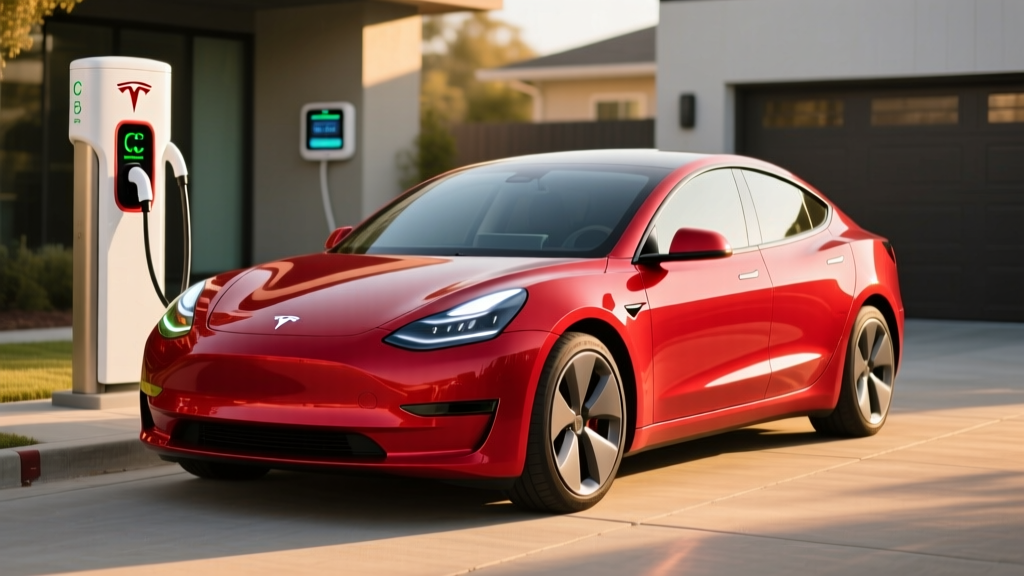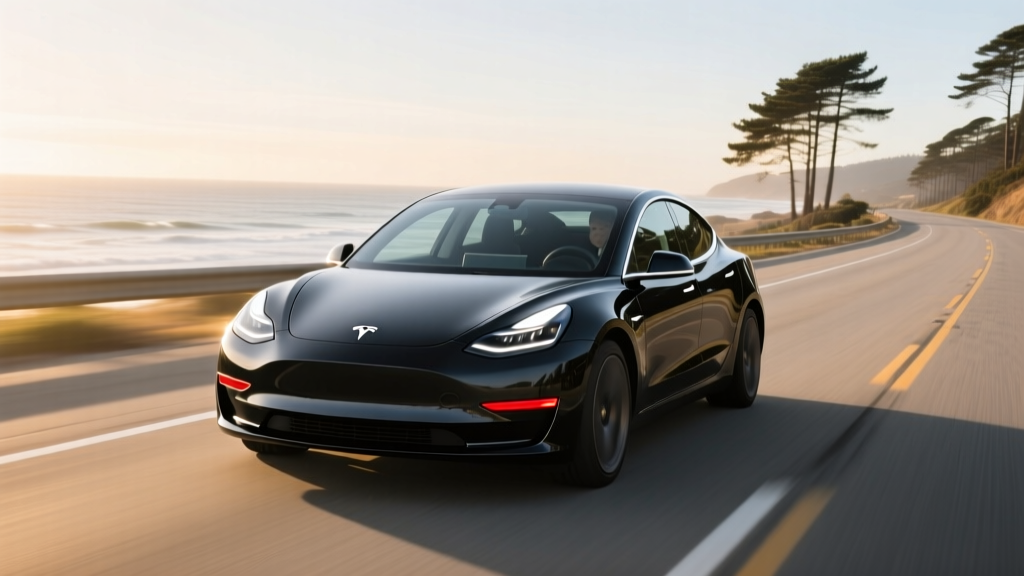
The Tesla Model 3 remains the benchmark compact electric sedan in 2026, but buyers searching for Tesla Model 3 top speed figures often find conflicting numbers across trims. The Long Range AWD hits an electronically limited 125 mph, while the Performance variant pushes to 162 mph — a meaningful gap that reflects fundamentally different powertrain tuning. This review covers every performance metric alongside the practical ownership data that actually matters: real-world range, charging curves, tax credit eligibility, and how the refreshed Model 3 stacks up against rivals like the Hyundai Ioniq 6 and BMW i4.
Tesla Model 3 Top Speed and Performance by Trim
Tesla offers the 2026 Model 3 in three primary configurations, each with distinct top-speed governors and acceleration profiles. The differences aren't just cosmetic — they reflect motor winding ratios, inverter tuning, and thermal management strategies.
| Specification | RWD (Base) | Long Range AWD | Performance AWD |
|---|---|---|---|
| Top Speed | 125 mph | 125 mph | 162 mph |
| 0-60 mph | 5.8 sec | 4.2 sec | 2.9 sec |
| Horsepower | 271 hp | 346 hp | 510 hp |
| Torque (lb-ft) | 317 | 389 | 546 |
| Drivetrain | Rear-Wheel Drive | Dual-Motor AWD | Dual-Motor AWD |
| EPA Range | 272 mi | 341 mi | 315 mi |
| Battery (usable) | 57.5 kWh (LFP) | 75 kWh (NMC) | 75 kWh (NMC) |
| MPGe (combined) | 132 MPGe | 134 MPGe | 121 MPGe |
| Base MSRP | $38,990 | $45,990 | $52,990 |
The Performance trim's 162 mph top speed places it in sports-sedan territory alongside the BMW M3, though the Tesla delivers it with instant electric torque rather than turbo lag. For context, you'll never approach 162 mph on public roads — this figure matters primarily for track use and reflects the vehicle's high-speed stability engineering. The RWD and Long Range trims are governed to 125 mph, which still exceeds any US speed limit by a wide margin.
Real-World Range vs. EPA Estimates
Long Range AWD: EPA 341 miles. Expect 280-300 miles at sustained 75 mph highway speeds in moderate temperatures. In freezing conditions (below 32°F), plan for 230-260 miles due to battery chemistry limitations and cabin heating demand. City driving with regenerative braking can match or slightly exceed the EPA figure.
RWD (LFP): EPA 272 miles. Real-world highway: 220-245 miles. Cold weather: 185-210 miles. The LFP chemistry tolerates cold slightly better than NMC at low states of charge, but overall energy capacity is smaller.
Performance: EPA 315 miles. Aggressive driving and the stickier summer tires reduce efficiency — expect 250-275 miles in mixed use, dropping to 210-235 miles in cold weather.
Battery Chemistry: LFP vs NMC in the Model 3 Lineup
Tesla's 2026 Model 3 lineup splits battery chemistry along trim lines, and this choice has real ownership implications beyond the spec sheet.
| Factor | LFP (RWD trim) | NMC (Long Range / Performance) |
|---|---|---|
| Energy Density | Lower (heavier pack for same kWh) | Higher (lighter, more range) |
| Cycle Life | 3,000+ cycles to 80% SoH | 1,500-2,000 cycles to 80% SoH |
| Charging to 100% | Recommended weekly for calibration | Daily 80% limit advised; 100% for trips only |
| Cold Performance | Greater range loss below freezing | Better low-temp discharge capability |
| Cobalt/Nickel | None (iron phosphate) | Contains nickel and cobalt |
| Weight Impact | ~50 lbs heavier vs equivalent NMC | Lighter, contributes to efficiency |
If you charge at home nightly and want maximum long-term battery longevity, the LFP pack in the RWD trim offers superior cycle life — Tesla explicitly recommends charging LFP batteries to 100% at least once per week for accurate state-of-charge calibration. The NMC packs in Long Range and Performance trims deliver more range and better cold-weather performance but benefit from daily charge limits around 80% to minimize degradation.
Charging Speed: DC Fast Charge and Home Level 2
The Model 3's charging capability varies significantly by trim, driven by battery chemistry and thermal management differences.
| Charging Level | RWD (LFP) | Long Range / Performance (NMC) |
|---|---|---|
| Max DC Fast Charge | 170 kW peak | 250 kW peak |
| 10-80% DC Time | ~30 minutes | ~25 minutes |
| Sustained DC Rate (10-60%) | ~130-150 kW average | ~190-220 kW average |
| Level 2 Home (48A / 11.5 kW) | ~30 mi/hr | ~44 mi/hr |
| Level 2 Home (32A / 7.7 kW) | ~20 mi/hr | ~30 mi/hr |
| Connector | NACS (native) | NACS (native) |
A critical ownership note: peak kW is not sustained kW. The Long Range's 250 kW peak occurs only between roughly 10-30% state of charge at a V4 Supercharger with a preconditioned battery. By 60% SoC, the rate tapers to ~120 kW, and above 80% it drops sharply to protect the cells. This charge curve taper is why the 10-80% metric is the industry standard — it captures the useful charging window.
For home charging, the Tesla Wall Connector at 48 amps on a 60-amp circuit delivers the fastest Level 2 speeds. Installation typically runs $800-$2,000 depending on panel proximity and local permit requirements. A 240V/32A dryer outlet adapter is a lower-cost alternative that still adds 20-30 miles per hour of charging — sufficient for most daily commutes.
Pricing, Trims, and Federal Tax Credit Eligibility
The 2026 Model 3 pricing structure has shifted with Tesla's ongoing cost adjustments, but the federal tax credit landscape requires careful navigation under current IRS §30D rules.
| Trim | Base MSRP | As-Tested (common config) | §30D Credit Eligibility |
|---|---|---|---|
| RWD | $38,990 | $40,490 (w/ paint + wheels) | Up to $7,500 (if sourcing rules met) |
| Long Range AWD | $45,990 | $48,990 (w/ FSD + paint) | Up to $7,500 (if sourcing rules met) |
| Performance AWD | $52,990 | $55,490 (w/ Track package) | Up to $7,500 (if sourcing rules met) |
IRS §30D Federal Tax Credit Requirements (2026)
- MSRP Cap: Sedans must be under $55,000 MSRP (all Model 3 trims qualify)
- Buyer Income Cap: AGI ≤ $150,000 (single), $225,000 (head of household), $300,000 (joint)
- Battery Sourcing: Critical minerals and battery components must meet phased-in domestic/free-trade requirements — the full $7,500 requires both thresholds met; partial credit ($3,750) if only one threshold is satisfied
- Point-of-Sale Transfer: Eligible buyers can apply the credit as a down payment reduction at purchase rather than waiting for tax filing
- Assembly: Vehicle must undergo final assembly in North America (Tesla Fremont qualifies)
Critical caveat: Tesla's battery sourcing has evolved significantly. As of 2026, the Long Range and Performance trims with US-sourced NMC cells from Panasonic's Nevada Gigafactory typically meet both critical-mineral and battery-component thresholds for the full $7,500. The RWD trim's LFP battery, historically sourced from CATL in China, may qualify for only $3,750 or potentially $0 depending on current-year sourcing percentages. Always verify current eligibility on the fueleconomy.gov tax credit database before purchasing, and consult a tax professional — these rules change with IRS guidance updates.
Interior, Cargo, and Daily Practicality
The refreshed Model 3 (internally called "Highland" and further refined for 2026) addressed many earlier complaints about ride quality and cabin noise, but the minimalist interior philosophy remains polarizing.
Passenger Space: Front legroom measures 42.7 inches, rear legroom 35.2 inches. The rear seat accommodates two adults comfortably; a third middle passenger is tight on longer trips due to the narrow center cushion and floor hump from the structural battery tray.
Cargo Volume: 23 cubic feet combined (trunk + frunk). The trunk offers 19.8 cu ft with a wide-opening liftback design, while the front trunk (frunk) adds 3.1 cu ft — useful for charging cables and small bags. This trails the Hyundai Ioniq 6's 12.3 cu ft trunk but the Model 3's liftback shape is more usable in practice.
Standout Tech: The 15.4-inch center touchscreen runs Tesla's latest software with integrated navigation, streaming, and gaming. A rear 8-inch screen for climate and media controls was added in the refresh. The glass roof provides an airy cabin but still lacks a shade — solar heat gain is noticeable in summer despite UV-blocking treatments. All vehicle functions, including mirror adjustment and glovebox release, are screen-controlled, which frustrates some traditionalists.
Driver Assistance: Basic Autopilot (lane centering + adaptive cruise) is standard. Full Self-Driving (Supervised) remains a $8,000 option or $99/month subscription. FSD is a SAE Level 2 system — you must remain fully engaged with hands on or near the wheel and eyes on the road at all times. It is not autonomous driving. Tesla's vision-only approach (no radar or ultrasonic sensors) handles most highway scenarios competently but can struggle in heavy rain, construction zones, and unmapped areas.
How the Model 3 Compares to Key Competitors
The compact electric sedan segment has grown considerably. Here's how the Model 3 Long Range stacks up against its primary rivals:
| Spec | Tesla Model 3 LR | Hyundai Ioniq 6 SEL | BMW i4 eDrive40 |
|---|---|---|---|
| Base MSRP | $45,990 | $42,750 | $57,900 |
| EPA Range | 341 mi | 361 mi | 301 mi |
| 0-60 mph | 4.2 sec | 5.1 sec | 5.5 sec |
| Max DC Charge | 250 kW | 235 kW | 205 kW |
| 10-80% DC Time | ~25 min | ~18 min | ~31 min |
| Supercharger Access | Native NACS | NACS adapter (2025+) | NACS adapter (2025+) |
| Cargo (cu ft) | 23.0 | 12.3 | 16.6 |
The Ioniq 6 edges out the Model 3 on EPA range and offers faster 10-80% charging thanks to its 800V architecture, but Tesla's Supercharger network remains the most reliable and extensive DC fast-charging ecosystem in North America. The BMW i4 delivers superior build quality and a more traditional luxury interior but at a significant price premium and lower range. For pure performance-per-dollar and charging infrastructure confidence, the Model 3 retains a structural advantage.
Warranty and Long-Term Ownership Costs
Tesla's warranty structure is competitive but not class-leading:
- Basic Vehicle: 4 years / 50,000 miles
- Battery & Drive Unit (RWD): 8 years / 100,000 miles (minimum 70% capacity retention)
- Battery & Drive Unit (Long Range / Performance): 8 years / 120,000 miles (minimum 70% capacity retention)
The 70% retention threshold is important: if your battery degrades to 69% of original capacity within the warranty period, Tesla will repair or replace it. Real-world data from high-mileage Model 3 owners suggests NMC packs typically retain 85-90% capacity at 100,000 miles with proper charging habits (avoiding sustained 100% SoC, minimizing DC fast charging to >90%). LFP packs show even slower degradation curves.
Insurance costs remain a Model 3 pain point. Average annual premiums run $2,200-$3,200 depending on state, age, and driving record — roughly 20-35% higher than comparable gas sedans due to repair cost patterns (Tesla's aluminum-intensive structure and integrated sensor suite drive higher collision repair bills). Get insurance quotes before purchasing to avoid sticker shock.
For the target buyer — a daily commuter covering 30-60 miles round trip with access to home Level 2 charging — the Model 3 Long Range offers the strongest combination of range buffer, Supercharger network access, and performance in the segment. The Performance trim is for enthusiasts who want sports-car acceleration and track capability in a four-door sedan. The RWD trim is the value play for budget-conscious buyers who can accept lower range and slower DC charging.
Pros
- Best-in-class Supercharger network access (native NACS, no adapter needed)
- Performance trim: 2.9-sec 0-60 and 162 mph top speed at $53K undercuts all ICE rivals
- Strong real-world efficiency (134 MPGe combined Long Range)
- Over-the-air updates continuously add features
- LFP option offers excellent long-term cycle life for daily charging
Cons
- Insurance premiums 20-35% above segment average
- Vision-only Autopilot/FSD struggles in heavy rain and construction zones
- No physical buttons — all controls through touchscreen
- RWD LFP trim limited to 170 kW DC charging
- Glass roof without shade creates summer heat load
- Rear seat middle position is cramped for adults
Frequently Asked Questions
What is the Tesla Model 3 top speed for each trim?
The RWD and Long Range AWD trims are electronically limited to 125 mph. The Performance trim reaches 162 mph. All trims exceed US legal speed limits; the Performance figure reflects engineering capability and track-use potential.
What is the real-world range of the Tesla Model 3?
The Long Range AWD (EPA 341 mi) delivers 280-300 miles at highway speeds in moderate weather and 230-260 miles in freezing temperatures. The RWD (EPA 272 mi) yields 220-245 highway miles, and the Performance (EPA 315 mi) returns 250-275 in mixed driving. City driving with regenerative braking can match or exceed EPA figures.
How fast does the Model 3 charge at home and on the road?
On a Tesla V3/V4 Supercharger, the Long Range and Performance peak at 250 kW and reach 10-80% in about 25 minutes. The RWD peaks at 170 kW (10-80% in ~30 min). At home on a 48A Wall Connector, expect 30-44 miles of range added per hour depending on trim — a full overnight charge covers any daily commute.
Does the 2026 Tesla Model 3 qualify for the $7,500 federal tax credit?
All trims fall under the $55,000 sedan MSRP cap. Buyer income must not exceed $150K (single), $225K (head of household), or $300K (joint filers). The Long Range and Performance trims with US-sourced Panasonic NMC cells typically qualify for the full $7,500. The RWD LFP trim may receive $3,750 or $0 depending on current battery-sourcing percentages. Verify at fueleconomy.gov and consult a tax professional.
Is the Tesla Model 3 worth buying over the Hyundai Ioniq 6 or BMW i4?
Choose the Model 3 if you prioritize Supercharger network reliability, strong acceleration, and Tesla's software ecosystem. Choose the Ioniq 6 if maximum EPA range (361 mi) and faster 10-80% DC charging (18 min on 800V) are your top concerns. Choose the BMW i4 if traditional luxury build quality and a conventional interior layout matter more than range and price.
Is Tesla Autopilot or FSD self-driving?
No. Both Autopilot and Full Self-Driving (Supervised) are SAE Level 2 driver-assistance systems. You must remain fully attentive, keep your eyes on the road, and be prepared to take over at any moment. Tesla's vision-only system handles highway lane-keeping and adaptive cruise well but is not a substitute for an engaged driver. Only Level 4 services like Waymo operate without a human driver in defined areas.