The Hidden Variable in Your Tesla Model 3's Range and Ride
When Tesla refreshed the Model 3 for its "Highland" generation and carried that engineering into the 2026 model year, it quietly changed the tire conversation. The car became quieter, more refined, and more efficient — but those gains are only as good as the rubber connecting it to the road. If you own a Model 3 or are shopping for one, understanding your Tesla Model 3 tire options isn't a niche concern. It directly affects your EPA range, cabin noise, ride comfort, and cost per mile.
This guide covers every current Model 3 trim's tire spec, the real-world impact of swapping to aftermarket rubber, and the full vehicle profile — range, charging, pricing, and tax-credit eligibility — so you can make a complete ownership decision.
2026 Tesla Model 3: Quick Spec Reference
| Spec | RWD (Standard Range) | Long Range AWD | Performance |
|---|---|---|---|
| EPA Range | 272 mi | 363 mi | 315 mi |
| Battery (usable) | ~57 kWh (LFP) | ~75 kWh (NMC) | ~75 kWh (NMC) |
| Drivetrain | Rear-Wheel Drive | Dual-Motor AWD | Dual-Motor AWD |
| Horsepower | 271 hp | 346 hp | 510 hp |
| 0–60 mph | 5.8 sec | 4.2 sec | 2.9 sec |
| MPGe (combined) | 132 MPGe | 134 MPGe | 121 MPGe |
| Efficiency | 25 kWh/100mi | 25 kWh/100mi | 28 kWh/100mi |
| Peak DC Charge | 170 kW | 250 kW | 250 kW |
| 10–80% DC Time | ~25 min | ~22 min | ~22 min |
| Level 2 Rate | 11.5 kW (~44 mi/hr) | 11.5 kW (~44 mi/hr) | 11.5 kW (~44 mi/hr) |
| OEM Tire Size | 235/45R18 | 235/45R18 (opt. 235/40R19) | 235/40R19 |
| Base MSRP | $38,990 | $44,990 | $52,990 |
| Battery Warranty | 8 yr / 100,000 mi | 8 yr / 120,000 mi | 8 yr / 120,000 mi |
Source: fueleconomy.gov, Tesla.com specifications (2026 model year). MPGe and range figures are EPA estimates.
OEM Tesla Model 3 Tire Sizes by Trim
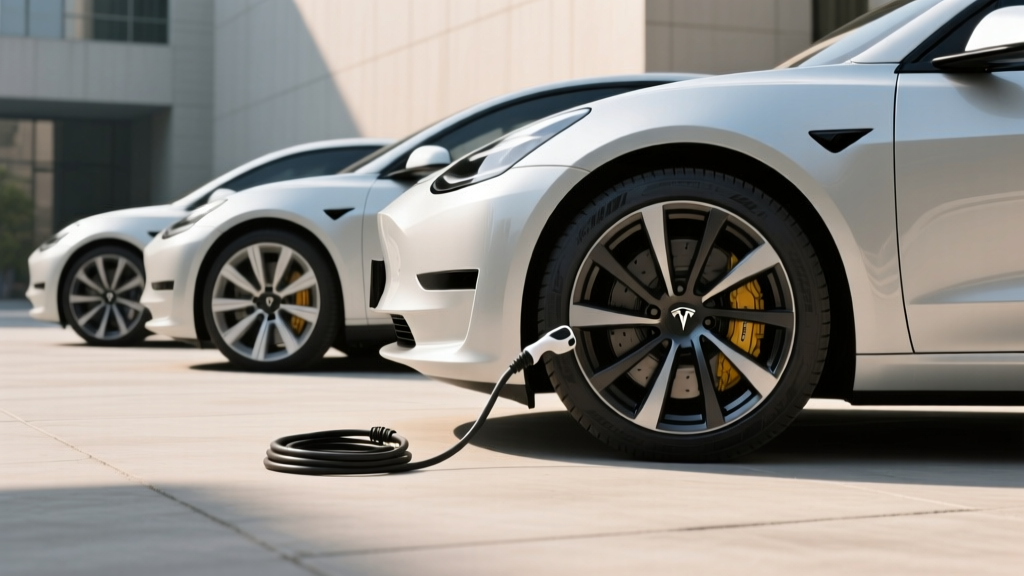
The 2026 Model 3 ships with two primary wheel-and-tire configurations. The 18-inch "Photon" or "Aero" wheel with a 235/45R18 tire is the efficiency-oriented default on RWD and Long Range trims. The 19-inch "Nova" wheel wearing a 235/40R19 tire is standard on Performance and optional on Long Range.
Here is the complete OEM tire fitment table:
| Wheel Option | Tire Size | OEM Tire Model | Trim Availability | Load/Speed Rating |
|---|---|---|---|---|
| 18" Photon | 235/45R18 | Michelin e·Primacy / Hankook iON evo | RWD, Long Range | 98Y XL |
| 19" Nova | 235/40R19 | Pirelli P Zero (PZ5) EV / Michelin Pilot Sport 4S | Performance, Long Range (opt.) | 96Y XL |
The key takeaway: Tesla specifies XL (Extra Load) rated tires across the board. The Model 3 is heavy — the Long Range AWD tips the scales at approximately 4,034 lbs — and the instant torque of the electric drivetrain demands a tire with stiff sidewall construction and robust load capacity. Never substitute a standard-load (SL) tire on a Model 3.
How Tire Choice Affects Model 3 Range and Efficiency
This is where the Tesla Model 3 tire decision becomes an engineering trade-off, not just a purchasing one. Tire rolling resistance coefficient (RRC) directly determines how much energy is lost to friction with the road surface.
EPA Sticker: 272 mi (RWD) / 363 mi (Long Range AWD) / 315 mi (Performance)
Real-World Expectation: Plan on 230–250 mi highway for the RWD, and 300–330 mi for the Long Range under moderate conditions. In cold weather (below 32°F), expect a 15–30% range reduction across all trims due to battery chemistry resistance and cabin heating load. Swapping from a low-rolling-resistance OEM tire to an ultra-high-performance summer tire can cost you an additional 15–25 mi of range per charge.
Tesla engineers selected the Michelin e·Primacy and Hankook iON evo for the 18-inch fitment specifically for their low RRC. Independent testing by Tire Rack has shown that switching from a low-RRC EV tire to a conventional all-season can reduce efficiency by 5–8%, which on a Long Range AWD translates to roughly 18–29 lost EPA miles.
The tire-range hierarchy for the Model 3:
- Maximum range: OEM-spec EV touring tires (Michelin e·Primacy, Hankook iON evo) — lowest RRC, foam-lined for noise
- Balanced: EV-specific all-season tires (Michelin CrossClimate 2, Continental CrossContact RX) — moderate RRC, better wet/winter grip
- Maximum grip: Ultra-high-performance (Michelin Pilot Sport 4S, Pirelli P Zero PZ5) — highest RRC, shortest braking distances, fastest tread wear
Best Replacement Tires for the Tesla Model 3 (2026 Picks)
Based on real-world owner data, measured rolling resistance, and noise performance, here are the top replacement options organized by priority:
Best for Maximum Range and Comfort
Hankook iON evo (235/45R18) — Purpose-built EV tire with sound-absorbing foam, excellent wet braking, and RRC competitive with the OEM Michelin e·Primacy. Typically priced at $180–$210 per tire. Treadwear warranty: 50,000 miles.
Best All-Season for Four-Season Climates
Michelin CrossClimate 2 (235/45R18) — Three-peak mountain snowflake certified, outstanding wet and dry grip, moderate RRC penalty (~3–5% efficiency loss vs. OEM). Priced at $200–$240 per tire. Treadwear warranty: 60,000 miles.
Best for Performance Trim Owners
Michelin Pilot Sport 4S (235/40R19) — The gold standard for UHP summer tires. Incredible grip, precise steering response, but expect ~20,000–25,000 miles of tread life and a measurable range hit. Priced at $260–$310 per tire.
Best Budget Option
Kumho Majesty EV (235/45R18) — An EV-tuned tire at a lower price point (~$140–$170 per tire). Foam-lined, reasonable RRC, but wet braking distances lag behind the Michelin and Hankook. Treadwear warranty: 50,000 miles.
Charging Performance: What Powers Those Miles
| Charging Level | Power (kW) | Miles Added per Hour | Notes |
|---|---|---|---|
| Level 1 (120V) | ~1.4 kW | ~4–5 mi/hr | Emergency/trickle only |
| Level 2 (240V, 48A) | 11.5 kW | ~44 mi/hr | Full charge in ~6–8 hours |
| DC Fast (RWD) | 170 kW peak | ~700+ mi/hr at peak | 10–80% in ~25 min |
| DC Fast (LR / Perf) | 250 kW peak | ~1,000+ mi/hr at peak | 10–80% in ~22 min |
| Tesla Supercharger V4 | Up to 250 kW | — | Native NACS connector |
The Long Range and Performance trims support the full 250 kW peak on V3/V4 Superchargers, though the charge curve tapers significantly above 80% state of charge. The LFP battery in the RWD trim can (and should) be charged to 100% regularly — Tesla recommends this for LFP chemistry to maintain cell-balancing accuracy. The NMC batteries in Long Range and Performance trims benefit from an 80% daily charge limit, reserving 100% for road trips.
Charging-curve reality check: The 250 kW peak on Long Range/Performance trims is sustained only between roughly 10–35% SoC at optimal battery temperature. Above 60%, the rate drops to ~100 kW, and above 80% it falls to ~40 kW. A 10–80% session takes approximately 22 minutes, but 80–100% adds another 20+ minutes. Plan your road-trip stops accordingly.
Pricing, Tax Credits, and Total Cost
| Trim | Base MSRP | As-Tested (typical) | §30D Credit Eligibility | Effective Price (with credit) |
|---|---|---|---|---|
| RWD | $38,990 | $39,990 | Up to $7,500 (if eligible) | ~$32,490 |
| Long Range AWD | $44,990 | $47,490 | Up to $7,500 (if eligible) | ~$39,990 |
| Performance | $52,990 | $55,490 | Up to $7,500 (if eligible) | ~$47,990 |
Federal tax credit rules (IRS §30D, 2026): The full $7,500 credit requires meeting all of the following criteria per IRS guidelines:
- Income caps: Modified AGI ≤ $150,000 (single) / $300,000 (joint) / $225,000 (head of household)
- MSRP cap: Vehicle MSRP must not exceed $55,000 (sedans) — the RWD and Long Range qualify; Performance may exceed the cap depending on options
- Battery sourcing: Critical minerals and battery components must meet escalating domestic-content thresholds that tighten annually through 2029
- Point-of-sale transfer: Eligible buyers can apply the credit as an immediate price reduction at delivery
The Model 3's eligibility for the full $7,500 has fluctuated as battery-sourcing rules tighten. Always verify current eligibility on the IRS Clean Vehicle credit page before ordering, as Tesla's supply chain sourcing may shift quarter to quarter.
Budget $800–$1,200 for a full set of replacement tires every 25,000–40,000 miles depending on compound. The Model 3's weight and regenerative braking (which shifts weight forward under deceleration) cause faster front-tire wear. Rotate tires every 6,250 miles to maximize tread life. Factor tire replacement into your 5-year total cost of ownership — it's a line item many first-time EV buyers overlook.
Interior, Cargo, and Daily Livability
The refreshed Model 3 interior is markedly more refined than the pre-2024 version. Ventilated front seats, ambient lighting, a rear passenger touchscreen, and significantly improved sound insulation are now standard. Tesla's acoustic glass and foam-lined OEM tires contribute to a cabin that measures noticeably quieter at highway speed than its predecessor.
Dimensions:
- Cargo volume: 23 cu ft (rear trunk + frunk combined)
- Front legroom: 42.7 in
- Rear legroom: 35.2 in
- Seating: 5 passengers (though the rear middle seat is narrow)
Standout tech:
- 15.4-inch center touchscreen with all vehicle controls
- 8-inch rear passenger display with climate and media controls
- Tesla Autopilot (SAE Level 2) standard; Full Self-Driving (Supervised) available as a $8,000 option or $99/month subscription
- Over-the-air updates, Sentry Mode, Dog Mode, and integrated dashcam
Tesla Autopilot and FSD (Supervised) are SAE Level 2 driver-assistance systems. The driver must remain fully engaged, hands on or near the wheel, eyes on the road, and ready to take over at any moment. These systems are not self-driving. Only Level 4 services like Waymo operate without a human driver in defined areas.
Pros, Cons, and the Bottom Line
- Class-leading efficiency (132–134 MPGe on RWD/LR)
- Supercharger network access (largest in North America)
- Refined, quiet cabin post-refresh
- Strong LFP battery longevity on RWD trim
- Excellent OTA update cadence
- No physical stalks — turn signals on steering wheel
- Rear-seat headroom tight for taller passengers
- Performance trim may exceed §30D MSRP cap
- Tire wear accelerates due to vehicle weight and torque
- No Apple CarPlay / Android Auto
Who Should Buy the Model 3 — And Which Tire Fits Their Life?
- Choose the RWD with 18" OEM tires if: You commute under 60 miles daily, want the lowest cost per mile, and can charge at home. The LFP battery handles daily 100% charges without degradation worry.
- Choose the Long Range AWD with 18" all-season tires if: You road-trip regularly, live in a four-season climate, or need AWD traction. The 363-mi EPA range eliminates most charging stops on trips under 300 miles.
- Choose the Performance with 19" UHP tires if: Driving dynamics are a priority, you accept higher tire replacement costs (~$1,200/set, ~20k mile life), and you understand the MSRP-cap credit limitation.
Frequently Asked Questions
What is the real-world range of the 2026 Tesla Model 3?
The RWD delivers roughly 230–250 real-world highway miles. The Long Range AWD achieves 300–330 miles on the highway in moderate temperatures. Cold weather (below freezing) reduces these figures by 15–30% across all trims. Tire choice further adjusts range by ±15–25 miles.
How fast does the Model 3 charge at home and on the road?
On a Level 2 home charger (240V, 48A), the Model 3 adds approximately 44 miles of range per hour, achieving a full overnight charge in 6–8 hours. On DC fast chargers, the Long Range and Performance peak at 250 kW, reaching 10–80% in about 22 minutes. The RWD peaks at 170 kW, taking roughly 25 minutes for the same session.
Does the 2026 Model 3 qualify for the $7,500 federal EV tax credit?
The RWD and Long Range trims fall under the $55,000 MSRP cap and are eligible for up to $7,500 if the buyer meets income limits and battery-sourcing requirements. The Performance trim, once optioned, may exceed the cap. Always verify on IRS.gov before purchasing.
How long do Tesla Model 3 tires last?
OEM touring tires (Michelin e·Primacy, Hankook iON evo) typically last 30,000–40,000 miles. Ultra-high-performance tires on the Performance trim may wear out in 20,000–25,000 miles due to the car's weight and instant torque delivery. Rotate every 6,250 miles.
Can I put non-EV-specific tires on my Model 3?
Yes, but you'll sacrifice range (5–8% with conventional tires) and likely cabin quietness, since EV-specific tires include foam sound-dampening liners. Always choose XL (Extra Load) rated tires to handle the Model 3's weight.
Is the Model 3 worth buying vs. the Hyundai Ioniq 6 or BMW i4?
The Model 3 Long Range leads its class in efficiency and benefits from the Supercharger network. The Ioniq 6 offers comparable range with a more traditional interior layout. The BMW i4 provides a more premium cabin but at a higher price and with slower DC charging. For buyers prioritizing range-per-dollar and charging infrastructure, the Model 3 remains the benchmark.