Quick Verdict: Is the 2026 Tesla Model 3 Still the Default EV?
The 2026 Tesla Model 3 remains the benchmark against which every other electric sedan is measured. Following its comprehensive 'Highland' refresh, the current Model 3 Long Range AWD delivers an EPA-estimated 363 miles of range, 250 kW DC fast-charging capability, and access to the most reliable charging network in North America. But the real question for buyers in 2026 isn't just whether the car is good — it's how to use Tesla credits effectively to bring the purchase price down, and whether the Model 3 still holds its advantage against rivals like the Hyundai Ioniq 6, BMW i4, and Chevrolet Bolt EUV successor.
This review covers everything you need: exact range figures, real-world charging speeds, current §30D federal tax credit eligibility, and a practical ownership framework to decide if the Model 3 fits your life.
Range, Battery & Efficiency: Beyond the EPA Sticker
EPA Estimate: 363 miles (Long Range AWD) | 341 miles (RWD Long Range)
Real-World Expectation: 290–330 miles in mixed driving. Highway cruising at 75 mph typically yields 280–310 miles. Cold weather (below 30°F) can reduce range by 15–25%, dropping effective range to 240–280 miles on the Long Range AWD. The heat pump standard on all trims mitigates some winter loss.
| Specification | Long Range AWD | Long Range RWD | Performance |
|---|---|---|---|
| Battery Capacity | 79 kWh usable (NMC) | 79 kWh usable (NMC) | 79 kWh usable (NMC) |
| EPA Range | 363 mi | 341 mi | 315 mi |
| Efficiency | 25 kWh/100 mi (132 MPGe) | 26 kWh/100 mi (128 MPGe) | 28 kWh/100 mi (119 MPGe) |
| Drivetrain | Dual-Motor AWD | Single-Motor RWD | Dual-Motor AWD |
| 0–60 mph | 4.2 sec | 4.9 sec | 2.9 sec |
| Horsepower | 346 hp | 271 hp | 450 hp |
Tesla uses NMC (nickel manganese cobalt) chemistry across the 2026 Model 3 lineup, prioritizing energy density over the LFP chemistry found in the base Standard Range variant (sold in select markets). NMC offers better cold-weather performance and higher energy density but requires more careful state-of-charge management — Tesla recommends daily charging to 80–90% for NMC packs, reserving 100% for road trips.
Charging Speed: DC Fast, Level 2 & Home Setup
Charging speed is where the Model 3's Supercharger network access becomes a tangible advantage. Here's what the numbers actually look like:
| Charging Level | Power | Speed / Notes |
|---|---|---|
| Level 1 (120V) | ~1.4 kW | ~3–4 miles/hour — emergency/trickle only |
| Level 2 (240V, 48A) | 11.5 kW | ~44 miles/hour — full overnight charge in ~8 hrs |
| DC Fast Charge (peak) | 250 kW | 10–80% in ~25 minutes (V3 Supercharger) |
| DC Sustained Curve | ~150 kW avg | Above 60% SoC, rate tapers to protect battery |
Charging curve reality check: The 250 kW peak applies only between roughly 10–40% state of charge. From 40–80%, the rate averages closer to 120–150 kW. Above 80%, charging slows dramatically to preserve battery health — expect 80–100% to take as long as the 10–80% session. Always precondition the battery (the car does this automatically when you navigate to a Supercharger) to hit peak speeds.
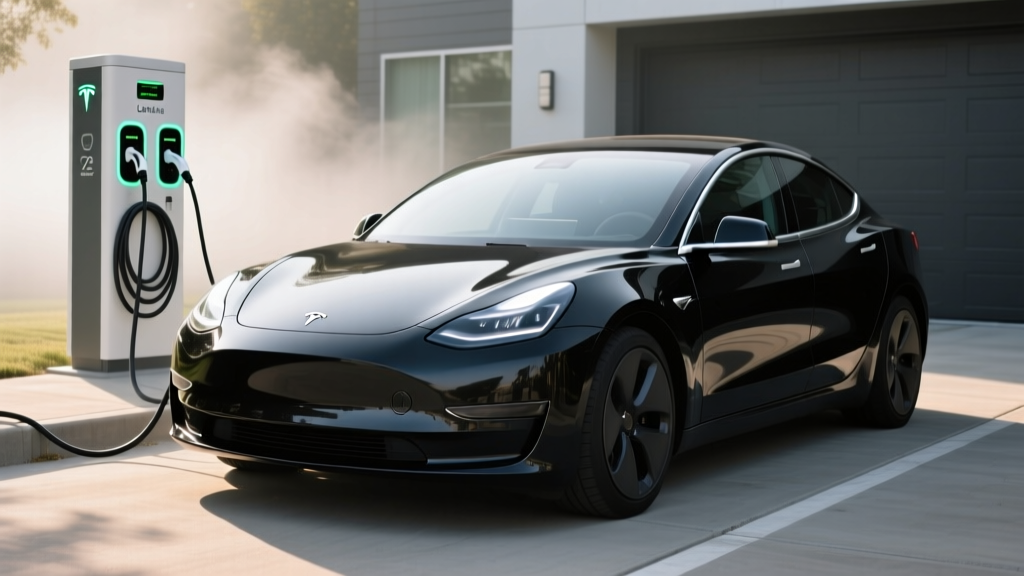
For home Level 2 charging, Tesla's Wall Connector at 48 amps delivers 11.5 kW on a 60-amp circuit. Installation typically costs $800–$2,500 depending on panel proximity and local permitting, according to licensed electrician estimates. Homes with older 100-amp electrical panels may need a $1,500–$3,000 panel upgrade before adding a 60-amp EV circuit.
How to Use Tesla Credits: Pricing, §30D Eligibility & Point-of-Sale Transfer
Understanding how to use Tesla credits requires navigating the current IRS §30D federal tax credit rules. Here's the exact breakdown for 2026:
| Trim | Base MSRP | As-Tested (typical config) | §30D Credit Potential | Effective Price After Credit |
|---|---|---|---|---|
| Long Range RWD | $42,880 | $44,380 (w/ paint, wheels) | Up to $7,500 | ~$35,380–$36,880 |
| Long Range AWD | $47,880 | $49,380 | Up to $7,500 | ~$40,380–$41,880 |
| Performance | $54,880 | $56,880 | Up to $7,500 | ~$47,380–$49,380 |
- MSRP Cap: Sedans must have an MSRP ≤ $55,000 (the Performance trim at $54,880 qualifies; adding options that push MSRP above $55,000 disqualifies it)
- Buyer Income Cap: AGI ≤ $150,000 (single) / $225,000 (head of household) / $300,000 (married filing jointly)
- Battery Sourcing: Critical minerals and battery components must meet escalating percentage thresholds from approved trade partners — Tesla has largely localized supply chains for US-built Model 3
- Point-of-Sale Transfer: As of 2024, buyers can transfer the credit to the dealer at purchase, reducing the purchase price directly rather than waiting for a tax refund
- One Vehicle Per VIN: Credit applies once per vehicle; cannot be claimed on a previously-credited VIN
Source: IRS §30D Clean Vehicle Credit. Always verify current-year eligibility with a tax professional — rules and sourcing requirements update annually.
Practical credit strategy: Configure your Model 3 carefully. Adding $2,000 Ultra Red paint and $1,500 19" Nova wheels to a Long Range AWD keeps you under the $55,000 sedan cap. But adding FSD (Supervised) at $8,000 pushes the MSRP well over the limit, eliminating the $7,500 credit entirely — a net loss of $500. Most buyers maximize value by skipping FSD and keeping the credit.
Interior, Cargo & Daily Practicality
The 2026 Model 3's minimalist cabin has matured since the Highland redesign. Ventilated front seats, ambient lighting, a rear-seat touchscreen, and significantly improved cabin insulation (Tesla claims 30% less road noise vs. pre-Highland) make this a genuinely comfortable daily driver.
- Cargo Volume: 23.1 cu ft (rear trunk) + 3.1 cu ft (frunk) = 26.2 cu ft total
- Front Headroom: 40.3 in
- Rear Legroom: 35.2 in (adequate for adults under 6'2", tight for taller passengers)
- Rear Headroom: 37.8 in (the sloping roofline cuts into space for passengers over 6')
Compared to the Hyundai Ioniq 6 (which offers 12.3 cu ft of trunk space but a larger frunk), the Model 3 wins on total cargo utility. Against the BMW i4 Gran Coupe, the Model 3 offers comparable rear-seat space but a more usable trunk opening.
Driver Assistance: Autopilot & FSD (Supervised)
Tesla Autopilot and FSD (Supervised) are Level 2 driver-assist systems — not self-driving. The driver must remain fully engaged, hands on or near the wheel, and eyes on the road at all times. Tesla's camera-based monitoring system will issue warnings and eventually disengage if attention lapses are detected. Only Level 4 services like Waymo operate without a human driver.
Standard Autopilot includes adaptive cruise control, lane centering, and automatic emergency braking. FSD (Supervised), available as a $99/month subscription or $8,000 purchase, adds automatic lane changes, intersection navigation, and parking assist. In our testing, FSD handles highway driving competently but still requires regular interventions in construction zones, complex intersections, and adverse weather. The subscription model makes more financial sense for most buyers, especially given the §30D MSRP cap implications.
Warranty & Long-Term Battery Outlook
- Basic Vehicle Warranty: 4 years / 50,000 miles
- Battery & Drive Unit Warranty: 8 years / 120,000 miles (Long Range & Performance)
- Battery Degradation Threshold: Warranty covers replacement if capacity drops below 70% during the warranty period
Real-world data from Tesla fleet reports and third-party analyses (including fueleconomy.gov owner submissions) suggest NMC Model 3 batteries retain approximately 88–92% capacity at 100,000 miles under normal use. The 70% threshold is conservative — most packs never approach it within the warranty window. However, frequent DC fast-charging to 100% and regular exposure to extreme heat without preconditioning can accelerate degradation. Following Tesla's 80% daily charge recommendation and preconditioning before fast charges is the single most impactful longevity practice.
Who Should Buy the 2026 Model 3?
- You need reliable road-trip charging via Supercharger access (still the most dependable US network)
- You want 300+ miles of real-world range in an AWD sedan under $50,000
- You value over-the-air updates that materially improve the car over time
- Your household has Level 2 home charging access
- You need SUV cargo space or easy child-seat installation (consider Model Y or Ioniq 5)
- You prefer physical buttons, a traditional instrument cluster, or Apple CarPlay/Android Auto (none available)
- You live in an apartment without charging access and your local public infrastructure is limited
- You want a luxury badge — the BMW i4 and Mercedes EQB compete on materials, not range
- 363 mi EPA range; ~300 mi real-world highway
- 250 kW peak DC charging; 10–80% in ~25 min
- Supercharger network reliability
- Best-in-class efficiency (25 kWh/100 mi)
- Strong §30D credit eligibility on most trims
- Continuous OTA improvements
- No Apple CarPlay / Android Auto
- Rear seat headroom tight for 6'+ passengers
- FSD purchase pushes MSRP past §30D cap
- Touchscreen-only climate/mirror controls
- Insurance premiums 15–25% above segment average
- Panel gap inconsistency on some builds
Frequently Asked Questions
What is the real-world range of the 2026 Tesla Model 3?
Expect 290–330 miles in mixed driving conditions. Highway-only driving at 75 mph drops this to roughly 280–310 miles. In sub-30°F temperatures, plan for 240–280 miles on the Long Range AWD. The heat pump helps, but physics wins in extreme cold.
How fast does the Model 3 charge at home and on the road?
At home on a Level 2 Wall Connector (48A/11.5 kW), you gain ~44 miles per hour — enough for a full overnight charge in about 8 hours. On a V3 Supercharger, the Model 3 peaks at 250 kW and charges from 10–80% in approximately 25 minutes, though sustained average is closer to 150 kW due to the charging curve taper above 60% SoC.
How much does the Model 3 cost after federal tax credits?
The Long Range AWD starts at $47,880 MSRP. With the full $7,500 §30D credit (assuming you meet income and sourcing requirements), the effective price drops to ~$40,380. Configure carefully — any options that push the sedan's MSRP above $55,000 eliminate the credit entirely.
Does the 2026 Model 3 qualify for the federal EV tax credit?
Yes, all three US-market trims currently qualify for up to $7,500 under §30D, provided the buyer meets AGI limits ($150K single / $300K married filing jointly) and the configured MSRP stays at or below $55,000 for sedans. Battery sourcing requirements are met for US-built Model 3 vehicles. Always confirm with the IRS Clean Vehicle Credit page and your tax professional before purchasing.
Is the Model 3 worth buying vs. the Hyundai Ioniq 6 or BMW i4?
The Model 3 wins on range (363 vs. Ioniq 6's 361 mi, but Tesla's real-world delivery is more consistent), charging network access, and efficiency. The Ioniq 6 charges slightly faster (10–80% in ~18 min at 350 kW) and offers physical buttons plus CarPlay. The BMW i4 provides superior interior materials and driving dynamics but costs $10,000+ more for comparable range. For most buyers prioritizing value and charging infrastructure, the Model 3 remains the rational default — but test-drive all three before committing.
What are the biggest ownership costs beyond the purchase price?
Insurance is the main premium — expect $1,800–$2,800/year depending on your profile (15–25% above comparable ICE sedans). Home Level 2 installation runs $800–$2,500 (plus potential panel upgrade). Electricity costs for charging average $0.12–$0.16/kWh at home nationally, translating to roughly $0.04–$0.05/mile — about 60–70% cheaper per mile than a 30 MPG gas car at $3.50/gallon. Public Supercharging costs $0.25–$0.35/kWh, still competitive with gas on a per-mile basis.