The Tesla Model 3 in 2026: Still the EV Benchmark?
The Tesla Model 3 remains one of the most compelling electric sedans on the market, even as competition from Hyundai, BMW, and Polestar intensifies. The current-generation "Highland" refresh brought meaningful improvements in ride quality, cabin materials, and noise isolation — but it also doubled down on one of the most polarizing design choices in the EV world: a massive, fixed glass roof with no retractable shade. If you're researching the Tesla Model 3 sun shade aftermarket, you're not alone. It's one of the most-searched accessories for this car, and for good reason. This review covers everything you need to know about the 2026 Model 3 — range, charging, pricing, tax credits, and livability — including the thermal realities of that panoramic glass.
Range, Efficiency, and the Real-World Caveat
The 2026 Tesla Model 3 lineup offers three primary trims, each with distinct range and drivetrain characteristics. Here's the full spec breakdown:
| Spec | RWD (Standard Range) | Long Range RWD | Long Range AWD |
|---|---|---|---|
| EPA Range | 272 mi | 363 mi | 341 mi |
| Battery (usable) | ~57 kWh (LFP) | ~75 kWh (NMC) | ~75 kWh (NMC) |
| Drivetrain | Rear-Wheel Drive | Rear-Wheel Drive | Dual-Motor AWD |
| 0–60 mph | 5.8 sec | 4.9 sec | 4.2 sec |
| Horsepower | ~271 hp | ~346 hp | ~346 hp (combined) |
| MPGe (combined) | 132 MPGe | 132 MPGe | 125 MPGe |
| Efficiency | 25 kWh/100 mi | 25 kWh/100 mi | 27 kWh/100 mi |
| Top Speed | 125 mph | 125 mph | 125 mph |
EPA estimates assume mixed driving at moderate temperatures. On a 70°F highway trip at 70–75 mph, expect roughly 85–90% of the sticker range — so the Long Range RWD delivers around 310–325 real highway miles. In freezing conditions (below 32°F), range can drop 20–30% without preconditioning, bringing the RWD Standard Range closer to 190–210 miles. The Model 3's heat pump helps mitigate cold-weather losses compared to older EVs, but physics still wins in deep winter. For daily commuting in temperate climates, the EPA numbers are very achievable.
Source: EPA Fuel Economy — Tesla Model 3
Charging Speed: DC Fast Charge and Home Level 2
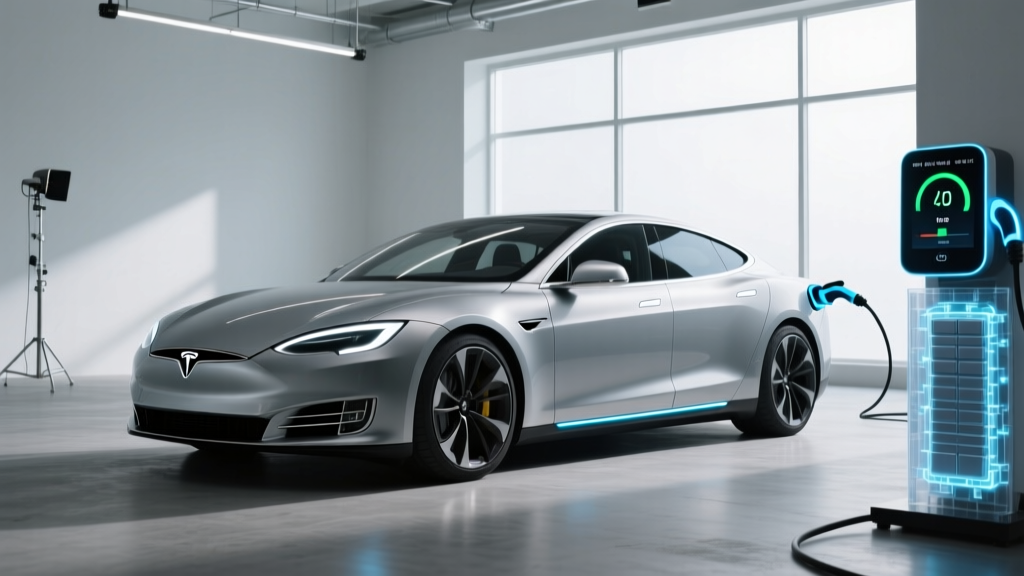
Charging speed is where the Model 3's engineering shows its maturity. Tesla's Supercharger network — now opening to other brands via NACS adapters — remains the most reliable public DC fast-charging ecosystem in the U.S. Here's what the 2026 Model 3 delivers:
| Charging Level | RWD (LFP Battery) | Long Range (NMC Battery) |
|---|---|---|
| Level 1 (120V household) | ~3–4 mi/hr (1.4 kW) | ~3–4 mi/hr (1.4 kW) |
| Level 2 (240V, 48A home) | ~30 mi/hr (11.5 kW) | ~44 mi/hr (11.5 kW) |
| DC Fast Charge (peak) | 170 kW | 250 kW |
| 10–80% DC Fast Time | ~25 min | ~18–22 min |
| Connector | NACS (native) | NACS (native) |
The Long Range trims sustain peak charge rates longer thanks to the NMC pack's thermal characteristics and larger buffer. The LFP pack in the RWD model charges more conservatively above 60% State of Charge — you'll notice the charge curve taper earlier. This is a known trade-off of LFP chemistry: superior cycle life and the ability to charge to 100% daily without degradation concerns, but slower peak charging speeds.
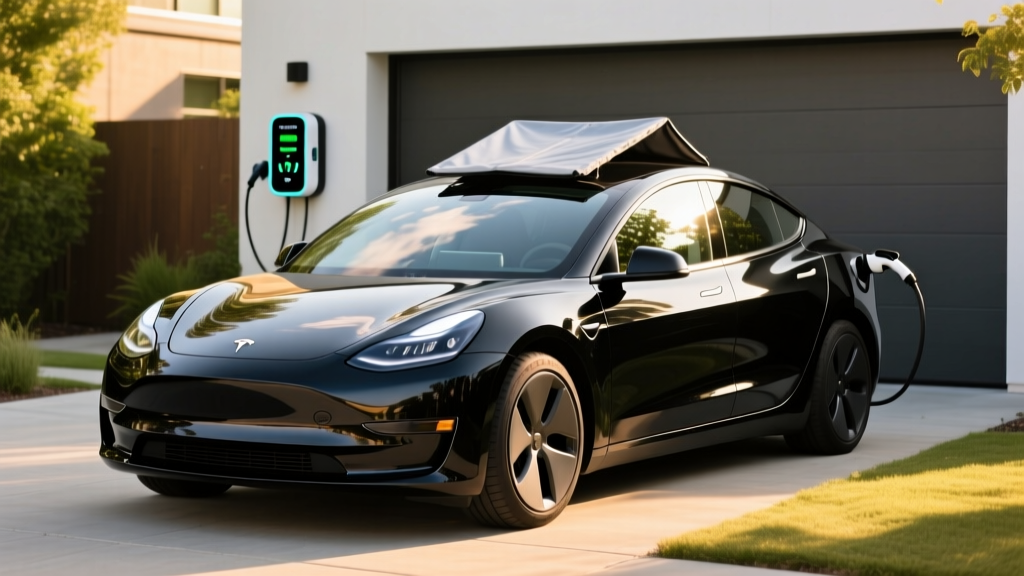
At home on a 48-amp Level 2 circuit (requiring a 60-amp breaker), a full overnight charge adds enough range for virtually any daily commute. Installation costs typically range from $800–$2,000 depending on your electrical panel's capacity and run distance — factor in a potential panel upgrade ($1,500–$3,000) if you're on an older 100-amp service.
The Glass Roof Problem: Why Tesla Model 3 Sun Shades Are a Must-Have Accessory
The Highland-refresh Model 3 features a two-piece panoramic glass roof that extends from the windshield header to the rear deck. Tesla claims the glass blocks 99% of UV radiation, and independent testing confirms strong UV rejection. However, infrared (IR) heat transmission is a different story.
In direct summer sunlight, cabin temperatures under the glass roof can be noticeably higher than in vehicles with metal roofs and traditional insulation. The glass does have a tinted, IR-reflective coating, but owners in Southern states — Arizona, Texas, Florida, Southern California — consistently report that the cabin soaks up heat during prolonged sun exposure. The HVAC system compensates, but that means increased energy draw and reduced range during hot-weather driving.
This is precisely why the Tesla Model 3 sun shade is one of the top-selling aftermarket accessories for this vehicle. Here's what to know:
- Types: Retractable fabric shades (mounted under the glass), rigid folding panels (stored in the trunk), and snap-in mesh screens.
- Cost: Quality retractable shades run $60–$150; rigid insulated panels from brands like RPM Tesla or Abstract Ocean cost $40–$90.
- Impact: A good sun shade can reduce cabin temperature by 10–15°F in direct sun, reducing HVAC load and preserving 3–5% of range on scorching days.
- Installation: Most clip into the existing headliner rails or use adhesive mounts — no drilling required. Allow 15–30 minutes for first-time install.
If you live above the 35th parallel and park in a garage, you may never need one. If you're in Phoenix, Las Vegas, or Houston and park outdoors, consider it essential equipment.
Pricing, Tax Credits, and Total Cost
The 2026 Tesla Model 3 starts at an accessible price point for a premium EV sedan, but tax credit eligibility requires careful attention to IRS §30D rules.
| Trim | Base MSRP | Federal §30D Credit | Effective Price (with credit) |
|---|---|---|---|
| RWD (Standard Range) | $38,990 | Up to $7,500* | ~$31,490 |
| Long Range RWD | $42,490 | Up to $7,500* | ~$34,990 |
| Long Range AWD | $47,490 | Up to $7,500* | ~$39,990 |
*Federal EV tax credit eligibility under IRS §30D is subject to multiple requirements:
- MSRP Cap: Sedans must have an MSRP at or below $55,000 (all Model 3 trims qualify).
- Buyer Income Cap: Modified AGI must not exceed $150,000 (single), $225,000 (head of household), or $300,000 (joint filers).
- Battery Sourcing: The full $7,500 requires meeting both critical minerals and battery component requirements. Tesla's U.S.-assembled packs with sourced materials have generally qualified, but specific eligibility can shift based on supply chain changes. Verify current status at fueleconomy.gov.
- Point-of-Sale Transfer: As of 2024+, the credit can be transferred to the dealer at purchase, reducing your out-of-pocket cost immediately rather than waiting for tax filing.
- VIN Verification: Confirm your specific vehicle's eligibility via the IRS VIN lookup tool before finalizing purchase.
Source: IRS — Clean Vehicle Credits
All 2026 Model 3 trims fall under the $55,000 sedan MSRP cap, making them eligible in principle. The key variable is battery sourcing compliance, which Tesla has largely managed, but always verify for your specific build date and VIN.
Interior, Cargo, and Daily Livability
The Highland interior is a meaningful step up from pre-2024 Model 3s. Ventilated front seats, ambient lighting, rear-seat touchscreen, and improved sound deadening transform the cabin experience. Here are the concrete dimensions:
- Front legroom: 42.3 inches
- Rear legroom: 35.3 inches (tight for passengers over 6'2")
- Cargo volume (trunk): 23 cu ft
- Frunk (front trunk): 3.1 cu ft — enough for a charging cable kit and small bag
- Seating: 5-passenger (rear middle seat is narrow and best for short trips)
The minimalist interior means virtually all controls — climate, mirrors, glovebox, turn signals — are accessed through the 15.4-inch center touchscreen or steering wheel buttons. This is a love-it-or-hate-it design choice. The removal of physical turn signal stalks in favor of steering-wheel-mounted buttons drew particular criticism, though most owners adapt within a few weeks.
Technology, Driver Assistance, and Safety
The Model 3 comes standard with Tesla's Autopilot suite — a SAE Level 2 driver-assistance system that includes adaptive cruise control, lane-keeping assist, and automatic emergency braking. This is not self-driving: the driver must remain engaged, hands on the wheel, and eyes on the road at all times.
Tesla Autopilot and Full Self-Driving (Supervised) are SAE Level 2 systems. The driver is always responsible for vehicle operation. FSD (Supervised) adds features like automatic lane changes, traffic light recognition, and city-street navigation, but requires continuous driver supervision. No consumer Tesla vehicle is capable of unsupervised autonomous driving. Only purpose-built robotaxi services (Waymo, Zoox) operate at SAE Level 4.
FSD (Supervised) remains an $8,000 add-on or $99/month subscription in 2026. Its real-world performance varies dramatically by geography — well-mapped urban areas with clear lane markings see the best results, while construction zones, rural roads, and inclement weather still require frequent driver intervention.
The 2026 Model 3 earned a 5-star overall safety rating from NHTSA and Top Safety Pick+ status from IIHS, with top scores across all crash-test categories.
Warranty, Battery Longevity, and Ownership Costs
Tesla's warranty coverage is competitive with the broader EV market:
- Basic Vehicle Warranty: 4 years / 50,000 miles
- Battery & Drive Unit (RWD): 8 years / 100,000 miles (minimum 70% capacity retention)
- Battery & Drive Unit (Long Range): 8 years / 120,000 miles (minimum 70% capacity retention)
The LFP battery in the RWD trim is notable for its exceptional cycle life — Tesla and third-party data suggest LFP packs can exceed 3,000 full charge cycles with minimal degradation. That's potentially 500,000+ miles of driving before hitting the 70% capacity threshold. NMC packs in the Long Range trims degrade slightly faster but still routinely retain 90%+ capacity at 100,000 miles based on fleet data.
Insurance costs remain a consideration: the Model 3 averages $1,800–$2,600 annually depending on your state, driving record, and coverage level. Tesla Insurance is available in some states and can be competitive, but shop around.
Who Should Buy the 2026 Tesla Model 3?
✓ Choose the Model 3 If:
- You want access to the most reliable DC fast-charging network (Superchargers)
- You prioritize efficiency and range-per-dollar over SUV cargo space
- You're a daily commuter covering 30–80 miles round-trip
- You value over-the-air updates that add features post-purchase
- You want a proven EV platform with strong resale value
✗ Look Elsewhere If:
- You need a spacious rear seat for tall passengers or car seats
- You refuse to navigate menus for basic climate/mirror adjustments
- You want a traditional instrument cluster or HUD
- You frequently tow (Model 3 is not rated for towing)
- You live in extreme heat without garage parking (glass roof thermal load)
Key competitors include the Hyundai Ioniq 6 (361 mi EPA, more conventional controls), BMW i4 (premium ride, lower efficiency), and Polestar 2 (Scandinavian design, slower charging). The Model 3 still leads in charging infrastructure access and software sophistication, but the gap has narrowed considerably.
Frequently Asked Questions
Does the 2026 Tesla Model 3 come with a sun shade?
No. Tesla does not include or offer a factory sun shade for the Model 3's glass roof. The aftermarket is well-stocked with options ranging from $40–$150. Retractable fabric shades that clip into the headliner rails are the most popular choice for daily use.
Does the glass roof significantly reduce range in hot weather?
Indirectly, yes. The solar heat gain increases HVAC load, which can reduce range by 3–7% in extreme heat (100°F+) when the cabin is pre-cooled and maintained. A sun shade reduces this thermal load. The glass itself does not affect the battery's chemical efficiency.
What is the real-world range of the Tesla Model 3 Long Range?
The EPA rates it at 363 miles. In real-world highway driving at 70–75 mph in moderate temperatures, expect 310–330 miles. In winter conditions below freezing, plan for 250–280 miles without preconditioning. With battery preconditioning enabled via navigation to a Supercharger, you'll recover some of that loss.
Can I charge the Tesla Model 3 on non-Tesla chargers?
Yes. The 2026 Model 3 uses the NACS connector natively. With the broader industry adopting NACS through 2025–2026, an increasing number of Electrify America, EVgo, and ChargePoint stations offer NACS cables. For older CCS-equipped stations, a NACS-to-CCS adapter (sold by Tesla and third parties for ~$200–$250) enables compatibility.
Is the Tesla Model 3 a good family car?
It works for small families (one or two children in booster seats), but the 35.3-inch rear legroom is tight for rear-facing car seats. Families needing more space should consider the Model Y, Hyundai Ioniq 5, or Kia EV6. The 23 cu ft trunk is adequate for groceries and strollers but not bulk cargo.
Does the Model 3 qualify for the full $7,500 federal tax credit?
All trims are under the $55,000 MSRP cap for sedans. Whether you receive the full $7,500 depends on your income (AGI limits apply), the battery sourcing compliance of your specific VIN, and your tax liability. The credit can now be transferred at point of sale, reducing your purchase price immediately. Always verify via the IRS VIN tool and consult a tax professional.