The Real Issue: Tesla Model 3 Steering Wheel Peeling Explained
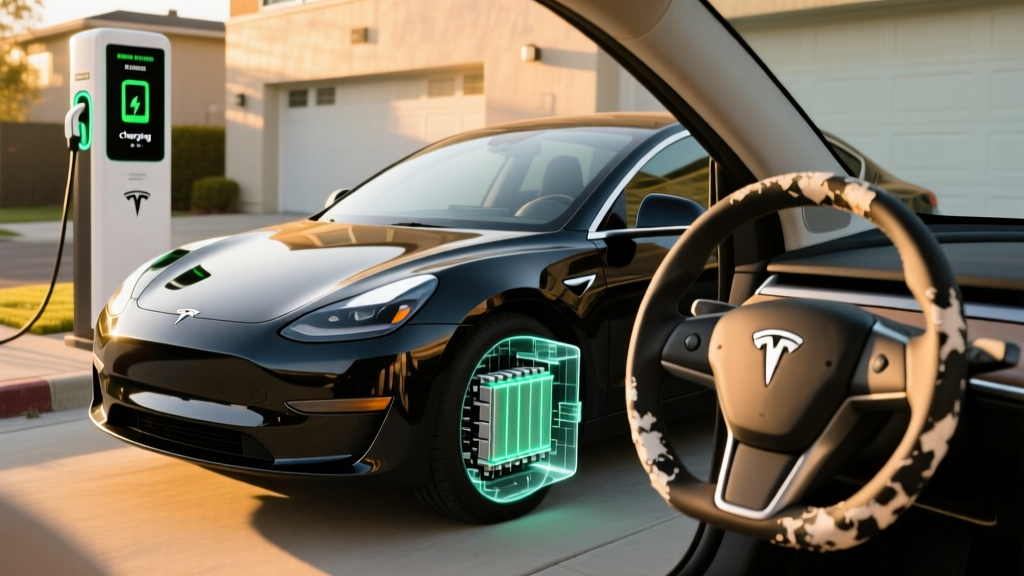
If you've searched for "Tesla Model 3 steering wheel peeling," you're not alone. This is one of the most widely reported interior quality complaints across 2018–2023 Model 3 and Model Y vehicles. The synthetic leather (vegan leather) wrap on the steering wheel rim begins to bubble, crack, and peel — often starting at the 10-and-2 o'clock grip positions where skin oils, UV exposure, and friction concentrate. Some owners report degradation as early as 20,000 miles; others see it around the 50,000-mile mark.
Tesla has not issued a formal recall or Technical Service Bulletin (TSB) specifically for steering wheel peeling. However, many owners have successfully obtained warranty replacements by documenting the defect and escalating through Tesla service. The 2024 "Highland" refresh brought revised materials and construction that appear more resistant, though long-term durability data on 2025–2026 Model 3 steering wheels is still accumulating.
This review covers the full 2026 Tesla Model 3 lineup — range, charging, performance, pricing, tax credits, and whether the steering wheel peeling problem should influence your buying decision.
2026 Tesla Model 3: Full Spec Breakdown
| Specification | Model 3 RWD | Model 3 Long Range AWD | Model 3 Performance |
|---|---|---|---|
| EPA Range | 272 miles | 341 miles | 315 miles |
| Battery (usable) | ~60 kWh (LFP) | ~75 kWh (NMC) | ~75 kWh (NMC) |
| Drivetrain | Rear-Wheel Drive | Dual-Motor AWD | Dual-Motor AWD |
| Horsepower | 271 hp | 346 hp | 510 hp |
| 0–60 mph | 5.8 sec | 4.2 sec | 2.9 sec |
| Top Speed | 125 mph | 125 mph | 163 mph |
| Max DC Charge Rate | 170 kW | 250 kW | 250 kW |
| 10–80% DC Fast Charge | ~25 min | ~22 min | ~22 min |
| Level 2 Home Charging | 11.5 kW (~37 mi/hr) | 11.5 kW (~44 mi/hr) | 11.5 kW (~44 mi/hr) |
| MPGe (combined) | 132 MPGe | 131 MPGe | 121 MPGe |
| kWh/100 mi | 25 kWh | 26 kWh | 28 kWh |
| Cargo Volume | 23 cu ft (rear + frunk) | 23 cu ft | 23 cu ft |
| Rear Legroom | 35.2 in | 35.2 in | 35.2 in |
| Base MSRP (2026) | $38,990 | $44,990 | $52,990 |
| Battery Warranty | 8 yr / 100,000 mi | 8 yr / 120,000 mi | 8 yr / 120,000 mi |
Sources: EPA Fuel Economy, Tesla.com specifications. Real-world results may vary based on temperature, terrain, and driving style.
Real-World Range vs. EPA Sticker: What to Actually Expect
EPA Rating (Long Range AWD): 341 miles
Real-World Highway (70–80 mph, moderate climate): ~270–295 miles
Cold Weather Highway (below 32°F): ~220–255 miles
City/Commuting (regenerative braking active): ~300–330 miles
The EPA range figure is a laboratory composite that blends city and highway cycles. In practice, highway driving at 75+ mph pushes aerodynamic drag significantly higher — the Model 3's efficiency drops from roughly 26 kWh/100 mi in mixed driving to 30+ kWh/100 mi at sustained 80 mph. Cold weather compounds this: the battery must heat itself, the cabin heater draws power (the heat pump on the Highland platform helps but doesn't eliminate the loss), and regenerative braking is restricted until the pack warms up.
The RWD model's LFP (lithium iron phosphate) battery is a critical detail. LFP chemistry has lower energy density than the NMC (nickel manganese cobalt) packs in the Long Range and Performance trims, which is why the RWD carries fewer usable kWh and delivers less range. However, LFP offers two significant ownership advantages: Tesla recommends charging to 100% regularly (unlike NMC, where daily 80% is advised for longevity), and LFP cells degrade more slowly over thousands of cycles. If you can charge at home nightly and don't need 300+ miles in a single stretch, the RWD's LFP pack is arguably the more durable long-term choice.
Charging Speed: DC Fast, Level 2, and the Charge Curve Reality
Peak charge rate tells only part of the story. A "250 kW" rating is the maximum the vehicle will accept at a low state of charge (typically 10–20%). As the battery fills, the charge rate tapers to protect cell health. Here's what the full session looks like:
| Charging Level | Power (kW) | Miles Added Per Hour | Notes |
|---|---|---|---|
| Level 1 (120V household) | ~1.4 kW | ~3–5 mi/hr | Emergency/top-up only |
| Level 2 (240V, 48A home charger) | 11.5 kW | 37–44 mi/hr | Full overnight charge in 6–8 hours |
| DC Fast (Tesla Supercharger V3/V4) | Up to 250 kW (LR/Perf) Up to 170 kW (RWD) | ~800–1,000 mi/hr (peak) | 10–80% in ~22 min (LR); tapers sharply above 80% |
| DC Fast (CCS adapter at third-party stations) | Up to 250 kW (station dependent) | Variable | Tesla includes CCS adapter; Electrify America, EVgo compatible |
Charge curve insight: On a Long Range or Performance Model 3 at a V3 Supercharger, you'll see 250 kW from roughly 10% to 30% SoC, then a gradual taper to ~150 kW by 50%, ~80 kW by 70%, and ~40 kW by 85%. This is why Tesla (and every EV maker) quotes 10–80% times rather than 0–100%. Charging from 80% to 100% on DC fast charge can take as long as the 10–80% portion. For road trips, plan your stops around the 10–80% window and skip topping to full unless you're at your final destination.
Home Level 2 charging on a 48-amp circuit (requiring a 60-amp breaker) delivers the full 11.5 kW the onboard charger accepts. If your electrical panel only supports a 40-amp circuit (32A charging), expect ~7.7 kW and roughly 28–32 miles of range per hour — still adequate for overnight replenishment for most commuters.
Steering Wheel Peeling: Causes, Fixes, and Warranty Options
The synthetic leather material Tesla uses on the Model 3 steering wheel is a polyurethane-based vegan leather. The peeling issue stems from three converging factors:
- Material adhesion failure: The adhesive bonding the synthetic wrap to the underlying foam/armature degrades under sustained heat and UV exposure. Vehicles parked outdoors in hot climates (Arizona, Texas, Southern California) show higher incidence rates.
- Friction and skin oils: The 10-and-2 grip zones endure constant mechanical wear. Lotions, sunscreen, and natural skin oils break down the polyurethane surface layer over time.
- Thermal cycling: The steering wheel sits directly behind the glass roof, which — despite UV tinting — allows significant infrared heat to reach the wheel surface. Repeated expansion and contraction weakens the adhesive bond.
What owners have done:
- Warranty replacement: Multiple owners on Tesla Motors Club forums and Reddit's r/TeslaMotors have documented successful steering wheel replacements under the 4-year/50,000-mile new vehicle limited warranty. The key is clear photographic documentation and persistence — initial service center responses sometimes classify peeling as "normal wear" and deny the claim. Escalation to a service manager or through the Tesla app often resolves this.
- Aftermarket steering wheel covers: A stitched-on leather or Alcantara wrap ($40–$120) can protect a new wheel preemptively or cover existing damage. This is the most cost-effective solution for out-of-warranty vehicles.
- Full aftermarket wheel replacement: Companies like Hansshow and MPP offer aftermarket steering wheels with real leather, Alcantara, or carbon fiber construction. Prices range from $300 to $900 plus installation.
- Professional re-wrapping: An upholstery shop can re-wrap the existing wheel in genuine leather or Alcantara for $200–$400 — often with better material durability than the OEM synthetic.
For 2026 buyers: The current-generation Model 3 (the "Highland" refresh introduced for 2024) uses a revised steering wheel construction. Early reports from high-mileage Highland owners suggest improved durability, but the sample size of vehicles past 40,000 miles remains limited. Inspect any used pre-2024 Model 3 steering wheel carefully before purchase — peeling typically begins subtly as small bubbles near the seams before progressing to visible flaking.
Pricing, Tax Credits, and True Cost of Ownership
| Cost Factor | Model 3 RWD | Model 3 Long Range AWD | Model 3 Performance |
|---|---|---|---|
| Base MSRP (2026) | $38,990 | $44,990 | $52,990 |
| Destination Fee | $1,390 | $1,390 | $1,390 |
| Federal Tax Credit (§30D) | Up to $7,500* | Up to $7,500* | Up to $7,500* |
| Effective Price After Credit | ~$32,880* | ~$38,880* | ~$46,880* |
*Federal tax credit eligibility depends on multiple requirements per IRS §30D rules: buyer AGI must not exceed $150,000 (single) / $300,000 (joint); MSRP must not exceed $55,000 for sedans; and the vehicle must meet critical mineral and battery component sourcing thresholds that phase in annually. As of 2026, the sourcing requirements are stringent — verify eligibility on the IRS website and with your tax professional before purchase. The credit can be transferred to the dealer at point of sale, reducing your out-of-pocket cost directly.
Five-year ownership cost considerations:
- Electricity vs. gas: At the U.S. average electricity rate of ~$0.17/kWh and 26 kWh/100 mi (RWD), fueling costs roughly $4.42 per 100 miles. A comparable gas sedan at 30 MPG and $3.40/gallon costs $11.33 per 100 miles. Over 60,000 miles, that's a savings of approximately $4,146 — though home charging rates vary widely by state and utility.
- Maintenance: No oil changes, no spark plugs, no transmission fluid. Brake pad life is extended significantly by regenerative braking (many Model 3 owners report original brake pads past 80,000 miles). Expect cabin air filter replacement every 2 years (~$50–$80) and tire rotation every 6,250 miles.
- Insurance: Tesla insurance premiums are typically 15–30% higher than equivalent gas sedans due to repair costs and parts pricing. Tesla's own insurance product (available in most states) uses real-time driving data and can be competitive for safe drivers.
- Depreciation: Model 3 depreciation has moderated since 2023 price cuts stabilized the used market. Expect roughly 40–50% value retention at 5 years/60,000 miles, per Kelley Blue Book data — competitive with the segment but not class-leading.
Performance, Tech, and Daily Livability
The 2026 Model 3 Highland platform represents a meaningful refinement over the pre-2024 version. The suspension tuning is noticeably more compliant — the previous generation's firm, crashy ride over sharp impacts has been addressed with revised damping and updated bushings. Road noise is substantially reduced thanks to acoustic glass and improved door seals. These are the kinds of quality improvements that matter daily and that reviewers consistently flagged as weaknesses in earlier Model 3s.
Powertrain highlights:
- RWD: 271 hp from a single rear motor is genuinely quick for a base trim. The 5.8-second 0–60 time beats most turbocharged four-cylinder gas sedans. Instant torque delivery makes city merging effortless.
- Long Range AWD: Dual motors provide all-weather traction and 346 hp. The 4.2-second 0–60 is sports-sedan territory, and the dual-motor system's traction in rain and light snow is a significant safety advantage over RWD.
- Performance: 510 hp and a 2.9-second 0–60 time rival a BMW M3 or Mercedes-AMG C63 — at a fraction of the price and with zero tailpipe emissions. Track mode adjusts torque distribution, stability control, and cooling for closed-course use.
Tech and driver assistance:
The 15.4-inch center touchscreen runs Tesla's latest software, which remains the most responsive and feature-rich infotainment system in any EV. The rear 8-inch screen (added with Highland) gives back-seat passengers climate and entertainment controls. Navigation, over-the-air updates, and the Tesla app ecosystem (remote preconditioning, Sentry Mode camera access, charging management) are best-in-class.
Cargo and passenger space:
The Model 3 offers 23 cubic feet of combined cargo space (rear trunk + front trunk/frunk). The trunk opening is a conventional sedan lid rather than a hatchback, which limits loading of bulky items compared to the Model Y's liftgate. Rear legroom at 35.2 inches is adequate for adults up to about 6'2" but tight for taller passengers on longer trips. The rear seat cushion sits low due to the under-floor battery pack, creating a "knees-up" seating position that some passengers find uncomfortable on road trips exceeding two hours.
Pros and Cons: The Honest Assessment
Pros
- Class-leading efficiency (25–28 kWh/100 mi)
- Supercharger network access — still the most reliable DC fast-charging ecosystem
- Over-the-air updates continuously add features
- LFP battery option (RWD) allows daily 100% charging with minimal degradation
- Highland refresh fixed ride quality and noise complaints
- Strong performance across all trims
- Low running costs vs. gas competitors
Cons
- Steering wheel peeling on pre-2024 models remains a widespread complaint
- Sedan trunk opening limits cargo versatility vs. hatchback competitors
- Rear seat comfort is compromised by low cushion height
- No Apple CarPlay or Android Auto — Tesla's system only
- FSD Supervised costs $8,000 and remains Level 2 despite the name
- Insurance premiums run higher than segment average
- Minimal physical controls — all climate/mirror/vent adjustments via touchscreen
Who Should Buy the 2026 Tesla Model 3?
Buy it if:
- You have reliable home charging (Level 2 garage or driveway access) and want the lowest per-mile operating cost in a premium sedan.
- You value Supercharger network reliability for road trips — Tesla's charging infrastructure remains measurably more dependable than Electrify America or EVgo, based on J.D. Power dependability data.
- You want a tech-forward daily driver with strong acceleration and don't need hatchback cargo space.
- The RWD trim at ~$32,880 (after tax credit) fits your budget and your commute is under 200 miles round-trip.
Look elsewhere if:
- You need a spacious rear seat for adults on long trips — the Hyundai Ioniq 6 or BMW i4 offer better rear-seat ergonomics.
- You want Apple CarPlay — Tesla will never support it; if your phone integration matters, consider the Ioniq 6, Polestar 2, or BMW i4.
- You're buying a used pre-2024 Model 3 and the steering wheel condition is poor — factor in a $200–$400 re-wrap or negotiate the replacement cost into the price.
- You need hatchback or SUV cargo flexibility — the Model Y, Hyundai Ioniq 5, or Ford Mustang Mach-E serve that use case better.
Frequently Asked Questions
Is the Tesla Model 3 steering wheel peeling covered under warranty?
The new-vehicle limited warranty covers 4 years or 50,000 miles. If peeling occurs within that window, Tesla service may replace the wheel, but initial claims are sometimes denied as "cosmetic wear." Document the issue with photos, file a service request through the Tesla app, and escalate if needed. Out of warranty, expect to pay $300–$600 for a replacement or professional re-wrap.
Does the 2026 Tesla Model 3 qualify for the $7,500 federal tax credit?
All three trims fall under the $55,000 MSRP cap for sedans under IRS §30D. However, eligibility also depends on your adjusted gross income (under $150K single / $300K joint), and the vehicle must meet critical mineral and battery component sourcing requirements that tighten each year. Check the IRS clean vehicle credit page for the current list of qualifying vehicles before purchasing, and consult a tax professional for your specific situation.
What is the real-world range of the Tesla Model 3 Long Range?
The EPA rates the Long Range AWD at 341 miles. In real-world highway driving at 70–80 mph in moderate temperatures, expect 270–295 miles. In cold weather (below freezing), that drops to roughly 220–255 miles due to battery heating demands, cabin climate load, and reduced regenerative braking efficiency. City driving with regenerative braking can approach or slightly exceed the EPA figure.
How fast does the Model 3 charge at home and on the road?
At home on a Level 2 (240V/48A) charger, the Model 3 adds 37–44 miles of range per hour, fully charging overnight in 6–8 hours. On a Tesla V3 Supercharger, the Long Range and Performance models peak at 250 kW and charge from 10–80% in approximately 22 minutes. The RWD model peaks at 170 kW and takes about 25 minutes for the same 10–80% session. Above 80% SoC, charge speed tapers dramatically — plan road-trip stops around the 10–80% window.
Tesla Model 3 vs. Hyundai Ioniq 6: which is the better buy?
The Ioniq 6 offers a hatchback-like liftgate (more cargo versatility), Apple CarPlay, and competitive range (up to 361 miles EPA on the SEL trim). The Model 3 wins on Supercharger network access, software sophistication, performance per dollar, and long-term OTA feature updates. If charging infrastructure reliability and tech are your priorities, the Model 3 edges ahead. If cargo flexibility, rear-seat comfort, and phone integration matter more, test-drive the Ioniq 6.
How can I prevent steering wheel peeling on my Model 3?
Use a UV-blocking windshield sunshade when parked outdoors. Clean the wheel regularly with a mild, non-alcohol-based interior cleaner to remove skin oils and sunscreen residue. Consider a stitched-on leather or Alcantara cover ($40–$120) as a preventive measure — this shields the OEM material from direct wear and UV exposure. If you're purchasing new, the Highland-generation wheel appears more resistant, but protective covers remain a sensible precaution in hot, sunny climates.