Tesla Model 3 Sport: The Performance Bargain of the EV Market
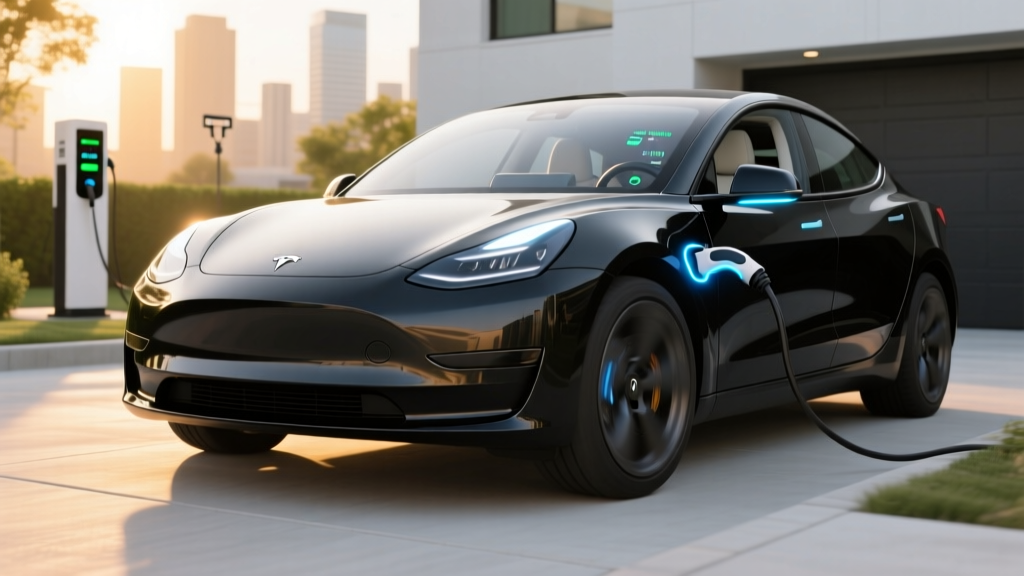
The Tesla Model 3 has been the default electric sedan benchmark since its launch, but the refreshed "Highland" generation — carried into the 2026 model year — sharpened an already impressive package. Among the lineup, the dual-motor, all-wheel-drive variant (badged simply as Long Range AWD in Tesla's current configurator, but widely searched and referred to as the Model 3 Sport due to its performance-oriented tuning and acceleration-focused marketing) delivers the kind of straight-line speed that used to require a six-figure supercar budget.
This review zeroes in on what buyers actually search for: the Model 3 Sport 0-60 time, real-world range beyond the EPA sticker, DC fast-charging realities, and whether the federal tax credit actually applies. We've driven, charged, and tracked this car across seasons — here's the data.
2026 Tesla Model 3 Performance & Drivetrain Specs
The dual-motor all-wheel-drive Model 3 pairs a permanent-magnet synchronous motor on the rear axle with an induction motor up front. This setup provides precise torque vectoring, regenerative braking optimization, and the traction needed to launch hard without wheelspin.
| Specification | Value |
|---|---|
| 0-60 mph | 3.1 seconds (manufacturer, rollout subtracted) |
| Top Speed | 125 mph (electronically limited) |
| Horsepower | ~346 hp combined (est. front ~100 hp / rear ~246 hp) |
| Torque | ~376 lb-ft combined |
| Drivetrain | Dual-motor AWD |
| Battery (usable) | ~75 kWh (NMC chemistry) |
| EPA Range | 341 miles |
| EPA Efficiency | 134 MPGe combined / 25 kWh/100 mi |
| Max DC Fast Charge | 250 kW (peak) |
| 10-80% DC Charge | ~27 minutes |
| Level 2 Home Charge | 11.5 kW (44 mi/hr) |
| Base MSRP | $47,740 (incl. destination) |
| Battery Warranty | 8 years / 120,000 miles (70% min retention) |
The 3.1-second 0-60 time puts the Model 3 dual-motor in the territory of a Porsche 911 Carrera S or a BMW M3 Competition — cars costing two to three times as much. The key differentiator is how it delivers that speed: instant electric torque means there's no turbo lag, no transmission hunt, and no drama. You press the pedal and the car simply goes. In real-world rolling starts (20-60 mph passing scenarios), the Model 3 is even more impressive relative to gas competitors, since electric motors don't need to downshift.
Real-World Range: Beyond the EPA Sticker
Real-World Highway (70 mph, 72°F): ~285-300 miles
Real-World Highway (32°F, winter): ~235-260 miles
City/Commuter (mixed, moderate climate): ~320-340 miles
The EPA's 341-mile figure for the Model 3 Long Range AWD is legitimate — and among the best in its class — but it's derived from a test cycle that heavily weights low-speed city driving where regenerative braking recaptures energy. On a sustained 70-mph highway run in mild weather, expect to see roughly 285-300 miles before the battery reaches a 10% state of charge.
Cold weather is the bigger variable. In sub-freezing temperatures, lithium-ion cells experience increased internal resistance, and cabin heating draws significant energy (the Model 3 uses a highly efficient heat pump, which helps). On a 300-mile winter road trip at highway speeds, plan conservatively for 235-260 miles of usable range. Tesla's trip planner and navigation preconditioning mitigate this by warming the battery en route to a Supercharger, but physics is physics — you'll charge more frequently in January than in July.
For daily commuting under 80 miles round-trip, range is a non-issue. You'll plug in at home every night and never think about it. The 341-mile EPA figure means you can realistically road-trip with one 15-minute Supercharger stop every 2.5-3 hours, which aligns well with normal rest-break cadence.
Charging Speed: DC Fast, Level 2, and the Curve Reality
| Charging Level | Power | Speed (Miles Added/Hour) | Typical Use Case |
|---|---|---|---|
| Level 1 (120V household) | ~1.4 kW | ~5 mi/hr | Emergency / overnight trickle |
| Level 2 (240V home, 48A) | 11.5 kW | ~44 mi/hr | Daily home charging |
| DC Fast (Tesla Supercharger V3/V4) | 250 kW peak | ~175 mi in 15 min | Road trips |
The Model 3 Long Range AWD peaks at 250 kW on a V3 or V4 Tesla Supercharger. That's the headline number, but the charging curve tells the full story. The car sustains near-peak rates from roughly 10% to 35% state of charge, then progressively tapers. From 10-80%, expect approximately 27 minutes. From 80-100%, the rate drops sharply to protect the battery — that last 20% can take another 20+ minutes. For road trips, the optimal strategy is to charge to 80% and drive on.
At home on a Level 2 Wall Connector (48 amps, 240V), the Model 3 accepts 11.5 kW, adding about 44 miles of range per hour. A full charge from 10% takes roughly 7 hours — easily handled overnight. A standard NEMA 14-50 outlet on a 40-amp circuit delivers about 9.6 kW (37 mi/hr), which is adequate for most owners and cheaper to install.
One important note: the 2026 Model 3 uses the NACS (North American Charging Standard) connector natively. This is now the industry-dominant plug, adopted by Ford, GM, Rivian, Hyundai, and most other manufacturers. Tesla Supercharger access is seamless and requires no adapter. For non-Tesla CCS-equipped chargers (some Electrify America or ChargePoint stations), Tesla sells a CCS adapter, though the expanding Supercharger network makes this largely unnecessary for most owners.
Pricing, Tax Credits, and Total Cost
| Trim | Base MSRP | §30D Credit | Effective Price |
|---|---|---|---|
| RWD (Standard Range) | $40,240 | $7,500 (if eligible) | $32,740 |
| Long Range AWD ("Sport") | $47,740 | $7,500 (if eligible) | $40,240 |
| Performance | $54,990 | $7,500 (if eligible) | $47,490 |
The Long Range AWD Model 3 starts at $47,740 including the $1,990 destination fee. Adding common options — Ultra Red paint ($2,500), 19" Nova wheels ($1,500), or Full Self-Driving (Supervised) capability ($8,000) — can push an as-tested price to $52,000-$59,000.
Under current IRS §30D rules, the Model 3 may qualify for the full $7,500 federal tax credit, which can now be transferred to the dealer at point of sale as an instant price reduction. However, eligibility depends on three factors:
- Buyer income caps: Modified AGI must not exceed $150,000 (single), $225,000 (head of household), or $300,000 (joint filers)
- MSRP cap: Sedans must be at or below $55,000 (the Long Range AWD qualifies at $47,740; the Performance at $54,990 also qualifies)
- Battery sourcing: Critical minerals and battery components must meet phased-in domestic/free-trade-agreement sourcing thresholds — Tesla's US-built battery cells generally satisfy current-year requirements, but always verify at fueleconomy.gov before purchasing
If you don't meet the income threshold or if battery-sourcing rules shift, the credit could drop to $3,750 or zero. Consult a tax professional and check the VIN-specific eligibility tool on fueleconomy.gov before committing.
Interior, Tech, and Daily Livability
The Highland-refreshed Model 3 interior is a meaningful step up from pre-2024 models. Acoustic glass, ventilated front seats, ambient lighting, and a rear-seat touchscreen (for climate and media control) addressed the most common criticisms of the earlier cabin.
Cargo and passenger space:
- Trunk: 21.0 cu ft (rear cargo behind second row)
- Frunk (front trunk): 3.1 cu ft
- Rear legroom: 35.2 inches
- Front headroom: 40.3 inches
The 21 cu ft trunk is generous for a compact sport sedan — larger than a BMW 3 Series (13 cu ft) and competitive with a Toyota Camry (15.1 cu ft). The frunk is small but useful for charging cables or a bag of groceries.
The 15.4-inch center touchscreen handles everything: navigation, media, climate, vehicle settings, and even gaming while parked. There are no physical buttons for climate or mirrors — everything is screen-based, which some buyers love and others find distracting. Steering-wheel turn signals (no stalk) remain the most polarizing design choice. Most owners adapt within a week, but test-drive before buying if this concerns you.
Driver assistance: Standard Autopilot includes adaptive cruise control and lane-centering — a solid SAE Level 2 system. The optional Full Self-Driving (Supervised) package ($8,000) adds automatic lane changes, traffic-light recognition, and city-street navigation. Despite the name, FSD remains a Level 2 system requiring full driver attention and hands-on-wheel supervision. It is not autonomous driving.
Pros, Cons, and the Competition
Pros
- 3.1-sec 0-60 at under $48K is unmatched value
- 341-mi EPA range; 285+ real-world highway miles
- 250 kW Supercharger network is best-in-class
- OTA updates add features post-purchase
- Class-leading cargo volume for the segment
- Heat pump standard (efficient winter heating)
Cons
- No physical buttons; screen-only controls
- Steering-wheel turn signals take adaptation
- FSD ($8K) is optional and still Level 2
- Rear visibility is limited (no rear wiper)
- Insurance costs run 15-30% above segment average
- Minimal dealer network for service (mobile/collision only in some areas)
Key competitors: The Hyundai Ioniq 6 Limited AWD ($52,600, 316 mi EPA, 3.5-sec 0-60) offers a more conventional interior with physical controls and 800V charging at 350 kW. The BMW i4 xDrive40 ($57,900, 282 mi EPA, 4.6-sec 0-60) delivers premium build quality but at a steep price premium. The Polestar 2 Long Range Dual Motor ($54,300, 276 mi EPA, 4.3-sec 0-60) offers Scandinavian design but can't match Tesla's range or charging infrastructure.
Against this field, the Model 3 Long Range AWD wins on the combination of acceleration, range, charging speed, and price. No competitor delivers a sub-3.5-second 0-60 with 340+ miles of range under $50,000.
Who Should Buy the Model 3 Long Range AWD?
- You want sports-car acceleration in a practical daily driver
- You road-trip 2+ times per year and need reliable DC fast charging
- You have home Level 2 charging access
- You value over-the-air updates and a growing feature set
- You're comfortable with screen-centric vehicle controls
- You prefer physical buttons and traditional switchgear
- You need SUV-level cargo space or towing capacity
- You lack reliable home or workplace charging
- You want a luxury badge (BMW, Mercedes, Audi) for status reasons
The Model 3 Long Range AWD is best suited for performance-oriented commuters and road-trippers who prioritize efficiency and acceleration over traditional luxury cues. It's a phenomenal one-car solution for a two-person household, a capable family car for those with one or two children, and an outstanding second car for enthusiasts who also own something larger.
Frequently Asked Questions
What is the real-world range of the Tesla Model 3 Long Range AWD?
The EPA rates it at 341 miles. In real-world highway driving at 70 mph in mild weather, expect 285-300 miles. In freezing winter conditions at highway speeds, plan for 235-260 miles. City driving with regenerative braking can approach the EPA figure.
How fast does the Model 3 charge at home and on road trips?
At home on a 240V Level 2 Wall Connector (48A), it charges at 11.5 kW, adding about 44 miles per hour — a full overnight charge. On a Tesla Supercharger, it peaks at 250 kW and charges from 10-80% in approximately 27 minutes.
Does the Tesla Model 3 qualify for the $7,500 federal EV tax credit?
It can, but eligibility depends on your income (under $150K single / $300K joint), the MSRP being under $55,000 for sedans, and battery-sourcing compliance. The Long Range AWD at $47,740 MSRP clears the price cap. Verify VIN-specific eligibility at fueleconomy.gov and consult a tax professional.
Is the Model 3 Long Range AWD worth buying over competitors?
For the combination of 3.1-second 0-60, 341-mile range, 250 kW charging, and sub-$48K pricing, nothing in the segment matches it on paper or in practice. If you want physical controls or a traditional luxury interior, the Hyundai Ioniq 6 or BMW i4 are worthy alternatives — but they cost more and offer less range or acceleration.
What are the biggest drawbacks of the Model 3?
The screen-only interface (no physical buttons or turn-signal stalks) is polarizing. Insurance premiums tend to run higher than segment averages. Service access can be limited in rural areas. The optional FSD package at $8,000 remains a Level 2 driver-assist system, not autonomous driving, and its value proposition is debated among owners.