The Tesla Model 3 has long been the default entry point into premium electric-vehicle ownership, and the refreshed "Highland" generation sharpened an already compelling package with better ride quality, a quieter cabin, and improved efficiency. But for many buyers, the Model 3's appeal extends beyond the drive itself — it's about the ecosystem. One increasingly popular accessory in that ecosystem is the SnapPlate, a magnetic, tool-free front license plate mount that eliminates the drilling and bumper damage associated with traditional bracket installs. In this review, we evaluate the 2026 Tesla Model 3 (commonly searched alongside the SnapPlate accessory) across every metric that matters: real-world range, charging speed, pricing after federal tax credits, and whether it still holds up against a growing field of rivals.
What Is the SnapPlate and Why Model 3 Owners Want It
The SnapPlate is an aftermarket magnetic license plate mount designed specifically for Tesla's minimalist front bumper, which lacks pre-drilled holes for a front plate bracket. In states that require front plates — including California, New York, Texas, and Florida — owners have historically faced a choice: drill into the bumper (risking paint damage, corrosion, and resale value loss) or risk a citation. The SnapPlate uses high-strength neodymium magnets encased in a rubber housing that adheres to the steel reinforcement behind the Model 3's front fascia, allowing tool-free installation and removal in seconds. It's become a staple in Tesla forums and owner groups, and the search term "SnapPlate Model 3" reflects how tightly this accessory has become associated with the car itself.
2026 Tesla Model 3 Trim Lineup and Pricing
Tesla simplified the Model 3 lineup for 2026, offering three trims. Here's how pricing breaks down before and after potential federal incentives.
| Trim | Base MSRP | Drivetrain | EPA Range | §30D Credit Eligible? | Est. After Credit |
|---|---|---|---|---|---|
| Long Range RWD | $42,490 | Rear-Wheel Drive | 363 mi | Yes (income/sourcing dependent) | ~$34,990 |
| Long Range AWD | $47,490 | Dual Motor AWD | 341 mi | Yes (income/sourcing dependent) | ~$39,990 |
| Performance | $54,990 | Dual Motor AWD | 315 mi | Yes (income/sourcing dependent) | ~$47,490 |
Tax credit caveats: The federal §30D credit provides up to $7,500, split into two halves — $3,750 for battery component sourcing and $3,750 for critical minerals. Eligibility depends on the buyer's modified adjusted gross income (AGI limits: $150K single / $225K head of household / $300K joint), the vehicle's MSRP (sedans must be under $55,000), and battery sourcing compliance. Tesla's US-built Model 3 has historically qualified for the full credit, but critical-mineral sourcing requirements tighten annually. Always verify current eligibility at IRS.gov and consider consulting a tax professional. The credit can now be transferred to the dealer at point of sale, reducing your out-of-pocket cost at delivery.
Range, Efficiency, and Real-World Expectations
The Long Range RWD Model 3 carries an EPA-estimated 363 miles of range — among the highest of any EV under $50,000. But EPA numbers represent a blended cycle, and real-world results depend heavily on driving conditions.
- EPA Estimate: 363 miles
- Highway (70-75 mph, moderate temps): ~295-315 miles
- City/Mixed (moderate temps): ~340-360 miles
- Cold Weather (below 30°F): ~240-280 miles (30-35% reduction)
- Efficiency: 132 MPGe combined / 25 kWh per 100 miles
Cold weather significantly impacts all lithium-ion batteries. The Model 3's heat pump mitigates cabin energy draw, but battery chemistry still loses capacity in freezing temps. Preconditioning the battery while plugged in recovers some of this loss.
The Model 3's efficiency — roughly 25 kWh per 100 miles — remains class-leading. The combination of a low drag coefficient (0.219 Cd), a highly efficient permanent-magnet motor, and aggressive regenerative braking means you extract more miles from every kWh than nearly any competitor. According to fueleconomy.gov, the Long Range RWD's 132 MPGe combined rating outpaces the Hyundai Ioniq 6 (140 MPGe but with less total range) and significantly beats the BMW i4 eDrive40 (109 MPGe).
Battery Chemistry, Capacity, and Longevity
The Model 3 Long Range RWD uses a ~60 kWh usable lithium iron phosphate (LFP) battery pack. LFP chemistry offers distinct trade-offs compared to the nickel-manganese-cobalt (NMC) packs found in the Performance trim and most luxury EVs.
| Attribute | LFP (Long Range RWD) | NMC (Performance/AWD) |
|---|---|---|
| Energy Density | Lower (heavier pack for same kWh) | Higher (lighter, more compact) |
| Cycle Life | 3,000+ cycles | 1,500-2,000 cycles |
| Charging Recommendation | Can charge to 100% daily | Recommended 80% daily, 100% for trips |
| Cold-Weather Performance | Slightly worse in extreme cold | Better low-temp discharge |
| Cobalt Content | None | Contains cobalt/nickel |
| Cost | Lower | Higher |
For daily commuters, LFP is arguably the superior choice. Tesla recommends charging LFP packs to 100% at least once per week for accurate state-of-charge calibration, which means you can use the full battery capacity every day without the degradation anxiety associated with NMC chemistry. The trade-off is a slightly heavier pack and marginally reduced cold-weather range — but for most US climates, this is manageable.
Warranty: Tesla covers the Model 3 battery and drive unit for 8 years or 100,000 miles (Long Range/Performance: 8 years/120,000 miles) with a minimum 70% capacity retention guarantee. Real-world degradation data from Tesla's fleet reports and third-party tracking (including Recurrent Auto) shows Model 3 batteries retaining approximately 88-92% capacity after 100,000 miles — well within warranty thresholds.
Charging Speed: DC Fast, Level 2, and Level 1
Charging speed is often the deciding factor for road-trip viability. Here's what the Model 3 delivers across all three charging levels.
| Charging Level | Power / Rate | Miles Added Per Hour | Notes |
|---|---|---|---|
| Level 1 (120V household) | ~1.4 kW | ~5-6 mi/hr | Emergency/trickle only |
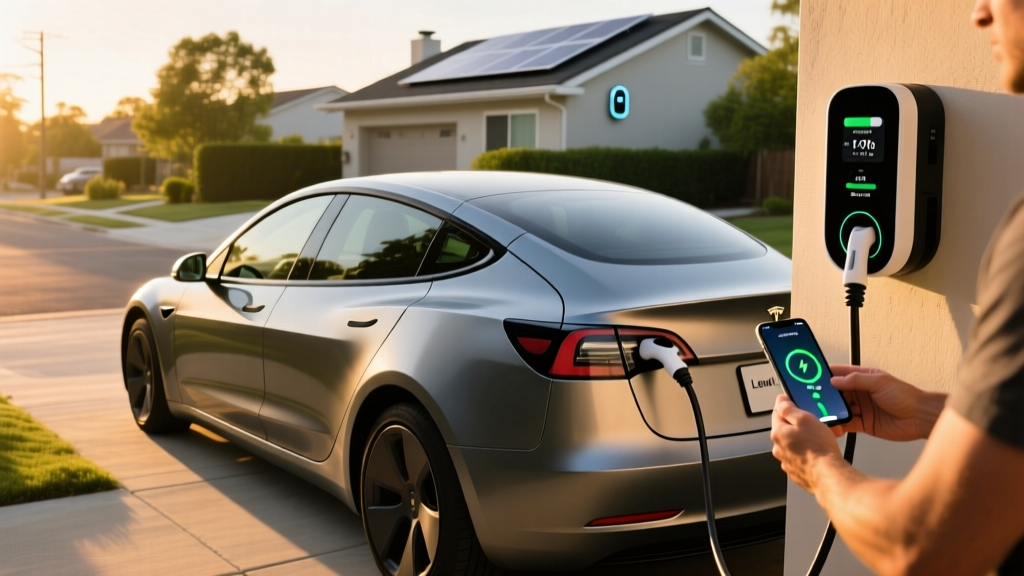
| Level 2 (240V home, 48A) | 11.5 kW | ~44 mi/hr | Full overnight charge in ~6 hrs |
| DC Fast Charge (Supercharger V4) | Peak 250 kW | ~175 mi in 15 min | 10-80% in ~25 min |
Charging curve reality check: The 250 kW peak rate applies only between approximately 10-30% state of charge. The Model 3's charging curve tapers progressively — expect roughly 175 kW through 50%, dropping to ~100 kW by 70%, and slowing significantly above 80% to protect battery health. A 10-80% session takes approximately 25 minutes at a V3 or V4 Supercharger. The final 80-100% can add another 20-30 minutes, which is why road-trip strategy focuses on shorter, more frequent stops rather than charging to full.
Access to the Tesla Supercharger network — now exceeding 6,000 stations and 65,000+ connectors in North America — remains the Model 3's single biggest charging advantage. With the industry's shift to NACS as the standard connector, competing EVs are gaining Supercharger access via adapters, but native Tesla vehicles still enjoy the most seamless plug-and-charge experience with no adapter required.
Performance and Driving Dynamics
| Spec | Long Range RWD | Long Range AWD | Performance |
|---|---|---|---|
| 0-60 mph | 5.8 sec | 4.2 sec | 2.9 sec |
| Horsepower | ~271 hp | ~346 hp | ~510 hp |
| Top Speed | 125 mph | 125 mph | 163 mph |
| Drivetrain | RWD | Dual Motor AWD | Dual Motor AWD |
The Highland refresh addressed one of the previous generation's most common criticisms — ride quality. Revised suspension tuning, new bushings, and acoustic glass front and rear make the 2026 Model 3 noticeably quieter and more compliant over rough pavement. The RWD model, with its single rear motor, delivers the kind of instant torque that makes city driving and highway merging effortless, even without the head-snapping acceleration of the dual-motor variants.
For those who want sports-sedan performance, the Performance trim's 2.9-second 0-60 time rivals a Porsche Taycan 4S at a fraction of the price — though the BMW i4 M50 and Hyundai Ioniq 5 N offer compelling alternatives for driving enthusiasts who prefer more traditional cockpit layouts.
Interior, Cargo, and Technology
Cargo capacity: 23 cu ft (trunk: 21 cu ft with rear seats up; plus ~2 cu ft frunk). Rear seats fold 60/40 for longer items. Rear legroom measures 35.2 inches — adequate for adults on shorter trips but tighter than a Hyundai Ioniq 6 (37.4 in) or BMW i4 (36.0 in).
The 15.4-inch center touchscreen controls virtually every vehicle function — there are no physical buttons for climate, mirrors, or glovebox. This minimalist approach divides opinion: some owners love the clean aesthetic and regular over-the-air software updates, while others find the lack of physical controls frustrating, especially for climate adjustments while driving. The refreshed Model 3 adds ventilated front seats, ambient lighting, a rear 8-inch touchscreen for passengers, and power-folding mirrors with auto-dimming.
Driver assistance: Tesla's Autopilot (standard) provides adaptive cruise control and lane-centering — this is SAE Level 2 driver assistance, meaning the driver must remain fully engaged and supervising at all times. Full Self-Driving (Supervised) remains a $8,000 add-on (or $99/month subscription) and, despite its name, is also Level 2. It adds automatic lane changes, traffic-light recognition, and Navigate on Autopilot, but does not make the vehicle autonomous. Only Level 4 services like Waymo operate without a human driver in geofenced areas.
Pros, Cons, and Who Should Buy the Model 3
Pros
- Class-leading efficiency (25 kWh/100 mi)
- 363-mile EPA range on Long Range RWD
- Native Supercharger network access (65,000+ connectors)
- LFP battery allows daily 100% charging
- Over-the-air updates add features post-purchase
- Strong resale value relative to EV peers
- Improved Highland ride quality and cabin quietness
Cons
- No physical buttons — everything through the screen
- Rear legroom tighter than competitors (35.2 in)
- No Apple CarPlay or Android Auto
- Turn signals on steering wheel (controversial stalk delete)
- FSD subscription cost adds up without delivering full autonomy
- Insurance premiums often 20-40% higher than gas equivalents
- LFP battery loses more range in extreme cold vs. NMC
Who the Model 3 Suits Best
- Daily commuters with home charging: The LFP battery and 363-mile range mean most owners charge once or twice a week, with enough buffer to skip a day.
- Road-trip travelers who value Supercharger access: The native NACS plug and Tesla's route planner with automatic preconditioning make long-distance EV travel the least stressful in the industry.
- Tech-forward buyers who prefer OTA updates and minimalism over traditional automotive interfaces.
- Not ideal for: Families needing maximum rear-seat space (consider Model Y or Ioniq 5), buyers who want CarPlay, or those in extreme-cold climates where LFP range loss is more pronounced.
How the Model 3 Stacks Up Against Competitors
| Spec | Tesla Model 3 LR RWD | Hyundai Ioniq 6 SE LR | BMW i4 eDrive40 | Polestar 2 LR SM |
|---|---|---|---|---|
| EPA Range | 363 mi | 361 mi | 301 mi | 315 mi |
| Efficiency (kWh/100mi) | 25 | 24 | 30 | 28 |
| DC Fast Charge Peak | 250 kW | 240 kW | 205 kW | 205 kW |
| 10-80% Time | ~25 min | ~18 min | ~31 min | ~27 min |
| Base MSRP | $42,490 | $42,750 | $57,900 | $50,200 |
| Native Supercharger? | Yes | Adapter needed | Adapter needed | Adapter needed |
The Ioniq 6 charges faster (18 minutes 10-80% thanks to its 800V architecture) and matches the Model 3 on range, but it lacks native Supercharger access and its rear-seat headroom is compromised by the sloping roofline. The BMW i4 offers a more traditional luxury experience with physical controls and CarPlay but costs significantly more and delivers less range. The Polestar 2 is well-built but trails on both range and price.
Frequently Asked Questions
What is the real-world range of the Tesla Model 3 Long Range?
EPA-estimated at 363 miles, real-world highway driving at 70-75 mph typically yields 295-315 miles. In freezing temperatures, expect 240-280 miles. City driving with regenerative braking recovers energy and often matches or exceeds the EPA number.
How fast does the Model 3 charge at home and on the road?
At home on a 240V Level 2 charger (48A/11.5 kW), the Model 3 adds about 44 miles per hour — a full charge takes roughly 6 hours. On a Tesla Supercharger (250 kW peak), a 10-80% session takes approximately 25 minutes, adding up to 175 miles in 15 minutes.
How much does the Tesla Model 3 cost after federal tax credits?
The Long Range RWD starts at $42,490 MSRP. If you qualify for the full $7,500 §30D credit (meeting income, MSRP, and battery-sourcing requirements), the effective price drops to approximately $34,990. The credit can be applied at point of sale as an instant discount. Always verify current eligibility on IRS.gov, as sourcing requirements tighten each year.
Does the Tesla Model 3 qualify for the $7,500 federal EV tax credit?
The Model 3 has historically qualified for the full $7,500 under §30D, as it is assembled in the US (Fremont, CA) and meets battery-sourcing thresholds. However, eligibility depends on your income (AGI caps apply), the trim's MSRP (all current trims fall under the $55,000 sedan cap), and annual tightening of critical-mineral sourcing rules. Check the latest qualified vehicle list at IRS.gov before purchasing.
Is the Tesla Model 3 worth buying vs. the competition in 2026?
For buyers who prioritize range, efficiency, Supercharger access, and a tech-forward experience, the Model 3 Long Range RWD remains the value benchmark at ~$42,490 before credits. If you prefer physical controls, CarPlay, or a more conventional luxury interior, the Hyundai Ioniq 6 or BMW i4 are strong alternatives — but they can't match the Model 3's combination of range, price, and charging-network convenience.
What is the SnapPlate and do I need it for my Model 3?
The SnapPlate is a magnetic front license plate mount that attaches to the Model 3's front bumper without drilling. If you live in a front-plate-required state, it's a popular alternative to Tesla's official bracket (which requires adhesive or drilling). It installs and removes in seconds, preserving your bumper's finish and resale value.
How long will the Model 3 battery last?
Tesla warranties the Long Range battery for 8 years or 120,000 miles with at least 70% capacity retention. Fleet data shows Model 3 packs typically retaining 88-92% capacity at 100,000 miles. LFP chemistry in the RWD model is rated for 3,000+ charge cycles — potentially exceeding 500,000 miles before reaching 80% capacity.