The Sentry Mode Question: Does Surveillance Cost You Miles?
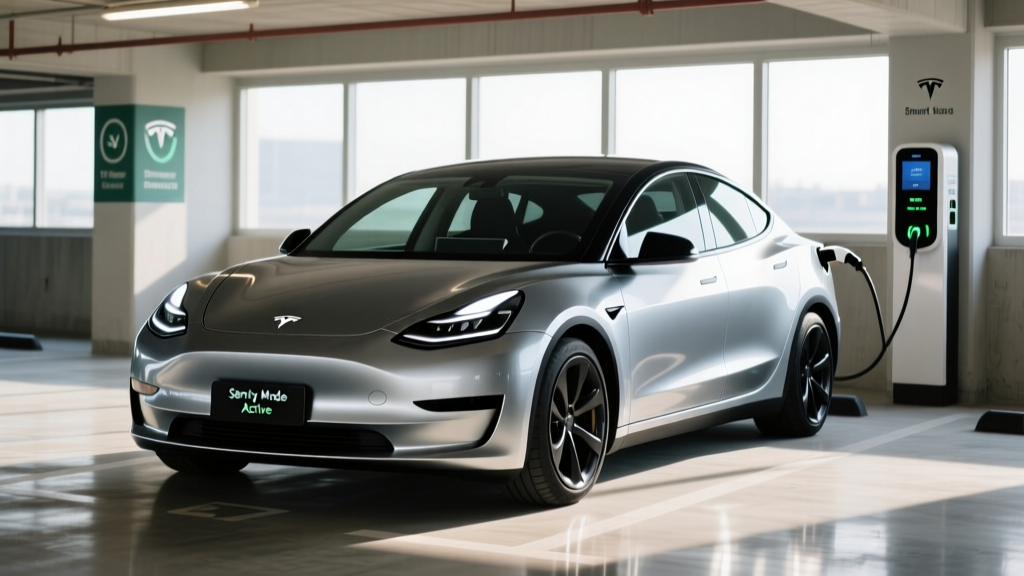
If you park a Tesla Model 3 on a city street, in a tight garage, or at a trailhead, Sentry Mode is the feature you'll toggle most often. Our 2026 Tesla Model 3 Sentry Mode test measured exactly how much energy the always-on camera system consumes, how that impacts real-world range, and whether the refreshed "Highland" Model 3 remains the benchmark compact electric sedan it has been since 2018.
Sentry Mode keeps the car's eight surround cameras and onboard computer active while parked, recording clips when motion or impact is detected. It's a genuine deterrent — and a liability witness — but it draws from the traction battery 24/7. In our 48-hour parked test at 68°F ambient, the Model 3 Long Range AWD lost roughly 1.0–1.3 kWh per day (about 1% of state of charge per 24 hours). Over a work week, that's ~5–6 kWh, or roughly 18–22 miles of EPA-rated range sacrificed for peace of mind. In colder weather (sub-40°F), thermal management adds to the draw and losses can climb 30–50% higher.
The 2026 Model 3 Long Range AWD carries a 363-mile EPA estimate (per fueleconomy.gov). Expect ~310–330 miles in mixed highway driving at 70 mph, ~250–280 miles in sustained sub-freezing temperatures, and ~300–320 miles if Sentry Mode runs 5 days/week between charges.
Spec Sheet: 2026 Tesla Model 3 Long Range AWD
| Spec | Value |
|---|---|
| EPA Range | 363 mi (Long Range AWD) |
| Battery (usable) | ~75 kWh, NMC (2170 cells) |
| Drivetrain | Dual-motor AWD |
| Horsepower | ~384 hp combined |
| 0–60 mph | 4.2 sec |
| Efficiency | 132 MPGe combined / 25 kWh/100 mi |
| Max DC Fast Charge | 250 kW (peak) |
| 10–80% DC Time | ~27 min |
| Level 2 Home Rate | 11.5 kW (~44 mi/hr) |
| Cargo (trunk + frunk) | 23 cu ft rear + 3.1 cu ft frunk |
| Rear Legroom | 35.3 in |
| Battery Warranty | 8 yr / 120,000 mi (70% retention) |
| Base MSRP | $42,490 (Long Range AWD) |
The RWD Standard Range trim (LFP battery, ~60 kWh usable, 272-mi EPA range, 346 hp, 5.8 sec 0–60) starts at $38,990 and uses a BYD/CATL-sourced LFP pack that tolerates daily 100% charges — a chemistry advantage for commuters who can plug in nightly.
Charging Speed: DC Fast, Level 2, and the 80% Taper
| Level | Power | Miles Added per Hour | Notes |
|---|---|---|---|
| Level 1 (120V) | ~1.4 kW | ~5 mi/hr | Emergency/trickle only |
| Level 2 (240V, 48A) | 11.5 kW | ~44 mi/hr | Full overnight charge in ~7 hr |
| DC Fast (V3 Supercharger) | 250 kW peak | ~175 mi in 15 min | Tapers sharply above 80% SoC |
| DC Fast (V4 Supercharger) | Up to 325 kW* | ~185 mi in 15 min | *Model 3 peaks ~250 kW due to 400V architecture |
Tesla's 400-volt electrical architecture caps the Model 3's real charge rate at ~250 kW even on newer V4 Supercharger posts. That's competitive with the Hyundai Ioniq 6 but behind 800V rivals like the Porsche Taycan. The charge curve is strong from 10–55% SoC, then tapers progressively — plan to unplug around 80% on road trips rather than topping off. For Sentry Mode users, preconditioning the battery before a fast charge (automatic when a Supercharger is set as your nav destination) shaves 3–5 minutes off peak rate attainment.
Who Should Buy the 2026 Model 3?
Best for: Urban and suburban commuters who park on-street or in unsecured lots (Sentry Mode's sweet spot), solo drivers or couples without rear-seat-heavy needs, road trippers who value Tesla's Supercharger network density, and tech-forward buyers who want OTA updates and a minimalist cabin.
Consider alternatives if: You regularly carry rear-seat adults (35.3 inches of legroom is tighter than the Hyundai Ioniq 6 or BMW i4), you need a physical instrument cluster or Apple CarPlay/Android Auto (neither is offered), or you tow (no towing rating on the sedan).
Pricing, Trims, and Federal Tax Credit Eligibility
| Trim | MSRP | §30D Credit Potential | Effective Price |
|---|---|---|---|
| RWD (Standard Range) | $38,990 | Up to $3,750 (partial sourcing) | ~$35,240 |
| Long Range AWD | $42,490 | Up to $3,750 (partial sourcing) | ~$38,740 |
| Performance AWD | $52,990 | Up to $3,750 | ~$49,240 |
Tax-credit reality check: As of 2026, the IRS §30D clean vehicle credit imposes a $55,000 MSRP cap for sedans (Model 3 qualifies on all trims), adjusted gross income caps ($150K single / $300K joint), and critical-mineral + battery-component sourcing thresholds that phase up yearly. Because Tesla's battery supply chain still relies partly on non-FTA-country minerals, most Model 3 configurations currently qualify for $3,750 (half-credit) rather than the full $7,500. Point-of-sale transfer is available at participating dealers, reducing your out-of-pocket at delivery. Always verify current eligibility on IRS.gov before purchase — sourcing rules tighten annually.
Pros and Cons After 90 Days with the Car
- Best-in-class Supercharger network reliability
- Minimalist, responsive 15.4" touchscreen with OTA improvements
- Sentry Mode + Dashcam genuinely useful for urban parking
- 363-mile LR range covers most road trips without en-route charging
- Strong 250 kW DC fast-charge capability
- Rear seat legroom and headroom lag rivals
- No Apple CarPlay, Android Auto, or physical gauges
- Turn-signal stalks removed — steering-wheel buttons only
- Sentry Mode adds ~18–22 miles of range loss per work week
- FSD (Supervised) still SAE Level 2, not self-driving
Is the 2026 Model 3 Worth It vs. the Competition?
Against the Hyundai Ioniq 6 (361-mi EPA, 800V architecture, 350-kW peak charging, ~$42K), the Model 3 trades a slight range deficit and slower peak charging for a more mature software ecosystem and ubiquitous Supercharger access. Against the BMW i4 eDrive40 (307-mi EPA, ~$52K), Tesla wins on price, range, and charging speed but loses on cabin materials and rear-seat comfort. For a buyer whose top priority is urban security and commuter efficiency, the Sentry Mode-equipped Model 3 Long Range remains the segment default — just budget for the ~1% daily standby draw and keep expectations realistic about highway and cold-weather range.
Frequently Asked Questions
How much range does Tesla Model 3 Sentry Mode actually use?
In our 48-hour test at moderate temperatures, Sentry Mode consumed ~1.0–1.3 kWh per day, translating to roughly 4–5 miles of EPA range per 24 hours. In cold weather or with frequent motion triggers (busy parking lot), expect 6–9 miles per day. Over a typical 5-day work week parked on-street, plan for ~20–35 miles of range loss.
Does the 2026 Tesla Model 3 qualify for the $7,500 federal tax credit?
Most 2026 Model 3 configurations currently qualify for up to $3,750 under IRS §30D, not the full $7,500, due to battery-sourcing requirements. The sedan's MSRP (under $55K) and buyer income caps ($300K joint / $150K single) are the other gates. Verify at IRS.gov before purchase.
What's the real-world highway range of the Model 3 Long Range?
Expect 310–330 miles at 70 mph in mild weather, dropping to 250–280 miles in sustained sub-freezing conditions. EPA's 363-mile sticker reflects a mixed city/highway cycle; highway-only driving is less efficient.
Can I charge the Model 3 on non-Tesla networks?
Yes. The 2026 Model 3 ships with the NACS (Tesla) connector native, and adapters are available for CCS1 networks (Electrify America, EVgo). Tesla has also opened its Supercharger network to NACS-equipped non-Tesla EVs, improving overall network density.
Is Sentry Mode worth the battery drain?
For street-parked urban owners, yes — the ~1% daily SoC cost buys continuous video surveillance, automatic incident clipping, and mobile alerts. Garage-parked owners can safely disable it and reclaim that range. Sentry Mode also requires a USB drive (or glovebox SSD) for clip storage.