Tesla Model 3 Screen Size and the Dashboard That Replaces Everything
If you're searching for the Tesla Model 3 screen size, the short answer is a single 15.4-inch center touchscreen (landscape orientation, 2560 × 1600 resolution). There is no instrument cluster behind the steering wheel, no head-up display, and no secondary screen for the front passenger in the standard refresh. Everything—speedometer, climate, navigation, media, vehicle settings—routes through that one panel. The 2024+ "Highland" refresh also added an 8-inch rear touchscreen for back-seat passengers, primarily for climate control and entertainment.
But a screen doesn't tell you whether the Model 3 is the right EV to buy. Below, we break down the 2026 Tesla Model 3 lineup—the RWD Standard Range, Long Range RWD, and Long Range AWD—with exact EPA range figures, charging speeds, real-world expectations, and the tax-credit math that determines your true out-of-pocket cost.
| Spec | Standard Range (RWD) | Long Range (RWD) | Long Range (AWD) |
|---|---|---|---|
| EPA Range | 272 mi | 363 mi | 346 mi |
| Battery (usable) | ~60 kWh (LFP) | ~79 kWh (NMC) | ~79 kWh (NMC) |
| Max DC Fast Charge | 170 kW | 250 kW | 250 kW |
| 10–80% DCFC Time | ~25 min | ~25 min | ~25 min |
| Level 2 Home Charge | 11.5 kW (~44 mi/hr) | 11.5 kW (~44 mi/hr) | 11.5 kW (~44 mi/hr) |
| 0–60 mph | 5.8 sec | 5.8 sec | 4.2 sec |
| Horsepower | 271 hp | ~300 hp | ~384 hp |
| Drivetrain | RWD (single motor) | RWD (single motor) | AWD (dual motor) |
| EPA Efficiency | 132 MPGe / 25 kWh/100mi | 134 MPGe / 25 kWh/100mi | 121 MPGe / 28 kWh/100mi |
| Base MSRP | $38,990 | $42,990 | $47,990 |
Sources: fueleconomy.gov, Tesla specifications. Pricing reflects MSRP before destination; verify current figures at time of purchase.
Real-World Range vs. EPA Sticker: What to Actually Expect
Tesla's efficiency is among the best in the EV segment. The Long Range RWD achieves 134 MPGe combined, which translates to roughly 3.8–4.0 miles per kWh. That efficiency advantage comes from Tesla's heat pump (standard on all trims since the refresh), low drag coefficient, and the octovalve thermal management system that scavenges heat from the battery and drive unit.
However, the EPA combined cycle includes generous city/regen driving. Highway-only trips—especially above 70 mph—will burn through the battery faster. Cold weather compounds this: the LFP chemistry in the Standard Range model is more sensitive to low temperatures than the NMC packs in the Long Range trims, so preconditioning (warming the battery via the Tesla app before departure) is essential for preserving range and enabling fast charging in winter.
Charging Speed: DC Fast, Level 2, and the Curve Reality
| Charging Level | Power | Miles Added per Hour | Notes |
|---|---|---|---|
| Level 1 (120V outlet) | ~1.4 kW | ~5 mi/hr | Emergency/trickle only |
| Level 2 (240V, 48A) | 11.5 kW | ~44 mi/hr | Full charge overnight (~8–9 hrs) |
| DC Fast (Standard Range) | Peak 170 kW | ~200 mi in 15 min | LFP charges to 100% regularly |
| DC Fast (Long Range) | Peak 250 kW | ~175 mi in 15 min | 10–80% in ~25 min; tapers sharply above 80% |
The Model 3 Long Range trims support up to 250 kW peak DC fast charging on Tesla's V3 Superchargers. That peak rate only holds between roughly 10–30% state of charge; the charge curve tapers progressively, dropping to ~60 kW by 80% and even lower above 90%. This is normal physics for NMC lithium-ion cells—pushing current into a nearly full battery generates excessive heat and accelerates degradation.
The Standard Range model uses LFP (lithium iron phosphate) chemistry, which Tesla recommends charging to 100% at least once per week for accurate state-of-charge calibration. LFP also handles heat better during charging, though its peak rate of 170 kW is lower than the Long Range's 250 kW. The practical difference: both trims complete a 10–80% session in roughly 25 minutes.
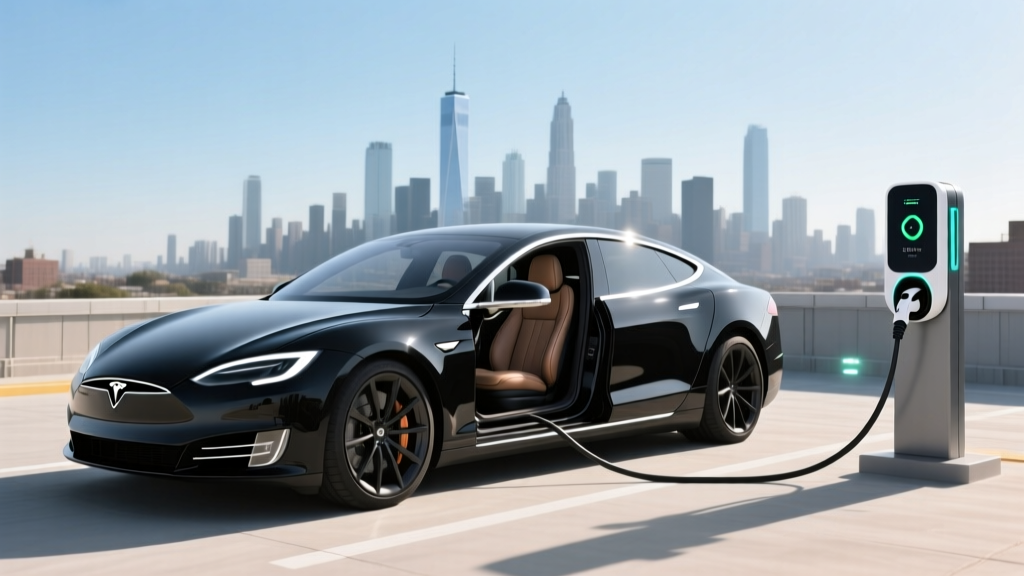
For home charging, the onboard charger accepts up to 11.5 kW (48 amps on a 60-amp circuit). A Tesla Wall Connector or equivalent Level 2 unit adds about 44 miles of range per hour—enough to fully replenish even the Long Range's 79 kWh battery overnight. Installation costs vary; budget $800–$2,000 for a professional 240V/60A circuit depending on panel proximity and local permit requirements.
Performance and Driving Dynamics
The Model 3 Long Range AWD hits 0–60 mph in 4.2 seconds with approximately 384 horsepower from its dual-motor setup. The Standard Range and Long Range RWD trims both clock 5.8 seconds—quick for daily driving but no longer class-leading against the Hyundai Ioniq 6 or BMW i4.
The Highland refresh significantly improved ride quality over the pre-2024 Model 3. Revised suspension tuning, acoustic glass, and additional sound deadening make the cabin noticeably quieter at highway speeds. Steering remains precise and communicative, and the low center of gravity (battery pack under the floor) keeps body roll minimal through corners.
One-pedal driving via regenerative braking is effective, though Tesla removed the adjustable regen slider years ago—you get one level of regen, and it's strong enough for most stop-and-go driving. The physical turn signal stalks were deleted in the refresh; signals are now activated via steering-wheel buttons, which remains a polarizing choice.
Interior, Cargo, and the Screen-First Cabin
The Model 3 interior is minimalist by design. The 15.4-inch touchscreen handles every function—there are no physical buttons for climate, volume, or glovebox release. Ventilated front seats, ambient lighting, and a panoramic glass roof are now standard across trims. Rear-seat legroom measures approximately 35.2 inches, adequate for adults on shorter trips but tighter than a Toyota Camry or Hyundai Sonata.
Cargo volume is 23 cubic feet (trunk plus front trunk/frunk). The trunk opening is a conventional sedan design, not a hatchback or liftback, which limits the size of bulky items you can load. The frunk is relatively small—useful for a charging cable bag or groceries, but not a full suitcase.
The 8-inch rear touchscreen (added in the Highland refresh) lets rear passengers control climate fan speed and temperature, and stream media. It's a welcome addition for families but not a substitute for a full rear-seat entertainment system.
Pricing, Trims, and Federal Tax Credit Eligibility
| Trim | Base MSRP | Destination | Est. Total | Potential §30D Credit | Est. Net Cost |
|---|---|---|---|---|---|
| Standard Range (RWD) | $38,990 | $1,390 | $40,380 | Up to $7,500* | ~$32,880 |
| Long Range (RWD) | $42,990 | $1,390 | $44,380 | Up to $7,500* | ~$36,880 |
| Long Range (AWD) | $47,990 | $1,390 | $49,380 | Up to $7,500* | ~$41,880 |
*Federal §30D tax credit eligibility is not guaranteed. The IRS requires the vehicle's MSRP to be at or below $55,000 for sedans (all Model 3 trims qualify), and the buyer must meet income caps: $150,000 single / $300,000 married filing jointly. Additionally, battery component and critical-mineral sourcing requirements determine whether the full $7,500, a partial $3,750, or no credit applies. As of 2026, Tesla's US-built Model 3 generally qualifies for the full credit, but sourcing rules tighten annually. Always verify current eligibility on irs.gov and consult a tax professional before relying on the credit in your purchase decision. The point-of-sale transfer option allows you to apply the credit as a down-payment reduction at the dealer if eligible.
Warranty, Reliability, and Long-Term Ownership
Tesla covers the Model 3 with a 4-year/50,000-mile limited vehicle warranty and an 8-year/100,000-mile battery and drive-unit warranty (Long Range trims; Standard Range is 8 years/100,000 miles as well). The battery warranty guarantees retention of at least 70% capacity during the coverage period. Real-world degradation data from Tesla owners suggests most Model 3 packs lose roughly 10–12% capacity in the first 50,000 miles, then the curve flattens significantly.
The LFP battery in the Standard Range model offers a longevity advantage: LFP chemistry tolerates 100% state-of-charge storage better than NMC and generally supports more charge cycles before meaningful degradation. If you plan to keep the car 10+ years and charge daily, LFP is arguably the more durable choice—though you sacrifice ~90 miles of range compared to the Long Range.
Insurance costs for the Model 3 tend to run 15–25% higher than comparable gas sedans due to repair costs (particularly the glass roof and sensor array). Tesla offers its own insurance product in many states, priced based on real-time driving behavior via the vehicle's telemetry. Compare quotes from multiple carriers before purchase.
Autopilot, FSD, and Driver Assistance
Basic Autopilot (traffic-aware cruise control and lane centering) is standard. FSD (Supervised) is a $8,000 option or $99/month subscription that adds automatic lane changes, navigate-on-autopilot for highway exits, and traffic-light/stop-sign recognition. As of 2026, FSD remains a Level 2 system—impressive in highway scenarios but requiring constant supervision, particularly in construction zones, complex intersections, and adverse weather.
Standard safety features include automatic emergency braking, blind-spot monitoring, lane-departure warning, and rear cross-traffic alert. The Model 3 has earned top ratings from both NHTSA (5-star overall) and IIHS (Top Safety Pick+).
Pros
- Class-leading efficiency (134 MPGe Long Range RWD)
- Extensive Supercharger network with reliable plug-and-charge
- Over-the-air updates continually add features
- LFP option for buyers who prioritize battery longevity
- Excellent safety ratings (NHTSA 5-star, IIHS TSP+)
- Minimalist, quiet cabin post-Highland refresh
Cons
- No physical buttons—everything through the 15.4" screen
- Turn signals moved to steering-wheel buttons (polarizing)
- Sedan trunk opening limits cargo flexibility vs. hatchbacks
- No instrument cluster or head-up display
- Insurance premiums above segment average
- FSD remains Level 2 despite the "self-driving" name
Who the Tesla Model 3 Suits Best
Choose the Standard Range (RWD) if: You commute under 60 miles round-trip, charge at home nightly, want the lowest entry price, and value LFP battery longevity over maximum range. Net cost after credit can dip below $33,000.
Choose the Long Range (RWD) if: You take regular road trips (200+ miles), want maximum range with a single motor for efficiency, and don't need AWD traction. The 363-mile EPA rating is the highest in the lineup.
Choose the Long Range (AWD) if: You live in a snowy/rainy climate, want 4.2-second 0–60 performance, and regularly carry rear-seat passengers who benefit from the dual-motor stability. This is the best all-weather Model 3.
Look elsewhere if: You need hatchback cargo space (consider the Model Y or Hyundai Ioniq 5), prefer physical controls, or want a head-up display and traditional instrument cluster.
Frequently Asked Questions
What is the Tesla Model 3 screen size?
The 2026 Tesla Model 3 features a 15.4-inch center touchscreen (landscape, 2560 × 1600 resolution) that controls all vehicle functions. An 8-inch rear touchscreen was added in the Highland refresh for rear-passenger climate and entertainment control. There is no instrument cluster or head-up display.
What is the real-world range of the Tesla Model 3?
The EPA rates the Long Range RWD at 363 miles and the Long Range AWD at 346 miles. In real-world highway driving at 70–75 mph, expect 290–320 miles in mild conditions. In freezing weather (below 30°F), range can drop 20–30%, yielding roughly 240–270 miles. The Standard Range model's 272-mile EPA rating translates to approximately 210–240 miles highway in mild weather.
How fast does the Model 3 charge at home and on the road?
At home on a Level 2 (240V, 48A) charger, the Model 3 accepts up to 11.5 kW, adding about 44 miles of range per hour—a full overnight charge. On DC fast chargers, the Long Range trims peak at 250 kW and complete 10–80% in roughly 25 minutes. The Standard Range (LFP) peaks at 170 kW with a similar 10–80% time of about 25 minutes.
Does the Tesla Model 3 qualify for the federal EV tax credit?
All 2026 Model 3 trims fall under the $55,000 MSRP cap for sedans under IRS §30D. Buyer income must not exceed $150,000 (single) or $300,000 (married filing jointly). Battery-sourcing and critical-mineral requirements determine the credit amount ($7,500, $3,750, or $0). As of 2026, US-built Model 3 vehicles generally qualify for the full $7,500, but rules tighten annually—verify on irs.gov before purchase. The point-of-sale transfer option lets you apply the credit as a down-payment reduction.
Is the Model 3 worth buying vs. competitors?
The Model 3 Long Range remains the efficiency benchmark in its class, and access to Tesla's Supercharger network (now open to other brands but still the most reliable) is a significant road-trip advantage. However, the Hyundai Ioniq 6 offers comparable range with a more traditional interior layout, the BMW i4 delivers superior build quality and driving dynamics, and the Polestar 2 provides a hatchback form factor. If you value minimalism, OTA updates, and charging infrastructure, the Model 3 is hard to beat. If you prefer physical controls or need cargo versatility, explore the alternatives.
How long will the Model 3 battery last?
Tesla warrants the battery for 8 years/100,000 miles with at least 70% capacity retention. Real-world data from high-mileage owners shows approximately 10–12% degradation in the first 50,000 miles, with a much slower decline thereafter. The LFP battery in the Standard Range model is expected to outlast the NMC packs in total cycle life. Battery replacement (out of warranty) currently costs approximately $12,000–$16,000 depending on the pack.