If you have ever stared at the minimalist Tesla touchscreen and wondered how to personalize it, you are not alone. One of the most searched Tesla customization questions is how to change Tesla color on screen — specifically the accent color that tints the vehicle visualization, navigation lines, and UI elements on the central display. This guide walks you through the exact steps, then pivots into a comprehensive 2026 Tesla Model 3 review covering range, charging, pricing, and whether this sedan still earns its spot as the default EV recommendation.
How to Change the Accent Color on Your Tesla Touchscreen
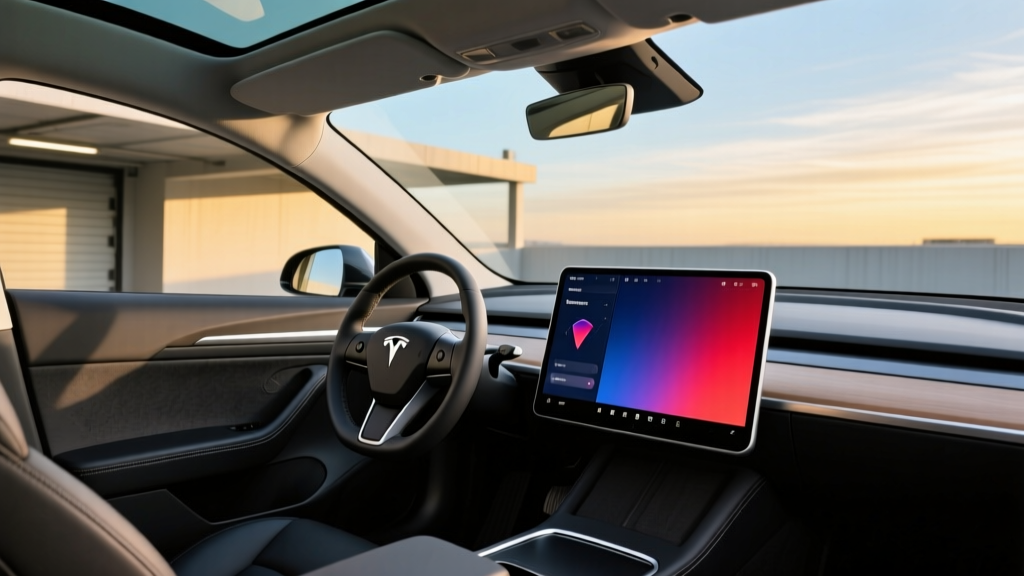
Tesla does not offer a full theme engine like some Android-based infotainment systems. Instead, you get an accent color selector that changes the highlight color used across the UI — the vehicle graphic on the dashboard, navigation route lines, media player accents, and certain menu highlights. Here is exactly how to do it:
- Tap the car icon (Controls) at the bottom-left corner of the touchscreen.
- Select Display from the left-hand menu.
- Scroll to the Accent Color section.
- Choose from the available palette — typically including blue, purple, red, orange, green, and white/silver. The default is a Tesla-branded blue.
- The change applies instantly across the UI. There is no save button — your selection persists until you change it again.
What this does NOT change: The accent color does not alter the map color scheme, the background (which is controlled by Light/Dark mode), or the vehicle visualization color representing your actual car paint. If you want Dark Mode or Light Mode, that toggle is in the same Display menu under Display Mode. You can also set it to Auto, which switches based on ambient light or time of day.
Pro tip: On newer software builds (2025.38+), Tesla added a "Classic" accent option that mimics the original red accent from early Model S screens — a favorite among long-time owners.
2026 Tesla Model 3: The Spec Sheet That Matters
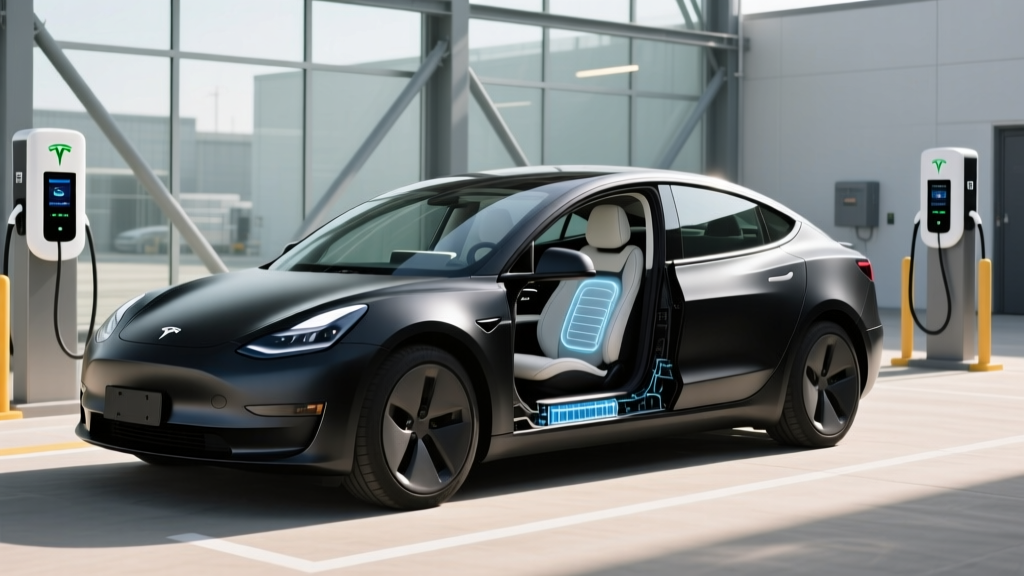
Now that your screen looks the way you want, let us look at the car behind it. The 2026 Model 3 continues with the "Highland" refresh architecture introduced for the 2024 model year, with minor software and battery-pack adjustments for 2026. Here are the numbers buyers actually need:
| Spec | Model 3 RWD (Base) | Model 3 Long Range AWD | Model 3 Performance |
|---|---|---|---|
| EPA Range | 272 mi | 341 mi | 315 mi |
| Battery (usable) | ~57.5 kWh (LFP) | ~75 kWh (NMC) | ~75 kWh (NMC) |
| Drivetrain | Rear-Wheel Drive | Dual-Motor AWD | Dual-Motor AWD |
| Horsepower | 271 hp | 346 hp | 510 hp |
| 0-60 mph | 5.8 sec | 4.2 sec | 2.9 sec |
| Max DC Fast Charge | 170 kW | 250 kW | 250 kW |
| 10-80% DCFC Time | ~25 min | ~22 min | ~22 min |
| Level 2 Home Charge Rate | 7.6 kW (~30 mi/hr) | 11.5 kW (~44 mi/hr) | 11.5 kW (~44 mi/hr) |
| MPGe (combined) | 132 MPGe | 125 MPGe | 113 MPGe |
| EPA Efficiency | 25 kWh/100mi | 26 kWh/100mi | 29 kWh/100mi |
| Base MSRP | $38,990 | $45,990 | $53,990 |
Source: fueleconomy.gov and Tesla.com official specs. Prices exclude destination fee.
Real-World Range: What the EPA Sticker Does Not Tell You
The LFP (lithium iron phosphate) battery in the base RWD model trades energy density for longevity and cost. LFP cells tolerate regular 100% charging better than NMC chemistry, meaning Tesla actually recommends charging the RWD to 100% at least weekly to maintain cell balancing. The NMC packs in Long Range and Performance trims are best kept between 20-80% for daily use, saving 100% charges for road trips.
Efficiency in practice varies heavily with driving style. The Model 3 remains one of the most aerodynamically efficient sedans on the market (drag coefficient of 0.219), which is why its kWh/100mi figures beat most competitors. On a 70-degree day with mixed city/highway driving, hitting or slightly beating the EPA number is realistic. Sustained 80 mph interstate travel with air conditioning will push consumption to 28-30 kWh/100mi on the Long Range, translating to closer to 250 miles of usable range before you want to find a charger.
Charging Speed and Infrastructure
Charging is where Tesla ownership still holds a tangible advantage in 2026, though the gap has narrowed as other networks expand and adopt NACS connectors.
| Charging Level | Power / Rate | Miles Added Per Hour | Notes |
|---|---|---|---|
| Level 1 (120V household) | ~1.4 kW | ~5 mi/hr | Emergency/trickle only |
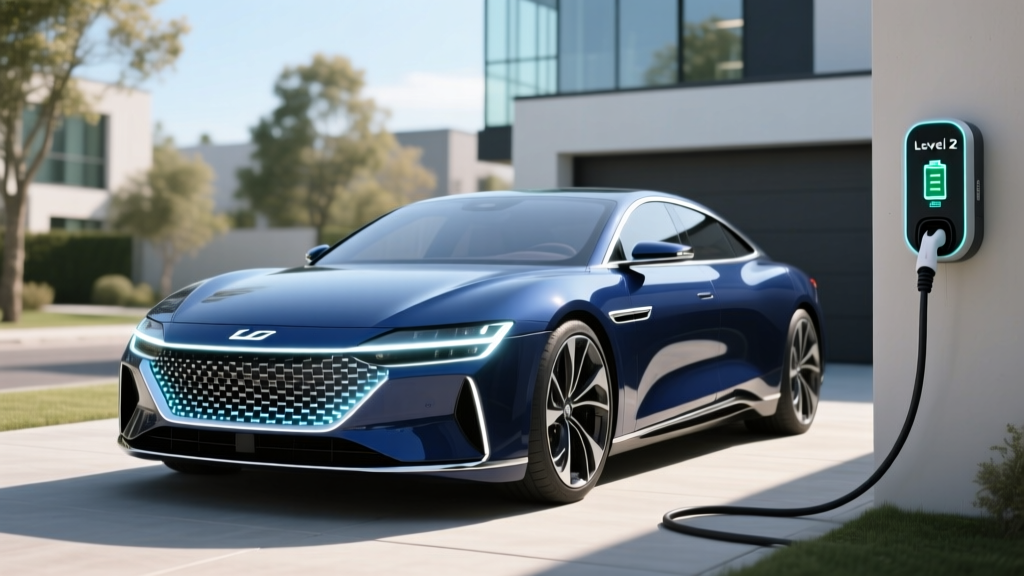
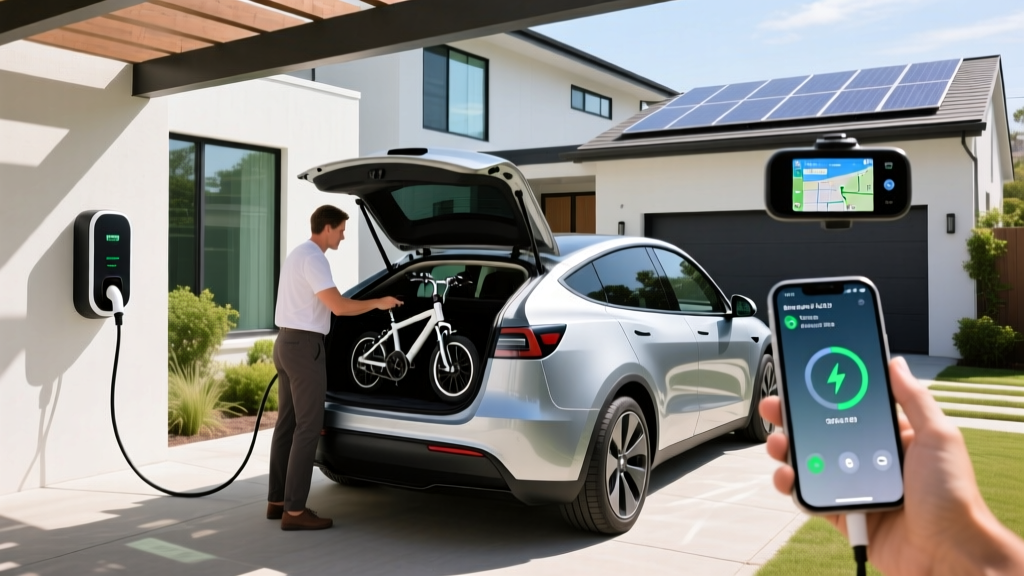
| Level 2 (240V home, 48A) | 7.6-11.5 kW | 30-44 mi/hr | Full overnight charge in 7-9 hours |
| DC Fast Charge (Supercharger) | Peak 170-250 kW | ~175-200 mi in 15 min | Peak rate sustained to ~50% SoC, then tapers |
The 250 kW peak on Long Range and Performance trims is a maximum, not an average. The charge curve holds near peak from roughly 10-50% State of Charge, then progressively tapers. From 80-100%, charging slows dramatically — adding that final 20% can take as long as the initial 10-80%. This is why Tesla's navigation system typically routes you to arrive at Superchargers at 10-15% SoC and suggests departing around 80%, optimizing your time at the charger.
The Supercharger network in 2026 exceeds 6,500 stations in North America. With the NACS connector now standard on the Model 3 (no adapter needed), you also gain access to chargers from Electrify America and other networks that have added NACS cables, though CCS-to-NACS adapters remain useful for older public stations. Always precondition your battery before DC fast charging — the car does this automatically when you navigate to a Supercharger, warming the pack to optimal temperature for maximum charge speed.
Pricing, Trims, and Federal Tax Credit Eligibility
| Trim | Base MSRP | As-Tested (typical config) | §30D Credit Eligibility | Effective Price (if eligible) |
|---|---|---|---|---|
| RWD | $38,990 | $39,990 (w/ paint) | Up to $7,500 (point-of-sale) | ~$32,490 |
| Long Range AWD | $45,990 | $47,490 (w/ paint + wheels) | Up to $7,500 (point-of-sale) | ~$39,990 |
| Performance | $53,990 | $55,990 | Up to $7,500 (point-of-sale) | ~$48,490 |
Federal tax credit caveats (IRS §30D, 2026 rules): The full $7,500 credit requires meeting both critical-mineral and battery-component sourcing requirements, which shift annually and become stricter each year. The Model 3 has historically qualified for the full credit on most trims, but eligibility depends on the specific battery batch and manufacturing period. Additionally:
- Buyer income caps: Modified AGI must not exceed $150,000 (single), $225,000 (head of household), or $300,000 (joint filers).
- MSRP cap: The vehicle MSRP must not exceed $55,000 for sedans — this means the Performance trim at $53,990 base qualifies, but adding options that push the MSRP above $55,000 will disqualify it.
- Point-of-sale transfer: As of 2024, you can transfer the credit to the dealer at purchase, reducing your out-of-pocket cost immediately rather than waiting for tax filing.
Always verify current eligibility on IRS.gov's qualified vehicles list before purchasing, as sourcing compliance can change mid-year. Consult a tax professional for your specific situation.
Interior, Cargo, and Daily Livability
The Highland refresh brought meaningful improvements to cabin refinement: acoustic glass all around, ventilated front seats, ambient lighting, rear-seat touchscreen for climate and media control, and a slightly softer ride from revised suspension tuning. The minimalist interior remains polarizing — there are no physical stalks (turn signals are on the steering wheel), no instrument cluster, and all climate controls live on the touchscreen.
Cargo dimensions:
- Rear trunk: 21.0 cu ft (with under-floor storage)
- Front trunk (frunk): 3.1 cu ft — enough for a charging cable bag and small items
- Total cargo volume (rear seats folded): ~50 cu ft
- Rear legroom: 35.3 inches
- Front headroom: 40.3 inches
The Model 3 is a midsize sedan, not a crossover. If you regularly haul bulky cargo or prefer a higher seating position, the Model Y is the more practical choice. But for a couple or a small family with one child seat, the Model 3 trunk and cabin space are adequate, and the driving dynamics are noticeably sharper than the taller, heavier Model Y.
Tech, Autopilot, and Driver Assistance
Every 2026 Model 3 includes Tesla's basic Autopilot suite: Traffic-Aware Cruise Control and Autosteer (lane-centering). This is an SAE Level 2 driver-assistance system — it requires your hands on the wheel and eyes on the road at all times. The car monitors engagement through steering-wheel torque detection and, on newer builds, an interior camera.
The 15.4-inch central touchscreen runs Tesla's proprietary infotainment OS — no Apple CarPlay or Android Auto. Instead, Tesla provides built-in navigation, Spotify/Apple Music integration, a web browser, and over-the-air software updates that regularly add features. The 2026 software builds have improved voice recognition and added dashcam viewer improvements and trip planning enhancements.
Warranty Coverage
- Basic Vehicle: 4 years / 50,000 miles
- Battery & Drive Unit (RWD): 8 years / 100,000 miles (minimum 70% capacity retention)
- Battery & Drive Unit (Long Range/Performance): 8 years / 120,000 miles (minimum 70% capacity retention)
The 70% retention threshold is standard across the industry. In practice, Tesla's battery degradation data from fleet analytics shows most Model 3 packs retain approximately 85-90% capacity at 100,000 miles, with the steepest degradation occurring in the first 10,000-15,000 miles before leveling off. LFP batteries in the RWD model tend to show slightly slower degradation curves, though they start with less total capacity.
Pros and Cons
- Best-in-class efficiency (kWh/100mi)
- Supercharger network access (NACS native)
- Over-the-air updates add real features over time
- Strong resale value relative to EV segment
- Highland refresh fixed most NVH complaints
- LFP battery on RWD allows daily 100% charging
- No Apple CarPlay or Android Auto
- Turn signals on steering wheel (not a stalk) — adjustment required
- Rear visibility is limited; relies heavily on cameras
- FSD subscription cost adds up without delivering full autonomy
- RWD model's 170 kW DCFC peak is slow vs. 800V competitors
- Insurance costs above segment average
Who Should Buy the 2026 Model 3?
Choose the Model 3 RWD if: You commute under 40 miles round-trip, have reliable home charging, want the lowest entry price, and value long-term battery durability (LFP chemistry) over maximum range. At roughly $32,500 after the federal credit, it is one of the most affordable new EVs available.
Choose the Model 3 Long Range AWD if: You take regular road trips, live in a cold climate where range loss matters, or want dual-motor traction for snow and rain. The 341-mile EPA rating provides genuine 280+ mile real-world highway range, and the 250 kW charging speed means shorter Supercharger stops.
Choose the Model 3 Performance if: You want sports-sedan acceleration (2.9 seconds to 60 mph rivals a Porsche Taycan at a fraction of the price) and do not mind sacrificing some range and paying above the $55,000 MSRP credit cap with options. This trim is for driving enthusiasts, not budget optimizers.
Look elsewhere if: You need hatchback or SUV cargo space (consider the Model Y or Hyundai Ioniq 5), you want Apple CarPlay (consider BMW i4 or Hyundai Ioniq 6), or you want 800V ultra-fast charging that outpaces Tesla's 250 kW peak (consider the Porsche Taycan or Hyundai Ioniq 5 with its 350 kW capability).
Frequently Asked Questions
Can I change the actual vehicle color shown on the Tesla screen?
The vehicle visualization on your Tesla screen reflects the exterior paint color your car was built with — you cannot change it in settings to a different color. What you can change is the UI accent color (see steps above), which tints the interface elements and navigation lines. If you want the on-screen car graphic to match a wrap or repaint, Tesla Service can update the vehicle configuration in their system, which syncs to your display.
What is the real-world range of the 2026 Tesla Model 3?
The EPA rates the Long Range AWD at 341 miles, the RWD at 272 miles, and the Performance at 315 miles. Real-world highway range in mild weather is approximately 85-90% of EPA for the Long Range (~280-305 mi), dropping to 65-75% in cold weather (~230-260 mi). City driving with regenerative braking often matches or slightly exceeds EPA figures.
How fast does the Model 3 charge at home and on the road?
At home on a Level 2 (240V) charger, the Long Range and Performance add about 44 miles of range per hour at 11.5 kW, fully charging overnight in 7-8 hours. The RWD charges at 7.6 kW (~30 mi/hr). On DC fast chargers, the Long Range and Performance peak at 250 kW (10-80% in ~22 minutes), while the RWD peaks at 170 kW (10-80% in ~25 minutes).
Does the 2026 Model 3 qualify for the $7,500 federal EV tax credit?
Most Model 3 trims have qualified for the full $7,500 under IRS §30D rules, but eligibility depends on battery-sourcing compliance (which tightens annually), buyer income limits ($150K single / $300K joint), and the $55,000 MSRP cap for sedans. The credit can be applied at the point of sale as a direct price reduction. Always check the IRS qualified vehicles list for your specific purchase date.
Is the Model 3 still worth buying vs. competitors in 2026?
The Model 3 Long Range remains the benchmark for efficiency and charging-infrastructure convenience. However, the Hyundai Ioniq 6 offers comparable range with 800V ultra-fast charging, the BMW i4 provides a more traditional luxury interior with Apple CarPlay, and the upcoming refreshed Chevrolet Bolt EUV targets the budget segment. If Supercharger access and software integration are your priorities, the Model 3 still leads. If you value interior material quality or CarPlay, test-drive the alternatives.
Does Tesla still use cameras instead of ultrasonic sensors?
Yes. The 2026 Model 3 relies entirely on Tesla Vision (camera-based) for parking assist, obstacle detection, and Autopilot. There are no ultrasonic sensors or radar. The camera system has improved substantially through software updates, but some owners report occasional phantom braking and less precise parking-distance estimation compared to ultrasonic-equipped vehicles. This remains a notable drawback for buyers who prioritize parking assist reliability.