Tesla Model 3 Safety: The Quick Verdict
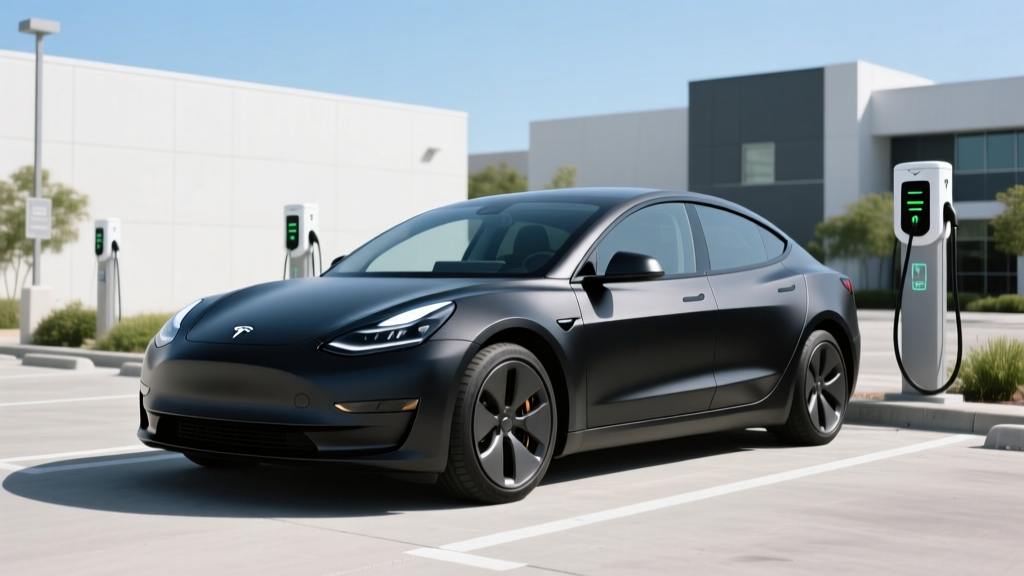
The Tesla Model 3 remains one of the safest vehicles on the road in 2026, earning top marks from both the National Highway Traffic Safety Administration (NHTSA) and the Insurance Institute for Highway Safety (IIHS). But Tesla Model 3 safety is a two-part story: passive crash protection is genuinely outstanding, while the active driver-assistance systems — branded Autopilot and Full Self-Driving (Supervised) — require constant human engagement and have drawn scrutiny from federal regulators. This review breaks down every crash-test score, safety technology feature, and known limitation so you can evaluate the Model 3 on data, not marketing.
| Spec | Long Range AWD | Performance AWD | Rear-Wheel Drive |
|---|---|---|---|
| EPA Range | 341 mi | 315 mi | 272 mi |
| Battery (usable) | ~75 kWh (NMC) | ~75 kWh (NMC) | ~57.5 kWh (LFP) |
| 0-60 mph | 4.2 sec | 2.9 sec | 5.8 sec |
| Horsepower | 346 hp | 510 hp | 271 hp |
| Drivetrain | Dual-motor AWD | Dual-motor AWD | RWD |
| Peak DC Charge | 250 kW | 250 kW | 170 kW |
| 10-80% DC Time | ~25 min | ~25 min | ~30 min |
| Level 2 Rate | 11.5 kW (~44 mi/hr) | 11.5 kW (~44 mi/hr) | 11.5 kW (~44 mi/hr) |
| MPGe (combined) | 132 MPGe | 119 MPGe | 132 MPGe |
| Efficiency | 25 kWh/100mi | 28 kWh/100mi | 25 kWh/100mi |
| Base MSRP | $47,740 | $54,990 | $38,990 |
| Battery Warranty | 8 yr / 120,000 mi | 8 yr / 120,000 mi | 8 yr / 100,000 mi |
Crash-Test Scores: NHTSA and IIHS Results
The Model 3's structural safety credentials are its strongest objective selling point. Both major U.S. testing bodies have evaluated the current-generation sedan, and the results are near-flawless.
NHTSA 5-Star Overall Rating
The NHTSA awarded the Tesla Model 3 a 5-star overall safety rating, the highest possible score. The breakdown:
- Frontal crash: 5 stars (driver and passenger)
- Side crash: 5 stars
- Rollover: 5 stars (risk of rollover: 6.6%)
The low rollover risk is typical of EVs with heavy battery packs mounted in the floor, which gives the Model 3 an exceptionally low center of gravity compared to combustion sedans.
IIHS Top Safety Pick+
The IIHS granted the Model 3 its Top Safety Pick+ award when equipped with acceptable headlights (the premium LED headlights on Long Range and Performance trims). The IIHS rated the Model 3 "Good" — its highest score — in every crashworthiness category:
- Driver-side small overlap front
- Passenger-side small overlap front
- Moderate overlap front (original and updated test)
- Side impact (updated test with heavier barrier)
- Roof strength
- Head restraints and seats
Crash avoidance and mitigation received "Acceptable" to "Good" scores depending on the headlight trim and the automatic emergency braking configuration. The updated IIHS side-impact test, which uses a 4,200-lb barrier at 37 mph to simulate being struck by a modern SUV, is particularly relevant — and the Model 3 aced it.
Real-World Range Reality Check
EPA sticker: 272 mi (RWD) / 341 mi (Long Range AWD) / 315 mi (Performance)
What to actually expect: In mixed driving at moderate temperatures, plan for roughly 240-260 mi on the RWD and 300-320 mi on the Long Range. Sustained highway driving at 75+ mph drops efficiency by 10-15%. In sub-freezing winter conditions, expect a 20-30% range reduction, especially on shorter trips where the battery cannot maintain thermal equilibrium. The LFP battery in the RWD trim is more resistant to cold degradation than NMC, but still loses meaningful range below 32°F.
Active Safety and Driver-Assist Systems
This is where Tesla Model 3 safety generates the most debate. The car ships with a robust suite of standard active safety features, but Tesla's optional Autopilot and Full Self-Driving (Supervised) packages are frequently — and incorrectly — conflated with autonomous driving.
SAE Automation Level: Level 2
Autopilot, Enhanced Autopilot, and Full Self-Driving (Supervised) are all SAE Level 2 driver-assistance systems. The driver must remain fully engaged — hands on or near the wheel, eyes on the road — at all times. Tesla's camera-based monitoring system issues escalating warnings if attention lapses are detected, and will eventually disengage the system and slow the vehicle if the driver does not respond. These systems are not self-driving. Only Level 4 services like Waymo operate without a human driver.
Standard Active Safety (Included on All Trims)
- Automatic Emergency Braking (AEB): Forward and rear collision mitigation, tested effective by IIHS at city and highway speeds
- Side Collision Warning: Alerts for vehicles in blind zones
- Lane Departure Warning and Lane Keeping Assist: Gentle steering correction and audible alerts
- Obstacle-Aware Acceleration: Reduces torque if an object is detected in the path of acceleration
- Emergency Lane Departure Avoidance: Steers the car back if drifting toward a road edge
- 8-camera surround view: Provides 360° visibility for the vehicle's perception systems and the driver's touchscreen display
Optional Autopilot and FSD (Supervised)
Basic Autopilot (standard): Traffic-Aware Cruise Control and Autosteer (lane centering on marked highways).
Enhanced Autopilot ($6,000): Adds Navigate on Autopilot (highway on-ramp to off-ramp), Auto Lane Change, Autopark, Summon, and Smart Summon.
Full Self-Driving — Supervised ($8,000): Adds Traffic Light and Stop Sign Control, and city-street Autosteer. Despite the "Full Self-Driving" branding, FSD remains a Level 2 system requiring constant supervision. NHTSA has opened multiple investigations into Tesla's Autopilot/FSD behavior in specific crash scenarios, and buyers should treat these as convenience features, not replacements for attentive driving.
⚠️ What Autopilot and FSD Do NOT Do
- They do not make the Model 3 self-driving or autonomous
- They cannot reliably detect all stationary objects, construction zones, or emergency vehicles
- Performance degrades in heavy rain, fog, snow, or when cameras are obstructed
- City-street FSD may make unexpected routing decisions — the driver must be prepared to intervene instantly
- NHTSA has issued standing general orders requiring Tesla to report crashes involving Autopilot/FSD
Charging Speed, Range, and Battery Chemistry
Safety on long trips means predictable charging. The Model 3 benefits from Tesla's Supercharger network — widely regarded as the most reliable DC fast-charging infrastructure in the U.S. — and the 2026 model now ships with the NACS (North American Charging Standard) port natively, eliminating the need for adapters at non-Tesla chargers that have adopted NACS.
| Charging Level | Power | Miles Added per Hour | Notes |
|---|---|---|---|
| Level 1 (120V household) | ~1.4 kW | ~3-5 mi/hr | Emergency/trickle only |
| Level 2 (240V home/public) | 11.5 kW (max onboard) | ~44 mi/hr | Full charge overnight (~7-8 hr) |
| DC Fast (V3 Supercharger) | Up to 250 kW peak | ~170 mi in 15 min | Long Range/Performance; tapers above 80% |
| DC Fast (RWD trim) | Up to 170 kW peak | ~130 mi in 15 min | LFP battery; can charge to 100% regularly |
Charge curve reality: The 250 kW peak on Long Range and Performance trims is sustained only between roughly 10-30% state of charge. Above 50%, the rate tapers significantly, and above 80% it drops to under 50 kW. This is why Tesla quotes 10-80% times (~25 minutes) rather than 0-100%. The LFP battery in the RWD trim has a lower peak rate but a flatter charge curve, and Tesla recommends periodic 100% charges to maintain battery calibration — an advantage for daily commuters who can charge fully at home.
Battery Chemistry and Longevity
The RWD Model 3 uses a lithium iron phosphate (LFP) battery, which sacrifices some energy density for greater thermal stability, longer cycle life, and lower cost. LFP cells are inherently less prone to thermal runaway than NMC chemistry, which is a passive safety advantage. The Long Range and Performance trims use nickel manganese cobalt (NMC) cells for higher energy density and longer range. Both chemistries are covered by Tesla's battery warranty:
- RWD: 8 years / 100,000 miles, whichever comes first, with minimum 70% capacity retention
- Long Range / Performance: 8 years / 120,000 miles, minimum 70% retention
Pricing, Tax Credits, and Total Cost
The Model 3's value proposition depends heavily on whether you qualify for the federal EV tax credit under IRS §30D. Here's the current pricing landscape:
| Trim | Base MSRP | §30D Credit (if eligible) | Effective Price |
|---|---|---|---|
| Rear-Wheel Drive | $38,990 | Up to $7,500 | ~$31,490 |
| Long Range AWD | $47,740 | Up to $7,500 | ~$40,240 |
| Performance AWD | $54,990 | Up to $7,500 | ~$47,490 |
IRS §30D Federal Tax Credit Requirements (2026)
- MSRP cap: Sedans must be ≤ $55,000 — all Model 3 trims qualify on sticker price
- Buyer income cap: AGI ≤ $150,000 (single), $225,000 (head of household), $300,000 (married filing jointly)
- Battery sourcing: Critical minerals and battery components must meet escalating domestic-content thresholds that tighten annually — verify current-year compliance on IRS.gov before purchase
- Point-of-sale transfer: Eligible buyers can transfer the credit to the dealer at purchase, reducing the out-of-pocket price immediately
- Assembly: Vehicle must undergo final assembly in North America (the Model 3 is built in Fremont, CA and Austin, TX)
Tax rules change frequently. Consult a tax professional and check the IRS clean vehicle credit page before finalizing your purchase.
Interior Space, Tech, and Practicality
The refreshed Model 3 (introduced for 2024 and carried into 2026 with minor updates) addressed many of the prior generation's interior complaints. Cabin materials are noticeably improved, with ventilated front seats, ambient lighting, and a rear-seat touchscreen for climate and entertainment control.
Dimensions and Cargo
- Front legroom: 42.4 inches
- Rear legroom: 35.2 inches (tight for tall passengers on long trips)
- Cargo (trunk): 23 cu ft
- Frunk (front trunk): 3.1 cu ft
- Total cargo: ~26 cu ft — competitive with compact sedans, less than hatchbacks like the Model Y or Ioniq 5
Infotainment and Controls
The 15.4-inch center touchscreen handles all vehicle functions, including climate controls, glovebox release, and mirror adjustment. There is no instrument cluster — speed and navigation appear on the main screen. A steering-column stalk has been eliminated: turn signals are now buttons on the steering wheel rim, and gear selection is via the touchscreen (with a backup roof-console control). This minimalist approach is polarizing — some owners adapt quickly, others find it distracting, which has minor safety implications for new drivers adjusting to the interface.
Pros, Cons, and Who Should Buy
✅ Pros
- Top-tier crash-test scores from both NHTSA (5-star) and IIHS (Top Safety Pick+)
- Standard AEB, lane-keeping, and 8-camera surround awareness
- Supercharger network access — the most reliable DC fast-charging ecosystem in the U.S.
- Class-leading efficiency (132 MPGe combined on RWD and Long Range)
- LFP battery option offers thermal stability and 100% daily charging
- Low rollover risk (6.6%) from floor-mounted battery pack
- Over-the-air updates continuously add safety and feature improvements
❌ Cons
- Autopilot/FSD are Level 2 only — not autonomous, despite branding
- NHTSA investigations into Autopilot crash patterns remain ongoing
- Turn-signal buttons on steering wheel and screen-based gear selection require adaptation
- Rear legroom is tight at 35.2 inches
- No Apple CarPlay or Android Auto — Tesla's proprietary system only
- Insurance premiums are above segment average due to repair costs
- FSD ($8,000) and Enhanced Autopilot ($6,000) are expensive optional add-ons
Who the Model 3 Suits Best
- Commuters: The RWD trim at ~$31,490 after the tax credit is an outstanding daily driver with 272 mi of range — more than enough for most round-trip commutes with home charging
- Tech-forward sedan buyers: If you value OTA updates, Supercharger access, and best-in-class crash scores over traditional luxury-brand badges
- Safety-prioritized families (small): Excellent crash protection, but the tight rear seat and modest cargo space make the Model Y a better fit for families needing car seats and stroller room
Key Competitors to Cross-Shop
- Hyundai Ioniq 6: 361 mi EPA range, 800V architecture for faster charging, lower starting price — but less charging infrastructure access without NACS adoption
- BMW i4: More traditional luxury interior and controls, but higher price and lower efficiency
- Polestar 2: Strong safety scores and Google-based infotainment, but lower range and slower charging
Choose the Model 3 If…
- Top crash-test scores from both NHTSA and IIHS are your priority
- You want access to Tesla's Supercharger network for road trips
- You prefer a minimalist, screen-centric interface
- You qualify for the full $7,500 federal tax credit
Look Elsewhere If…
- You need more than 35 inches of rear legroom or hatchback cargo flexibility
- You want Apple CarPlay/Android Auto integration
- You are uncomfortable with screen-based primary controls (gear selection, turn signals)
- You want a true Level 3+ hands-off driving system (not available on any consumer vehicle at this price point)
Frequently Asked Questions
What is the real-world range of the Tesla Model 3?
The EPA rates the Long Range AWD at 341 miles, the Performance at 315 miles, and the RWD at 272 miles. In real-world mixed driving, expect roughly 85-92% of the EPA figure in moderate temperatures. Sustained highway driving at 75+ mph and sub-freezing winter conditions will reduce range further — plan for 200-220 miles on the RWD and 260-290 miles on the Long Range in worst-case winter highway scenarios.
How fast does the Model 3 charge at home and on the road?
On a Level 2 home charger (240V, 48A), the Model 3 charges at up to 11.5 kW, adding roughly 44 miles of range per hour — a full overnight charge takes 7-8 hours. On a V3 Supercharger, the Long Range and Performance trims peak at 250 kW and can add ~170 miles in 15 minutes (10-80% in about 25 minutes). The RWD trim peaks at 170 kW due to its LFP battery, with a 10-80% time of roughly 30 minutes.
Does the Tesla Model 3 qualify for the $7,500 federal EV tax credit?
All 2026 Model 3 trims fall under the $55,000 MSRP cap for sedans. Eligibility depends on your adjusted gross income (≤$150K single / ≤$300K married filing jointly) and whether the vehicle's battery components and critical minerals meet the current-year domestic sourcing thresholds. Battery-sourcing rules tighten annually — always verify on the IRS clean vehicle credit page and consult a tax professional before purchase. Eligible buyers can transfer the credit to Tesla at point of sale for an immediate price reduction.
Is Autopilot or FSD actually self-driving?
No. Both Autopilot and Full Self-Driving (Supervised) are SAE Level 2 driver-assistance systems. The driver must remain attentive, keep hands on or near the wheel, and be prepared to take over at any moment. Tesla's cabin camera monitors driver attention and will issue warnings and eventually disengage the system if attention lapses are detected. NHTSA has investigated multiple crashes involving Tesla vehicles using Autopilot, and the agency's Standing General Order requires Tesla to report all such incidents. Treat these systems as enhanced cruise control and lane-keeping, not as replacements for an engaged driver.
Is the Model 3 worth buying vs. competitors in 2026?
The Model 3's combination of 5-star NHTSA scores, IIHS Top Safety Pick+, Supercharger network access, class-leading efficiency, and aggressive post-credit pricing makes it one of the strongest value propositions in the EV sedan segment. The Hyundai Ioniq 6 offers more range and faster 800V charging, and the BMW i4 delivers a more traditional luxury experience, but neither matches the Model 3's overall package of safety credentials, charging infrastructure, and software ecosystem. If the minimalist interior and screen-heavy controls work for you, the Model 3 is difficult to beat on objective metrics.
What are the biggest safety concerns with the Model 3?
The main concerns center on driver-assist system over-reliance, not crash protection. The car's passive safety is exceptional. The risks are behavioral: drivers who over-trust Autopilot or FSD and disengage from the driving task. Additionally, the turn-signal buttons on the steering wheel (replacing the traditional stalk) and screen-based gear selection require an adjustment period that some safety advocates argue introduces unnecessary cognitive load. NHTSA's ongoing investigations into Autopilot-related crashes are worth monitoring, but the data does not suggest the Model 3 is less safe than comparable vehicles when the driver remains fully engaged.
How does the Model 3's LFP battery affect safety?
LFP (lithium iron phosphate) chemistry is inherently more thermally stable than NMC. LFP cells are less prone to thermal runaway at high temperatures or when damaged, which is a meaningful passive safety advantage. The trade-off is lower energy density (hence the RWD's shorter 272-mile range) and a lower peak DC charge rate (170 kW vs. 250 kW). For daily commuting and home charging, these trade-offs are minimal, and the LFP battery's ability to be charged to 100% regularly without degradation concerns makes it practical for most commuters.