Tesla Model 3 Safety Rating: Why It Leads the Compact EV Segment
If you're researching the Tesla Model 3 safety rating, the short answer is that it remains one of the highest-scoring vehicles in its class from both U.S. testing agencies. The 2026 Model 3 carries a 5-star overall rating from NHTSA and earned the Insurance Institute for Highway Safety's (IIHS) Top Safety Pick+ designation — the institute's highest honor. But safety is only part of the ownership equation. This review covers the complete picture: real-world range, charging speeds, battery chemistry, pricing after federal tax credits, and whether the refreshed Model 3 still holds its ground against a rapidly closing field of competitors.
Crash Test Scores: NHTSA and IIHS Breakdown
The NHTSA awarded the Tesla Model 3 five stars overall, with five stars in frontal crash, five stars in side crash, and four stars in rollover resistance. The rigid battery pack mounted low in the chassis contributes to a very low center of gravity, which directly reduces rollover risk compared to taller crossovers.
On the IIHS side, the Model 3 earned Top Safety Pick+ with "Good" ratings across every crashworthiness category — small overlap front (driver and passenger side), moderate overlap front, side impact, roof strength, and head restraints. Its front crash prevention system scored "Superior" for vehicle-to-vehicle and vehicle-to-pedestrian detection.
| Test | NHTSA Score | IIHS Score |
|---|---|---|
| Overall / Crashworthiness | ★★★★★ (5/5) | Top Safety Pick+ |
| Frontal Crash | ★★★★★ | Good |
| Side Crash | ★★★★★ | Good |
| Rollover | ★★★★ (4/5) | N/A |
| Roof Strength | N/A | Good |
| Front Crash Prevention | N/A | Superior |
| Headlights | N/A | Acceptable (base) / Good (premium) |
One nuance: headlight ratings vary by trim. The base RWD model's reflector LEDs earned an "Acceptable" score, while the Long Range and Performance trims with premium projector headlights received a "Good" rating. If nighttime visibility is a priority, this is worth factoring into your trim choice.
Range, Battery, and Efficiency: The Numbers That Matter
The 2026 Tesla Model 3 is available in three configurations, each with a different battery and drivetrain. Tesla does not officially publish usable battery capacity, but teardown data and third-party testing place the RWD pack at approximately 60 kWh usable (LFP chemistry) and the Long Range/Performance packs at approximately 75–79 kWh usable (NMC chemistry).
• RWD: EPA 272 mi — expect ~230–250 mi on highway trips at 70+ mph; ~200–220 mi in freezing weather with cabin heat.
• Long Range AWD: EPA 341 mi — expect ~285–310 mi highway; ~250–275 mi in cold conditions.
• Performance AWD: EPA 315 mi — expect ~265–290 mi highway; ~230–255 mi in cold conditions.
LFP batteries (RWD) tolerate regular 100% charging better than NMC, which Tesla recommends keeping between 20–80% for daily use.
| Spec | RWD | Long Range AWD | Performance AWD |
|---|---|---|---|
| EPA Range | 272 mi | 341 mi | 315 mi |
| Battery (usable, est.) | ~60 kWh (LFP) | ~75–79 kWh (NMC) | ~75–79 kWh (NMC) |
| Drivetrain | Rear-Wheel Drive | Dual-Motor AWD | Dual-Motor AWD |
| Horsepower | 271 hp | 346 hp | 510 hp |
| 0–60 mph | 5.8 sec | 4.2 sec | 2.9 sec |
| MPGe (combined) | 132 MPGe | 124 MPGe | 118 MPGe |
| kWh/100 mi | 25 kWh | 27 kWh | 28 kWh |
| Top Speed | 125 mph | 125 mph | 163 mph |
Efficiency is where the Model 3 continues to shine against heavier competitors. The RWD variant's 25 kWh/100 mi (132 MPGe combined per fueleconomy.gov) means you're spending less per mile at the charger than nearly any other EV on the market. The heat pump, standard across all trims, significantly reduces range loss in cold weather compared to resistive heating systems found in some rivals.
Charging Speed: DC Fast Charging and Home Level 2
Charging speed remains a top concern for EV buyers, and the Model 3's architecture delivers competitive but not class-leading performance. The Long Range and Performance trims peak at approximately 250 kW on DC fast chargers (Tesla Superchargers V3/V4), while the RWD with its LFP pack peaks closer to 170 kW.
| Charging Method | Power (kW) | Speed (mi/hr added) | Notes |
|---|---|---|---|
| Level 1 (120V household) | ~1.4 kW | ~3–4 mi/hr | Emergency/top-up only |
| Level 2 (240V, 48A Wall Connector) | 11.5 kW | ~33–44 mi/hr | Full charge in 7–9 hours |
| DC Fast (RWD, LFP) | Peak 170 kW | ~600+ mi/hr (peak) | 10–80% in ~30 min |
| DC Fast (Long Range/Perf, NMC) | Peak 250 kW | ~850+ mi/hr (peak) | 10–80% in ~25–27 min |
A critical nuance: peak kW is not sustained kW. The Model 3's charge curve tapers significantly above 60% state of charge. You'll see 250 kW only briefly in the 10–30% SoC window on a Long Range model, with speeds dropping to roughly 100–120 kW by the time you reach 60%, and further to 40–50 kW above 80%. This is normal lithium-ion behavior, but it means a 10–80% session takes roughly 25–27 minutes under ideal conditions, not the ~15 minutes some marketing materials imply.
The Model 3 uses the NACS (North American Charging Standard) connector natively — the same port now adopted by Ford, GM, Rivian, and most major automakers. This gives Tesla owners seamless access to the Supercharger network (over 20,000 stalls in North America) without adapters. For non-Tesla CCS chargers (Electrify America, EVgo), Tesla sells a CCS adapter, though NACS adoption is rapidly expanding.
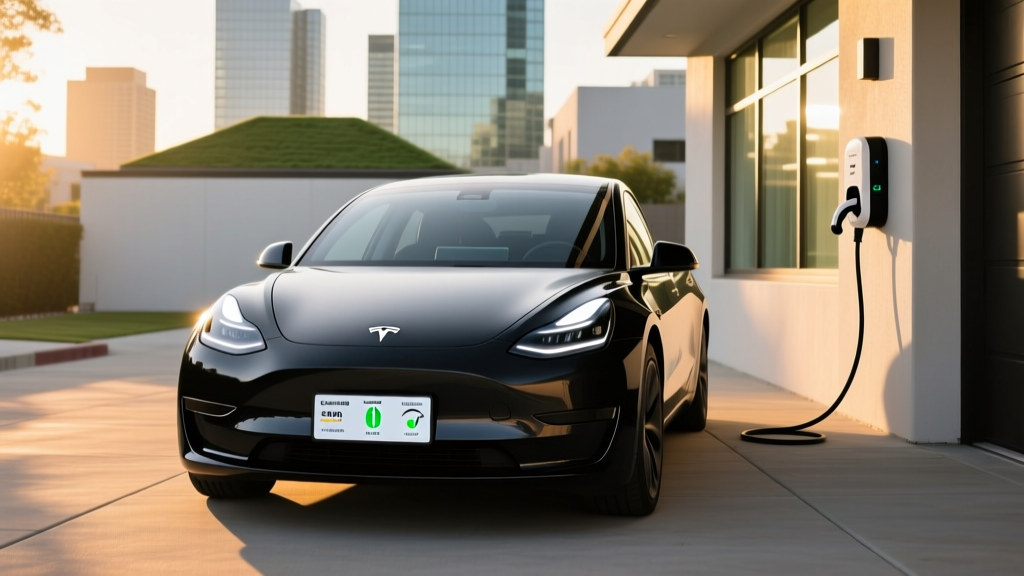
For home charging, Tesla's Wall Connector at 48 amps on a 60-amp circuit delivers 11.5 kW — enough to add roughly 33–44 miles of range per hour, or a full overnight charge for any trim. Installation costs typically run $800–$2,000 depending on your panel capacity and conduit distance. Homes with 100-amp panels may need a $1,500–$3,000 panel upgrade to support a dedicated 60-amp circuit.
Pricing, Tax Credits, and Total Cost
The 2026 Tesla Model 3 lineup starts at $38,990 for the RWD, with the Long Range AWD at $44,990 and the Performance at $52,990 (all prices before destination and incentives). These figures position the Model 3 aggressively against the Hyundai Ioniq 6, BMW i4, and Polestar 2.
| Trim | Base MSRP | §30D Credit (est.) | Effective Price |
|---|---|---|---|
| RWD | $38,990 | Up to $7,500 | ~$31,490 |
| Long Range AWD | $44,990 | Up to $7,500 | ~$37,490 |
| Performance AWD | $52,990 | Up to $7,500 | ~$45,490 |
- MSRP cap: Sedans must be under $55,000 — all Model 3 trims qualify.
- Income cap: AGI must not exceed $150,000 (single), $225,000 (head of household), or $300,000 (joint).
- Battery sourcing: Critical minerals and battery components must meet escalating domestic-content thresholds. Tesla's U.S.-built battery cells and LFP sourcing have generally allowed the Model 3 to qualify for the full $7,500, but verify current eligibility at fueleconomy.gov before purchasing.
- Point-of-sale transfer: You can transfer the credit to the dealer at purchase for an immediate price reduction, rather than waiting to claim it on your tax return.
Interior, Cargo, and Daily Livability
The refreshed Model 3 interior is noticeably more refined than pre-2024 models, with ventilated front seats, ambient lighting, acoustic glass, and a rear-seat touchscreen for climate and media control. The minimalist cabin remains polarizing — there are no physical buttons, and turn signals are on the steering wheel (a change from the traditional stalk), which takes genuine adaptation.
Practical dimensions:
- Cargo volume: 23 cu ft (trunk + frunk combined) — adequate for weekly groceries and two carry-on suitcases, but tighter than the Model Y's 30 cu ft or the Hyundai Ioniq 5's 27 cu ft.
- Rear legroom: 35.3 inches — sufficient for adults under 6 feet, but tall passengers will notice the sloping roofline cutting into headroom.
- Front headroom: 40.3 inches — generous for a low-slung sedan.
The 15.4-inch center touchscreen handles everything: navigation, media, climate, vehicle settings, and even a dashcam viewer. The Tesla app ecosystem, over-the-air updates, and built-in trip planner with real-time Supercharger routing remain class-leading in integration, even as competitors like Hyundai and BMW have closed the gap on infotainment responsiveness.
Driver Assistance and Active Safety Technology
Every Model 3 comes standard with Tesla Autopilot, which includes adaptive cruise control, lane centering, automatic emergency braking, blind-spot monitoring, and lane departure warning. This is a robust Level 2 system, and it's what contributes to the IIHS "Superior" front crash prevention score.
Full Self-Driving (Supervised) is a $8,000 add-on (or $99/month subscription) that adds automatic lane changes, navigate-on-autopilot, traffic light and stop sign recognition, and a claimed city-streets capability. However, FSD remains an SAE Level 2 system requiring constant driver supervision. NHTSA has investigated multiple incidents involving Tesla's driver-assist systems, and the agency requires all Level 2 systems to be used with an attentive driver behind the wheel.
- It does not make the Model 3 autonomous or self-driving.
- It does not eliminate the need for driver attention and hands-on-wheel readiness.
- It does not perform reliably in all weather conditions, construction zones, or unmapped areas.
- It does not replace your responsibility as the driver in the event of a crash.
Warranty and Long-Term Ownership
Tesla's warranty structure is straightforward:
- Basic vehicle: 4 years / 50,000 miles
- Battery and drive unit: 8 years / 100,000 miles (RWD) or 8 years / 120,000 miles (Long Range & Performance)
- Battery degradation threshold: Tesla warrants that the battery will retain at least 70% of its original capacity during the warranty period. If it drops below 70%, Tesla will repair or replace it.
Real-world degradation data from fleet monitoring services like Recurrent Auto shows that Model 3 batteries typically retain 90–95% capacity after 50,000 miles, with the steepest drop occurring in the first 10,000–15,000 miles before leveling off. LFP batteries in the RWD model show slightly less degradation over time compared to NMC, partly because owners can charge to 100% regularly without accelerating wear — a meaningful advantage for high-mileage commuters.
Insurance costs are a known pain point. The Model 3's repair costs (especially for body panels and sensor recalibration) push premiums higher than comparable gas sedans. Expect annual insurance of $1,800–$2,800 depending on your state, age, and driving record — shop quotes before committing.
Pros and Cons: The Honest Assessment
Pros
- Best-in-class safety ratings (NHTSA 5-star, IIHS TSP+)
- Industry-leading efficiency (132 MPGe RWD)
- Supercharger network access with NACS native port
- Strong resale value relative to EV segment average
- OTA updates continuously add features
- LFP battery option (RWD) allows daily 100% charging
Cons
- No physical controls — all functions through touchscreen
- Steering-wheel turn signals require relearning
- Rear headroom limited by sloping roofline
- Higher insurance premiums than gas sedan equivalents
- FSD costs $8,000 and remains Level 2 only
- DC fast charging tapers early vs. 800V competitors (Ioniq 5/6)
Is the Tesla Model 3 Worth It vs. Competitors?
The Model 3's strongest competitive advantage in 2026 is the combination of its safety ratings, efficiency, and Supercharger network access. The Hyundai Ioniq 6 offers more rear-seat space and 800V charging (10–80% in 18 minutes), but its charging network access depends on third-party reliability. The BMW i4 is more luxurious but starts $15,000 higher. The Polestar 2 is compelling but trails on range and efficiency.
Choose the Tesla Model 3 If:
- Safety ratings are your top priority (best combined NHTSA/IIHS scores in class)
- You want the most reliable DC fast-charging network (Superchargers)
- You prioritize efficiency and low cost-per-mile
- You're comfortable with a touchscreen-only interface
Consider Alternatives If:
- You need maximum rear-seat headroom (look at Ioniq 6 or BMW i4)
- You want the fastest DC charging speeds (Hyundai/Kia 800V platforms)
- You prefer physical buttons and traditional controls
- You want a luxury badge and quieter cabin (BMW i4, Mercedes EQB)
Frequently Asked Questions
What is the real-world range of the Tesla Model 3?
The EPA rates the Long Range AWD at 341 miles, but real-world highway driving at 70+ mph typically yields 285–310 miles. In freezing temperatures with cabin heating, expect 250–275 miles. The RWD model's 272-mile EPA rating drops to roughly 200–220 miles in cold highway conditions. Preconditioning the battery before driving and using seat heaters instead of cabin heat can recover 10–15 miles of range in winter.
How fast does the Model 3 charge at home and on the road?
At home on a Level 2 Tesla Wall Connector (48A/240V), the Model 3 adds 33–44 miles of range per hour, fully charging overnight. On DC fast chargers, the Long Range peaks at 250 kW (10–80% in ~25–27 minutes), while the RWD peaks at 170 kW (10–80% in ~30 minutes). Charge speeds taper significantly above 60% SoC, so plan to unplug at 80% on road trips for the best time efficiency.
Does the 2026 Tesla Model 3 qualify for the $7,500 federal tax credit?
All three Model 3 trims fall under the $55,000 MSRP cap for sedans under IRS §30D rules. However, eligibility also depends on your adjusted gross income (must not exceed $150K single / $300K joint) and current battery-sourcing requirements. Tesla's domestic battery production has generally allowed the Model 3 to qualify for the full $7,500, but always verify at fueleconomy.gov before purchase. The credit can be transferred at point of sale for an immediate price reduction.
Is the Tesla Model 3 safer than the Model Y?
Both vehicles earned 5-star NHTSA ratings and IIHS Top Safety Pick+ awards. The Model 3's lower center of gravity gives it a slight edge in rollover resistance, while the Model Y's higher ride height may offer marginal advantages in certain multi-vehicle collision scenarios. For pure crashworthiness scores, they are effectively equivalent — choose based on body style preference and cargo needs rather than a meaningful safety gap.
What are the biggest drawbacks of owning a Model 3?
The most common owner complaints center on the all-touchscreen interface (adjusting mirrors, opening the glovebox, and changing climate settings all require screen taps), the steering-wheel-mounted turn signals, and insurance premiums that run 20–40% higher than equivalent gas sedans. On road trips, DC charging speeds, while adequate, trail behind 800V competitors like the Hyundai Ioniq 5/6 and Kia EV6, which can complete 10–80% sessions roughly 7–10 minutes faster.
How long will the Model 3 battery last?
Tesla warranties the battery for 8 years / 100,000 miles (RWD) or 8 years / 120,000 miles (Long Range/Performance) with a minimum 70% capacity retention guarantee. Real-world fleet data from Recurrent Auto shows most Model 3 batteries retain 90%+ capacity at 50,000 miles. Full battery replacement outside of warranty currently costs between $12,000–$16,000 depending on the pack, though prices continue to decline as battery manufacturing scales.