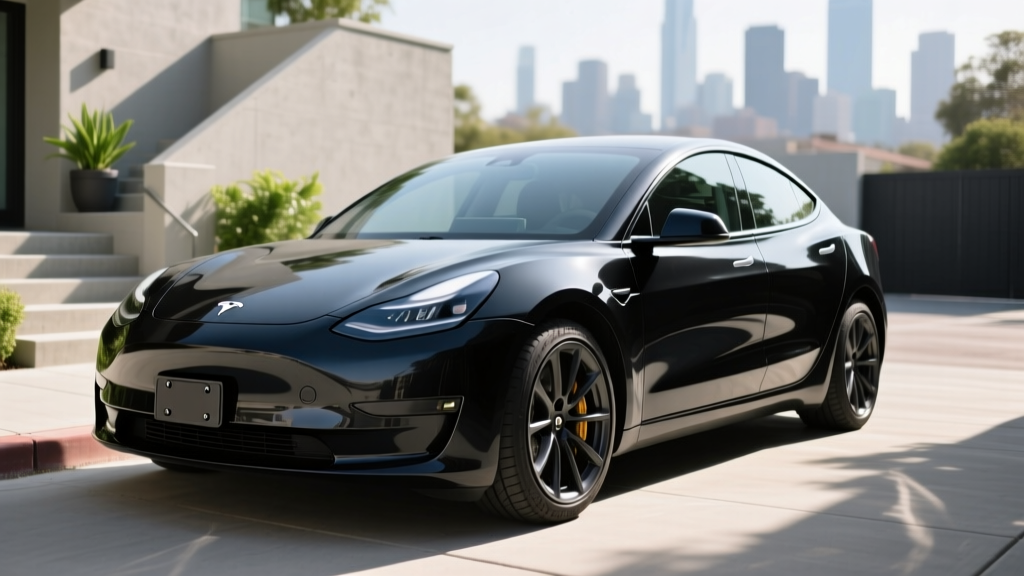
If you are researching the Tesla Model 3 safety rating, you are likely weighing one of the most popular electric sedans on the market. The refreshed Model 3 (often called the "Highland" generation, introduced for the 2024 model year and carried into 2026) brought meaningful structural, suspension, and interior upgrades — but safety remains the primary reason many buyers land on this car. This review covers the Model 3's crash-test performance in detail, then moves through the full ownership picture: real-world range, DC fast-charging behavior, pricing after the federal tax credit, and how it stacks up against rivals like the Hyundai Ioniq 6 and BMW i4.
Tesla Model 3 Safety Rating: NHTSA and IIHS Results
The 2026 Tesla Model 3 continues to earn top marks from both major U.S. safety agencies. Here is how the scores break down:
| Agency | Overall Rating | Key Sub-Scores |
|---|---|---|
| NHTSA | 5 Stars Overall | 5★ Frontal Crash, 5★ Side Crash, 5★ Rollover |
| IIHS | TOP SAFETY PICK+ | Good in all crashworthiness tests; Acceptable/Good headlight ratings on higher trims |
| Euro NCAP (EU variant) | 5 Stars (96% Adult Occupant) | Among highest adult-occupant scores ever recorded |
The NHTSA 5-star rating applies across all trims — RWD, Long Range AWD, and Performance. The Model 3's low center of gravity (battery pack mounted under the floor) gives it an exceptionally low rollover risk of approximately 6.6%, one of the lowest of any sedan on the road.
The IIHS TOP SAFETY PICK+ designation requires Good ratings in every crashworthiness evaluation, adequate headlight performance, and an advanced front crash prevention system. Tesla's automatic emergency braking (AEB) scored "Superior" in both vehicle-to-vehicle and vehicle-to-pedestrian tests.
Range, Battery, and Real-World Efficiency
Safety gets you to the shortlist; range and efficiency determine whether you keep the car. The 2026 Model 3 lineup offers three configurations with distinctly different battery chemistries and range profiles.
| Spec | RWD (Standard Range) | Long Range AWD | Performance AWD |
|---|---|---|---|
| EPA Range | 272 mi | 341 mi | 315 mi |
| Battery Capacity (usable) | ~57.5 kWh | ~75 kWh | ~75 kWh |
| Battery Chemistry | LFP (Lithium Iron Phosphate) | NMC (Nickel Manganese Cobalt) | NMC |
| Drivetrain | Rear-Wheel Drive | Dual-Motor AWD | Dual-Motor AWD |
| Horsepower | 283 hp | 346 hp | 510 hp |
| 0-60 mph | 5.8 sec | 4.2 sec | 2.9 sec |
| MPGe (combined) | 132 MPGe | 134 MPGe | 119 MPGe |
| Efficiency (kWh/100 mi) | 25 kWh/100 mi | 25 kWh/100 mi | 28 kWh/100 mi |
| Base MSRP | $38,990 | $45,990 | $53,990 |
The EPA numbers above assume mixed driving at moderate temperatures. Here is what to expect in practice:
- Highway driving at 75 mph: Expect ~10-15% reduction. The Long Range AWD delivers roughly 290-305 real highway miles.
- Cold weather (below 32°F / 0°C): Range drops 20-30% due to battery heating demands and cabin HVAC. The LFP RWD pack is especially sensitive — preconditioning via the Tesla app before departure is essential.
- City / stop-and-go: Regenerative braking recovers energy, often exceeding EPA estimates. The RWD model can achieve 280+ miles in urban commuting.
Charging Speed: DC Fast Charging and Home Level 2
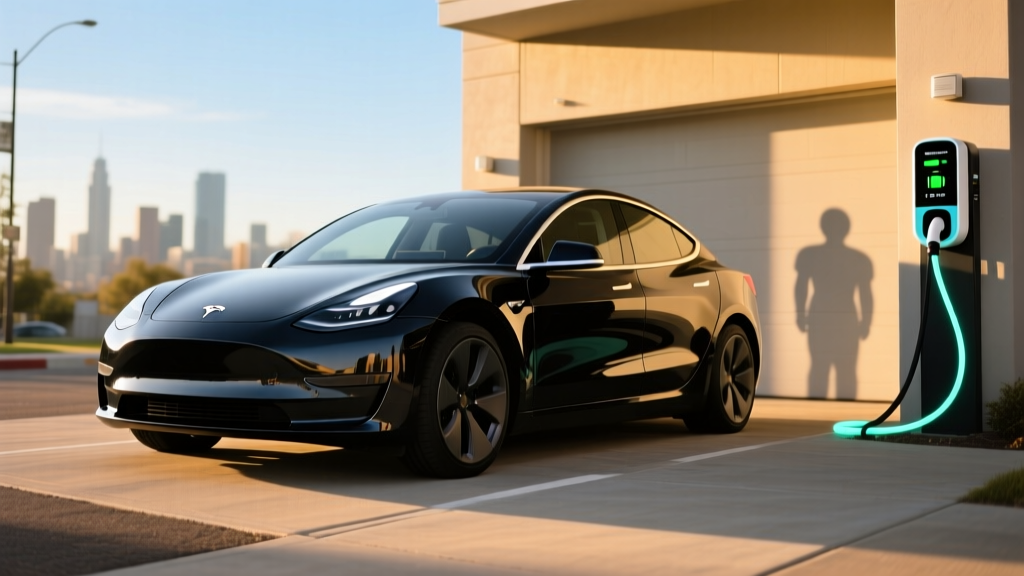
Charging speed is where the Highland-generation Model 3 made significant gains over its predecessor. The updated thermal management system sustains higher charge rates for longer.
| Charging Level | Spec | RWD (LFP) | Long Range / Performance (NMC) |
|---|---|---|---|
| DC Fast Charge (peak) | Max kW | 170 kW | 250 kW |
| DC Fast Charge | 10-80% time | ~25 min | ~18-20 min |
| Level 2 (240V, 48A) | Charge rate | 11.5 kW (~37 mi/hr) | 11.5 kW (~44 mi/hr) |
| Level 1 (120V) | Trickle charge | ~1.3 kW (~4 mi/hr) | ~1.3 kW (~5 mi/hr) |
| Connector | Standard | NACS (native Tesla) — Supercharger compatible; CCS adapters available | |
Charge curve reality: The 250 kW peak on Long Range and Performance models is not sustained across the full session. The battery accepts peak power between roughly 10-35% SoC, then tapers progressively. A typical 10-80% session at a V3 Supercharger (250 kW cabinet) averages about 130-145 kW sustained. On a 10-90% road-trip session, plan for roughly 30-35 minutes total including the taper above 80%.
The RWD's LFP battery charges more slowly in absolute terms (170 kW peak) but has a flatter charge curve, meaning the gap between peak and sustained rates is narrower. Real-world 10-80% sessions average ~120 kW.
Preconditioning matters: Navigate to a Supercharger using the car's built-in navigation, and the battery will automatically warm to optimal charging temperature before arrival. In cold weather, this can cut your 10-80% time by 5-10 minutes compared to arriving at a charger without preconditioning.
Pricing, Trims, and Federal Tax Credit Eligibility
The Model 3's pricing positions it against premium compact sedans, but the federal tax credit can dramatically change the math. Here is the current landscape for 2026:
| Trim | MSRP (before dest.) | Est. After §30D Credit | §30D Eligible? |
|---|---|---|---|
| RWD (Standard Range) | $38,990 | ~$31,490 (if $7,500 applied) | Yes — meets MSRP cap, subject to income and sourcing rules |
| Long Range AWD | $45,990 | ~$38,490 (if $7,500 applied) | Yes — under $55,000 sedan cap |
| Performance AWD | $53,990 | ~$46,490 (if $7,500 applied) | Yes — under $55,000 sedan cap |
Critical §30D eligibility requirements (per IRS.gov):
- MSRP cap: Sedans must be under $55,000 MSRP. All Model 3 trims currently qualify.
- Buyer income limits: Modified AGI must not exceed $150,000 (single), $225,000 (head of household), or $300,000 (joint filing).
- Battery sourcing: The credit splits into two halves — $3,750 for critical-minerals sourcing and $3,750 for battery-component manufacturing. Qualification amounts ($3,750 or $7,500) depend on current-year sourcing thresholds, which tighten annually. Verify the exact credit amount for your delivery date on the IRS clean vehicle credit page.
- Point-of-sale transfer: As of 2024+, you can transfer the credit to the dealer at purchase, reducing your out-of-pocket cost immediately rather than waiting for a tax return. This applies to Tesla's direct sales model as well.
Disclaimer: Tax credit eligibility depends on individual circumstances, delivery date, and evolving IRS guidance. Consult a tax professional before making purchase decisions based on the credit.
Interior, Cargo, Technology, and Daily Livability
The Highland refresh transformed the Model 3 interior from "minimal to a fault" to genuinely premium. Ventilated front seats, ambient lighting, acoustic glass all around, rear-seat ventilation, and a rear touchscreen for climate and media controls bring it in line with what German competitors have offered for years.
Dimensions and space:
- Front headroom: 40.3 in | Front legroom: 42.7 in
- Rear headroom: 37.8 in | Rear legroom: 35.2 in
- Trunk: 21.0 cu ft (rear) + 3.1 cu ft (frunk) = 24.1 cu ft total
- Ground clearance: 5.5 in
The rear trunk opening is a conventional sedan lid, not a hatchback — this limits practicality for bulky cargo compared to the Model Y or Hyundai Ioniq 6's hatch design. Two large suitcases fit easily; four requires careful packing.
Tech highlights:
- 15.4-inch center touchscreen with integrated navigation, media, and vehicle controls (no physical instrument cluster)
- Tesla app integration: remote preconditioning, Sentry Mode camera access, software updates
- 8-camera vision system for Autopilot and FSD (Supervised)
- Over-the-air updates that add features post-purchase
- No Apple CarPlay or Android Auto — Tesla's native interface is the only option
Notable drawbacks:
- No physical stalks — turn signals are steering-wheel buttons (controversial; takes 2-4 weeks of adaptation for most drivers)
- Gear selection is via the touchscreen swipe or overhead console (no traditional shifter)
- No heads-up display
- Rear visibility is limited by the sloping roofline; rely on the backup camera
- Panel-gap consistency has improved but still varies unit to unit
Warranty Coverage and Long-Term Ownership
| Coverage | Term |
|---|---|
| Basic Vehicle (bumper-to-bumper) | 4 years / 50,000 miles |
| Battery & Drive Unit (RWD) | 8 years / 100,000 miles (≥70% retention) |
| Battery & Drive Unit (Long Range / Performance) | 8 years / 120,000 miles (≥70% retention) |
| Rust-through (perforation) | 12 years / unlimited miles |
The 70% battery retention threshold is standard for the industry. Real-world degradation data from Tesla's fleet suggests the NMC packs in Long Range and Performance models lose approximately 10-12% capacity over the first 100,000 miles, then flatten considerably. LFP packs (RWD) show slightly higher initial degradation (~8-10% in 50,000 miles) but excellent long-term stability — many fleet examples exceed 150,000 miles with 85%+ retention when charged to 100% regularly as recommended.
Insurance note: Model 3 insurance premiums run 15-25% higher than comparable gas sedans due to repair costs (specialized aluminum body panels, sensor recalibration). Budget $1,800-$2,800/year depending on your state and driving record. Tesla Insurance is available in select states and can be competitive — get quotes from both.
Tesla Model 3 vs. Key Competitors
| Metric | Tesla Model 3 LR AWD | Hyundai Ioniq 6 SEL AWD | BMW i4 eDrive40 |
|---|---|---|---|
| EPA Range | 341 mi | 316 mi | 307 mi |
| Peak DC Charge | 250 kW | 235 kW | 205 kW |
| 10-80% DCFC Time | ~18-20 min | ~18 min | ~31 min |
| 0-60 mph | 4.2 sec | 5.1 sec | 5.5 sec |
| Base MSRP | $45,990 | ~$48,500 | ~$57,900 |
| NHTSA Overall | 5 Stars | 5 Stars | Not fully rated |
| IIHS Rating | TSP+ | TSP+ | TSP |
| Supercharger Access | Native | Via NACS adapter | Via NACS adapter |
The Model 3 Long Range AWD offers the best combination of range, charging speed, and price in this segment. The Ioniq 6 is a strong alternative if you prefer a conventional instrument cluster, physical buttons, Apple CarPlay, and hatchback cargo access. The BMW i4 wins on driving dynamics and build quality but costs significantly more and charges more slowly.
Choose the Model 3 if: You prioritize range, Supercharger network access, software features, and value. You are comfortable with a touchscreen-centric interface and don't need a hatchback.
Choose the Ioniq 6 if: You want CarPlay/Android Auto, physical controls, hatchback cargo access, and Hyundai's 10-year powertrain warranty.
Choose the BMW i4 if: Driving dynamics, interior materials, and brand prestige matter more than maximum range or lowest price.
Pros, Cons, and Final Verdict
- 5-star NHTSA and IIHS TSP+ safety ratings across all trims
- Class-leading 341-mile EPA range (Long Range AWD)
- 250 kW DC fast charging with 10-80% in ~18-20 minutes
- Native Supercharger access — the most reliable public charging network
- LFP option (RWD) for lower cost and excellent battery longevity
- Over-the-air updates keep the car current post-purchase
- Strong resale value relative to EV segment average
- No Apple CarPlay or Android Auto
- Steering-wheel turn-signal buttons are divisive
- Sedan trunk (not hatchback) limits cargo flexibility
- Insurance costs above segment average
- FSD (Supervised) remains Level 2 — not autonomous despite the name
- Minimal physical controls — everything routes through the touchscreen
- Service center wait times can be long in some markets
Verdict: The 2026 Tesla Model 3 earns its reputation as the default EV sedan recommendation. The safety ratings are among the best of any vehicle — electric or gas — on the road. Combined with top-tier range, fast charging, and a price that qualifies for the full federal tax credit, it is the most complete package in its class. The primary caveats are the touchscreen-only interface, lack of CarPlay, and sedan trunk limitations. If those don't bother you, the Model 3 is the car to beat.
Frequently Asked Questions
What is the Tesla Model 3's NHTSA safety rating?
The 2026 Tesla Model 3 holds a 5-star overall NHTSA safety rating across all trims, with 5 stars in frontal crash, side crash, and rollover categories. Its rollover risk of ~6.6% is among the lowest of any sedan.
Does the Tesla Model 3 qualify for the $7,500 federal EV tax credit?
All 2026 Model 3 trims fall under the $55,000 MSRP sedan cap and are potentially eligible for up to $7,500 under IRS §30D. However, the actual credit amount depends on battery-sourcing requirements (which tighten yearly), and buyer income must not exceed $150K single / $300K joint. Check the IRS clean vehicle credit page for current sourcing rules.
What is the real-world range of the Tesla Model 3 Long Range?
The EPA rates the Long Range AWD at 341 miles. In real-world highway driving at 75 mph, expect 290-305 miles. In cold weather (below freezing), plan for 240-270 miles depending on cabin heating and whether you precondition the battery.
How fast does the Tesla Model 3 charge at home?
On a 240V, 48-amp Level 2 home charger (such as the Tesla Wall Connector), the Model 3 charges at up to 11.5 kW, adding approximately 37-44 miles of range per hour depending on trim. A full overnight charge (8 hours) adds roughly 300+ miles — more than enough for daily driving.
Is the Tesla Model 3 a good car for road trips?
Yes. The Long Range AWD's 341-mile EPA range combined with native Tesla Supercharger access (250 kW peak, 10-80% in ~18-20 minutes) makes it one of the best road-trip EVs available. The integrated navigation automatically plans charging stops and preconditions the battery for each one.
LFP vs NMC: Which Model 3 battery should I choose?
Choose LFP (RWD trim) if you want lower cost ($38,990 MSRP), the ability to charge to 100% daily, and excellent long-term cycle life — ideal for commuters who can charge at home. Choose NMC (Long Range / Performance) if you need maximum range, faster DC charging, or AWD traction for snow and mountain driving.