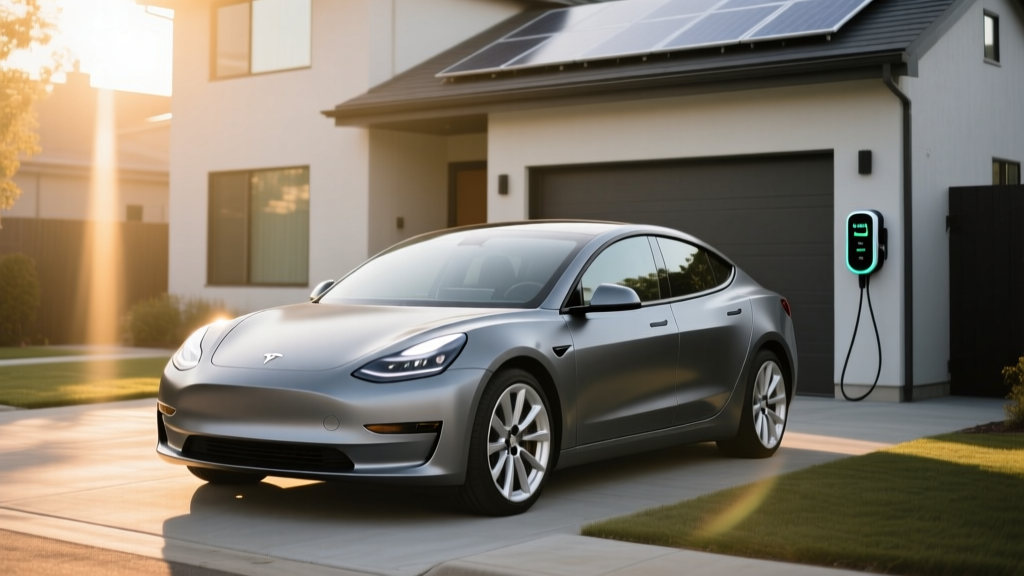
The Tesla Model 3 Rear-Wheel Drive remains the automaker's most affordable sedan and one of the best-selling electric vehicles in the United States. Following the "Highland" refresh that debuted for the 2024 model year, the Model 3 RWD carries into 2026 with meaningful refinements in ride quality, cabin noise, and interior materials — while maintaining the price-to-range ratio that made it a benchmark in the entry-level EV segment.
This review covers the 2026 Tesla Model 3 RWD with exact EPA data, real-world range observations, charging speeds, battery chemistry trade-offs, and a clear breakdown of federal tax credit eligibility under current IRS §30D rules. If you're cross-shopping the Model 3 RWD against the Hyundai Ioniq 6, Chevrolet Equinox EV, or BMW i4, the numbers below will tell you where Tesla still leads — and where it falls short.
Quick Verdict: Who Should Buy the Model 3 RWD?
The Model 3 RWD is the right pick for buyers who want a proven EV platform with access to the Supercharger network, strong efficiency, and a starting price near $38,000 before incentives. It's best suited for commuters, urban professionals, and couples who need a tech-forward daily driver with enough range for weekend road trips. It is not ideal for families needing easy child-seat installation, drivers who frequently tow, or anyone who prefers physical buttons over touchscreen controls.
Choose the Model 3 RWD if: You want the lowest-cost entry into Tesla's ecosystem, value access to the 17,000+ Supercharger network, commute under 60 miles daily, and prefer a minimalist cabin.
Look elsewhere if: You need rear-seat space rivaling a midsize sedan, want Apple CarPlay/Android Auto, require a hatchback or liftback for cargo versatility, or frequently drive in extreme cold where LFP chemistry loses more range.
Range, Battery & Efficiency
| Specification | 2026 Model 3 RWD |
|---|---|
| EPA Estimated Range | 272 miles |
| Battery Capacity (usable) | ~58 kWh |
| Battery Chemistry | LFP (Lithium Iron Phosphate) |
| EPA Efficiency (combined) | 132 MPGe / 25 kWh/100 mi |
| Drivetrain | Rear-Wheel Drive, single motor |
| Horsepower | 271 hp |
| 0–60 mph | 5.8 seconds |
The Model 3 RWD uses a lithium iron phosphate (LFP) battery pack, a chemistry choice that prioritizes longevity, thermal stability, and lower cost over maximum energy density. LFP cells tolerate repeated charging to 100% without the accelerated degradation seen in NMC (nickel manganese cobalt) packs — Tesla actually recommends periodic 100% charges for LFP vehicles to keep the battery management system calibrated.
The trade-off: LFP batteries are heavier and less energy-dense than NMC, which is why the RWD variant carries a smaller ~58 kWh usable pack compared to the 75 kWh pack in the Long Range AWD model. Cold-weather performance also suffers more with LFP chemistry, as we detail below.
Real-World Range Reality: The EPA rates the Model 3 RWD at 272 miles. In mixed driving at moderate temperatures (60–80°F), expect 250–265 miles. On sustained highway runs at 75 mph, plan for roughly 230–245 miles. In freezing conditions (below 32°F), LFP range loss can reach 25–35%, dropping effective range to 180–210 miles depending on cabin heating use and preconditioning habits. Always precondition the battery via the Tesla app before departure in cold weather — this warms the pack and recovers significant range.
For context, the EPA's fueleconomy.gov listing confirms the 132 MPGe combined figure, which translates to roughly 25 kWh consumed per 100 miles of driving — among the most efficient sedans in its class.
Charging Speed: DC Fast, Level 2 & Home Setup
Charging speed is where the Model 3 RWD's LFP battery and 400-volt architecture show their limitations compared to 800V competitors like the Hyundai Ioniq 6 or Kia EV6. Here's the exact breakdown:
| Charging Level | Max Rate | Speed / Time |
|---|---|---|
| Level 1 (120V household) | ~1.4 kW | ~3–4 miles per hour |
| Level 2 (240V home/work) | 11.5 kW (48A) | ~44 miles per hour; full charge in ~6 hours |
| DC Fast Charge (CCS/NACS) | Peak 170 kW | 10–80% in ~25 minutes |
DC fast-charging reality: The Model 3 RWD peaks at 170 kW at a Supercharger or compatible DC station, but that peak is short-lived. The charge curve tapers significantly above 55–60% state of charge. A 10–80% session takes approximately 25 minutes under ideal conditions (warm battery, V3/V4 Supercharger). Expect 80–100% top-offs to add another 20+ minutes due to aggressive taper — a characteristic of LFP packs that protect cell longevity.
Home Level 2 charging: The onboard charger accepts up to 11.5 kW (48 amps) on a 240V circuit. For a full installation with a Tesla Wall Connector or equivalent Level 2 unit on a 60-amp dedicated circuit, budget $800–$2,000 depending on your electrical panel's proximity to the garage and whether a panel upgrade (to 200A service) is needed. Most Model 3 RWD owners who charge overnight at home start each morning at or near 100% — making the 272-mile range more than sufficient for daily use.
The Highland-refreshed Model 3 comes with a NACS (North American Charging Standard) port natively, granting direct access to Tesla's Supercharger network without adapters. For non-Tesla DC networks using CCS connectors, a NACS-to-CCS adapter (available from Tesla and third parties) is required.
Performance, Ride & Driving Dynamics
The single rear-mounted motor produces 271 horsepower and propels the Model 3 RWD from 0–60 mph in 5.8 seconds. That's quick enough for confident highway merging and passing, though noticeably a step behind the Long Range AWD's 4.2-second sprint. The rear-wheel-drive layout gives the car a balanced, sporty feel through corners, and the Highland refresh significantly improved ride comfort with revised dampers and additional sound-deadening material.
Regenerative braking in the Model 3 is aggressive and largely enables one-pedal driving in most traffic scenarios. Tesla removed the user-adjustable regen setting in recent software updates, so the default strong regen is the only mode — most owners adapt within a week, but it's worth noting if you're transitioning from a gas car or an EV with milder regen blending.
Driver assistance: Every Model 3 ships with Basic Autopilot, which includes Traffic-Aware Cruise Control and Autosteer (lane centering). This is an SAE Level 2 system — it assists with steering and speed but requires the driver to remain fully attentive with hands on the wheel. Full Self-Driving (Supervised) is an $8,000 add-on or $99/month subscription that adds automated lane changes, navigation-guided on/off-ramp transitions, and traffic-light recognition. Despite the name, FSD Supervised remains SAE Level 2 and is not autonomous driving. The driver is legally and practically responsible at all times.
Interior, Cargo & Technology
The Model 3 cabin is famously minimalist: a single 15.4-inch touchscreen handles all infotainment, climate, and vehicle controls. The Highland refresh added ventilated front seats, ambient lighting, improved materials (including a fabric dashboard trim replacing the previous all-vinyl look), and a rear-seat 8-inch touchscreen for passengers to control climate and media.
| Dimension | Measurement |
|---|---|
| Front Legroom | 42.7 inches |
| Rear Legroom | 35.2 inches |
| Cargo Volume (trunk) | 21.0 cu ft |
| Frunk (front trunk) | 3.1 cu ft |
| Total Cargo | 24.1 cu ft |
Rear-seat space is adequate for adults on shorter trips but tighter than competitors like the Hyundai Ioniq 6 (38.2 inches rear legroom) or the BMW i4. The trunk is a conventional sedan lid rather than a liftback, limiting the size of items you can load — a notable drawback if you regularly haul bulky gear. The 3.1 cu ft frunk is useful for charging cables and small bags.
Notable tech omissions: The Model 3 does not support Apple CarPlay or Android Auto. Navigation, music, and phone integration all run through Tesla's proprietary software. For most Tesla owners this is a non-issue — the native system is responsive and feature-rich — but it remains a dealbreaker for some buyers deeply invested in Apple or Google ecosystems.
Pricing, Trims & Federal Tax Credit
| Item | Amount |
|---|---|
| 2026 Model 3 RWD Base MSRP | $38,990 |
| Destination Fee | $1,390 |
| Total Before Incentives | $40,380 |
| Federal §30D Tax Credit (if eligible) | Up to $7,500 |
| Effective Price After Max Credit | ~$32,880 |
The Model 3 RWD is Tesla's entry point, and at $38,990 it undercuts the Long Range AWD ($44,990) and Performance ($50,990) trims by a wide margin. The base price includes Autopilot, 18-inch wheels, and the full tech suite. Common upgrades include paint colors ($1,000–$2,500), 19-inch wheels ($1,500), and FSD Supervised ($8,000 or subscription).
Federal tax credit eligibility (§30D): The Model 3 RWD may qualify for up to $7,500 in federal tax credits, but eligibility depends on several requirements that change periodically. As of 2026, key rules include:
- MSRP cap: Sedans must be priced at or below $55,000 — the Model 3 RWD clears this easily.
- Buyer income limits: Modified adjusted gross income must not exceed $150,000 (single), $225,000 (head of household), or $300,000 (joint filing).
- Battery sourcing: A percentage of critical minerals must be sourced from the U.S. or free-trade-agreement countries, and battery components must be manufactured or assembled in North America. Tesla has shifted significant battery production to U.S. facilities, but the exact credit amount ($3,750 or $7,500) depends on current-year sourcing thresholds. Check the latest eligibility at IRS.gov.
- Point-of-sale transfer: Eligible buyers can transfer the credit to the dealer at purchase, reducing the out-of-pocket price immediately rather than waiting for a tax refund.
Always verify your personal eligibility with a tax professional and cross-reference the fueleconomy.gov tax credit database for the latest qualifying vehicles and credit amounts.
Warranty & Long-Term Ownership
Tesla's warranty coverage for the Model 3 RWD:
- Basic Vehicle Limited Warranty: 4 years / 50,000 miles, whichever comes first
- Battery & Drive Unit Warranty: 8 years / 100,000 miles, with minimum 70% capacity retention over the warranty period
The LFP battery chemistry is a long-term ownership advantage. Data from fleet monitoring suggests LFP packs degrade more slowly in the first 100,000 miles compared to NMC, often retaining 90%+ capacity at the warranty threshold. Tesla's 70% retention guarantee is conservative relative to real-world LFP performance, giving owners meaningful peace of mind.
Maintenance costs are low: no oil changes, no spark plugs, reduced brake wear from regenerative braking. Expect to budget for cabin air filter replacement (~$100–$150 every 2–3 years), tire rotation, and eventual tire replacement (EVs wear tires faster due to instant torque and heavier curb weight). Insurance premiums for the Model 3 tend to be above the segment average — get quotes before purchasing, as rates vary significantly by state and driver profile.
Pros, Cons & How It Compares
Pros
- Lowest-cost entry to Tesla's Supercharger network (17,000+ stalls globally)
- Class-leading efficiency at 132 MPGe combined
- LFP battery supports routine 100% charging with minimal degradation
- Excellent over-the-air software updates that add features post-purchase
- Strong resale value relative to EV segment average
- Highland refresh brought meaningful ride and noise improvements
Cons
- 170 kW peak DC charging is slower than 800V competitors (Ioniq 6: 350 kW)
- Cold-weather range loss is significant with LFP chemistry (25–35%)
- No Apple CarPlay or Android Auto
- Sedan trunk opening limits cargo versatility vs hatchback rivals
- Rear-seat legroom is tighter than some competitors
- Touchscreen-only controls can be distracting for climate and mirror adjustments
Vs. Hyundai Ioniq 6 SE Standard Range: The Ioniq 6 offers 800V architecture (350 kW peak charging), Apple CarPlay, and a more spacious rear seat, but costs slightly more and lacks Supercharger access (though Hyundai is gaining NACS compatibility). If fast DC charging is your priority, the Ioniq 6 wins on paper.
Vs. Chevrolet Equinox EV 2LT: The Equinox EV offers more cargo space (crossover form factor) and a comparable price after incentives, but its efficiency and driving dynamics don't match the Model 3's sedan refinement.
Vs. Tesla Model 3 Long Range AWD: The $6,000 upgrade to Long Range adds 90+ miles of EPA range (363 miles), dual-motor AWD, and an NMC battery better suited to cold climates. If you road-trip frequently or live in northern states, the Long Range is the stronger value despite the higher price.
Frequently Asked Questions
What is the real-world range of the Tesla Model 3 RWD?
The EPA rates it at 272 miles. In temperate mixed driving, expect 250–265 miles. Highway-only at 75 mph drops to roughly 230–245 miles. In freezing weather, LFP range loss of 25–35% means planning for 180–210 miles unless you precondition the battery aggressively.
How fast does the Model 3 RWD charge at home and on the road?
At home on a 240V Level 2 charger, it adds about 44 miles of range per hour (11.5 kW), fully charging in roughly 6 hours. On DC fast chargers, it peaks at 170 kW and charges from 10–80% in approximately 25 minutes, with significant taper above 60%.
Does the Tesla Model 3 RWD qualify for the $7,500 federal tax credit?
It may qualify for up to $7,500 under IRS §30D rules, depending on your income, the vehicle's battery-sourcing compliance for the current year, and MSRP caps (which the Model 3 RWD clears). The credit can be applied at the point of sale. Verify current eligibility on IRS.gov and consult a tax professional.
Is the Model 3 RWD worth it over the Long Range AWD?
For daily commuters who charge at home and rarely road-trip over 200 miles, the RWD saves $6,000 and is the smarter buy. For frequent travelers, cold-climate drivers, or those who need AWD traction, the Long Range AWD's extra range, dual motors, and NMC battery justify the premium.
Can I charge a Model 3 RWD at non-Tesla charging stations?
Yes. The Model 3 uses a NACS port natively, which works at all Tesla Superchargers. For CCS-equipped networks (Electrify America, EVgo, etc.), you'll need a NACS-to-CCS adapter. Tesla sells one, and third-party options are available.
How long will the LFP battery last?
LFP chemistry is known for exceptional cycle life — often exceeding 3,000+ full charge cycles before significant degradation. Tesla warranties the battery for 8 years / 100,000 miles at 70%+ capacity retention. Real-world fleet data suggests many LFP packs retain 90%+ capacity at 100,000 miles, making this one of the most durable battery options available.