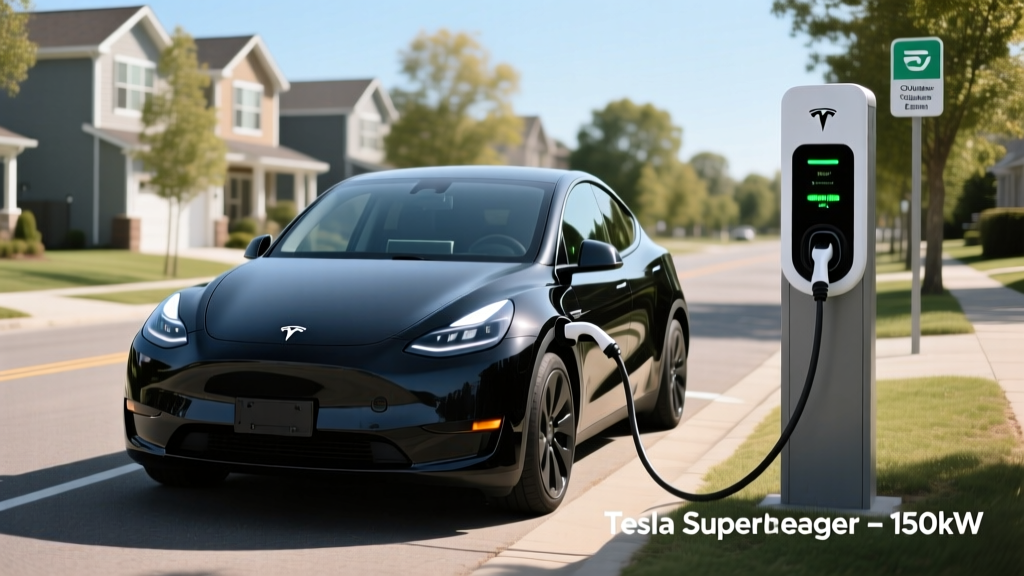
Quick Verdict: The Efficiency King of the Tesla Lineup
If you're searching for the most efficient Tesla model you can buy today, the answer is the 2026 Tesla Model 3 Rear-Wheel Drive (RWD). With an EPA-estimated 132 MPGe combined and 272 miles of range from a relatively modest 60 kWh (usable) LFP battery, the base Model 3 extracts more miles per kilowatt-hour than any other vehicle in Tesla's current catalog — including the refreshed Model Y, the Model S Long Range, and the Cybertruck.
Efficiency isn't just a spec-sheet bragging right. It directly determines how far you go on a charge, how little you pay per mile, and how quickly you replenish at a DC fast charger. The Model 3 RWD achieves roughly 26 kWh per 100 miles in mixed driving — a figure that rivals the Hyundai Ioniq 6 and undercuts most electric sedans on the market. Pair that with Tesla's Supercharger network access and a sub-$40,000 starting price, and the Model 3 RWD becomes the default recommendation for cost-conscious, efficiency-focused EV buyers.
This review covers everything you need to decide: real-world range, LFP charging behavior, tax credit eligibility under current IRS §30D rules, and how the Model 3 RWD stacks up against its closest competitors.
2026 Tesla Model 3 RWD: Core Specifications
| Attribute | Value |
|---|---|
| EPA Range | 272 miles |
| EPA Efficiency (Combined) | 132 MPGe (26 kWh/100 mi) |
| Battery (Usable) | ~60 kWh, LFP (lithium iron phosphate) |
| Drivetrain | Rear-Wheel Drive (single motor) |
| Horsepower | 271 hp |
| 0–60 mph | 5.8 seconds |
| Max DC Fast Charge | 170 kW peak |
| 10–80% DC Charge Time | ~25 minutes |
| Level 2 Home Charging | 11.5 kW (~44 mi/hr) |
| Cargo Volume | 23 cu ft (trunk + frunk combined) |
| Rear Legroom | 35.3 inches |
| Base MSRP | $38,990 (before destination) |
| Battery Warranty | 8 years / 100,000 miles |
Range and Efficiency: EPA Sticker vs. Real World
EPA Estimate: 272 miles
Real-World Expectation: ~230–250 miles highway (70–80 mph); ~255–270 miles mixed city/suburban; ~190–215 miles in sub-freezing winter conditions
The EPA's 272-mile figure for the Model 3 RWD is derived from a standardized test cycle that blends city and highway driving at moderate temperatures. In practice, your mileage will vary based on speed, ambient temperature, elevation changes, and climate-control usage.
Highway driving is where EVs lose efficiency most noticeably. At sustained 75–80 mph, expect to see roughly 230–250 miles of range before needing to charge. The Model 3's slippery 0.219 drag coefficient helps, but aerodynamic drag increases with the square of speed — going from 65 to 80 mph costs real miles.
Cold weather is the bigger range killer. LFP batteries are more sensitive to low temperatures than NMC chemistry. In sustained sub-30°F conditions with cabin heating active, plan for 20–30% range reduction. Tesla's heat pump (standard on the refreshed Model 3) mitigates this significantly compared to older resistance-heater EVs, but physics is physics. Preconditioning the battery while plugged in — using the Tesla app's scheduled departure feature — recovers some of that loss.
City and suburban driving is where the Model 3 RWD shines brightest. Regenerative braking recaptures energy at every stop, and the single-motor RWD powertrain has fewer drivetrain losses than a dual-motor AWD setup. Many owners report achieving or slightly exceeding the EPA figure in stop-and-go commuting at moderate speeds.
For context on how efficiency is measured, the EPA's fueleconomy.gov listing provides the official 132 MPGe combined rating, broken down by city and highway cycles.
Charging: LFP Behavior, DC Speeds, and Home Setup
Charging the Model 3 RWD is a different experience from its Long Range and Performance siblings, primarily because of the LFP (lithium iron phosphate) battery chemistry. Here's what you need to know.
DC Fast Charging
| State of Charge | Peak Power | Notes |
|---|---|---|
| 10–40% | ~170 kW | Peak rate sustained briefly |
| 40–60% | ~130–150 kW | Sustained mid-curve plateau |
| 60–80% | ~80–110 kW | Taper begins |
| 80–100% | ~30–50 kW | Significant taper; avoid unless needed |
The Model 3 RWD peaks at roughly 170 kW on a V3 Supercharger or compatible CCS/NACS DC fast charger. That's lower than the Long Range's ~250 kW peak, but the smaller 60 kWh battery means you're filling fewer total kilowatt-hours. The result: a 10–80% charge in approximately 25 minutes under optimal conditions (warm battery, low starting SoC, high-ambient-power station).
One critical LFP advantage: Tesla recommends charging LFP-equipped vehicles to 100% regularly — at least once per week. Unlike NMC batteries, which benefit from staying between 20–80% for longevity, LFP cells are more stable at full charge and actually benefit from periodic full calibrations for accurate range estimation. This effectively gives you the full 272 miles as usable daily range, not just a road-trip maximum.
Level 2 Home Charging
On a 48-amp Level 2 home charger (like the Tesla Wall Connector on a 60-amp circuit), the Model 3 RWD accepts up to 11.5 kW, adding roughly 44 miles of range per hour. A full 0–100% charge takes about 6 hours — easily achievable overnight.
If your home has a standard 240V/50-amp circuit (common in newer homes with electric dryers or ranges), you'll see about 9.6 kW / ~37 miles per hour. Older homes with limited panel capacity may need an electrical upgrade — budget $500–$2,000+ for a panel upgrade if your electrician recommends one. Always consult a licensed electrician for final installation specs.
LFP vs. NMC: What It Means for You
| Factor | LFP (Model 3 RWD) | NMC (Model 3 Long Range) |
|---|---|---|
| Energy Density | Lower (heavier per kWh) | Higher (lighter, more range) |
| Cold-Weather Performance | More range loss in freezing temps | Better cold-weather retention |
| Longevity / Cycle Life | Superior — 3,000+ cycles typical | Good — ~1,500–2,000 cycles |
| Daily Charge Recommendation | Charge to 100% weekly | Keep at 80% daily, 100% for trips |
| Cost | Lower (cheaper materials) | Higher (cobalt, nickel) |
For a detailed technical breakdown of LFP degradation behavior and long-term ownership data, see our LFP vs. NMC battery chemistry guide.
Performance and Driving Dynamics
The Model 3 RWD isn't a performance car, but it doesn't feel slow. The single rear motor produces 271 horsepower and launches the sedan to 60 mph in 5.8 seconds — quicker than most gas-powered midsize sedans and more than adequate for highway merging and passing.
Rear-wheel drive means the Model 3 RWD is lighter than the dual-motor variants, and you feel it in corners. The refreshed Highlandand chassis tuning gives it a composed, slightly firm ride with responsive steering. It's the most engaging version of the Model 3 to drive on a back road, even if it lacks the brute acceleration of the Performance trim.
The trade-off: no all-wheel drive. If you live in a region with heavy snow or frequent ice, the RWD model with winter tires can manage, but the Long Range AWD provides meaningfully better traction in adverse conditions. For dry and wet pavement, RWD is perfectly capable.
Interior, Tech, and Cargo
The refreshed Model 3 interior is a substantial step up from pre-2024 models. Ventilated front seats, ambient lighting, a rear-seat touchscreen, and improved sound insulation make it feel closer to a premium European sedan than the spartan earlier generations.
Infotainment: The 15.4-inch center touchscreen runs Tesla's latest software, which is fast, responsive, and feature-rich. Navigation, streaming (Netflix/YouTube while parked), and over-the-air updates are all standard. There is no Apple CarPlay or Android Auto — Tesla's ecosystem is self-contained.
Driver Assistance: Basic Autopilot (traffic-aware cruise control and lane centering) is standard. Enhanced Autopilot ($6,000) and Full Self-Driving Supervised ($8,000) remain optional. Important clarification:
Tesla Autopilot and FSD (Supervised) are SAE Level 2 driver-assistance systems. The driver must remain fully engaged, hands on or near the wheel, and eyes on the road at all times. These systems do NOT make the car self-driving. Only Level 4 services like Waymo operate without a human driver in defined geographic zones.
Cargo: The trunk offers 21 cu ft of space, and the frunk (front trunk) adds another 2 cu ft — enough for a charging cable kit and a small bag. Total: 23 cu ft. That's competitive with the BMW i4 and slightly less than the Hyundai Ioniq 6's trunk, though the Model 3's liftback-style opening is practical.
Rear seat: Legroom measures 35.3 inches — adequate for average-height adults but tighter than a Camry or Accord. The rear floor is flat (no transmission tunnel hump), which helps the middle passenger.
Pricing, Trims, and Federal Tax Credit Eligibility
| Trim | MSRP | Range (EPA) | Drivetrain |
|---|---|---|---|
| RWD (Base) | $38,990 | 272 mi | RWD |
| Long Range AWD | $45,990 | 341 mi | Dual-Motor AWD |
| Performance | $52,990 | 315 mi | Dual-Motor AWD |
Destination charges add approximately $1,390 to the MSRP. Options like paint colors ($1,000–$2,500), 19-inch wheels ($1,500), and FSD can push the as-tested price well above $45,000 for a loaded RWD.
Federal Tax Credit: IRS §30D Eligibility
The 2026 Tesla Model 3 RWD may qualify for up to $7,500 under the federal §30D Clean Vehicle Credit — but eligibility depends on several conditions that change based on IRS guidance and battery-sourcing requirements. Here is the current framework:
- MSRP Cap: The vehicle's base MSRP must be ≤ $55,000 for sedans (the Model 3 qualifies at $38,990 base).
- Buyer Income Cap: Modified adjusted gross income must not exceed $150,000 (single), $225,000 (head of household), or $300,000 (married filing jointly).
- Battery Sourcing: A percentage of critical minerals and battery components must be sourced from the U.S. or free-trade-agreement countries. The credit splits into two halves ($3,750 + $3,750), and meeting only one requirement yields a partial $3,750 credit. Tesla's supply chain has been evolving — check the latest IRS qualified vehicles list before purchasing.
- Point-of-Sale Transfer: As of 2024, buyers can transfer the credit to the dealer at purchase, reducing the upfront price rather than waiting for a tax refund. Tesla supports this at checkout.
Always verify eligibility with a tax professional and the official IRS guidance for your purchase year. Rules are subject to legislative change.
Ownership Costs: Efficiency Pays Off Daily
The Model 3 RWD's efficiency advantage compounds over time. At 26 kWh/100 miles and a national average electricity rate of ~$0.16/kWh, you're paying roughly $0.042 per mile to charge at home. Compare that to a 30 MPG gas sedan at $3.40/gallon ($0.113/mile), and the Model 3 saves approximately $710 per year over 15,000 miles of driving — and more if your local electricity rates are lower or you have solar.
Insurance tends to be higher for Teslas than for comparable gas sedans — expect $1,800–$2,400/year depending on your state, age, and driving record. Get quotes before purchasing.
Maintenance is minimal: no oil changes, no spark plugs, cabin air filter replacement every 2 years, tire rotation every 6,250 miles, and occasional brake fluid and windshield washer checks. Tesla's battery and drive unit warranty covers 8 years or 100,000 miles (whichever comes first) with a minimum 70% capacity retention threshold.
How It Compares: Model 3 RWD vs. Key Rivals
| Model | EPA Range | MPGe | Base MSRP | Max DC kW |
|---|---|---|---|---|
| Tesla Model 3 RWD | 272 mi | 132 | $38,990 | 170 kW |
| Hyundai Ioniq 6 SE RWD | 305 mi | 140 | $37,500 | 240 kW |
| BMW i4 eDrive40 | 301 mi | 109 | $52,200 | 200 kW |
| Polestar 2 SM | 276 mi | 107 | $49,900 | 205 kW |
The Hyundai Ioniq 6 SE edges the Model 3 on both range and MPGe, and it charges faster (800V architecture enables 240 kW peak). But the Model 3 counters with Supercharger network access (still the most reliable public network in the U.S.), stronger software integration, better resale value, and a lower starting price when the tax credit applies.
The BMW i4 and Polestar 2 are premium alternatives, but neither matches the Model 3's efficiency or price-to-range ratio.
- Best-in-Tesla efficiency (132 MPGe)
- Lowest entry price in the lineup
- LFP battery longevity and 100% daily charging
- Supercharger network access (NACS native)
- Strong OTA updates and software ecosystem
- Engaging RWD driving dynamics
- No AWD option on RWD trim
- Greater cold-weather range loss (LFP)
- Lower DC fast-charge peak than Long Range
- No Apple CarPlay / Android Auto
- Rear seat legroom is average, not generous
- FSD is expensive and still Level 2
Who Should Buy the Model 3 RWD?
Choose the Model 3 RWD if:
- You commute 30–80 miles daily and want the lowest cost per mile
- You have home Level 2 charging and rarely road-trip more than 250 miles one-way
- You live in a mild-to-moderate climate (limited sub-freezing months)
- You want Tesla's software, Supercharger access, and resale value at the lowest price
- You prioritize long-term battery longevity (LFP cycle life)
- You need AWD for snow/ice (step up to Long Range AWD)
- You regularly drive 300+ miles between charging stops (Long Range or Ioniq 6)
- You need maximum rear-seat space for adults (consider Model Y or Ioniq 5)
- You live in a region with harsh winters and no garage (LFP cold-weather penalty)
Frequently Asked Questions
What is the real-world range of the Tesla Model 3 RWD?
The EPA rates the 2026 Model 3 RWD at 272 miles. In real-world highway driving at 75 mph, expect 230–250 miles. In city commuting with regenerative braking, you may match or slightly exceed 272 miles. In sustained sub-freezing temperatures, plan for 190–215 miles.
How fast does the Model 3 RWD charge?
On DC fast charging, it peaks at 170 kW and charges from 10–80% in approximately 25 minutes under optimal conditions. On a Level 2 home charger (48A/11.5 kW), it adds about 44 miles of range per hour, with a full charge taking roughly 6 hours.
Does the Model 3 RWD qualify for the $7,500 federal EV tax credit?
It can, but eligibility depends on your income (must be under IRS caps), the vehicle's battery sourcing compliance at time of purchase, and the MSRP cap for sedans ($55,000 — the Model 3 qualifies). Check the IRS qualified vehicle list and consult a tax professional for your specific situation.
Is the Model 3 RWD worth it vs. the Long Range?
If you don't need AWD or 341 miles of range, the RWD saves $7,000 at purchase and delivers better efficiency. The LFP battery also offers superior long-term cycle life. For road trippers and cold-climate drivers, the Long Range's extra range and NMC cold-weather performance justify the premium.
How long will the LFP battery last?
LFP batteries are rated for 3,000+ charge cycles before significant degradation. At 272 miles per cycle, that's theoretically over 800,000 miles — far more than the car itself will last. Tesla warranties the battery for 8 years / 100,000 miles with at least 70% capacity retention. Real-world data from high-mileage Teslas suggests LFP packs degrade more slowly than NMC in the early years.
Can I charge the Model 3 RWD to 100% daily?
Tesla recommends charging LFP-equipped vehicles to 100% at least once per week for accurate battery calibration. Daily 100% charging is acceptable for LFP chemistry, unlike NMC, which benefits from staying at 80% for daily use.