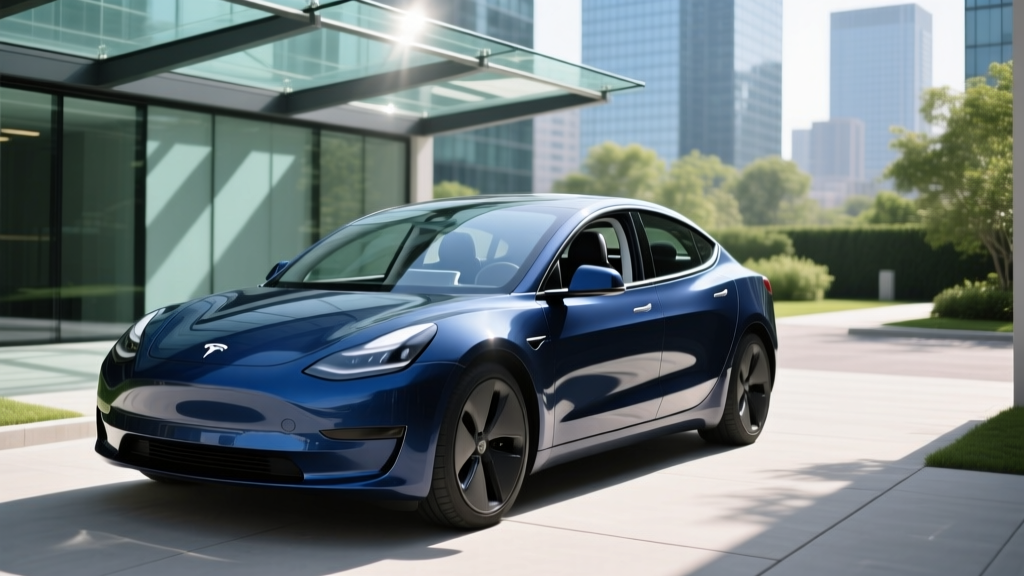
The Tesla Model 3's defining design feature isn't its sleek silhouette or minimalist interior — it's the expansive, all-glass roof that stretches from the windshield header to the rear trunk line. For 2026, Tesla continues to equip every Model 3 trim with this panoramic glass canopy, a choice that shapes everything from cabin ambiance to thermal management and even vehicle efficiency. If you've been searching for details on the Model 3 roof — whether it opens, how it handles heat, and what it means for real-world ownership — this review covers the full vehicle through that specific lens.
But a roof doesn't make a car. Below, we break down the complete 2026 Tesla Model 3 lineup: range, charging speed, performance, pricing, federal tax credit eligibility, and whether this sedan still earns its spot against growing competition from Hyundai, BMW, and others.
The Model 3 Roof: What You Actually Get
Every 2026 Tesla Model 3 — from the base Rear-Wheel Drive to the Performance trim — comes with a fixed, single-piece laminated glass roof panel. It does not open, tilt, or retract. There is no mechanical sunshade included from the factory. Tesla's design philosophy is deliberate: the glass roof maximizes headroom (no mechanical hardware eating into the ceiling), reduces weight compared to a retractable mechanism, and creates an airy, open cabin feel that makes the compact sedan feel significantly larger inside.
The glass itself is tinted and treated with infrared (IR) and ultraviolet (UV) filtering layers. Tesla states the roof blocks over 99% of UV radiation, which helps protect interior materials and occupants from sun exposure. However, the IR rejection — while improved on the 2024+ "Highland" refresh and carried forward — still allows meaningful heat gain in direct summer sunlight.
Real-World Cabin Comfort: The Heat Question
Here's where owner experience diverges from marketing. In moderate climates (Pacific Northwest, Northern Europe), the glass roof is a delight — flood the cabin with light, enjoy stargazing, and never feel enclosed. In hot climates (Arizona, Texas, Southern California summers), the roof becomes a significant heat source. Cabin temperatures can climb noticeably, and the climate control system works harder to compensate, which draws energy from the battery.
This isn't a trivial efficiency concern. Tesla's heat pump system (standard on all 2026 Model 3 trims) is highly effective, but cooling a glass-roofed cabin in 100°F+ ambient temperatures can reduce range by an estimated 5–10% compared to a vehicle with an insulated metal roof and shade. Many owners in sunbelt states invest in an aftermarket glass roof sunshade (typically $40–$80 from third-party suppliers) to mitigate this.
2026 Tesla Model 3: Full Specifications at a Glance
| Spec | RWD (Base) | Long Range AWD | Performance |
|---|---|---|---|
| EPA Range | 272 miles | 363 miles | 315 miles |
| Battery (usable) | ~60 kWh (LFP) | ~82 kWh (NMC) | ~82 kWh (NMC) |
| Drivetrain | Rear-Wheel Drive | Dual-Motor AWD | Dual-Motor AWD |
| Horsepower | 271 hp | 346 hp | 510 hp |
| 0–60 mph | 5.8 sec | 4.2 sec | 2.9 sec |
| MPGe (combined) | 132 MPGe | 130 MPGe | 118 MPGe |
| Efficiency | 25 kWh/100mi | 26 kWh/100mi | 29 kWh/100mi |
| Max DC Fast Charge | 170 kW | 250 kW | 250 kW |
| 10–80% DC Time | ~25 min | ~27 min | ~27 min |
| Level 2 Home Charge | 11.5 kW (~44 mi/hr) | 11.5 kW (~44 mi/hr) | 11.5 kW (~44 mi/hr) |
| Base MSRP | $38,990 | $45,490 | $52,990 |
Source: fueleconomy.gov and Tesla's official specifications. Prices reflect 2026 model year MSRP before destination fees.
Range and Efficiency: Sticker vs. Reality
The EPA range numbers above are useful starting points, but real-world results depend heavily on driving style, terrain, climate, and — yes — that glass roof's thermal behavior.
Real-World Range Expectations
RWD (272 mi EPA): Expect 230–250 miles in mixed driving at moderate temperatures. Sustained highway speeds above 75 mph drop this to roughly 210–230 miles. In freezing weather (below 32°F), the LFP battery's cold-weather performance is noticeably weaker than NMC chemistries — plan for 180–210 miles of usable range unless you precondition aggressively.
Long Range AWD (363 mi EPA): This is the sweet spot for road-trippers. Real-world mixed driving yields 310–340 miles comfortably. Highway-only at 70 mph nets about 290–310 miles. Cold weather (20°F) reduces range to approximately 260–290 miles, aided by the heat pump and NMC chemistry's superior cold tolerance.
Performance (315 mi EPA): Aggressive driving will slash range to 220–250 miles. If you drive it like a normal sedan, expect 270–295 miles in moderate conditions. Cold weather brings similar losses to the Long Range, around 240–270 miles.
LFP vs. NMC: What the Roof Buyer Should Know About the Battery Below
The RWD trim uses a lithium iron phosphate (LFP) battery, while the Long Range and Performance use nickel manganese cobalt (NMC). This matters for daily ownership:
| Factor | LFP (RWD) | NMC (Long Range / Performance) |
|---|---|---|
| Daily Charge Recommendation | 100% (charge to full daily) | 80% for daily; 100% for trips |
| Cold-Weather Performance | Weaker — more range loss below freezing | Better cold tolerance |
| Cycle Life / Longevity | Superior — 3,000+ cycles | Good — 1,500–2,000 cycles |
| Energy Density | Lower (heavier for same kWh) | Higher (lighter, more range) |
| Cost | Lower (cheaper to manufacture) | Higher |
If you live in a cold climate and are choosing the RWD specifically for its lower price, understand that the LFP battery's cold-weather limitations compound the glass roof's cooling demands in winter. The Long Range AWD is a more practical choice for northern-tier states.
Charging: DC Fast Charging and Home Level 2
Tesla's Supercharger network remains the gold standard for public DC fast charging — reliable, abundant, and seamlessly integrated with the car's navigation and battery preconditioning system.
DC Fast Charging Speeds
The RWD model peaks at 170 kW on a V3 or V4 Supercharger, while the Long Range and Performance peak at 250 kW. However, peak kW is not sustained kW. The charge curve tapers significantly above 50–60% state of charge:
- 10–50% SoC: Sustained near-peak rates (150–170 kW RWD; 200–250 kW Long Range/Performance)
- 50–80% SoC: Gradual taper — rates drop to 80–120 kW depending on battery temperature
- 80–100% SoC: Sharp taper — charging slows dramatically to protect battery health
For road trips, Tesla's navigation system automatically preconditions the battery when you navigate to a Supercharger, warming it to optimize charge speed on arrival. This is critical — arriving at a charger without preconditioning (e.g., in cold weather with a short trip to the station) can halve your peak charge rate.
Home Level 2 Charging
All 2026 Model 3 trims accept up to 11.5 kW on Level 2 (48-amp circuit, requiring a 60-amp breaker). Using a Tesla Wall Connector or compatible J1772/NACS Level 2 charger:
- RWD: ~44 miles of range added per hour of charging
- Long Range AWD: ~44 miles per hour
- Performance: ~40 miles per hour (slightly less efficient)
A full overnight charge (8–10 hours) easily replenishes any daily driving for all trims. Home Level 2 installation typically costs $500–$2,000 depending on electrical panel capacity and run distance — factor this into your purchase budget.
Performance and Driving Dynamics
The 2026 Model 3 Highland refresh brought meaningful improvements to ride quality, cabin quietness, and suspension tuning — areas where the pre-2024 Model 3 drew frequent criticism. The glass roof contributes to a lower center of gravity (no heavy sunroof mechanism) and a structurally rigid roof panel that aids handling.
RWD: 271 hp and a 5.8-second 0–60 time make this quicker than most gas-powered compact sedans. It's a satisfying daily driver, not a thrill machine.
Long Range AWD: 346 hp and 4.2 seconds to 60 mph. The dual-motor all-wheel-drive system provides confident traction in rain and light snow. This is the best all-around Model 3 for most buyers.
Performance: 510 hp and a 2.9-second 0–60 time put this in sports car territory. Track Mode, adaptive dampers, and high-performance brakes justify the premium for enthusiasts, but the ride is noticeably firmer.
Interior, Tech, and Cargo Space
The Model 3's interior is defined by radical minimalism: a single 15.4-inch center touchscreen handles all infotainment, climate controls, and vehicle settings. There is no traditional instrument cluster — speed and navigation info display on the main screen. A rear 8-inch touchscreen was added in the Highland refresh for rear-seat passengers.
Dimensions and Space
- Front headroom: 40.3 inches (the glass roof maximizes this — no headliner hardware)
- Rear headroom: 37.0 inches (adequate for most adults, but the sloping roofline limits space for passengers over 6'2")
- Front legroom: 42.7 inches
- Rear legroom: 35.2 inches (tight for tall adults on long trips)
- Cargo (trunk + frunk): 23 cu ft total (trunk: 21 cu ft; front trunk: 2 cu ft)
The glass roof's contribution to front headroom is tangible — it makes the cabin feel open and reduces the claustrophobic feeling some sedans produce. However, the sloping rear roofline (which transitions into the trunk) means rear headroom is more constrained than the front.
Driver Assistance: Autopilot and FSD
Every 2026 Model 3 includes Tesla's Basic Autopilot (adaptive cruise control, lane-keeping assist, automatic emergency braking). Full Self-Driving (Supervised) remains an $8,000 option or $99/month subscription.
Pricing, Tax Credits, and Value
| Trim | Base MSRP | Destination | Est. Total | Federal Credit (§30D) | Effective Price |
|---|---|---|---|---|---|
| RWD | $38,990 | $1,390 | $40,380 | Up to $7,500* | ~$32,880* |
| Long Range AWD | $45,490 | $1,390 | $46,880 | Up to $7,500* | ~$39,380* |
| Performance | $52,990 | $1,390 | $54,380 | Up to $7,500* | ~$46,880* |
*Federal tax credit eligibility under IRS §30D is subject to multiple requirements. See checklist below.
Federal Tax Credit Eligibility Checklist
- MSRP cap: Vehicle must have an MSRP below $55,000 (sedans). The Performance trim at $52,990 qualifies; options that push total MSRP above $55,000 may disqualify it.
- Buyer income cap: Modified adjusted gross income must not exceed $150,000 (single), $225,000 (head of household), or $300,000 (joint filing).
- Battery sourcing: A percentage of critical minerals and battery components must be sourced from the US or free-trade-agreement countries. These thresholds increase annually. Verify current-year compliance on IRS.gov's qualified vehicle list.
- Point-of-sale transfer: As of 2024+, you can transfer the credit to the dealer at purchase, reducing your out-of-pocket cost immediately rather than waiting for tax filing.
- Tax liability: The credit is non-refundable — you must have sufficient federal tax liability to claim it (unless using point-of-sale transfer).
Always confirm eligibility with a tax professional and check the IRS qualified vehicle list before purchasing, as battery sourcing compliance can change with model year and production batch.
Warranty Coverage
- Basic vehicle: 4 years / 50,000 miles
- Battery & drive unit (RWD): 8 years / 100,000 miles
- Battery & drive unit (Long Range / Performance): 8 years / 120,000 miles
- Battery degradation threshold: Tesla warrants that the battery will retain at least 70% of its original capacity during the warranty period
The glass roof panel itself is covered under the basic 4-year/50,000-mile warranty for defects. Impact damage (hail, debris) would fall under comprehensive insurance coverage.
Pros, Cons, and the Competition
✅ Pros
- Expansive glass roof creates an airy, open cabin feel with excellent front headroom
- Class-leading Supercharger network access for road trips
- Over-the-air updates continuously add features
- Long Range AWD offers 363 miles EPA — among the longest in its price segment
- Strong resale value relative to most EVs
- Highly efficient heat pump standard on all trims
- Minimalist interior reduces physical clutter
❌ Cons
- Glass roof admits significant heat in hot climates — aftermarket sunshade often needed
- No physical buttons for climate/media — everything on the touchscreen
- Rear seat headroom limited by sloping roofline for tall passengers
- RWD trim's LFP battery struggles more in extreme cold
- FSD (Supervised) remains expensive and still requires full driver attention
- No Apple CarPlay or Android Auto support
- Repair costs for glass roof damage can be substantial out of warranty
Key Competitors
Hyundai Ioniq 6: More conventional interior with physical buttons, comparable range (up to 361 miles), and faster 800V charging architecture (10–80% in ~18 minutes). However, its charging network relies on Electrify America and third-party providers — less reliable than Tesla's Superchargers.
BMW i4: Premium interior quality and a more traditional luxury sedan feel. The eDrive40 starts around $57,000 — significantly more expensive — but offers a more refined ride and conventional controls.
Polestar 2: Scandinavian design with a standard panoramic glass roof (also fixed). Competitive range and a Google-based infotainment system with Android Automotive. Starting price is comparable to the Model 3 Long Range.
Who Should Buy the 2026 Tesla Model 3?
Choose the Model 3 RWD if: You're in a moderate climate, commute under 50 miles daily, want the lowest entry price, and can charge at home every night.
Choose the Long Range AWD if: You take regular road trips, live in a cold-weather state, need all-wheel drive, and want maximum range flexibility.
Choose the Performance if: You want sports-car acceleration, enjoy track driving, and are willing to sacrifice some range and ride comfort.
Look elsewhere if: You need physical buttons, want Apple CarPlay, require generous rear-seat space for tall adults, or live in extreme heat and don't want to manage glass-roof solar gain.
Frequently Asked Questions
Does the Tesla Model 3 roof open or have a sunshade?
No. The 2026 Model 3 roof is a fixed, single-piece laminated glass panel. It does not open, tilt, or retract. Tesla does not include a factory sunshade, though many owners purchase aftermarket shades ($40–$80) for hot-climate comfort.
What is the real-world range of the Model 3?
Real-world range varies significantly by trim and conditions. The RWD delivers roughly 230–250 miles in mixed driving; the Long Range AWD achieves 310–340 miles; the Performance yields 270–295 miles when driven conservatively. Highway driving at sustained high speeds and extreme temperatures (hot or cold) reduce these figures by 10–25%.
How fast does the Model 3 charge?
On DC fast charging, the RWD peaks at 170 kW (10–80% in ~25 minutes), while the Long Range and Performance peak at 250 kW (10–80% in ~27 minutes). At home on a Level 2 charger (11.5 kW), all trims add approximately 40–44 miles of range per hour.
How much does the Model 3 cost after the federal tax credit?
If you qualify for the full $7,500 federal credit under §30D (subject to income caps, MSRP limits, and battery sourcing rules), the RWD drops to approximately $32,880, the Long Range AWD to ~$39,380, and the Performance to ~$46,880. Use the point-of-sale transfer option to apply the credit at purchase. Confirm eligibility on IRS.gov and with a tax professional.
Does the glass roof affect efficiency or range?
Indirectly, yes. In hot weather, the glass roof increases solar heat gain, requiring the climate system to work harder. This can reduce range by an estimated 5–10% in extreme heat compared to a vehicle with an insulated roof. In cold weather, the effect is negligible. Preconditioning while plugged in and using an aftermarket sunshade in summer help mitigate the impact.
Is the Tesla Model 3 worth buying vs. competitors?
The Model 3 remains a strong value, particularly the Long Range AWD at ~$39,380 after the tax credit — few EVs offer 363 miles of EPA range and Supercharger network access at that price. However, if you prefer physical controls, CarPlay support, or a more traditional luxury interior, the Hyundai Ioniq 6, BMW i4, or Polestar 2 are worthy alternatives.
Is the glass roof safe in a rollover?
Yes. The Model 3 earned a 5-star overall safety rating from NHTSA, and the glass roof panel is laminated (similar to a windshield) — it is designed to remain intact and contribute to structural rigidity. The IIHS has also rated the Model 3 highly in roof strength tests.