Quick Verdict: The Model 3 Still Sets the Bar for Inland Empire EV Buyers
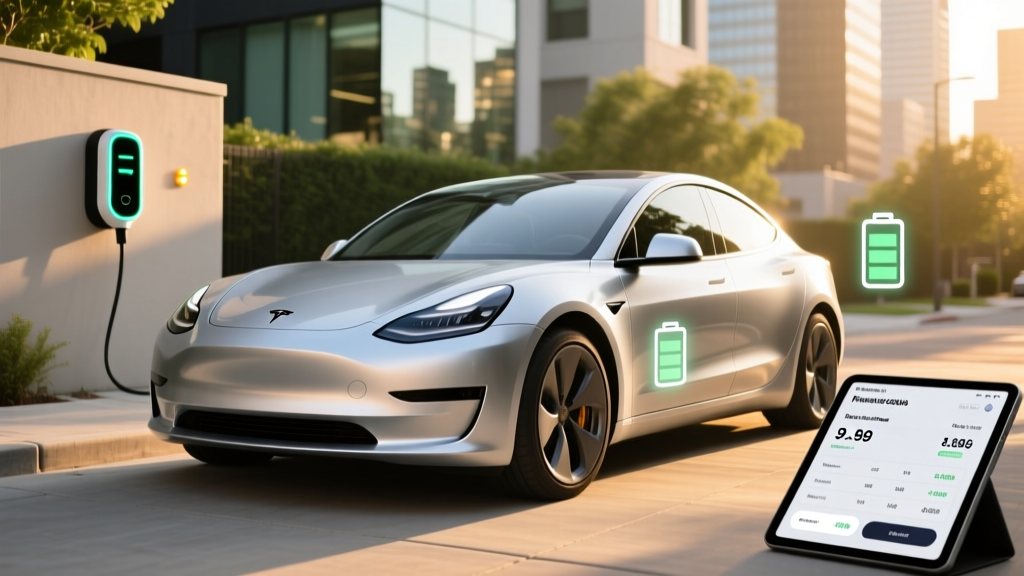
For Riverside drivers navigating the 91, 60, and 215 freeways daily, the 2026 Tesla Model 3 remains the default benchmark in the compact electric sedan segment. With up to 363 miles of EPA-estimated range, access to the most reliable DC fast-charging network in the country, and a starting price that undercuts several key rivals, the refreshed Model 3 (internally called "Highland") continues to dominate Southern California's EV landscape.
But the competition has closed the gap. Hyundai's Ioniq 6, BMW's i4, and the updated Polestar 2 all offer compelling alternatives. This review breaks down exactly what Riverside buyers get — and where the Model 3 falls short — using real-world data, not marketing copy.
Range, Battery, and Efficiency: What the Numbers Actually Mean
EPA Estimate: 363 miles (Long Range AWD) / 272 miles (RWD)
Real-World Highway (75 mph, I-10 to Palm Springs): ~290–310 miles (Long Range)
Cold-Weather Note: Riverside rarely drops below 40°F, so winter range loss is minimal (~5–8%). Mountain drives to Big Bear or Idyllwild will reduce range 15–20% due to elevation gain and HVAC load.
Summer Heat Impact: Inland Empire summers regularly exceed 100°F. Expect cabin cooling to reduce range ~5–7% during July–September heat waves.
The 2026 Model 3 is offered with two distinct battery chemistries, and this choice matters far more than most buyers realize:
| Spec | RWD (Standard Range) | Long Range AWD | Performance |
|---|---|---|---|
| EPA Range | 272 mi | 363 mi | 315 mi |
| Battery (usable) | ~57.5 kWh | ~75 kWh | ~75 kWh |
| Chemistry | LFP (Lithium Iron Phosphate) | NMC (Nickel Manganese Cobalt) | NMC |
| Efficiency (MPGe) | 132 MPGe combined | 130 MPGe combined | 118 MPGe combined |
| kWh/100 mi | 25 | 26 | 28 |
| Drivetrain | RWD, single motor | AWD, dual motor | AWD, dual motor |
| 0–60 mph | 5.8 sec | 4.2 sec | 2.9 sec |
| Horsepower | 271 hp | 346 hp | 510 hp |
Why chemistry matters: The RWD trim uses an LFP battery, which can (and should) be charged to 100% regularly without degradation concerns. LFP also offers a longer cycle life and better thermal stability — ideal for Riverside's hot summers. The trade-off: lower energy density (hence the 272-mile range) and slightly reduced performance in freezing temperatures (rarely an issue in the Inland Empire). The Long Range and Performance trims use NMC chemistry, which delivers more range per kilogram but Tesla recommends daily charging to 80% for longevity.
Source: fueleconomy.gov for EPA efficiency data.
Charging Speed: DC Fast Charging and Home Setup
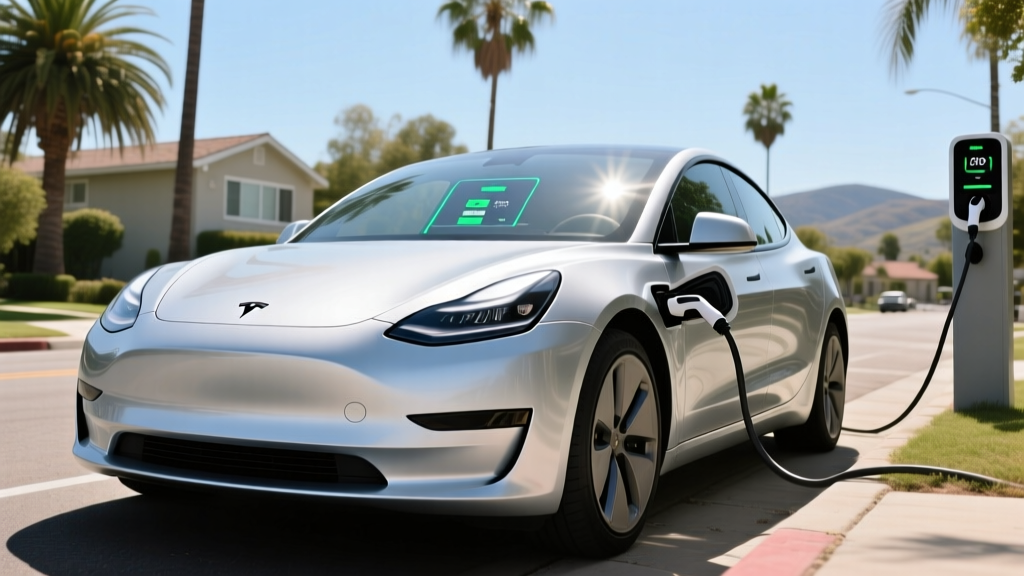
Charging infrastructure is where Tesla still holds a decisive advantage, especially for Riverside residents who rely on the Supercharger network for road trips to San Diego, Las Vegas, or the Sierras.
| Charging Level | Power / Rate | Speed | Notes |
|---|---|---|---|
| Level 1 (120V household) | 1.4 kW | ~3–4 mi/hr | Emergency/trickle only |
| Level 2 (240V, 48A Wall Connector) | 11.5 kW | ~44 mi/hr | Full charge in 7–9 hours overnight |
| DC Fast Charge (Supercharger V4) | Peak 250 kW | 10–80% in ~25 min (Long Range) | Curve tapers above 60%; 80–100% adds 15+ min |
Charging curve reality check: The "250 kW peak" figure applies only at low states of charge (roughly 5–30% SoC). By 50% SoC, the rate drops to ~150 kW, and above 80% it falls below 50 kW. On a road trip from Riverside to Las Vegas, plan for ~25-minute stops at Superchargers in Barstow and Baker, not the 15 minutes marketing materials might suggest.
Home charging in Riverside: Most homes in the 92501, 92503, and 92506 zip codes have 200-amp electrical panels, which can support a 60-amp circuit for the Tesla Wall Connector. Expect a licensed electrician to charge $800–$2,000 for a standard install (panel to garage run under 50 feet). Older homes near downtown Riverside may need a panel upgrade ($1,500–$3,000 additional). Always get a permit — Riverside County requires electrical permits for EV charger installations.
Riverside also has a growing number of public Level 2 and DC fast chargers. The Supercharger stations at Galleria at Tyler, Riverside Plaza, and the Mission Inn area provide convenient top-ups during errands. For non-Tesla DC charging, Electrify America and EVgo stations are available but less abundant in the Inland Empire compared to coastal LA.
Pricing, Trims, and Federal Tax Credit Eligibility
| Trim | Base MSRP | Est. §30D Credit | Effective Price* |
|---|---|---|---|
| RWD (Standard Range) | $38,990 | Up to $3,750 | ~$35,240 |
| Long Range AWD | $45,240 | Up to $7,500 | ~$37,740 |
| Performance | $52,990 | Up to $7,500 | ~$45,490 |
*Effective price assumes full credit eligibility. Actual credit varies based on battery sourcing requirements and buyer income. Destination fee ($1,390) not included.
- Income caps: Modified AGI must not exceed $150,000 (single), $225,000 (head of household), or $300,000 (joint filers).
- MSRP cap: Sedans must have an MSRP at or below $55,000. The Performance trim at $52,990 clears this, but adding premium paint, FSD, or wheels can push the transaction price above the cap — the MSRP on the window sticker is what counts.
- Battery sourcing: The credit splits into two halves — $3,750 for critical minerals and $3,750 for battery component assembly. Tesla's supply chain qualifies for varying amounts depending on the trim and production batch. The RWD trim (with LFP cells historically sourced from CATL in China) may qualify for only partial credit.
- Point-of-sale transfer: As of 2024, you can transfer the credit to the dealer at purchase, reducing your out-of-pocket cost immediately rather than waiting for tax filing.
Verify current eligibility at irs.gov or consult a tax professional before purchasing.
Interior, Tech, and Daily Practicality
The refreshed Model 3 interior is a meaningful step up from the pre-2024 versions. Ventilated front seats, ambient lighting, a rear-seat touchscreen, and improved sound insulation make the cabin genuinely competitive with premium European sedans.
Cargo and passenger space:
- Rear trunk: 21.0 cu ft (including under-floor storage)
- Front trunk (frunk): 3.1 cu ft — enough for a charging cable bag or small backpack
- Front headroom: 40.3 in | Rear headroom: 37.8 in
- Front legroom: 42.7 in | Rear legroom: 35.2 in
The rear seat fits two adults comfortably for long trips. Three across is tight for anyone over 5'8". For families with rear-facing car seats, the Model 3 works but is snug — the Model Y offers substantially more rear space if this is a priority.
Infotainment and tech:
- 15.4-inch center touchscreen with Tesla's latest UI (responsive, minimal lag)
- No Apple CarPlay or Android Auto — Tesla's native system handles navigation, media (Spotify, Apple Music, Tidal), and phone integration via Bluetooth
- 8.0-inch rear touchscreen for climate and media controls
- Sentry Mode (dashcam recording when parked), Dog Mode, and Camp Mode are standout utility features
- Over-the-air updates continue to add features post-purchase
Driver assistance — critical clarification:
Both Tesla Autopilot (included) and Full Self-Driving Supervised ($8,000 option or $99/month) are SAE Level 2 driver-assist systems. They do NOT make the car self-driving. You must keep your hands on the wheel and eyes on the road at all times. FSD Supervised handles highway lane changes, city street navigation, and traffic light/stop sign recognition, but it makes errors — particularly in construction zones, unmapped areas, and complex intersections. The $8,000 FSD purchase is a speculative bet on future capability, not a guarantee of autonomous driving today.
Warranty, Reliability, and Long-Term Ownership
| Coverage | Term |
|---|---|
| Basic Vehicle | 4 years / 50,000 miles |
| Battery & Drive Unit (RWD) | 8 years / 100,000 miles (70% minimum retention) |
| Battery & Drive Unit (Long Range/Perf) | 8 years / 120,000 miles (70% minimum retention) |
The 70% retention threshold means Tesla will replace or repair the battery if it degrades below 70% of original capacity within the warranty period. In practice, NMC Model 3 batteries typically show 5–8% degradation in the first 50,000 miles, then plateau. LFP batteries in the RWD trim tend to degrade even more slowly, though they start with less range.
For Riverside owners, the main long-term ownership considerations are tire wear (EVs are heavier and deliver instant torque, wearing tires 20–30% faster than comparable gas cars) and cabin air filter replacement (every 2–3 years; the HEPA filter upgrade is worthwhile given Inland Empire air quality during wildfire season).
Insurance costs in Riverside County run 15–25% higher for the Model 3 compared to a similarly priced gas sedan like the Toyota Camry. Get quotes from GEICO, State Farm, and Tesla Insurance before committing — Tesla's own insurance product uses real-time driving data and can be competitive for safe drivers.
Pros, Cons, and Who Should Buy
- Best-in-class Supercharger network (17,000+ stalls in North America)
- Industry-leading efficiency (130+ MPGe across trims)
- LFP battery option eliminates daily-charge anxiety
- OTA updates add real features over time
- Strong resale value relative to most EVs
- Excellent safety ratings (NHTSA 5-star, IIHS Top Safety Pick+)
- No Apple CarPlay / Android Auto
- Rear seat space is tighter than Model Y or Ioniq 6
- Turn signal stalks removed (buttons on steering wheel — polarizing)
- FSD at $8,000 remains a speculative purchase
- Service center wait times in the Inland Empire can be 2–4 weeks
- Ride quality on rough roads is firm
- Daily commuters on the 91 or 60 freeways: The Long Range trim handles a 100-mile round trip with range to spare, and home charging means zero gas station visits.
- Tech-forward buyers who want OTA updates, Sentry Mode, and a minimalist interior.
- Apartment dwellers with workplace charging: Riverside's growing workplace charger infrastructure makes EV ownership viable even without a garage.
- NOT ideal for: Families needing three-across rear seating, frequent tow-capable users (Model 3 is not rated for towing), or buyers who prefer traditional controls and CarPlay.
How the Model 3 Stacks Up Against Key Competitors
| Spec | Tesla Model 3 LR | Hyundai Ioniq 6 SEL | BMW i4 eDrive40 |
|---|---|---|---|
| EPA Range | 363 mi | 361 mi | 301 mi |
| Base MSRP | $45,240 | $42,450 | $57,900 |
| Peak DC Charge | 250 kW | 350 kW (800V) | 200 kW |
| 10–80% DCFC Time | ~25 min | ~18 min | ~31 min |
| Charging Network | Tesla Supercharger (native) | CCS (NACS adapter needed for Superchargers) | CCS (NACS adapter needed) |
| CarPlay / Android Auto | No | Yes | Yes |
The Ioniq 6 charges faster thanks to its 800-volt architecture and offers CarPlay, but its public charging network experience in the Inland Empire is less seamless than Tesla's. The BMW i4 delivers superior ride quality and brand prestige but at a significant price premium and with less range. For Riverside buyers who prioritize charging convenience and total cost of ownership, the Model 3 Long Range remains the most rational choice.
Frequently Asked Questions
What is the real-world range of the Tesla Model 3 in Riverside's climate?
The Long Range AWD achieves its EPA 363-mile rating under ideal conditions. In real-world Riverside driving — 75 mph freeway speeds on the 91, summer A/C running, and occasional mountain elevation — expect 290–310 miles on a full charge. The RWD trim delivers roughly 220–240 real-world miles. During July–August heat waves (105°F+), budget an additional 5–7% range loss for battery cooling.
How fast does the Model 3 charge at home and on the road?
At home with a Tesla Wall Connector (48-amp, 240V), you'll add roughly 44 miles of range per hour — a full overnight charge takes 7–9 hours. On the road, Tesla Superchargers deliver up to 250 kW peak, achieving a 10–80% charge in about 25 minutes for the Long Range trim. Remember: charging slows significantly above 80% SoC to protect battery health.
Does the 2026 Tesla Model 3 qualify for the $7,500 federal EV tax credit?
It depends on the trim and your tax situation. The Long Range AWD ($45,240 MSRP) and Performance ($52,990 MSRP) are below the $55,000 sedan MSRP cap. The RWD trim may qualify for a partial credit ($3,750) due to LFP battery sourcing. You must also meet income caps ($150K single / $300K joint). Check current battery-sourcing eligibility at irs.gov before purchasing, as these requirements update periodically.
Is the Model 3 worth buying over the Model Y or Ioniq 6?
Choose the Model 3 if you prioritize efficiency, range, and a lower price, and don't need substantial rear cargo space. Choose the Model Y if you need family-friendly rear seating and hatchback cargo access. Choose the Ioniq 6 if faster DC charging (350 kW), CarPlay support, and a more conventional interior layout matter to you — but accept a less seamless public charging experience in Southern California.
What are the biggest drawbacks of owning a Model 3 in Riverside?
Service center capacity is the top complaint. The nearest Tesla service centers (Riverside, Corona, and San Bernardino) often have 2–4 week wait times for non-emergency repairs. The lack of Apple CarPlay frustrates some buyers. And while the Supercharger network is excellent, non-Tesla charging options in the Inland Empire are still developing, which matters if you ever need to use Electrify America or EVgo as backup.
Sources: EPA data via fueleconomy.gov; Tesla specifications via tesla.com/model3; IRS §30D rules via irs.gov. Pricing and credit eligibility current as of 2026 model year; verify at time of purchase.