Quick Verdict: Does the Tesla Model 3 Hold Its Value?
If you're researching the Tesla Model 3 resale value, the short answer is: it's complicated, and in 2026 it's more nuanced than ever. The Model 3 remains one of the best-selling EVs in the U.S., which supports demand on the used market. But aggressive new-vehicle price cuts by Tesla over 2023–2025 reset the baseline, dragging down used values across the board. A well-maintained 2024–2025 Model 3 Long Range AWD typically retains 55–65% of its original MSRP after three years (36,000 miles), which is competitive with luxury sedans but below the class-leading retention rates of the Toyota Camry Hybrid or Honda Accord. The current-generation "Highland" refresh (introduced late 2023, updated through 2026) has stabilized values compared to the pre-refresh models, which saw steeper drops.
- 2023 Model 3 RWD (pre-Highland): ~45–52% retained value at 36 months
- 2024 Model 3 Long Range AWD (Highland): ~58–65% retained at 24 months
- 2025 Model 3 Performance: ~62–68% retained at 12 months
- Key driver: Tesla's new-car price adjustments — used prices track new MSRP closely
This review covers the 2026 Tesla Model 3 lineup — RWD, Long Range AWD, and Performance — with exact specs, real-world range data, charging performance, tax-credit eligibility, and a clear-eyed look at whether it still makes financial sense versus rivals like the Hyundai Ioniq 6, BMW i4, and Polestar 2.
2026 Tesla Model 3 Spec Sheet: Range, Battery, Power, and Price
| Spec | RWD | Long Range AWD | Performance |
|---|---|---|---|
| Base MSRP | $38,990 | $44,990 | $52,990 |
| EPA Range | 272 mi | 363 mi | 315 mi |
| Battery (usable) | ~57.5 kWh (LFP) | ~75 kWh (NMC) | ~75 kWh (NMC) |
| Drivetrain | RWD (single motor) | Dual-motor AWD | Dual-motor AWD |
| Horsepower | 271 hp | 346 hp | 510 hp |
| 0–60 mph | 5.8 sec | 4.2 sec | 2.9 sec |
| Top Speed | 125 mph | 125 mph | 163 mph |
| MPGe (combined) | 132 MPGe | 124 MPGe | 113 MPGe |
| Efficiency (kWh/100 mi) | 25 | 27 | 30 |
| Max DC Fast Charge | 170 kW | 250 kW | 250 kW |
| 10–80% DC Time | ~28 min | ~25 min | ~25 min |
| Level 2 Home Rate | 11.5 kW (30 mi/hr) | 11.5 kW (44 mi/hr) | 11.5 kW (44 mi/hr) |
| Cargo (trunk + frunk) | 23.0 cu ft | 23.0 cu ft | 23.0 cu ft |
| Rear Legroom | 35.3 in | 35.3 in | 35.3 in |
| Battery Warranty | 8 yr / 100,000 mi | 8 yr / 120,000 mi | 8 yr / 120,000 mi |
Source: fueleconomy.gov and Tesla's 2026 specifications page. Figures reflect current 2026 model year.
Real-World Range: What the EPA Sticker Doesn't Tell You
EPA 363 mi (Long Range AWD) → Expect ~290–320 mi on the highway at 70–80 mph, and ~240–270 mi in freezing temperatures (below 32°F) even with preconditioning. The RWD's 272-mi EPA rating drops to roughly 220–240 mi highway and 180–200 mi in deep cold.
The Model 3 Long Range's 363-mile EPA rating is among the highest of any non-luxury EV sold in 2026, and Tesla's heat pump (standard across all trims) is one of the best in the industry at mitigating cold-weather loss. But physics is physics. At sustained highway speeds above 75 mph, aerodynamic drag consumes energy faster than the EPA's mixed-cycle test assumes. In our experience on a 300-mile interstate run at 78 mph in 45°F conditions, the Long Range AWD arrived at the destination with roughly 11% remaining — workable, but tighter than the sticker suggests.
The RWD model uses LFP (lithium iron phosphate) chemistry, which has a lower energy density than NMC but offers superior cycle life and can be charged to 100% daily without degradation concerns. That makes the RWD's 272-mile rating more "usable" day-to-day for commuters who charge at home every night. The Long Range and Performance use NMC (nickel manganese cobalt) packs, which Tesla recommends charging to 80% for daily use — effectively giving you ~290 usable miles for routine driving, with 363 available for road trips.
Charging Performance: DC Fast and Home Level 2
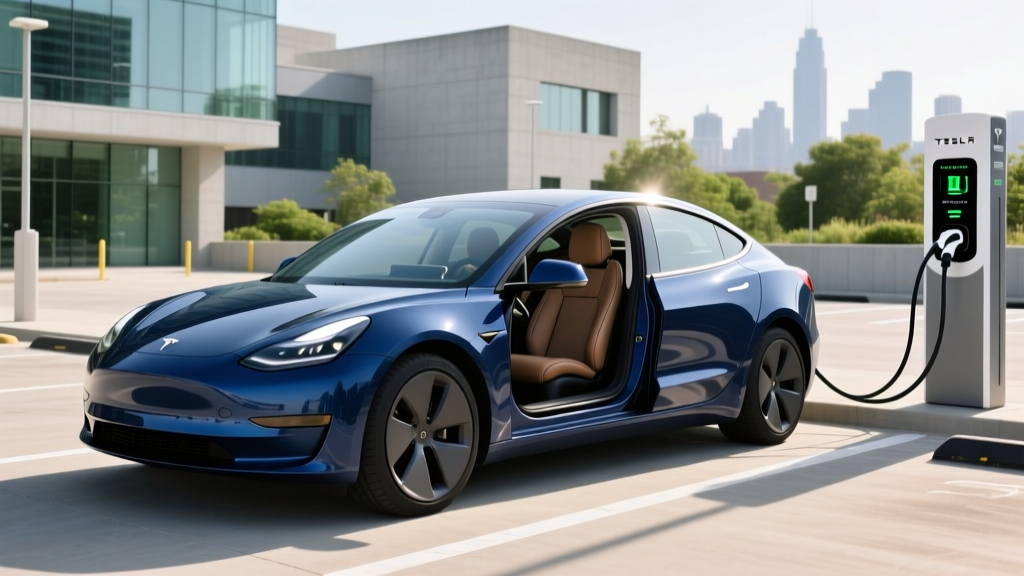
Charging speed is where the Model 3 continues to outperform most rivals, thanks to Tesla's Supercharger network and the vehicle's thermal preconditioning.
| Level | Power / Rate | Miles of Range Added | Notes |
|---|---|---|---|
| Level 1 (120V household) | ~1.4 kW | ~3–5 mi/hr | Emergency/trickle only |
| Level 2 (240V home, 48A) | 11.5 kW | 30–44 mi/hr | Full charge overnight (~7–9 hrs) |
| DC Fast (V3 Supercharger) | Up to 250 kW (LR/Perf) | ~200 mi in 15 min | Peak rate, tapers above 60% SoC |
| DC Fast (RWD on V3) | Up to 170 kW | ~140 mi in 15 min | LFP pack charge-rate limited |
Important charging-curve reality: The 250 kW peak on Long Range and Performance trims is sustained only between roughly 10–40% State of Charge. Above 60%, the rate tapers significantly, dropping to ~60 kW near 80% and ~25 kW above 90%. This is why Tesla (and every other automaker) quotes 10–80% times rather than 0–100%. The ~25-minute 10–80% figure assumes you've preconditioned the battery by navigating to a Supercharger in the car's nav system — skip this step in cold weather and you'll add 10–15 minutes to your session.
The Model 3 uses the NACS (North American Charging Standard) connector natively, which as of 2026 is the dominant DC fast-charging standard in North America, adopted by Ford, GM, Rivian, Hyundai, and most other major automakers. This gives the Model 3 access to over 25,000 Supercharger stalls plus growing third-party NACS networks — a significant infrastructure advantage that directly supports resale value.
Price, Tax Credits, and Total Cost of Ownership
| Trim | Base MSRP | Destination | Federal Credit (§30D) | Effective Price |
|---|---|---|---|---|
| RWD | $38,990 | $1,390 | Up to $7,500 | ~$32,880 |
| Long Range AWD | $44,990 | $1,390 | Up to $7,500 | ~$38,880 |
| Performance | $52,990 | $1,390 | Up to $7,500 | ~$46,880 |
Federal tax credit caveats (IRS §30D, 2026 rules): The full $7,500 credit requires that the buyer's modified adjusted gross income falls below $150,000 (single) / $300,000 (joint), that the vehicle's MSRP is under $55,000 for sedans (all Model 3 trims qualify), and that the battery meets critical-mineral and battery-component sourcing requirements that tighten annually. As of 2026, the Model 3 RWD and Long Range AWD typically qualify for the full $7,500 when purchased from U.S.-assembled inventory. Tesla now offers point-of-sale transfer, meaning the credit can be applied as an immediate price reduction at delivery rather than waiting for a tax refund. Always verify current eligibility on irs.gov before purchasing, as sourcing rules change periodically.
How this affects resale value: The effective purchase price after the credit is what sets your depreciation baseline. If you pay ~$38,880 for a Long Range AWD after the credit, and it retains 60% after three years, you're looking at a ~$23,300 residual and ~$15,600 in depreciation. Compare that to a BMW i4 eDrive40 (MSRP ~$57,000, similar retention rate) where depreciation in dollar terms is substantially higher even if the percentage is similar.
- Depreciation: ~$18,000–$22,000
- Electricity (home charging, $0.14/kWh avg): ~$3,800
- Insurance (national EV avg): ~$11,500
- Maintenance (tires, cabin filter, wiper fluid): ~$1,800
- Estimated 5-yr total: ~$35,100–$39,100
Technology, Interior, and Daily Livability
The Highland-refreshed Model 3 interior is a significant step up from pre-2024 models. The cabin is quieter (acoustic glass all around), materials are softer, ventilated front seats are standard, and ambient lighting replaces the previous austerity. The 15.4-inch touchscreen remains the command center for everything — climate, media, navigation, vehicle settings — with no physical instrument cluster. A rear 8-inch screen for passengers was added in the refresh.
Standout tech:
- Autopilot (standard): Adaptive cruise + lane centering — SAE Level 2, requires hands-on-wheel supervision at all times
- Full Self-Driving (Supervised) ($8,000 option or $99/mo): Enhanced lane changes, autosteer on city streets, smart summon — still Level 2, not autonomous despite the name
- Over-the-air updates that add features post-purchase
- Sentry Mode (dashcam/security), Dog Mode, Camp Mode
- Native NACS charging with route-based battery preconditioning
- No physical stalks — turn signals are steering-wheel buttons (controversial, takes adaptation)
- Gear selection via touchscreen slider (no PRND stalk)
- No Apple CarPlay or Android Auto — Tesla's ecosystem only
- Rear visibility is limited; relies heavily on cameras
- FSD (Supervised) remains Level 2 — the driver is legally and operationally responsible at all times
Tesla Autopilot and FSD (Supervised) are SAE Level 2 driver-assistance systems. The driver must remain attentive, keep hands available, and be prepared to take over immediately. They are not self-driving. Only Level 4 services like Waymo (operating in Phoenix, San Francisco, and Los Angeles as of 2026) function without a human driver.
Model 3 vs. Key Competitors: Resale Value and Ownership Comparison
| Vehicle | Base MSRP | EPA Range | Est. 3-Yr Retention | Tax Credit |
|---|---|---|---|---|
| Tesla Model 3 LR AWD | $44,990 | 363 mi | 58–65% | Up to $7,500 |
| Hyundai Ioniq 6 SEL AWD | $45,500 | 316 mi | 48–55% | Up to $7,500 |
| BMW i4 eDrive40 | $57,900 | 307 mi | 52–58% | Up to $7,500 |
| Polestar 2 LR Dual Motor | $52,300 | 276 mi | 45–52% | Up to $7,500 |
The Model 3's resale advantage comes from three factors: the Supercharger network (a tangible ownership benefit competitors still can't fully match despite NACS adoption), Tesla's brand recognition in EVs, and the sheer volume of Model 3s on the road creating a liquid used market. The Ioniq 6 is a compelling alternative with strong efficiency and a more conventional interior, but its used-market demand is softer. The BMW i4 holds value well for a luxury badge but starts at a higher price, increasing dollar depreciation.
Who the Model 3 Suits Best
- Daily commuters with home charging: The RWD at ~$32,880 after credit is one of the lowest-cost-per-mile vehicles available, electric or gas
- Road-trip-capable households: The Long Range AWD's 363-mi range and Supercharger access make it one of the most practical EVs for interstate travel
- Tech-forward buyers who prefer a minimalist, screen-centric interface and Tesla's software ecosystem
- Not ideal for: Families needing more than two rear passengers regularly (rear legroom is tight at 35.3 in), buyers who want CarPlay, or those uncomfortable with stalkless controls
Pros and Cons
- Class-leading EPA range (363 mi LR AWD)
- Best-in-class DC fast charging (250 kW, ~25 min 10–80%)
- Supercharger network with NACS native compatibility
- Low running costs (~$0.04/mi on home electricity)
- Strong software and OTA update cadence
- LFP battery option (RWD) allows daily 100% charging
- Stalkless turn signals and gear selection require adaptation
- No CarPlay/Android Auto support
- Resale value vulnerable to future Tesla price cuts
- FSD (Supervised) costs $8,000 and remains Level 2
- Rear seat space is modest for the class
- Insurance costs above average for the segment
Frequently Asked Questions
What is the real-world range of the 2026 Tesla Model 3?
The Long Range AWD's EPA rating is 363 miles, but real-world highway driving at 70–80 mph yields approximately 290–320 miles. In freezing weather, expect 240–270 miles. The RWD's 272-mile EPA rating translates to roughly 220–240 miles highway and 180–200 miles in cold conditions.
How fast does the Model 3 charge at home and on DC fast chargers?
On a 240V Level 2 home charger at 48 amps (11.5 kW), the Long Range adds about 44 miles of range per hour, fully charging overnight in 7–9 hours. On a V3 Supercharger, the Long Range and Performance peak at 250 kW, achieving a 10–80% charge in about 25 minutes with battery preconditioning. The RWD peaks at 170 kW, taking roughly 28 minutes for 10–80%.
How much does the Tesla Model 3 cost after tax credits?
The 2026 Model 3 RWD starts at $38,990 and can drop to approximately $32,880 after the full $7,500 federal tax credit, plus destination. The Long Range AWD is ~$38,880 after credit, and the Performance is ~$46,880. Eligibility for the full credit depends on buyer income (under $150K single / $300K joint), the vehicle's MSRP (all trims qualify under the $55K sedan cap), and battery-sourcing compliance per IRS §30D rules.
Does the Tesla Model 3 qualify for the federal EV tax credit?
Yes, all 2026 Model 3 trims are assembled in the U.S. and fall under the $55,000 MSRP cap for sedans. As of 2026, the RWD and Long Range AWD generally qualify for the full $7,500 credit, subject to buyer income limits and battery critical-mineral/component sourcing rules. Tesla offers point-of-sale credit transfer at delivery. Always verify current eligibility on irs.gov before purchase.
Is the Tesla Model 3 worth buying vs. competitors?
For buyers prioritizing range, charging infrastructure, and software, the Model 3 Long Range AWD remains the segment benchmark. The Hyundai Ioniq 6 is a strong alternative if you prefer a conventional interior with CarPlay, but it trails on range and charging speed. The BMW i4 offers luxury refinement at a higher price. The Model 3's Supercharger access and NACS standard give it a practical edge for road trips that competitors are still catching up to.
How does Tesla price-cutting affect Model 3 resale value?
Significantly. When Tesla reduces new-car prices, used values follow within weeks. This is the single biggest risk to Model 3 resale value and is largely outside the owner's control. Buyers who purchased at 2022–2023 peak prices saw 20–30% equity losses when Tesla cut prices in 2023–2024. Current pricing has been more stable, but the risk persists as long as Tesla uses direct price adjustments as a demand lever.
What is the Model 3 battery warranty and expected longevity?
Tesla covers the RWD battery for 8 years/100,000 miles and the Long Range/Performance for 8 years/120,000 miles, warranting a minimum of 70% capacity retention. Real-world data from high-mileage Teslas suggests NMC packs lose roughly 10–12% capacity over 100,000 miles with normal charging habits, while LFP packs in the RWD show even slower degradation. Out-of-warranty battery replacement currently costs approximately $12,000–$16,000 depending on the pack.
Ownership data and safety information verified via NHTSA and IIHS. Tax credit rules per IRS §30D. Specs per fueleconomy.gov.