The Tesla Model 3 remains the benchmark compact electric sedan, but with increasing competition from the Hyundai Ioniq 6, BMW i4, and refreshed Chinese-market rivals, buyers in 2026 are asking a more pragmatic question: are Tesla Model 3 reliable enough to justify the investment over the long haul? The short answer is yes — particularly the post-2024 "Highland" refresh and current 2026 model year — but reliability in the EV era means something different than it did for internal-combustion cars. It's less about whether the engine will blow up and more about battery degradation, software stability, build consistency, and charging hardware longevity.
This review examines the 2026 Tesla Model 3 lineup through the lens of real-world ownership data, EPA testing, battery chemistry science, and total cost of ownership. We'll cover every number that matters — from LFP battery cycle life to DC fast-charge taper curves — so you can decide whether the Model 3 earns a spot in your driveway.
2026 Tesla Model 3: At-a-Glance Specs
| Spec | RWD (Standard Range) | Long Range AWD | Performance |
|---|---|---|---|
| EPA Range | 272 mi | 341 mi | 315 mi |
| Battery (usable) | ~60 kWh (LFP) | ~79 kWh (NMC) | ~79 kWh (NMC) |
| Drivetrain | RWD, single motor | AWD, dual motor | AWD, dual motor |
| Horsepower | 271 hp | 346 hp | 510 hp |
| 0–60 mph | 5.8 sec | 4.2 sec | 2.9 sec |
| MPGe (combined) | 142 MPGe | 132 MPGe | 121 MPGe |
| Efficiency | 24 kWh/100 mi | 26 kWh/100 mi | 28 kWh/100 mi |
| Peak DC Charge | 170 kW | 250 kW | 250 kW |
| 10–80% DC Time | ~25 min | ~25 min | ~25 min |
| Level 2 Rate | 11.5 kW (~44 mi/hr) | 11.5 kW (~44 mi/hr) | 11.5 kW (~44 mi/hr) |
| Base MSRP | $38,990 | $45,990 | $53,990 |
| Battery Warranty | 8 yr / 100,000 mi | 8 yr / 120,000 mi | 8 yr / 120,000 mi |
Range in the Real World: EPA vs. What You'll Actually Get
Real-World Expectation: 270–310 mi highway at 70 mph; 200–240 mi in sub-freezing cold with cabin heat; 310–340 mi in city/regenerative driving in mild weather.
The EPA's combined-cycle range test is a useful baseline, but it doesn't reflect sustained highway speeds or winter conditions. In independent highway range tests at 70 mph in 65°F weather, the Model 3 Long Range AWD consistently delivers between 280 and 310 miles before reaching a 5% state of charge (SoC). Drop the ambient temperature to 25°F, and that number falls to roughly 200–240 miles — a 25–35% reduction driven by battery internal resistance, cabin heating load, and reduced regenerative braking efficiency.
The RWD model's EPA-rated 272 miles translates to approximately 215–245 miles on a real highway run. For daily commuting under 80 miles round-trip, this is more than sufficient, but road-trippers should plan charging stops around the 180-mile mark in cold weather to maintain a safety buffer.
One reliability bright spot: Tesla's thermal management system is among the best in the industry. The octovalve heat pump (standard since the 2021 refresh) efficiently scavenges waste heat from the drivetrain to warm the cabin, reducing winter range loss compared to PTC-heater-equipped competitors. This matters for long-term battery health, too — keeping the pack in its optimal 20–40°C operating window slows degradation.
Battery Chemistry, Degradation, and Long-Term Reliability
Understanding whether Tesla Model 3 vehicles are reliable requires understanding the two battery chemistries Tesla uses:
| Attribute | LFP (RWD / Standard Range) | NMC (Long Range & Performance) |
|---|---|---|
| Chemistry | Lithium Iron Phosphate | Nickel Manganese Cobalt |
| Energy Density | Lower (~160 Wh/kg cell) | Higher (~260 Wh/kg cell) |
| Usable Capacity | ~60 kWh | ~79 kWh |
| Cycle Life (to 80% SoH) | 3,000+ cycles | 1,500–2,000 cycles |
| Recommended Daily Charge | 100% (daily) | 80% (daily); 100% for trips |
| Cold-Weather Performance | Moderately weaker | Better low-temp output |
| Estimated Degradation at 150k mi | ~5–8% | ~8–12% |
| Cobalt Content | None | Yes (sourcing varies) |
The LFP pack in the RWD model is arguably the most reliability-friendly battery Tesla offers. LFP cells tolerate full-charge storage without the accelerated calendar degradation that plagues NMC chemistry at high SoC. Tesla explicitly recommends charging the RWD to 100% regularly, which also keeps the battery management system (BMS) calibration accurate — a common pain point on NMC vehicles where owners habitually charge to 80% and then see range-estimate drift.
Real-world fleet data from sources like Recurrent Auto and Tesla's own Impact Report indicate that Model 3 batteries retain roughly 88–92% of original capacity at 100,000 miles, with the degradation curve flattening significantly after the initial 10–15% loss in the first 20,000–30,000 miles. At 200,000 miles, most packs still hold 80–85% — above the warranty replacement threshold of 70% retention.
Warranty coverage: The Model 3 RWD carries an 8-year/100,000-mile battery and drive unit warranty, while the Long Range and Performance models get 8 years/120,000 miles. The threshold for a warranty replacement is degradation below 70% of original capacity. Tesla's historical claim rate on battery replacements remains low — estimated at under 1% of vehicles — which is strong evidence of pack-level reliability.
Charging Speed and Infrastructure: The Tesla Advantage
| Charging Level | Power / Rate | Miles Added | Typical Use Case |
|---|---|---|---|
| Level 1 (120V household) | ~1.4 kW | ~5 mi/hr | Emergency / trickle top-up |
| Level 2 (240V home, Wall Connector) | 11.5 kW | ~44 mi/hr | Overnight home charging |
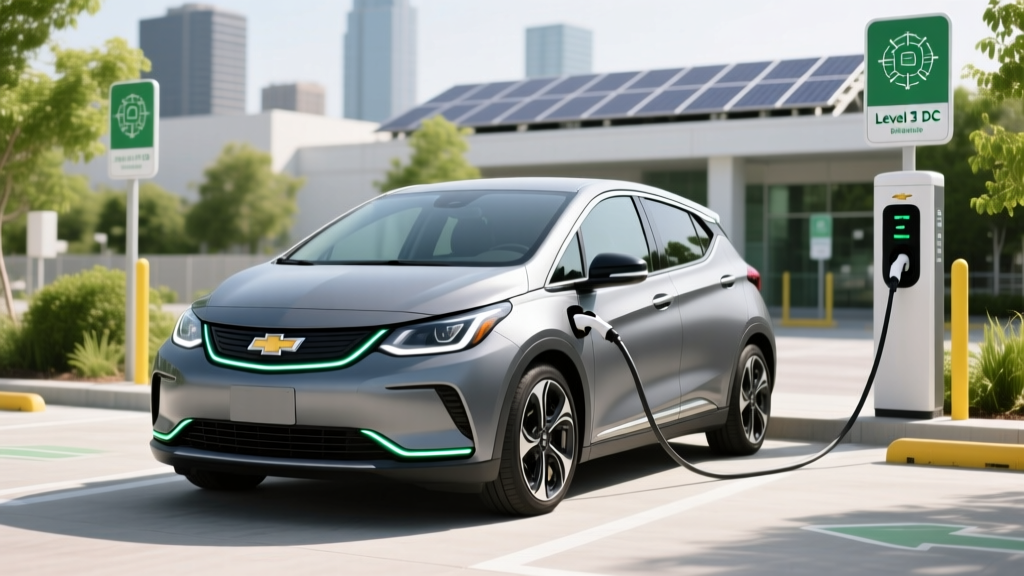
| DC Fast Charge (V3 Supercharger) | Up to 250 kW | ~175 mi in 15 min | Road trips |
| DC Fast Charge (V4 Supercharger) | Up to 250 kW (Model 3 capped) | ~175 mi in 15 min | Road trips |
The Model 3's DC fast-charging curve is well-documented and predictable. On a V3 Supercharger (250 kW capable), the Long Range AWD peaks near 250 kW at low SoC (around 10–15%), sustains above 200 kW up to approximately 40% SoC, then tapers progressively: ~150 kW at 55%, ~100 kW at 70%, and ~40–50 kW above 85%. This means the advertised 10–80% time of roughly 25 minutes is achievable at a well-maintained Supercharger stall with a preconditioned battery.
Preconditioning matters. Tesla's navigation-routed battery preconditioning warms the pack to the optimal charge temperature before you arrive at the Supercharger. In cold weather, arriving without preconditioning can cut peak charge rates by 40–60% and extend a 10–80% session from 25 minutes to 45+ minutes. Always navigate to the charger via the car's built-in nav to trigger this feature.
Home charging on a Tesla Wall Connector at 48 amps (11.5 kW) adds approximately 44 miles of range per hour — enough to fully replenish the RWD's 60 kWh pack in about 5.5 hours and the Long Range's 79 kWh pack in roughly 7 hours. For most owners charging overnight, this is more than adequate.
The Supercharger network remains Tesla's strongest reliability asset. With over 60,000 Superchargers globally and uptime rates consistently above 97%, Tesla owners experience far fewer dead-charger arrivals than CCS-network users. The 2026 Model 3 uses the NACS connector natively, which has now been adopted by Ford, GM, Rivian, Volvo, and most major automakers — ensuring long-term infrastructure compatibility.
Build Quality, Software, and Known Issues
The "Highland" refresh (introduced late 2023, continuing into 2026) addressed many of the historical build-quality complaints that plagued earlier Model 3 production — uneven panel gaps, wind noise, and interior material quality. The current Model 3 features acoustic glass all around, ventilated front seats, a rear passenger touchscreen, ambient lighting, and significantly improved suspension tuning with frequency-selective dampers.
That said, some reliability patterns persist and are worth noting honestly:
- Panel gap variability: Improved but not eliminated. Fremont-built cars still show slightly more inconsistency than Shanghai-built units.
- 12V auxiliary battery: Tesla switched to a lithium-ion 12V battery in 2023+ models, which should last the life of the vehicle — a significant improvement over the lead-acid units that failed every 2–4 years.
- Phantom braking: Tesla's vision-only Autopilot system (no radar since 2021) has drawn NHTSA scrutiny for occasional phantom-braking events on highways. Software updates have reduced but not eliminated this.
- TPMS and sensor gremlins: Occasional tire-pressure sensor communication drops, typically resolved via software or a $50–80 sensor replacement.
- Heat pump failures: Early 2021–2022 models saw some octovalve/heat pump failures. The 2024+ Highland and 2026 models use a revised design with markedly lower failure rates.
On the software side, Tesla's over-the-air (OTA) update cadence is unmatched. New features, efficiency improvements, and bug fixes arrive regularly. However, major UI overhauls occasionally introduce regressions — a 2025 update temporarily removed the battery-percentage display, for instance, before community backlash prompted a quick restoration. This "move fast and break things" approach is part of Tesla ownership; it's a reliability trade-off versus the slower, more conservative update cycles of legacy automakers.
Technology, Safety, and Driver Assistance
The 2026 Model 3 comes standard with Tesla's Basic Autopilot, which includes traffic-aware cruise control and autosteer on marked highways. The optional FSD (Supervised) package ($8,000 one-time or $99/month) adds city-street autosteer, traffic-light and stop-sign recognition, and automatic parking. FSD has improved substantially since its 2022 beta launch, but it remains a supervision-required system — not autonomous driving.
Safety ratings remain excellent. The Model 3 earned a 5-star overall rating from NHTSA and a Top Safety Pick+ designation from IIHS in its most recent evaluation. Standard active-safety features include automatic emergency braking, blind-spot monitoring, lane-departure warning, and rear cross-traffic alert.
The infotainment system runs on a 15.4-inch center touchscreen with a responsive, app-like interface. There is no Apple CarPlay or Android Auto — Tesla's proprietary system handles navigation, media (Spotify, Apple Music, Tidal built-in), phone integration via Bluetooth, and vehicle controls. The rear-seat 8-inch touchscreen (added with the Highland refresh) handles climate controls and entertainment for passengers.
Pricing, Tax Credits, and Total Cost of Ownership
| Trim | Base MSRP | Destination | Federal Credit (§30D) | Effective Price |
|---|---|---|---|---|
| RWD (Standard Range) | $38,990 | $1,390 | Up to $7,500* | ~$32,880 |
| Long Range AWD | $45,990 | $1,390 | Up to $7,500* | ~$39,880 |
| Performance | $53,990 | $1,390 | Up to $7,500* | ~$47,880 |
*Federal EV tax credit eligibility under IRS §30D is subject to multiple requirements:
- Buyer income caps: Modified AGI ≤ $150,000 (single), ≤ $225,000 (head of household), ≤ $300,000 (joint).
- MSRP cap: Sedans must not exceed $55,000 MSRP. All 2026 Model 3 trims qualify.
- Battery sourcing: The full $7,500 requires meeting both critical-minerals and battery-component sourcing thresholds, which adjust annually. Consult the IRS qualified vehicle list for the current month's eligible configurations — partial credit ($3,750) may apply if only one requirement is met.
- Point-of-sale transfer: As of 2024, buyers can transfer the credit to the dealer at purchase, reducing the upfront price rather than waiting for a tax refund.
On total cost of ownership, the Model 3 remains one of the most economical EVs to own over five years. Electricity costs average $0.14/kWh nationally, translating to roughly $3.64 per 100 miles for the Long Range — versus $12–15 per 100 miles for a comparable gas sedan at $3.50/gallon and 30 MPG. Insurance is the offset: Model 3 premiums average 15–25% higher than equivalent ICE sedans due to repair costs and Tesla's aluminum/steel mixed construction. Factor in zero oil changes, minimal brake wear (regenerative braking extends pad life to 100,000+ miles), and no emissions testing, and the 5-year TCO typically undercuts a BMW 3 Series or Audi A4 by $8,000–$12,000.
Cargo, Passenger Space, and Daily Practicality
The Model 3 is a compact sedan, and its dimensions reflect that. Here's what you're working with:
- Rear trunk: 21.0 cu ft (class-competitive, beats the Ioniq 6's 11.2 cu ft trunk but not a hatchback)
- Front trunk (frunk): 3.1 cu ft (enough for a charging cable bag and a small backpack)
- Front legroom: 42.7 inches
- Rear legroom: 35.2 inches (tight for tall adults on long trips)
- Rear headroom: 37.1 inches (the sloping roofline cuts into space for passengers over 6'0")
The Model 3 does not have a hatchback or liftback — the trunk opening is a conventional sedan design, which limits cargo flexibility compared to the Tesla Model Y or Hyundai Ioniq 5. If you regularly haul bulky items, a Model Y is the more practical choice. For a couple or a single commuter with occasional rear passengers, the Model 3's cabin is well-organized and comfortable.
Pros
- Best-in-class Supercharger network access and reliability
- LFP battery option offers exceptional cycle life and daily 100% charging
- Industry-leading efficiency (kWh/100 mi) in its segment
- OTA updates continuously add features and improve the car
- Low TCO when factoring fuel, maintenance, and tax credits
- Excellent safety ratings (NHTSA 5-star, IIHS TSP+)
Cons
- Trunk opening limits cargo flexibility vs. hatchback competitors
- Rear seat tight for tall adults; no rear HVAC vents on some trims
- No Apple CarPlay / Android Auto — Tesla-only ecosystem
- Vision-only Autopilot still exhibits occasional phantom braking
- Insurance premiums above segment average
- Service center wait times can stretch weeks in some metro areas
Is the Model 3 Worth It vs. Key Competitors?
The 2026 Model 3 competes against a growing field. Here's how it stacks up against the most common cross-shops:
- vs. Hyundai Ioniq 6: The Ioniq 6 SE Long Range offers 361 miles EPA at a lower price (~$42,000) and has a hatchback-like fastback design. However, Hyundai's CCS charging network reliability lags far behind Tesla's NACS/Supercharger ecosystem, and the Ioniq 6's rear seat is even tighter.
- vs. BMW i4 eDrive40: The i4 offers a more premium interior, hatchback cargo flexibility, and CarPlay. But it starts at $57,000+, is less efficient (lower MPGe), and lacks access to the Supercharger network without an adapter.
- vs. Tesla Model Y: If cargo space and rear-seat room are priorities, the Model Y Long Range ($47,990, 310 mi EPA) is the more practical Tesla. The Model 3 is the better driver's car — lower center of gravity, lighter, more efficient.
Look elsewhere if: You need hatchback cargo flexibility (Ioniq 5, Model Y); you refuse to live without Apple CarPlay (BMW i4, Hyundai); you regularly carry tall rear-seat passengers (Model Y, Ioniq 6 is still tight); you want the longest possible EPA range regardless of price (Lucid Air Pure at 419 mi, but at $70,000+).
Frequently Asked Questions
Are Tesla Model 3 expensive to maintain?
No. The Model 3 has no engine oil, spark plugs, timing belts, or transmission fluid. Routine maintenance is limited to cabin air filter replacement ($30–50 every 2 years), tire rotation ($0 at many Tesla service centers), windshield washer fluid, and wiper blades. Brake pads routinely last 100,000+ miles thanks to regenerative braking. Annual maintenance costs average $200–400, versus $800–1,200 for a comparable gas sedan.
Does the 2026 Tesla Model 3 qualify for the $7,500 federal tax credit?
All three trims fall under the $55,000 MSRP sedan cap, making them potentially eligible. However, the actual credit amount depends on current battery-sourcing and critical-minerals requirements (which tighten annually), plus your personal income. Check the IRS qualified vehicles list for the specific month of your purchase, as eligible configurations can change.
How long will a Tesla Model 3 battery last before needing replacement?
Fleet data suggests Model 3 batteries retain 80–90% capacity at 150,000 miles, with LFP packs degrading more slowly than NMC. Battery replacement before 200,000 miles is uncommon. If a replacement is needed out of warranty, Tesla currently quotes approximately $12,000–$16,000 for a Model 3 pack, though third-party refurbishment options are emerging at lower cost.
Is Tesla's Autopilot safe for highway driving?
Basic Autopilot (standard) is a capable Level 2 highway assist — it handles lane centering and adaptive cruise well on well-marked interstates. However, you must remain attentive. NHTSA has investigated phantom-braking events, and the vision-only system can struggle in heavy rain, construction zones, and faded lane markings. Treat it as a fatigue-reduction tool, not a replacement for driving.
What is the real-world range of the Model 3 Long Range in winter?
Expect 200–240 miles in sustained sub-freezing temperatures (20–32°F) at highway speeds, representing a 25–35% reduction from the 341-mile EPA rating. Preconditioning the battery and using seat heaters instead of cabin heat can recover 10–15 miles of that loss. The heat pump is significantly more efficient than resistive heating, which helps.
How fast does the Model 3 charge at home on Level 2?
On a Tesla Wall Connector at 48 amps (11.5 kW), the Model 3 adds approximately 44 miles of range per hour. A full charge from 10% to 100% takes about 5.5 hours for the RWD (60 kWh) and about 7 hours for the Long Range (79 kWh). This requires a 60-amp dedicated circuit installed by a licensed electrician — budget $800–2,000 for installation depending on your electrical panel's capacity and distance from the panel to the charger location.