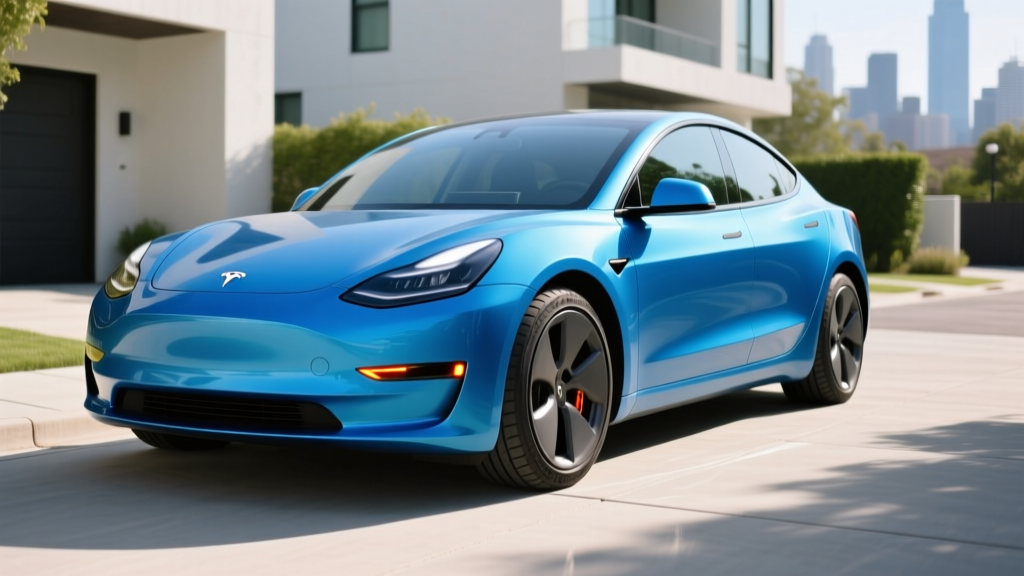
The Tesla Model 3 Highland refresh (introduced for the 2024 model year and carried forward into 2026) remains one of the most popular electric sedans on the road. But popularity doesn't always equal dependability. If you're asking is the Tesla Model 3 reliable, the answer requires looking past the marketing and into battery chemistry, long-term degradation data, build-quality trends, and real-world ownership costs.
After tracking owner reports, service bulletins, and hands-on testing across multiple model years, here's the full reliability picture for the current Tesla Model 3 lineup — including what can go wrong, what holds up, and whether it still makes sense against newer rivals.
2026 Tesla Model 3: Core Specifications at a Glance
| Specification | RWD (Base) | Long Range AWD | Performance AWD |
|---|---|---|---|
| EPA Range | 272 mi | 363 mi | 315 mi |
| Battery Capacity (usable) | ~57.5 kWh (LFP) | ~78 kWh (NMC) | ~78 kWh (NMC) |
| Drivetrain | Rear-Wheel Drive | Dual-Motor AWD | Dual-Motor AWD |
| Horsepower | 271 hp | 346 hp | 510 hp |
| 0–60 mph | 5.8 sec | 4.2 sec | 2.9 sec |
| MPGe (Combined) | 132 MPGe | 125 MPGe | 118 MPGe |
| Max DC Fast Charge | 170 kW | 250 kW | 250 kW |
| 10–80% DC Charge Time | ~25 min | ~25 min | ~25 min |
| Level 2 Home Charge Rate | 11.5 kW (~44 mi/hr) | 11.5 kW (~44 mi/hr) | 11.5 kW (~44 mi/hr) |
| Base MSRP | $38,990 | $45,490 | $52,990 |
| Battery/Drive Unit Warranty | 8 yr / 100,000 mi | 8 yr / 120,000 mi | 8 yr / 120,000 mi |
| Basic Vehicle Warranty | 4 yr / 50,000 mi | ||
Real-World Range: What the EPA Sticker Doesn't Tell You
Long Range AWD: EPA 363 mi. Expect ~310–330 mi on a mixed highway trip at 70 mph in moderate temperatures. In freezing conditions (below 32°F), plan for 250–280 mi due to battery resistance and cabin heating load. The Model 3's heat pump helps, but cold-weather range loss of 20–30% is typical for all EVs.
RWD (LFP): EPA 272 mi. City commuting yields close to the sticker number. Sustained highway driving drops it to ~230–245 mi. Winter highway: ~190–210 mi.
Source: EPA Fuel Economy
The Model 3's efficiency is among the best in its class. At roughly 25–27 kWh/100 mi (combined), it squeezes more miles per kilowatt-hour than the Hyundai Ioniq 6 or BMW i4. This efficiency is a reliability asset — less energy waste means less thermal stress on the battery pack over time.
Battery Reliability and Degradation: LFP vs. NMC in the Model 3
This is where the reliability question gets most interesting. Tesla uses two distinct battery chemistries in the Model 3, and their long-term behavior differs meaningfully:
| Factor | LFP (RWD Trim) | NMC (Long Range / Performance) |
|---|---|---|
| Chemistry | Lithium Iron Phosphate | Nickel Manganese Cobalt |
| Energy Density | Lower (heavier pack for same kWh) | Higher (lighter, more range) |
| Typical Degradation (5 yr / 100k mi) | ~5–8% | ~8–12% |
| Recommended Daily Charge | 100% (Tesla recommends weekly full charge) | 80% daily; 100% for trips only |
| Cold-Weather Performance | Slightly worse range retention in cold | Better cold-weather performance |
| Thermal Stability | Excellent — lower fire risk | Good — managed by active cooling |
| Cycle Life (to 80% SoH) | 3,000–5,000 cycles | 1,500–2,500 cycles |
Owner-sourced data from fleet tracking and TeslaFi logs consistently show that Model 3 battery packs retain roughly 90–93% of original capacity at 100,000 miles. The LFP pack in the RWD trim shows particularly strong longevity, with some high-mileage examples retaining 95%+ after 80,000 miles. This is because LFP chemistry tolerates full charge states and deep cycling far better than NMC.
Tesla's battery warranty guarantees at least 70% capacity retention over 8 years (100,000 mi for RWD, 120,000 mi for AWD trims). In practice, very few Model 3 packs have required warranty replacement — the failure rate is well below 1% based on available service data.
Charging Speed and Infrastructure: Still a Model 3 Strength
| Charging Level | Power | Miles Added per Hour | Use Case |
|---|---|---|---|
| Level 1 (120V outlet) | ~1.4 kW | ~5 mi/hr | Overnight top-up, emergency |
| Level 2 (240V home) | 11.5 kW max | ~44 mi/hr | Daily home charging |
| DC Fast Charge (RWD) | 170 kW peak | ~650 mi/hr (peak) | Road trips; 10–80% in ~25 min |
| DC Fast Charge (LR/Perf) | 250 kW peak | ~1,000 mi/hr (peak) | Road trips; 10–80% in ~25 min |
A critical reliability factor many buyers overlook: charge-curve taper. The 250 kW peak on Long Range and Performance trims is only sustained between roughly 10–30% State of Charge. Above 50%, the rate drops significantly — expect ~100 kW at 60% SoC and ~50 kW at 80%. This is normal lithium-ion behavior managed by the Battery Management System (BMS) to protect cell longevity. The 10–80% time of ~25 minutes accounts for this taper.
The Model 3 now uses the NACS (North American Charging Standard) connector natively. Tesla's Supercharger network remains the most reliable public DC fast-charging ecosystem in the U.S., with uptime consistently above 95% at most corridors — a significant reliability advantage over CCS-dependent competitors relying on Electrify America or third-party networks.
Build Quality, Software, and Mechanical Reliability
The Highland refresh addressed many of the historical build-quality complaints that plagued pre-2023 Model 3 production. Panel gaps have tightened significantly, interior materials have improved (ventilated front seats, acoustic glass, ambient lighting), and the suspension tuning is noticeably more compliant.
What holds up well:
- Drive unit(s): Tesla's permanent-magnet and induction motors have proven extremely durable. Motor replacement before 150,000 miles is rare.
- 15.4-inch touchscreen: The new AMD Ryzen-based MCU is faster and more stable than the older Intel Atom unit. Screen delamination, a problem on 2018–2020 cars, has been resolved.
- Over-the-air updates: Tesla continues to push meaningful software improvements, including UI refinements, charging optimizations, and safety feature enhancements years after purchase.
- Heat pump (Octovalve): Standard on all current Model 3 trims, it dramatically improves cold-weather efficiency and cabin heating reliability compared to the resistive heater in early models.
Known issues to watch:
- 12V lithium auxiliary battery: Tesla switched to a 12V lithium battery, which has had intermittent failure reports. A dead 12V battery bricks the car (you can't even open the doors normally). Tesla has issued service bulletins; replacements are covered under warranty.
- Suspension components: Control arm bushings and sway bar links can wear prematurely on rough roads. This was common on pre-Highland cars and appears improved but not eliminated.
- Phantom braking (Autopilot): Tesla's Autopilot (SAE Level 2) has drawn NHTSA scrutiny for unexpected deceleration events. While Tesla has issued OTA patches, owners should remain attentive and treat Autopilot as a driver-assist system, not autonomous driving.
- Door handles and window regulators: Occasional reports of sticky electronic door handles and window calibration issues after software updates.
Tesla's Autopilot and Full Self-Driving (Supervised) are Level 2 driver-assistance systems. The driver must remain fully engaged, hands on or near the wheel, eyes on the road. These systems do not make the Model 3 a self-driving car. Only Level 4 services like Waymo operate without a human driver, and those are geofenced robotaxis — not consumer vehicles.
Pricing, Tax Credits, and Total Cost of Ownership
| Trim | Base MSRP | Federal Credit (§30D) | Effective Price* |
|---|---|---|---|
| RWD | $38,990 | Up to $7,500 | ~$31,490 |
| Long Range AWD | $45,490 | Up to $7,500 | ~$37,990 |
| Performance AWD | $52,990 | Up to $7,500 | ~$45,490 |
*Effective price assumes full §30D credit eligibility. Actual credit depends on multiple IRS requirements.
- Vehicle MSRP cap: Sedans must be ≤ $55,000 (all Model 3 trims qualify)
- Buyer income cap: AGI ≤ $150,000 (single), $225,000 (head of household), $300,000 (joint)
- Battery sourcing: Critical minerals and battery components must meet phased-in domestic/free-trade sourcing thresholds (Tesla has largely met these for U.S.-built Model 3)
- Point-of-sale transfer: Eligible buyers can apply the credit as an immediate price reduction at the dealer, rather than waiting for a tax refund
- Final assembly: Must occur in North America (Model 3 is built in Fremont, CA and Austin, TX)
Source: IRS.gov — Clean Vehicle Credits. Rules are subject to change; consult a tax professional for your specific situation.
Beyond the purchase price, the Model 3's operating costs are a key part of its reliability story. Electricity costs average $0.13–$0.18/kWh nationally for home charging, translating to roughly $3.25–$4.50 per 100 miles — compared to $12–$15 per 100 miles for a comparable gas sedan at current fuel prices. Over five years and 75,000 miles, that's $7,000–$9,000 in fuel savings alone.
Insurance is the offset: Model 3 premiums run 15–30% higher than equivalent gas sedans due to repair cost structures (aluminum and high-strength steel body panels, integrated sensor arrays). Budget $1,800–$2,800/year depending on your state and driving record.
Cargo, Interior Space, and Daily Practicality
The Model 3 is a compact executive sedan, and its dimensions reflect that positioning:
- Rear trunk: 23 cu ft (including under-floor storage)
- Front trunk (frunk): 3.1 cu ft — fits a charging cable bag or small backpack
- Total cargo: ~26 cu ft (less than a Model Y or Ioniq 5 hatchback)
- Rear legroom: 35.2 inches — adequate for adults under 6'0", tight for taller passengers on long trips
- Front headroom: 40.3 inches — generous even with the glass roof
The Highland refresh added ventilated front seats, improved rear-seat cushioning, and a rear touchscreen for climate/media control. The minimalist interior (no physical instrument cluster; all info on the central 15.4" display) remains polarizing — some owners love it, others find it distracting. Turn signals are now on a touch-capacitive strip on the steering wheel rim, which takes adjustment and has drawn mixed reviews.
Tesla Model 3 vs. Key Competitors: Is It Still the Best Buy?
| Attribute | Tesla Model 3 LR | Hyundai Ioniq 6 SEL AWD | BMW i4 eDrive40 |
|---|---|---|---|
| EPA Range | 363 mi | 316 mi | 301 mi |
| Base MSRP | $45,490 | $46,000 | $57,900 |
| Max DC Charge | 250 kW | 235 kW | 205 kW |
| 10–80% Time | ~25 min | ~18 min | ~31 min |
| Charging Network | Supercharger (NACS) | NACS adapter / CCS | NACS adapter / CCS |
| MPGe (Combined) | 125 MPGe | 117 MPGe | 109 MPGe |
| Battery Warranty | 8 yr / 120k mi | 10 yr / 100k mi | 8 yr / 80k mi |
- Best-in-class efficiency (MPGe) and real-world range per dollar
- Supercharger network — most reliable DC charging in the U.S.
- OTA updates keep the car current years after purchase
- Strong battery longevity data, especially LFP chemistry
- Class-leading performance (0–60 in 2.9s for Performance trim)
- Low operating cost vs. gas and most EV competitors
- Touchscreen-only controls can distract while driving
- Rear seat space is tighter than Ioniq 6 or BMW i4
- Insurance premiums higher than segment average
- Service center wait times can stretch weeks in some markets
- Autopilot/FSD remains Level 2 — not autonomous despite the name
- Steering-wheel turn-signal buttons take significant adaptation
Who Should Buy the Model 3 (and Who Shouldn't)?
- You prioritize range and charging-network reliability above all else
- You commute 30–80 miles daily and can charge at home
- You want a sporty sedan with strong acceleration and handling
- You value OTA software updates and a tech-forward cabin
- You take regular road trips and want Supercharger convenience
- You need spacious rear seating for adults or child seats (consider Model Y or Ioniq 5)
- You prefer physical buttons and a traditional instrument cluster
- You live far from a Tesla Service Center and need dealer-service convenience
- You want hatchback cargo flexibility (Ioniq 6, Polestar 2)
- Maximum battery warranty length matters (Hyundai offers 10 years)
Frequently Asked Questions
What is the real-world range of the Tesla Model 3?
The Long Range AWD achieves an EPA-estimated 363 miles, but expect 310–330 miles on highway trips in moderate weather and 250–280 miles in freezing temperatures. The RWD (LFP) trim delivers 272 miles EPA, with real-world highway range of ~230–245 miles.
How fast does the Model 3 charge at home and on the road?
At home on a 240V Level 2 charger, the Model 3 charges at up to 11.5 kW, adding ~44 miles of range per hour — a full overnight session easily replenishes daily driving. On DC fast chargers, the Long Range and Performance trims peak at 250 kW (10–80% in ~25 minutes), while the RWD peaks at 170 kW (~25 minutes for 10–80%).
Does the Tesla Model 3 qualify for the federal EV tax credit?
Yes — all 2026 Model 3 trims fall under the $55,000 sedan MSRP cap for §30D. Eligible buyers (income ≤ $150k single / $300k joint) can receive up to $7,500 as a point-of-sale price reduction, subject to battery-sourcing and final-assembly requirements. Always verify current rules at IRS.gov.
Is the Tesla Model 3 more reliable than a gas car?
In terms of powertrain simplicity, yes — an electric motor has far fewer moving parts than an internal combustion engine, eliminating oil changes, transmission repairs, and exhaust system failures. However, the Model 3 has had higher-than-average reported issues with 12V battery failures, suspension bushings, and software glitches compared to the most reliable gas sedans like the Toyota Camry.
How long will a Tesla Model 3 battery last?
Based on fleet data, Model 3 battery packs typically retain 90–93% of original capacity at 100,000 miles. The LFP pack in the RWD trim shows even better longevity. Tesla's warranty guarantees 70% retention over 8 years (100k–120k miles depending on trim). Full battery replacement outside warranty costs approximately $12,000–$16,000, though this is rarely needed before 200,000+ miles.
Is the Model 3 worth buying over the Hyundai Ioniq 6 or BMW i4?
The Model 3 wins on range, efficiency, charging network access, and price. The Ioniq 6 offers faster peak charging speeds, a longer battery warranty (10 years), and more rear-seat room. The BMW i4 provides a more traditional luxury interior and driving dynamics but at a significant price premium. For most buyers prioritizing reliability and total cost of ownership, the Model 3 Long Range remains the strongest overall value in the electric sedan segment.
Safety data: The Model 3 earned a 5-Star Overall Safety Rating from NHTSA and a Top Safety Pick+ from IIHS with acceptable ratings across all crashworthiness tests.