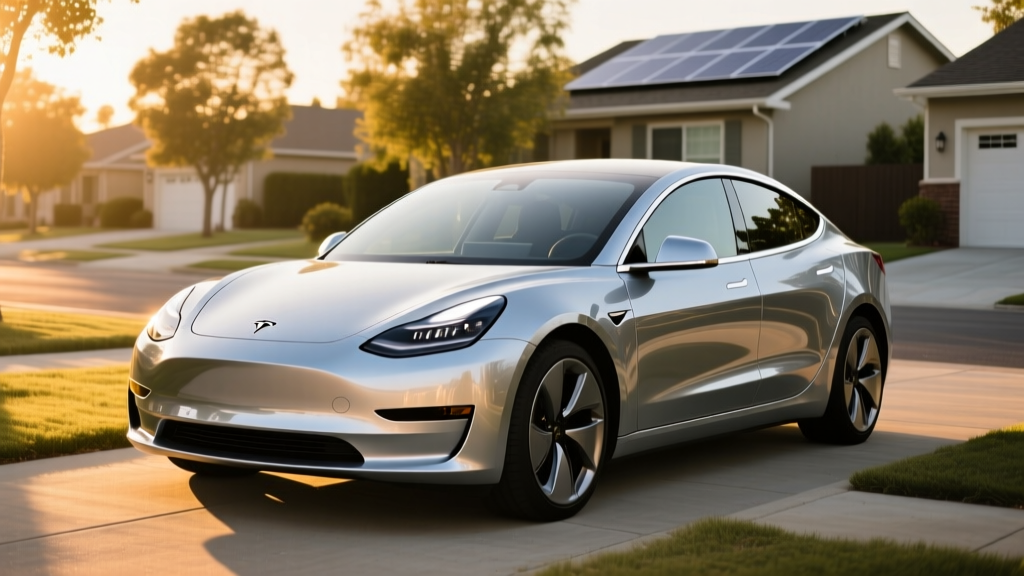
The Tesla Model 3 Highland refresh (introduced for 2024 and carried into the 2026 model year with minor updates) remains one of the most scrutinized sedans on the road. Buyers searching for Tesla Model 3 reliability data face a paradox: Tesla's powertrains and battery packs are among the most durable in the EV segment, yet the brand consistently ranks mid-to-low in initial-quality surveys from J.D. Power and Consumer Reports. The explanation is simple once you separate the two: the high-voltage battery and drive units rarely fail, while fit-and-finish, 12V accessories, and software glitches drive most complaint volume.
This review dissects the 2026 Model 3 through the lens of long-term ownership reliability, pairing hard specs with real-world data so you can decide whether this sedan fits your daily driving and your risk tolerance.
2026 Tesla Model 3 Core Specifications
| Spec | RWD (Standard Range) | Long Range AWD | Performance AWD |
|---|---|---|---|
| EPA Range | 272 mi | 363 mi | 341 mi |
| Battery (usable) | ~57.5 kWh (LFP) | ~77 kWh (NMC) | ~77 kWh (NMC) |
| Horsepower | 271 hp | 346 hp | ~510 hp |
| 0–60 mph | 5.8 sec | 4.2 sec | 2.9 sec |
| Drivetrain | RWD single motor | Dual-motor AWD | Dual-motor AWD |
| Peak DC Charge | 170 kW | 250 kW | 250 kW |
| 10–80% DC Time | ~25 min | ~27 min | ~27 min |
| Level 2 (11.5 kW AC) | ~44 mi/hr | ~44 mi/hr | ~44 mi/hr |
| MPGe (combined) | 132 MPGe | 131 MPGe | 118 MPGe |
| kWh/100 mi | 25 | 26 | 29 |
| Base MSRP | $38,990 | $47,740 | $54,990 |
| Powertrain Warranty | 8 yr / 100,000 mi | 8 yr / 120,000 mi | 8 yr / 120,000 mi |
Battery Longevity & Chemistry: The Heart of Reliability
The strongest argument in favor of Tesla Model 3 reliability is the traction battery. Tesla's 2024 Impact Report disclosed that Model 3/Y packs lose approximately 12% of capacity after 200,000 miles, meaning roughly 88% state-of-health (SoH) at that milestone. For context, the federal minimum warranty threshold is 70% retention over 8 years or the stated mileage, whichever comes first — Tesla's real-world data significantly outperforms that floor.
Chemistry matters here, and the 2026 Model 3 uses two distinct packs:
| Attribute | LFP (RWD) | NMC (Long Range / Performance) |
|---|---|---|
| Energy Density | Lower (~160 Wh/kg cell) | Higher (~250 Wh/kg cell) |
| Cycle Life | 3,000+ full cycles | 1,500–2,000 full cycles |
| Recommended Daily SoC | 100% (charge freely) | 80% daily; 100% for trips |
| Cold-Weather Performance | Moderate range loss | Better low-temp output |
| Cobalt Content | None | Contains cobalt/nickel |
If you plan to keep the car past 150,000 miles and charge at home nightly, the LFP pack in the RWD trim is arguably the most durable consumer battery on the market. The trade-off is lower range (272 EPA miles) and slightly weaker DC fast-charge speeds.
Real-World Range vs. EPA Sticker
Long Range AWD — EPA 363 mi: Expect 310–330 mi on mixed highway driving at 70 mph; approximately 250–275 mi in sub-freezing winter conditions (battery preconditioning mitigates some loss via the standard heat pump).
RWD — EPA 272 mi: Expect 230–250 mi highway; roughly 190–210 mi in cold weather. LFP chemistry loses slightly more range in freezing temps than NMC, but recovers predictably once the pack warms.
Tesla's efficiency is among the best in the segment — 25–29 kWh/100 mi depending on trim — thanks to the Highland generation's improved aerodynamics (0.219 Cd) and the standard heat pump. On a 300-mile road trip in moderate weather, the Long Range AWD comfortably covers the distance with 30–50 miles of buffer. In January cold with cabin heat at 72°F, plan one Supercharger stop.
Charging Speed: Home & DC Fast Charging
| Charging Level | Power | Miles Added per Hour | Notes |
|---|---|---|---|
| Level 1 (120V / 12A) | ~1.4 kW | ~3–4 mi/hr | Emergency / trickle only |
| Level 2 (240V / 48A) | 11.5 kW | ~44 mi/hr | Full overnight recharge (~8–10 hr) |
| DC Fast (RWD peak) | 170 kW | — | 10–80% in ~25 min |
| DC Fast (LR / Perf peak) | 250 kW | — | 10–80% in ~27 min; tapers sharply above 80% |
A critical reliability note on charging: the 2026 Model 3 uses the NACS (J3400) connector natively — no adapter required at Tesla Superchargers, and now compatible with growing numbers of third-party networks (Electrify America, EVgo) that have deployed NACS cables. The onboard charger accepts up to 11.5 kW AC; a 48-amp home wall connector on a 60-amp circuit is the recommended setup. Expect $800–$1,500 for a professional Level 2 installation depending on panel proximity and local permit costs.
The charge curve on the 250 kW trims peaks only between roughly 10–35% SoC, then steps down to ~150 kW near 50%, and ~75 kW by 80%. This is standard for NMC chemistry but worth understanding: the "27-minute" 10–80% figure assumes you arrive at low SoC with a preconditioned battery (the car does this automatically when a Supercharger is set as your navigation destination).
Build Quality, Software & Reported Issues
The Highland refresh addressed many of the panel-gap and interior-rattle complaints that dogged pre-2024 Model 3s. The 2026 build shows tighter tolerances, ventilated front seats, acoustic glass all around, and a rear touchscreen for passengers. That said, reliability surveys still flag several recurring issues:
- 12V lithium auxiliary battery: Tesla switched to a 12V Li-ion unit in 2023. While lighter, early units showed higher-than-expected replacement rates. Tesla extended coverage on some units — verify your VIN at service.
- Phantom braking (Autopilot): Vision-only Tesla Autopilot occasionally triggers unexpected deceleration on highways. This is an ongoing NHTSA-monitored concern.
- Touchscreen dependency: With no physical stalks (turn signals are steering-wheel buttons, wipers and climate are screen-based), a frozen or rebooting screen is more than an annoyance — it's a functional impairment. Reboots are infrequent but documented.
- Suspension bushings: Some owners at 40,000+ miles report front control-arm bushing wear producing clunks over bumps. Not a recall item, but a known wear point.
The powertrain itself — motors, inverter, reduction gearbox — is essentially bulletproof in normal use. Tesla's drive units rarely require service before 200,000 miles, and the absence of a multi-speed transmission eliminates a major failure point found in some competitors.
Pricing, Tax Credits & Total Cost of Ownership
| Trim | Base MSRP | Est. After §30D Credit* | Destination |
|---|---|---|---|
| RWD | $38,990 | $31,490 | $1,390 |
| Long Range AWD | $47,740 | $40,240 | $1,390 |
| Performance AWD | $54,990 | $47,490 | $1,390 |
*Assumes full $7,500 federal tax credit under IRS §30D. Eligibility requires: buyer AGI ≤ $150,000 (single) / $300,000 (joint); MSRP ≤ $55,000 for sedans; battery critical-mineral and component sourcing compliance. The Model 3 RWD and Long Range currently qualify; verify the Performance trim's MSRP cap and sourcing status at IRS.gov before purchase, as rules and eligible VIN lists update frequently. Point-of-sale transfer is available through participating dealers.
Against the Hyundai Ioniq 6 SE Long Range (~$42,000, EPA 361 mi) and the BMW i4 eDrive35 (~$52,000, EPA 307 mi), the Model 3 Long Range undercuts on price-after-credit while leading in range and Supercharger network access. Insurance premiums run 15–25% higher than segment average — factor $180–$260/month depending on your ZIP and driving record.
Cargo, Passenger Space & Daily Practicality
The 2026 Model 3 provides 23 cu ft of cargo space (trunk + frunk combined) — adequate for two carry-ons and a week of groceries but tighter than a Model Y or Ioniq 5. Rear legroom measures 35.3 inches, which fits adults under 6'2" comfortably; taller passengers will want the Model Y's roofline instead. The 15.4-inch front touchscreen and 8-inch rear display handle all infotainment, navigation, and climate controls. Wireless CarPlay is not supported — Tesla's native UI is the only option, which some buyers love and others consider a dealbreaker.
Driver Assistance: Autopilot & FSD (Supervised)
Tesla Autopilot (standard) and Full Self-Driving Supervised ($8,000 option or $99/month) are SAE Level 2 systems. The driver must remain attentive, hands on or near the wheel, and ready to intervene at any moment. These are not Level 4 robotaxi systems like Waymo. Treat FSD as an advanced lane-keeping and navigation assist, not a replacement for an engaged driver.
Reliability-wise, Autopilot hardware (HW4 cameras and processor) is robust. The software receives regular over-the-air updates, which can introduce new features or occasionally regress behavior — a double-edged sword depending on your tolerance for beta-style iteration.
Pros & Cons at a Glance
- Class-leading efficiency (25–29 kWh/100 mi)
- LFP battery option (RWD) with exceptional cycle life
- NACS native — full Supercharger access
- OTA updates add features post-purchase
- Strong powertrain durability data at 200k+ miles
- Eligible for $7,500 §30D credit (RWD & LR)
- Touchscreen-only controls frustrate some drivers
- No Apple CarPlay / Android Auto
- Phantom braking incidents under Autopilot
- Rear seat tight for passengers over 6'2"
- Higher insurance premiums vs. rivals
- FSD ($8,000) remains Level 2, not autonomous
Who the 2026 Model 3 Suits Best
Choose the Model 3 RWD if you commute under 80 miles round-trip, charge at home, want the lowest cost of entry (~$31,500 after credit), and prioritize battery cycle life over maximum range.
Choose the Long Range AWD if you take regular road trips, live in a cold climate, need dual-motor traction, and want the best balance of range, price, and Supercharger convenience.
Look elsewhere if you need three-across rear seating, cargo volume over 30 cu ft (consider the Model Y), or insist on Apple CarPlay and physical buttons (BMW i4, Hyundai Ioniq 6).
Frequently Asked Questions
What is the real-world range of the 2026 Tesla Model 3?
The Long Range AWD delivers roughly 310–330 miles on a highway-heavy drive in mild weather, dropping to 250–275 miles in freezing temperatures. The RWD LFP variant returns 230–250 miles highway, with cold-weather range around 190–210 miles.
How fast does the Model 3 charge at home and on the road?
On a 48-amp Level 2 home charger (11.5 kW), the Model 3 adds about 44 miles of range per hour — a full overnight recharge. On DC fast charging, the Long Range and Performance trims peak at 250 kW, reaching 10–80% in roughly 27 minutes with battery preconditioning. The RWD peaks at 170 kW, 10–80% in about 25 minutes.
Does the 2026 Model 3 qualify for the federal EV tax credit?
The RWD ($38,990) and Long Range AWD ($47,740) trims fall under the $55,000 sedan MSRP cap and currently qualify for the full $7,500 §30D credit, subject to buyer income limits ($150k single / $300k joint AGI) and battery-sourcing requirements. Verify your specific VIN's eligibility at IRS.gov before purchasing, as eligible configurations can change.
Is the Tesla Model 3 reliable long-term?
Powertrain reliability is excellent — Tesla's own fleet data shows ~88% battery SoH at 200,000 miles, and drive units rarely require service. Most reliability complaints involve fit-and-finish, the 12V auxiliary battery, and software behavior, not the high-voltage system. The 8-year / 100,000–120,000-mile battery warranty provides substantial backing.
How does the Model 3 compare to the Hyundai Ioniq 6 or BMW i4?
The Ioniq 6 SE Long Range matches Model 3 range (~361 mi EPA) at a similar price but uses CCS (NACS adapter required for Superchargers) and has fewer public fast-charging options. The BMW i4 offers superior build quality and CarPlay but less range, higher pricing, and no §30D credit eligibility for many trims. The Model 3 wins on charging-network access and efficiency; the i4 wins on interior refinement.
Sources: EPA range and MPGe data via fueleconomy.gov; Tesla battery longevity data from Tesla's 2024 Impact Report; federal tax credit rules per IRS §30D guidance.